The Hygge Handbook: Decorate Your Way to Comfort, Happiness, and Well-Being
While hygge gets most of its attention during cold, dark winter months, the truth is that hygge is a year-round philosophy. The Danes don’t pack away their cozy mindset when spring arrives. Instead, they adapt hygge principles to celebrate what’s special about each season, creating comfort and connection no matter what the weather brings.
This chapter is all about keeping that hygge feeling alive throughout the entire year. You’ll learn how to adjust your home’s atmosphere to embrace the unique qualities of each season while maintaining the core principles of comfort, coziness, and well-being. The goal isn’t to completely redecorate four times a year but to make thoughtful, manageable shifts that honor the changing seasons and keep your space feeling fresh and inviting.
Let’s talk about why seasonal hygge matters. Our connection to nature and the changing seasons is fundamental to well-being, even if we spend most of our time indoors. By acknowledging and celebrating these natural rhythms in our homes, we create a deeper sense of harmony with the world around us. Plus, seasonal changes give us permission to refresh our spaces regularly, preventing that stale feeling that can develop when everything stays exactly the same for too long.
Winter hygge is what most people think of first, and for good reason. This is when hygge principles really shine. We'll explore how to maximize coziness during dark, cold months, from layering extra textiles to increasing your candle game. You'll learn about creating warm lighting schemes that combat seasonal blues, incorporating heavier textures that invite snuggling, and establishing rituals that make winter something to embrace rather than just endure.
Winter is also the perfect time to focus on the social aspects of hygge. We’ll discuss hosting intimate gatherings that prioritize connection over perfection, creating cozy corners for reading and reflection, and making your home a place where people want to spend time when the weather outside is frightful. You’ll get practical ideas for winter activities that bring hygge to life, from bread baking to puzzle building.
Spring hygge is about renewal and lightness while maintaining that underlying sense of comfort. As the days get longer and nature wakes up, your home can reflect this energy. We’ll explore how to lighten up your color palette with fresh whites and soft pastels, bring in flowering branches and early blooms, and adjust your textiles to lighter weights. You’ll learn how to open up your space to welcome spring while keeping enough coziness that your home still feels like a sanctuary.
Spring cleaning gets a hygge twist in this chapter. Rather than viewing it as a chore, we’ll frame it as a refreshing ritual that clears space physically and mentally. You’ll get strategies for decluttering mindfully, reorganizing with intention, and making your cleaning routine feel more like self-care than obligation.
Summer hygge might seem contradictory, but it’s actually wonderful. The Danes are experts at creating cozy outdoor spaces and bringing the outdoors in during warmer months. We’ll discuss how to adapt hygge principles for summer, from creating inviting outdoor areas to adjusting indoor spaces for heat and light. You’ll learn about incorporating summer scents, using lighter fabrics, and celebrating the abundance of fresh flowers and natural light.
Summer is also prime time for hygge activities that happen outside your four walls. We’ll explore picnic setups, beach blanket coziness, and creating portable hygge for adventures. The key is maintaining that sense of comfort and presence no matter where you are.
Autumn hygge combines the best of both worlds as temperatures cool and days shorten. This transitional season is perfect for gradually reintroducing heavier textiles, richer colors, and more candles. We’ll discuss how to make the most of autumn’s natural beauty, from incorporating seasonal foliage to embracing the warm, earthy color palette that fall provides. You’ll learn how to create spaces that celebrate harvest abundance and prepare for the cozier months ahead.
Throughout each seasonal section, we'll provide practical, actionable ideas that don't require buying a bunch of new stuff. Many seasonal shifts can be achieved by simply rearranging what you already have, bringing in natural elements from outside, or making small adjustments to lighting and textiles. The emphasis is on working with the seasons rather than against them, finding joy in change rather than resisting it.
We’ll also address how to store seasonal items efficiently so that transitioning between seasons doesn’t feel overwhelming. You’ll learn which items are worth keeping year-round and which deserve to be rotated, plus organization strategies that make seasonal changes feel manageable rather than like a huge project.
By the end of this chapter, you’ll understand that hygge isn’t just for winter. You’ll have a framework for adapting your home throughout the year, celebrating what’s special about each season while maintaining that underlying sense of comfort and well-being that makes hygge so appealing. Your home will feel dynamic and connected to the natural world while remaining your cozy sanctuary no matter what month appears on the calendar.
Winter Hygge: Embracing the Coziest Season
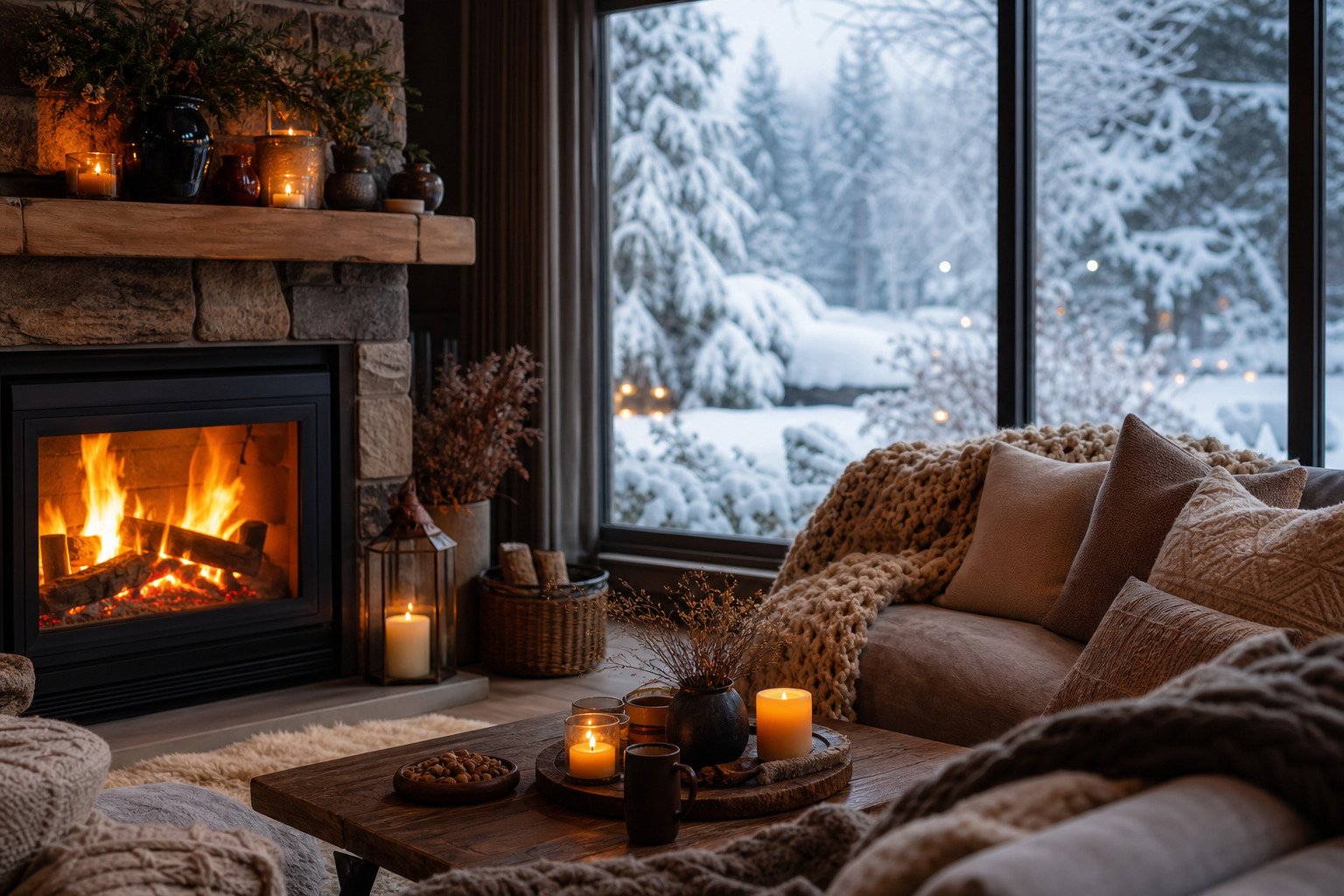
Winter is hygge’s moment to shine. When darkness falls early and temperatures drop, your home becomes more than just shelter. It transforms into a warm refuge that actively fights back against the cold and gloom outside. The beauty of winter hygge is that it gives you permission to go all in on comfort. This is the season for maximum coziness, where layering becomes an art form and candlelight isn’t just nice, it’s essential. But winter hygge isn’t about hiding from the season. It’s about making peace with winter’s challenges and finding genuine joy in what makes this time of year special. The goal is creating a home so inviting that you actually look forward to cold evenings instead of just tolerating them.
Layer Textiles Like Your Life Depends On It
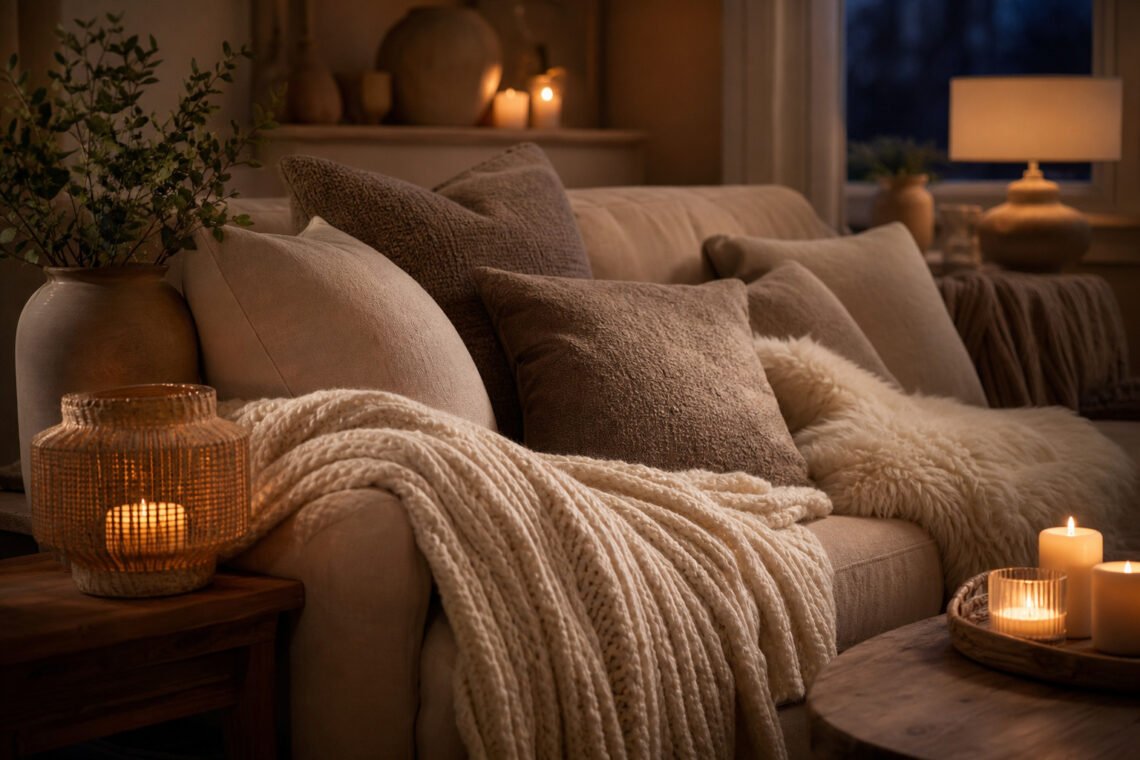
Winter is the time to bring out every cozy textile you own and then add a few more. Start with your existing furniture and build up from there. Drape chunky knit blankets over sofas and chairs where they're easily grabbable. Add extra throw pillows in heavier fabrics like wool, velvet, or faux fur. Don't worry about matching perfectly. A mix of textures actually creates more visual interest and feels more authentic than a coordinated set.
Think about your floors too. If you have hardwood or tile, layering rugs makes a huge difference. Put a plush sheepskin or faux fur rug over your existing area rug in spots where you walk barefoot most often. These layers aren’t just decorative—they provide actual insulation that makes rooms feel warmer and more inviting.
Switch out lighter summer bedding for heavier winter options. Flannel sheets, thick duvets, and extra blankets turn your bed into a cloud you can’t wait to sink into. Keep a basket of soft blankets in your living room so anyone who feels chilly can grab one without getting up.
Master Your Winter Lighting Strategy
Lighting becomes critical during winter when natural daylight is scarce. The goal is creating multiple layers of warm, soft light that chase away darkness without being harsh. Start by assessing your overhead lighting. If you're relying on bright ceiling fixtures, you're missing the hygge boat entirely. Winter calls for lamps—lots of them—placed at different heights throughout your rooms.
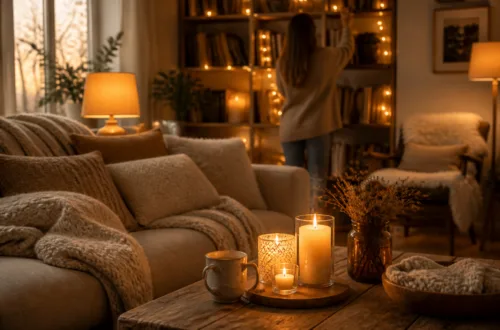
This is also prime candle season. Go beyond the single candle on the coffee table. Cluster candles in groups of three or five on trays, mantels, shelves, and side tables. Mix different heights and widths for visual interest. The flickering light from candles creates a living, breathing quality that no electric light can match.
Consider adding string lights or fairy lights as well. They're not just for holidays. Draped over a bookshelf, wound around a mirror frame, or hung along a window, they add a magical quality that's perfect for dark winter evenings.
Create Winter Rituals That Anchor Your Days
Winter hygge thrives on rituals that give structure and something to look forward to. These don’t need to be elaborate. Simple, repeatable activities work best. Maybe it’s lighting candles every evening at 5 PM when darkness falls, signaling the transition from work mode to relaxation mode. Or perhaps it’s making a pot of tea every afternoon and actually sitting down to drink it.
Food rituals work especially well in winter. Baking bread on Sunday afternoons fills your home with warmth and incredible smells. Making a big pot of soup that lasts several days provides both comfort food and the satisfaction of having something homemade ready to go. Hot chocolate isn't just for kids—a really good version becomes a treat worth anticipating.
Social rituals matter too, but keep them small and intimate. Game nights, movie marathons, or just sitting around talking with candles burning creates the kind of togetherness that hygge celebrates.
Bring Winter Inside Intentionally
Rather than trying to pretend winter doesn't exist, bring elements of the season into your home in ways that feel beautiful rather than bleak. Evergreen branches in a simple vase bring life and a fresh pine scent indoors. Pinecones collected on walks make great natural decorations clustered in bowls or scattered on mantels. Birch logs stacked near a fireplace create a rustic, woodsy vibe.
Winter’s color palette can influence your decor too. Deep forest greens, rich browns, and warm grays reflect the season without feeling cold. Add touches of these colors through pillows, throws, or even just switching out the books displayed on your coffee table. White and cream tones can represent snow in a way that feels fresh rather than stark.
If you're lucky enough to have a fireplace, use it regularly. There's something primal and deeply comforting about a real fire. The point is acknowledging winter rather than fighting it, finding beauty in what the season offers.
Spring and Summer Hygge: Lighter but Still Cozy
When warmer weather arrives, hygge doesn’t disappear. It just changes clothes. Spring and summer hygge is about maintaining that sense of comfort and presence while embracing the energy and lightness of longer days and warmer temperatures. The challenge is adapting hygge principles to seasons that feel fundamentally different from winter’s darkness. But here’s the thing: coziness isn’t just about being warm and bundled up. It’s about feeling content, present, and at ease in your space. That can absolutely happen when it’s sunny and 75 degrees outside.
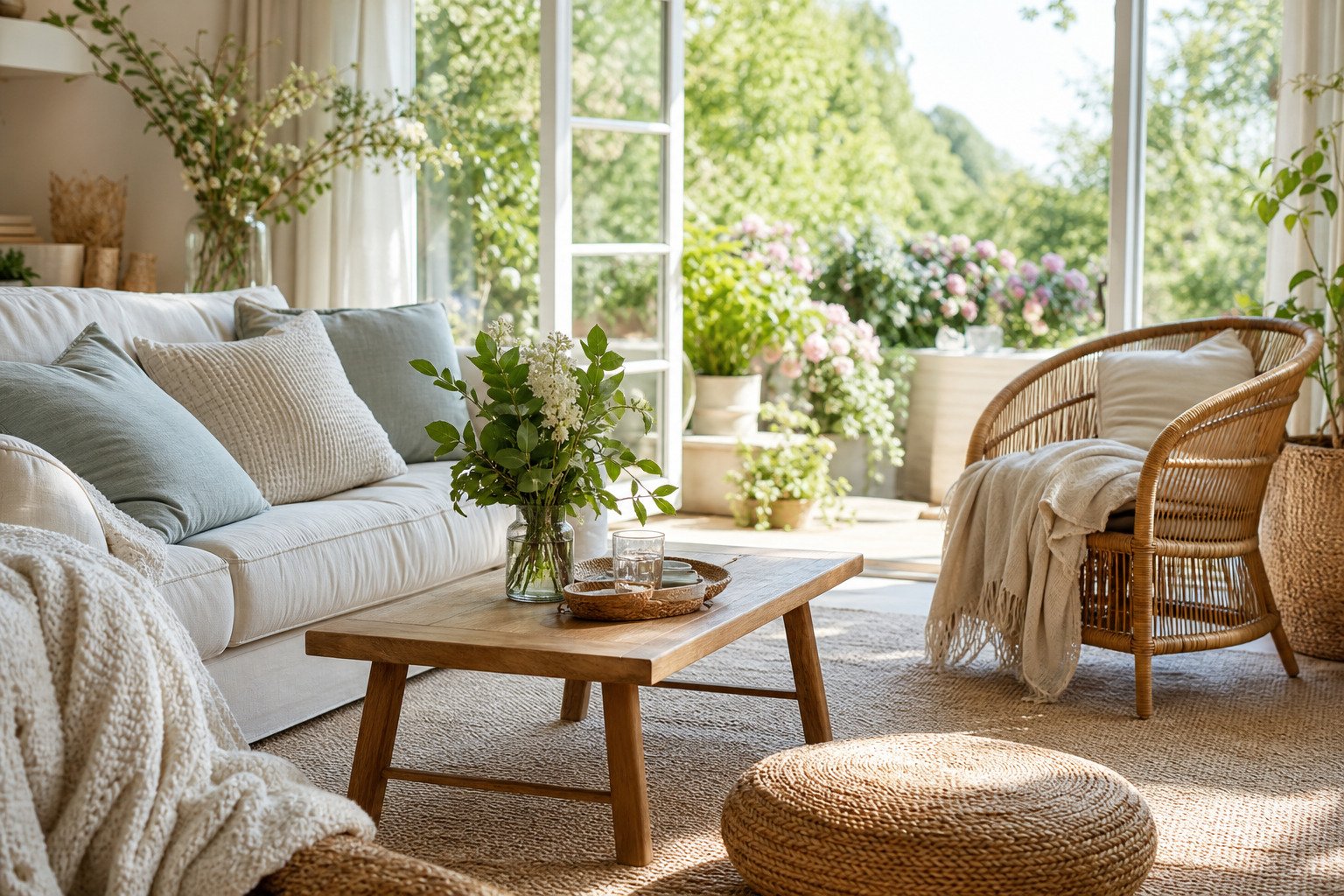
Lighten Up Your Textiles and Colors
As temperatures rise, your heavy winter layers need to go into storage. Replace thick wool blankets with lighter cotton or linen throws that still provide comfort without overheating. Switch out velvet and faux fur pillows for ones made from breathable fabrics like cotton, linen, or even lightweight knits. The goal is maintaining softness and texture while adapting to warmer weather.
Your color palette can shift too. Winter’s deep, rich tones give way to softer, airier colors. Think warm whites, soft creams, pale blues, gentle greens, and blush pinks. These colors feel fresh and light without abandoning the hygge principle of warmth. They create a sense of breathing room that’s perfect for warmer months while still feeling cozy rather than stark.
Consider swapping out heavier curtains for lighter ones that filter rather than block light. Sheer curtains or light linen panels allow natural light to flood in while still providing some privacy and softness. If you have dark rugs, you might roll them up for the season and either leave floors bare or bring in natural fiber rugs like jute or sisal that feel summery but still add texture and warmth underfoot.
Bring the Outside In (And Take Hygge Outside)
Spring and summer are perfect for blurring the lines between indoors and outdoors. Keep windows open when weather permits, letting fresh air and natural sounds flow through your home. This simple act creates a connection to the world outside that feels revitalizing. Fresh flowers become easier and cheaper to come by, so keep vases filled with whatever's blooming. Even grocery store bouquets or stems cut from your yard bring life and beauty indoors.
Take your hygge practice outside as well. Create cozy outdoor spaces on balconies, patios, or in your yard. A comfortable outdoor chair with soft cushions, a small side table for your morning coffee, and maybe some potted plants creates an instant hygge zone. String lights or lanterns add ambiance for evening outdoor time. Even a simple blanket spread on the grass for reading or afternoon naps counts as hygge when you’re fully present and comfortable.
Plan outdoor activities that embrace hygge principles. Pack a picnic with actually good food, not just whatever's convenient. Bring a proper blanket, real plates if possible, and take time to enjoy the experience rather than rushing through it. Evening walks, outdoor dining, or just sitting outside with a drink as the sun sets all qualify as hygge when you approach them mindfully.
Adjust Your Lighting for Longer Days
With abundant natural light, your artificial lighting needs change dramatically. You’ll use candles less, but they still have a place for evening ambiance. Save them for later in the evening when the sun finally sets. During the day, focus on maximizing and managing natural light. Use mirrors strategically to bounce light into darker corners. Keep windows clean so light can pour in unobstructed.
For artificial lighting, you want options that feel gentle and warm even when it's light outside. Lamps with warm-toned bulbs create pockets of coziness for overcast days or evening reading. Consider adding some outdoor lighting for patios or balconies. Solar lanterns, string lights, or even just candles in glass holders make outdoor spaces feel magical as evening falls and turn al fresco dining into a special experience.
The key is matching your lighting to the longer days rather than fighting them. Let natural light dominate during daylight hours, then gradually transition to softer, warmer lighting as evening arrives. This creates a natural rhythm that works with the season rather than against it, maintaining that hygge sense of coziness while celebrating the abundance of light that summer provides.
Autumn Hygge: The Perfect Transition Season
Autumn might be the most naturally hygge season of all. As temperatures cool and days shorten, you get to gradually reintroduce all those cozy elements you put away for summer. But you’re not dealing with winter’s harsh cold yet, so you can still enjoy the outdoors comfortably. It’s the sweet spot, the season that perfectly balances lightness and coziness. Autumn also brings incredible natural beauty that’s perfect for bringing indoors. The changing leaves, harvest abundance, and crisp air all contribute to a feeling of transition and preparation that fits beautifully with hygge philosophy.
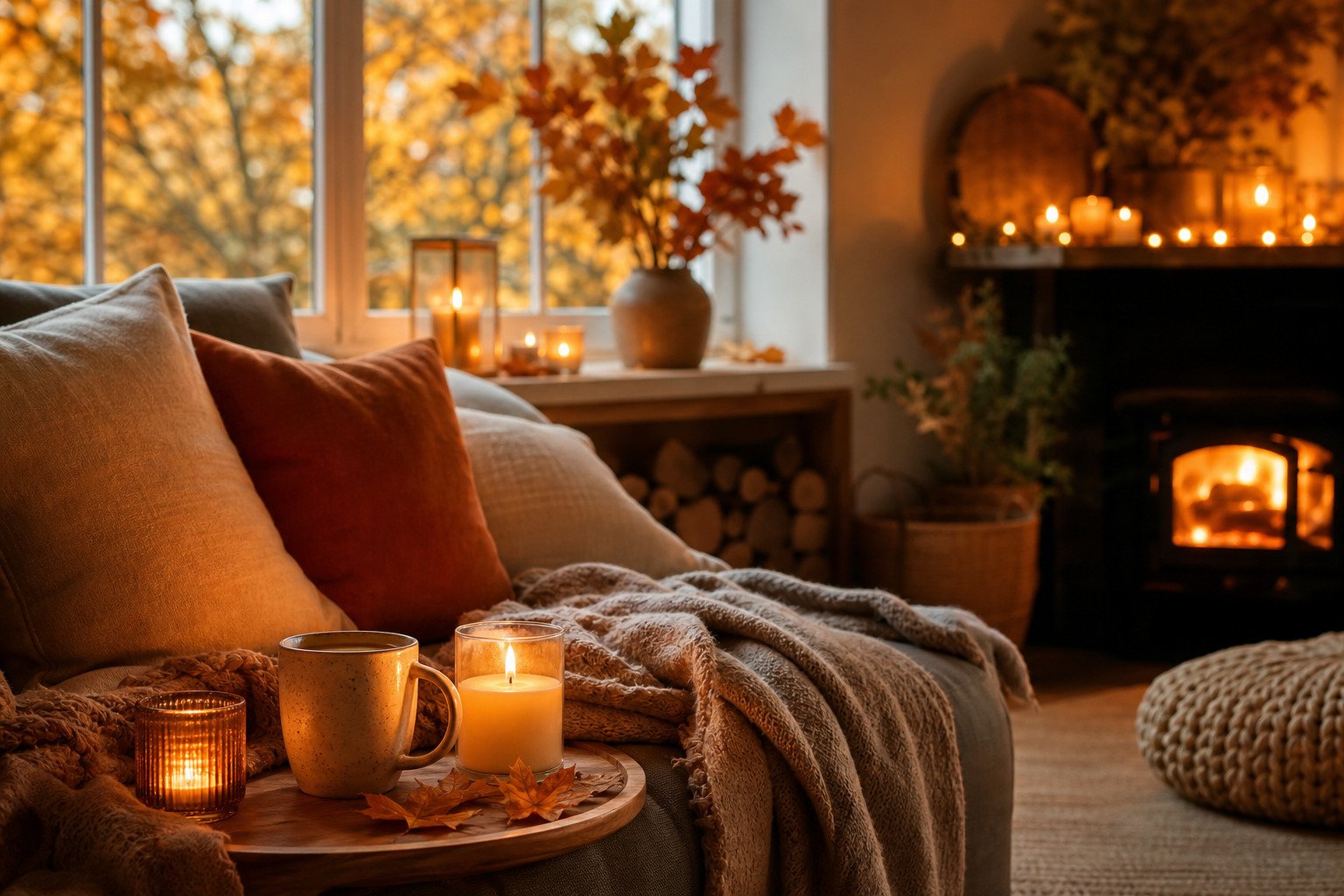
Gradually Layer Back In Cozy Elements
Rather than doing one big seasonal switch, autumn is perfect for gradual changes that mirror the slowly dropping temperatures. Start by bringing out a few throw blankets in early fall, maybe just one per room. As weeks pass and it gets cooler, add more. Same with pillows. Begin with a couple of heavier texture pillows mixed with your summer ones, then slowly replace more as autumn progresses.
This gradual approach prevents that overwhelming feeling of having to completely redecorate overnight. It also lets you respond to actual temperature changes rather than just the calendar. Some years autumn stays warm longer. Other years, it gets cold fast. By layering gradually, you’re working with reality rather than against it. Plus, there’s something deeply satisfying about slowly cocooning your space as the season progresses.
Watch your lighting needs too. As days get shorter, you'll naturally start using lamps and candles earlier in the evening. Let this happen organically rather than sticking to summer lighting patterns just because it's not officially winter yet. If it's dark at 6 PM and you want to light candles, go for it. Autumn is about honoring what your body and space actually need rather than following rigid seasonal rules.
Celebrate Autumn’s Natural Abundance
Few seasons offer as much decorating material from nature as autumn. Take advantage of it. Collect colorful fallen leaves on walks and press a few to frame or scatter on tables. Gather acorns, interesting seed pods, or pretty stones to display in bowls or glass jars. Visit a farmers market or pumpkin patch and bring home gourds, small pumpkins, or decorative squash to cluster on mantels, shelves, or dining tables.
Branches with colorful leaves make stunning, free bouquets that last for weeks. Strip lower leaves so you can see the stems, then arrange in a simple vase. As leaves dry and curl, they take on different character rather than just looking dead. This acceptance of natural aging and change is very hygge. You're celebrating the whole lifecycle, not just the perfect moment.
Autumn's scents are amazing too. Bring them into your home through candles scented with apple, cinnamon, clove, or woodsy notes. Simmer a pot of water with cinnamon sticks, orange peels, and cloves on the stove for natural fragrance that also adds humidity to increasingly dry indoor air. Bake with autumn spices so your home smells like nutmeg, ginger, and cinnamon. These scents trigger cozy feelings and create that sense of warmth and welcome that hygge celebrates.
Embrace Autumn Activities and Rituals
Autumn practically begs for hygge activities. Apple picking, hiking to see fall colors, visiting pumpkin patches, or just taking evening walks to crunch through fallen leaves all combine the hygge values of being present, connecting with nature, and enjoying simple pleasures. Make these activities intentional rather than rushed. Pack a thermos of something warm to drink. Bring a blanket to sit on. Take your time and really experience what you’re doing.
Food rituals shift naturally in autumn. It's soup season, stew season, baking season. These aren't just meals, they're activities that warm your home and fill it with delicious smells while providing comfort food perfect for cooling weather. Make a big batch of chili or soup on Sunday to enjoy throughout the week. Bake an apple pie or batch of cookies. The process is as important as the result.
Create new autumn traditions or resurrect old ones. Maybe you pull out your favorite sweater on the first truly cold day and make it an event. Perhaps you designate one weekend in October for putting away summer and bringing out autumn decor, making it a fun ritual rather than a chore. Movie marathons with autumn themes, reading by the window while leaves fall, or hosting friends for a casual harvest dinner all embody that autumn hygge spirit of transition, gratitude, and cozy connection.
Making Seasonal Transitions Easy and Enjoyable
The idea of switching your home’s look four times a year might sound exhausting. Who has time for that? But here’s the secret: seasonal hygge transitions don’t have to be big productions. With smart organization and a focus on small, meaningful changes, you can shift your home’s feeling to match the seasons without it becoming another stressful item on your to-do list. The key is setting up systems that make seasonal changes feel natural and even enjoyable rather than overwhelming.
Organize Seasonal Items for Easy Access
How you store seasonal items makes all the difference in whether you'll actually use them. Instead of throwing everything into random boxes in the basement, create a simple organizational system. Use clear plastic bins labeled by season so you can see what's inside without opening them. Within each bin, group similar items together—all autumn candles in one bag, spring throw pillow covers in another.
Store these bins somewhere accessible, not buried in the back of a closet you never open. Even if it means dedicating a closet shelf or section of your basement to seasonal items, having them easy to reach means you’ll actually swap things out regularly. If getting to your seasonal stuff requires moving ten other boxes and climbing on a ladder, you probably won’t do it.
Take photos of arrangements you loved so you can recreate them next year without starting from scratch. Keep a simple list in each bin noting what’s inside. This saves time and helps you remember what you have so you don’t buy duplicates. When putting away seasonal items, purge anything you didn’t use or love. If that autumn wreath sat untouched all season, it’s time to let it go.
Focus on Small Changes That Make Big Impact
You don't need to redecorate your entire home to acknowledge the changing seasons. Small, strategic changes create surprisingly big shifts in how your space feels. Swapping throw pillow covers takes five minutes but completely changes a room's vibe. Switching out the artwork or photos displayed on one wall costs nothing but makes your space feel fresh.
Focus on high-impact areas first. Your main living space, your bedroom, and your entryway are the places you experience most. Making seasonal shifts in these areas gives you the most return on effort. Less frequented rooms can stay more neutral year-round. This targeted approach means you’re not trying to seasonally transform your entire house, just the parts that matter most to your daily experience.
Natural elements do a lot of heavy lifting for seasonal changes. Bringing in branches that reflect the current season, switching what flowers you display, or changing items in a bowl on your coffee table from seashells in summer to pinecones in winter creates seasonal feeling without requiring storage or big purchases. These natural elements are often free and can be composted when you’re done.
Create a Seasonal Rotation Routine
Rather than waiting until you can't stand looking at your summer stuff one more day in October, create a loose routine for seasonal transitions. This doesn't mean marking exact dates on your calendar, but having a general framework helps. Maybe you know you'll transition to autumn mode sometime in late September or early October. That mental marker means you're not caught off guard when the mood strikes.
Make the actual transition process enjoyable rather than treating it as a chore. Put on music, make a nice beverage, and approach it as a chance to refresh your space. Involve family members if you have them. Even kids can help swap out pillow covers or decide where to put decorations. When the process itself feels good, you’ll be more likely to do it regularly.
Don’t aim for perfection or completion in one day. It’s fine if your seasonal transition happens over a week or two. Maybe you swap textiles one weekend and deal with decorative items the next. This gradual approach is less overwhelming and lets you live with changes to make sure they feel right. The goal is a home that feels connected to the season, not winning an award for fastest decorator.