The Hygge Handbook: Decorate Your Way to Comfort, Happiness, and Well-Being
Now that we’ve covered your main living spaces, let’s talk about the core elements that can transform any room in your home into a hygge haven. These are the building blocks you’ll use throughout your entire space, creating a cohesive feeling of warmth and comfort that flows from room to room.
Think of this chapter as your hygge toolkit. We’re going to break down the essential components that make hygge design work, from the foundational color palettes that create calm to the specific materials that add authentic coziness. Whether you’re redesigning your entire home or just want to add more hygge to your current space, understanding these core elements will guide every decision you make.
First up, we need to talk about color. Hygge spaces almost always feature a specific range of hues, and there's solid psychology behind why these colors make us feel so comfortable. We're talking about warm neutrals, soft whites, gentle grays, and muted earth tones. But don't worry, this doesn't mean your home needs to look boring or bland. We'll explore how to use these foundational colors as a canvas and add personality through accent colors and textures.
Natural materials are absolutely fundamental to creating authentic hygge spaces. Wood, wool, linen, cotton, leather, stone… these materials connect us to nature and add a tactile quality that synthetic alternatives simply can’t match. In this section, you’ll learn which materials to prioritize, how to incorporate them naturally without forcing a specific aesthetic, and why investing in quality natural materials often saves money in the long run.
Lighting is where hygge truly comes alive, and we’re going to spend significant time on this topic. The Danes have practically perfected the art of atmospheric lighting, and for good reason. The right lighting can completely transform a space from sterile to sanctuary in seconds. We’ll cover everything from the famous hygge candles to strategic lamp placement, dimmer switches, and creating layers of light that work for different times of day and activities.
Candles deserve their own deep discussion because they’re so integral to hygge culture. We’re not just talking about having a few candles around. We’re talking about understanding which types create the best ambiance, how to use them safely throughout your home, and yes, alternatives for those times when open flames aren’t practical. You’ll learn about battery-operated options that don’t look cheap, LED candles that actually flicker realistically, and how many candles are enough versus too many.
Textiles and soft furnishings are what transform a house into a home, and hygge design takes this seriously. We’ll discuss the best fabrics for different purposes, how to layer textiles for maximum coziness, and practical tips for maintaining these materials. From throw blankets to curtains, rugs to cushions, you’ll learn how to choose pieces that look good, feel amazing, and actually get used rather than just taking up space.
Natural elements extend beyond materials to include bringing actual nature indoors. We’ll explore which plants thrive indoors and contribute to hygge atmosphere, how to incorporate natural objects like branches or stones without looking like you’re trying too hard, and the benefits of connecting with nature even when you’re inside your home.
Scent is an often-overlooked aspect of creating a hygge environment, but it’s incredibly powerful. We’ll discuss natural ways to make your home smell inviting, from essential oils to simmering spices, and how to avoid overwhelming artificial fragrances that can actually work against the peaceful atmosphere you’re trying to create.
Personal touches and meaningful objects are what make hygge personal rather than generic. You'll learn how to display items that tell your story, incorporate handmade elements, and create vignettes that feel intentional without looking staged. The goal is authenticity over perfection, and we'll talk about exactly how to achieve that balance.
Finally, we’ll address how to maintain hygge elements throughout different seasons. Hygge isn’t just for winter, though that’s when it gets the most attention. You’ll discover how to adapt these core elements for spring freshness, summer lightness, and autumn coziness, ensuring your home feels hygge year-round.
By the end of this chapter, you’ll have a comprehensive understanding of the essential building blocks that create hygge spaces. You’ll know exactly what to look for when shopping, how to prioritize your design decisions, and most importantly, how to use these elements in ways that feel authentic to your personal style and lifestyle needs.
The Hygge Color Palette: Creating Calm Through Color
Color might seem like a simple design choice, but it’s actually one of the most powerful tools you have for creating a hygge atmosphere. The colors you choose set the emotional tone of your entire space. Walk into a room painted in harsh whites and bright colors, and you’ll feel one way. Walk into a room with soft, warm neutrals, and you’ll immediately feel different. That’s not just personal preference. There’s actual science behind why certain colors make us feel calm, safe, and comfortable.
The hygge color palette isn’t about following strict rules or making your home look like every other Scandinavian-inspired space on Instagram. It’s about understanding which colors naturally promote relaxation and then using them in ways that feel right for you. Let’s break down exactly how to build a color scheme that supports the cozy, comfortable feeling you’re after.
The Foundation: Warm Neutrals and Why They Work
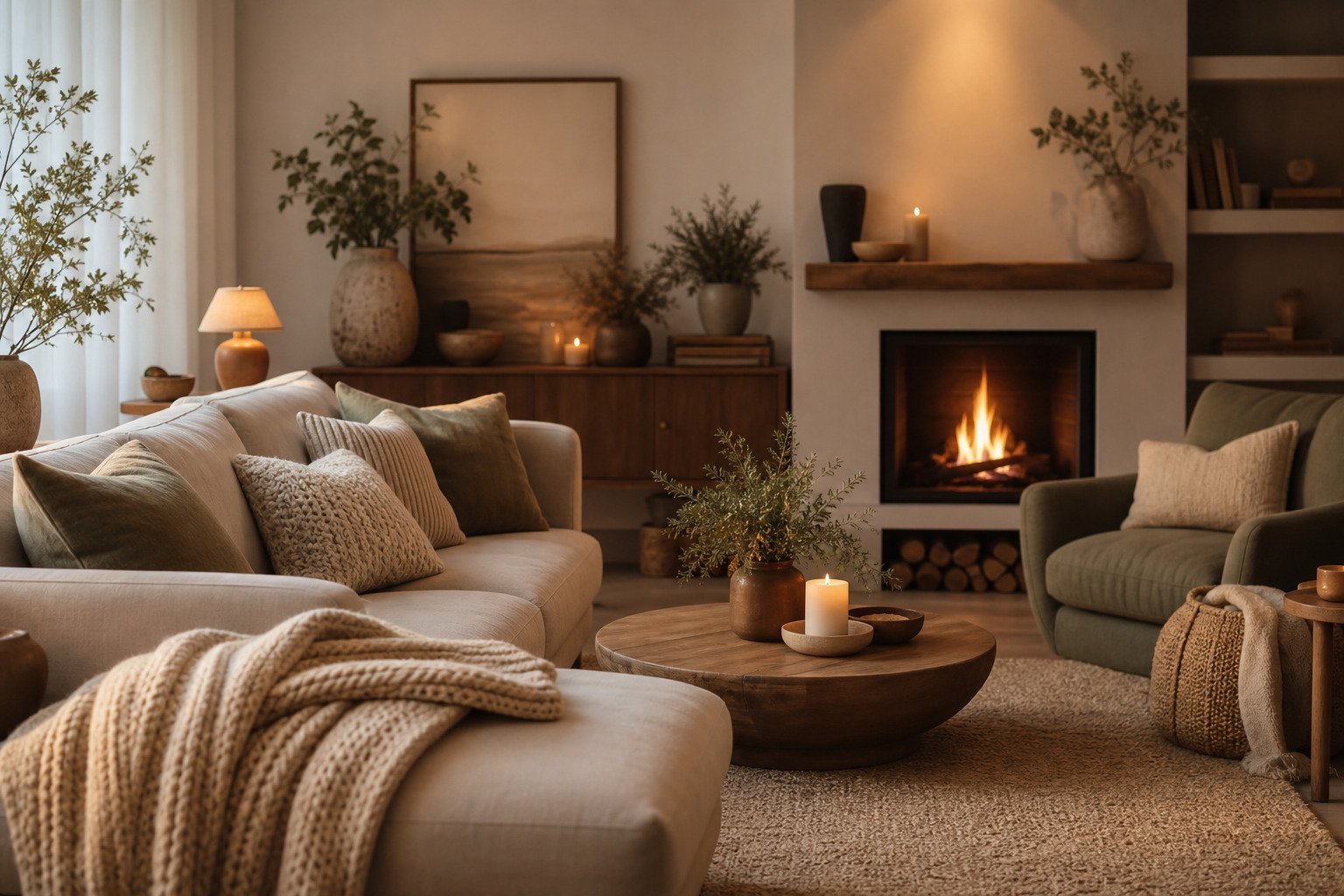
When we talk about warm neutrals, we’re looking at colors like cream, beige, warm gray, taupe, and soft off-whites. These aren’t the stark, cold whites you see in minimalist modern spaces. They’re colors with undertones of yellow, brown, or pink that make them feel inherently warmer. Think about the color of natural linen, unbleached cotton, or aged wood. These are the colors that should dominate your walls, larger furniture pieces, and foundational elements.
Why do these colors work so well for hygge? First, they’re easy on the eyes. They don’t demand attention or create visual stress. Second, they reflect light in a soft, diffused way rather than bouncing it around harshly. This creates that gentle, even lighting that makes spaces feel calm. Third, they serve as the perfect backdrop for adding texture and accent colors without overwhelming the senses.
When choosing your neutrals, pay attention to undertones. Hold paint samples or fabric swatches next to each other in the actual lighting of your room. A beige that looks perfect in the store might read too pink or too yellow in your space. Most hygge spaces lean toward warmer undertones rather than cool ones.
Accent Colors: Adding Personality Without Losing Peace
Just because your foundation is neutral doesn’t mean everything has to be beige. Accent colors are where you bring in personality and prevent your space from feeling bland. The key is choosing muted, nature-inspired versions of colors rather than bright, saturated ones. Think dusty rose instead of hot pink, sage green instead of lime, rust orange instead of traffic cone orange, and soft navy instead of electric blue.
These muted tones work because they’re complex. They have depth and subtlety that prevents them from being visually jarring. They also tend to appear in nature, which creates an unconscious connection to the natural world. When you’re selecting accent colors, imagine them softened by a layer of gray or white. That’s the level of saturation you’re aiming for.
How much accent color should you use? The general rule in hygge spaces is about 10 to 20 percent of your total color scheme. You might have cream walls, beige furniture, and warm gray flooring, then bring in dusty blue through throw pillows, soft terracotta through a ceramic vase, and deep green through plants.
Seasonal Color Shifts: Keeping It Fresh Year-Round
One of the smartest aspects of building a neutral foundation is that it allows you to shift your accent colors seasonally without repainting or buying new furniture. This keeps your space feeling fresh and connected to the time of year without requiring a complete redesign every few months. Your cream sofa and beige walls can work perfectly in both summer and winter when you swap out the accessories.
In spring and summer, lean toward lighter, airier accent colors. Soft whites, pale blues, gentle greens, and barely-there pinks create a feeling of freshness and lightness. Your textiles can be lighter in weight too, with linen and cotton taking center stage. The overall feeling should be breezy and open while still maintaining that hygge comfort.
As you move into fall and winter, introduce richer, deeper accent colors. Burgundy, forest green, chocolate brown, deep navy, and warm copper tones add coziness without being dark or heavy. The transition doesn't need to be dramatic. Even swapping out three or four key accessories can shift the entire feeling of a room from summer to fall.
Natural Materials: The Foundation of Authentic Hygge
If there’s one thing that separates a truly hygge space from one that just looks hygge in photos, it’s the use of natural materials. You can copy the color scheme and the layout perfectly, but if everything in your space is made of plastic, polyester, and particle board, it’s not going to feel right. There’s something about natural materials that our brains and bodies respond to on an almost instinctive level. They feel better to touch, they age beautifully rather than just looking worn out, and they connect us to the natural world even when we’re indoors.
But natural materials can be expensive, and not all of them are practical for every situation. Let’s talk about which materials matter most, where to invest your money, and how to incorporate natural elements in ways that actually work for real life.
Wood: The Heart of Hygge Design
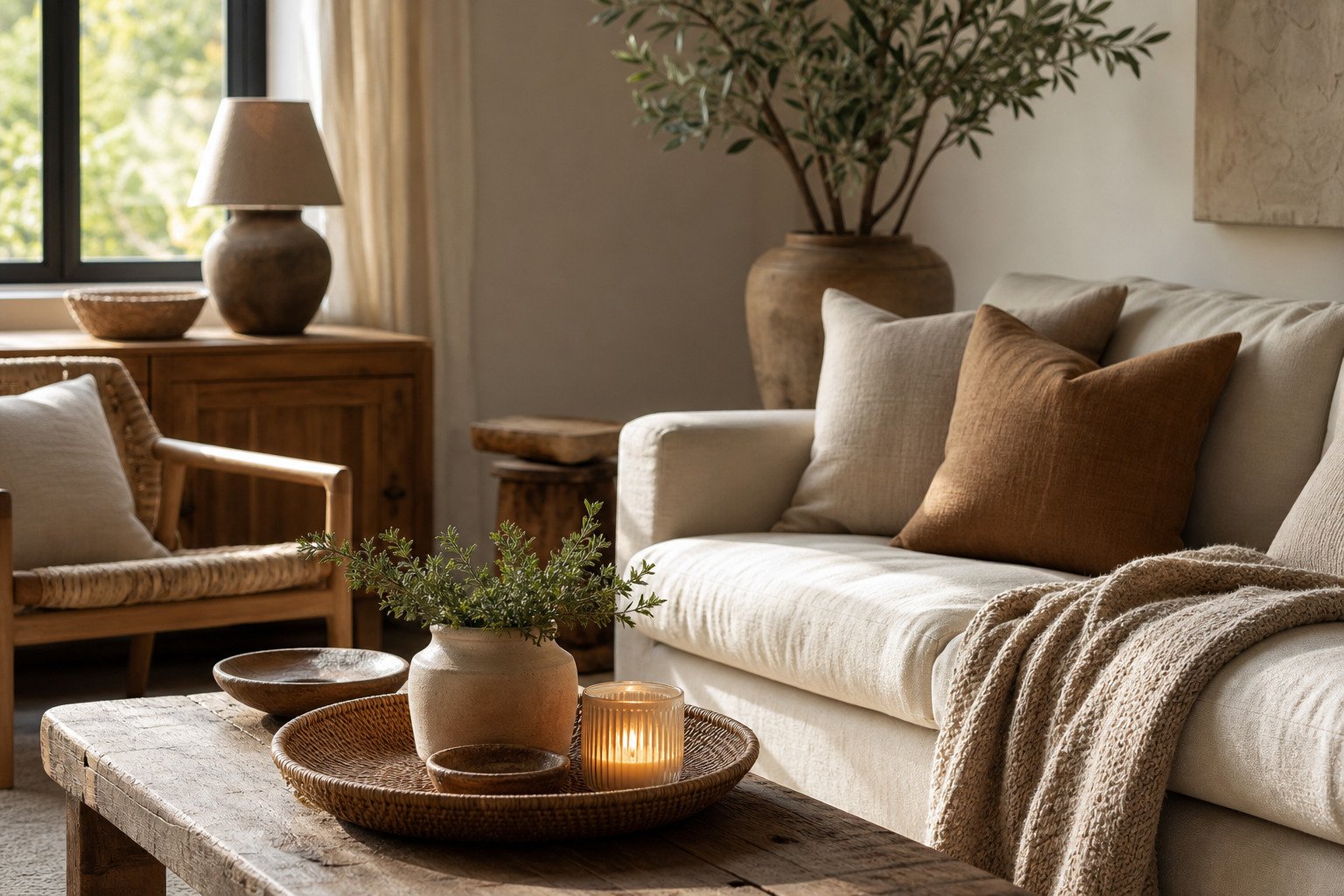
Wood is probably the single most important material in hygge design. It brings warmth, texture, and a connection to nature that nothing else can match. The good news is that wood comes in endless varieties and price points, so there’s always a way to incorporate it regardless of your budget.
For furniture, look for solid wood or wood veneer over engineered wood whenever possible. Yes, solid wood costs more upfront, but a solid wood dining table or bookshelf will outlast several cheap particle board versions. If solid wood isn't in your budget right now, prioritize it for pieces you touch frequently, like a coffee table or bedside table.
Don't feel like everything needs to match. In fact, mixing different wood tones adds depth and interest to a space. A light oak floor can work beautifully with medium walnut furniture and dark ebony picture frames. Beyond furniture, think about smaller wooden elements: cutting boards displayed on the kitchen counter, wooden bowls, picture frames, candle holders, and serving trays.
Textiles: Wool, Linen, and Cotton for Comfort
The fabrics you choose have a massive impact on how your space feels, both visually and physically. Natural fiber textiles like wool, linen, and cotton are breathable, durable, and have a tactile quality that synthetic fabrics can’t replicate. They also tend to look better as they age.
Wool is a hygge superstar, especially for blankets, rugs, and pillows. It's naturally temperature-regulating, so wool blankets keep you warm in winter without making you sweaty. Wool rugs are incredibly durable and naturally stain-resistant. Look for wool blends if pure wool feels too scratchy or isn't in your budget.
Linen brings a relaxed, lived-in quality that’s perfect for hygge. It wrinkles easily, but that’s part of its charm. Use linen for curtains, throw pillows, table linens, and bedding. Cotton is your everyday workhorse—affordable and easy to care for. For hygge purposes, look for cotton with texture or weight to it.
Stone, Ceramic, and Other Natural Elements
Beyond wood and textiles, other natural materials add variety and interest to your hygge space. Stone brings coolness and permanence. A stone countertop, stone coasters, or even just a collection of river rocks in a bowl adds a grounding element. Ceramic and stoneware dishes, vases, and decorative objects have a handmade quality that feels personal and authentic.
Leather is another natural material worth considering, especially for furniture that gets heavy use. A leather sofa or chair develops a patina over time that tells the story of your life. Cork is another interesting natural material gaining popularity for everything from flooring to bulletin boards.
The point isn't to turn your home into a natural history museum. It's about making conscious choices to include materials that have life and warmth. When you're shopping, touch things. Notice how they feel in your hands and how they make you feel.
Lighting and Candles: Creating Atmosphere and Ambiance
Lighting is where hygge magic really happens. You can have all the right furniture, colors, and materials, but if your lighting is wrong, the space will never feel truly cozy. The Danes have this figured out better than most cultures. They use about six pounds of candle wax per person per year, which should tell you something about how seriously they take lighting. But creating great hygge lighting isn’t just about buying more candles. It’s about understanding layers, sources, and how light affects mood.
Let’s break down exactly how to light your spaces in ways that support comfort, functionality, and that essential hygge feeling. We’ll cover both the romantic glow of candlelight and the practical aspects of lighting you need for actual daily life.
Layered Lighting: Multiple Sources for Maximum Coziness
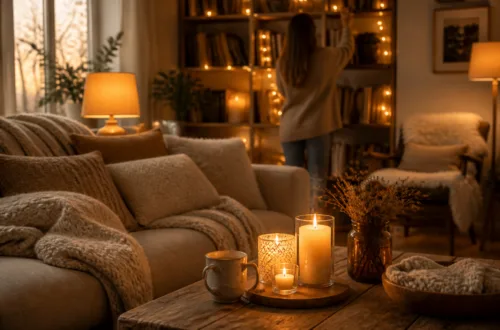
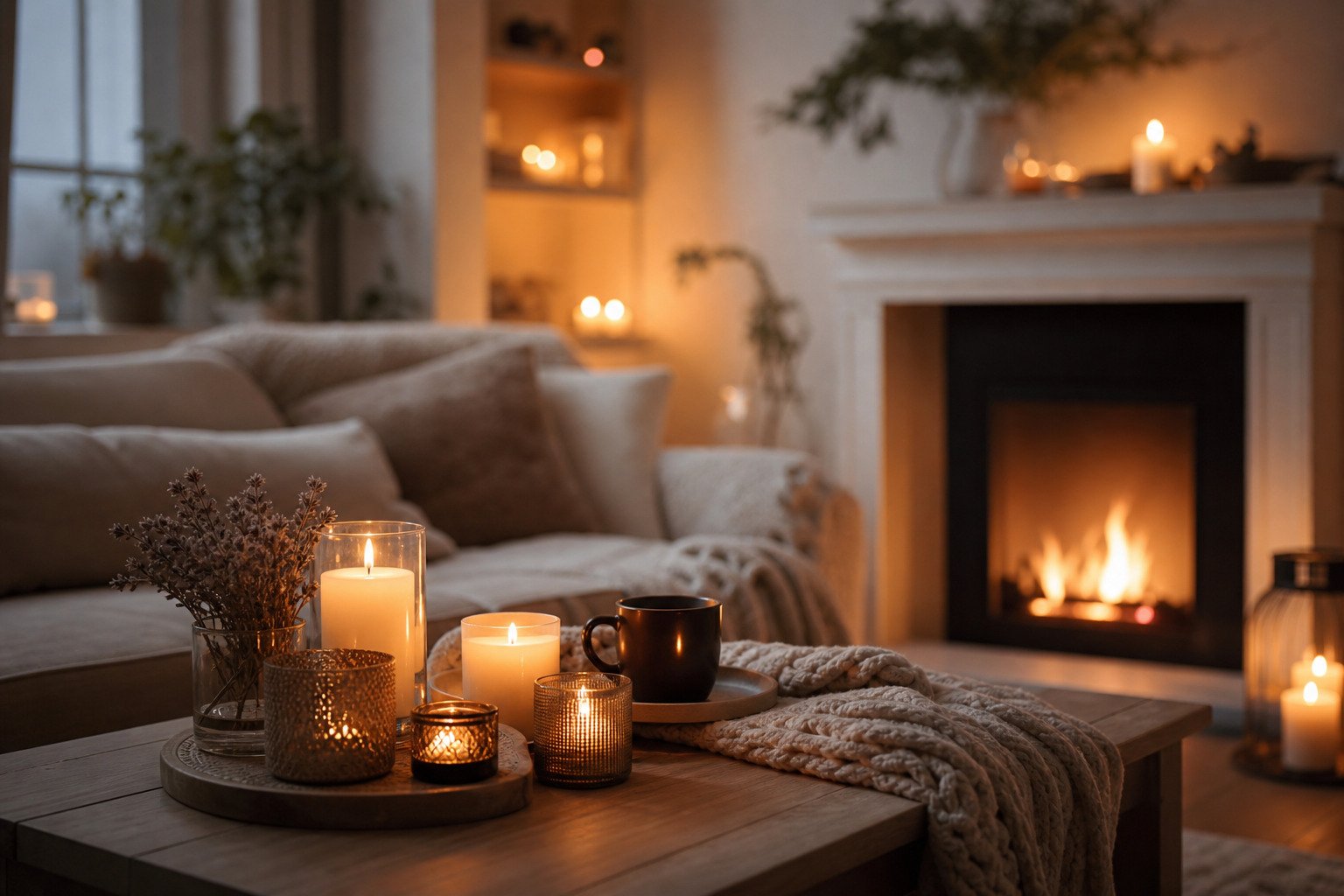
The single biggest mistake people make with lighting is relying on a single overhead fixture. That harsh, direct light from above is the enemy of hygge. It creates sharp shadows, highlights every flaw, and makes spaces feel institutional rather than homey. Instead, you want multiple sources of light at different heights and intensities. This is called layered lighting, and it's what creates that soft, enveloping glow that makes hygge spaces so inviting.
Start by thinking about three types of lighting: ambient, task, and accent. Ambient lighting is your general illumination, the overall glow of the room. Task lighting is focused light for specific activities like reading or cooking. Accent lighting highlights specific features or creates visual interest. In a hygge space, you need all three, but the balance shifts away from overhead ambient lighting toward more task and accent sources.
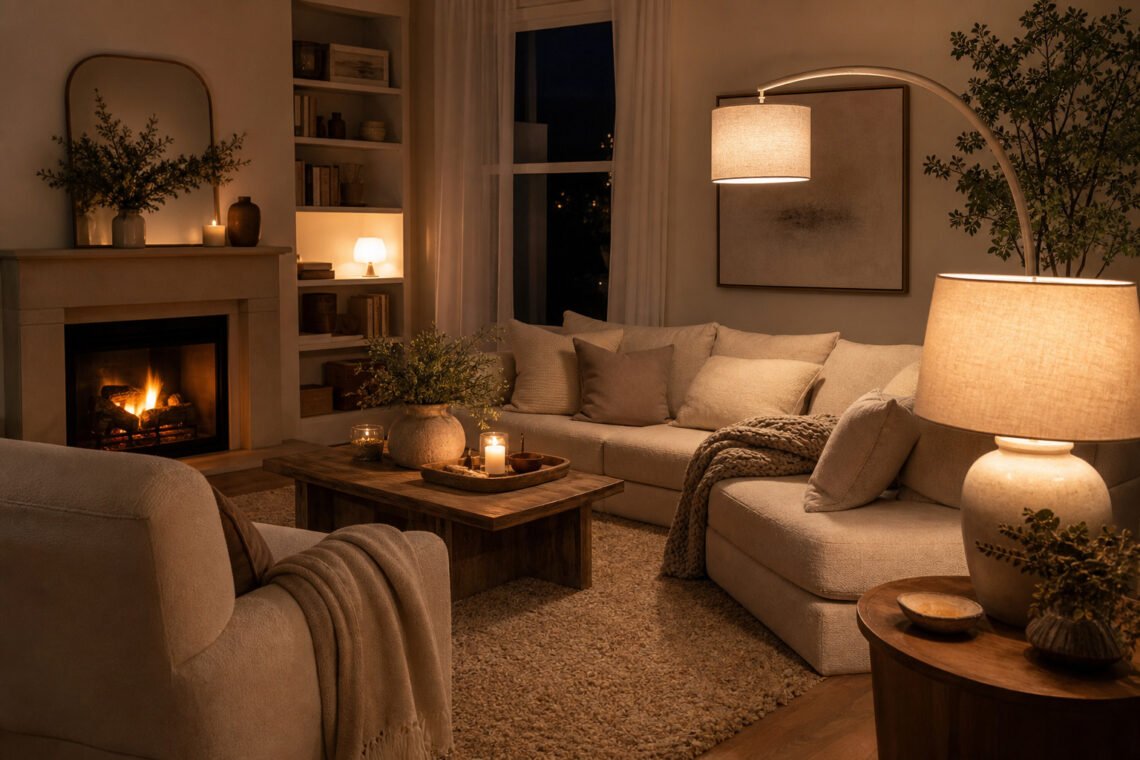
For ambient lighting, consider floor lamps, table lamps, and wall sconces rather than ceiling fixtures. If you do use overhead lights, put them on dimmer switches so you can control the intensity. Multiple smaller sources create this effect better than one large fixture. Three table lamps set on low creates better ambiance than one overhead light dimmed to the same total brightness.
The Art of Candle Placement and Use
Candles are non-negotiable in hygge design. Yes, you can create a cozy space without them, but why would you? The flickering light of candles does something to our brains. It slows us down, helps us relax, and creates instant atmosphere in a way that electric lights can’t match. But there’s definitely a right way and a wrong way to use candles in your space.
First, let's talk about quantity and placement. You want groups of candles rather than single candles scattered randomly. Three to five candles of varying heights on a coffee table creates a focal point. A row of tea lights along a windowsill adds gentle light without taking up space. Cluster candles on a tray, in a fireplace, or on a shelf. This grouping makes them feel intentional rather than haphazard.
Choose unscented or very lightly scented candles for spaces where you’ll have them burning frequently. Strong artificial fragrances can be overwhelming and give people headaches. If you want scent, use pure beeswax or soy candles with essential oils rather than synthetic fragrances. Safety matters too—use proper candle holders, never leave them unattended, and keep them away from flammable materials.
Strategic Use of Natural and Artificial Light
While we focus a lot on artificial lighting and candles, natural light is equally important for creating a hygge space that works throughout the day. The goal is to maximize natural light during daytime hours while having the flexibility to create that cozy glow in the evenings. This requires some thought about window treatments and room arrangement.
During the day, you want as much natural light as possible without glare or heat issues. Sheer curtains or light-filtering blinds let light in while maintaining privacy. If your space gets harsh direct sun, consider layering window treatments. Sheer panels for daytime and heavier curtains for evening provide flexibility. Position seating areas to take advantage of natural light for reading or other activities.
As evening approaches, you'll transition to your artificial lighting and candles. This is where having multiple light sources really pays off. Consider adding dimmer switches to every fixture you can. Don't forget about the color temperature of your bulbs—for hygge spaces, you want warm white bulbs (2700K to 3000K) rather than cool white or daylight bulbs.
Textiles and Soft Furnishings: Layering Comfort
If lighting creates the atmosphere of a hygge space, textiles create the physical comfort. These are the elements you actually touch and interact with every day. The throw blanket you grab during movie night, the pillow you lean against while reading, the rug under your feet when you get out of bed. Getting your textiles right makes the difference between a space that looks cozy and one that actually feels cozy.
The key to hygge textiles is layering. Not just piling things on randomly, but thoughtfully combining different textures, weights, and materials to create depth and inviting comfort. Let’s look at how to choose and arrange textiles throughout your space.
Throw Blankets and How to Use Them
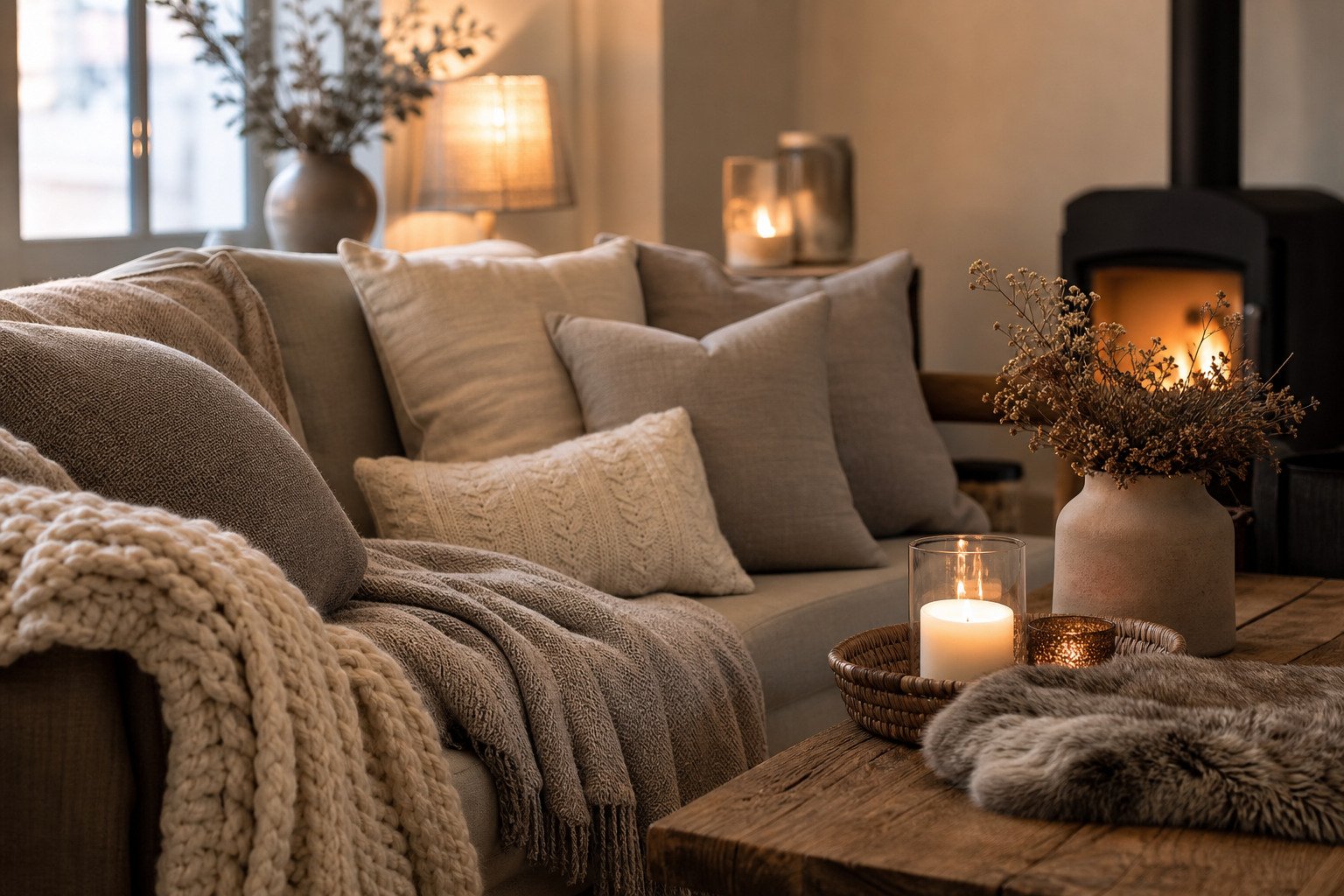
Throw blankets are probably the most iconic hygge element after candles. They’re practical, beautiful, and they instantly make any space look more inviting. But there’s more to using throw blankets than just tossing one over the back of your sofa. The material, weight, and placement all matter if you want them to actually get used rather than just looking decorative.
For material, you've got several good options. Wool and wool blends are warm, durable, and have a lovely weight to them. Chunky knit blankets made from thick wool or cotton yarn are incredibly popular right now for good reason. They're textural, cozy, and photograph beautifully. Just know that those super chunky knits can be heavy and warm, so they're best for colder months or air-conditioned spaces. Cotton or linen throws work better for warmer weather.
Size matters more than you might think. For a sofa, look for throws between 50 by 60 inches and 60 by 80 inches. For a reading chair, 50 by 60 inches is usually perfect. Keep them within reach of where you'll actually use them. Don't feel like you need to fold or arrange throws perfectly. Part of the hygge aesthetic is looking lived-in rather than staged.
Pillows: More Than Just Decoration
Pillows are where you can really play with texture and add personality to your space. But here’s the thing: hygge pillows need to be comfortable, not just pretty. Those super firm decorative pillows that you can’t actually lean on? Not hygge. You want pillows that invite you to sink in, get comfortable, and stay awhile.
For pillow fills, down and down alternative are your best bets. They're soft, moldable, and return to shape after use. Foam fill pillows can be too firm and don't have that sink-in quality. Cover materials should be touchable. Linen, cotton, wool, velvet, and knits all work beautifully. Mix textures within the same color family for visual interest without chaos.
How many pillows is enough? Generally, odd numbers work better visually. Three to five pillows on a standard sofa creates a full look without being overwhelming. But more important than the number is making sure at least some of those pillows are actually comfortable for lounging. The majority should be functional, not just decorative.
Rugs, Curtains, and Other Fabric Elements
Beyond blankets and pillows, other textile elements play crucial roles in creating a hygge space. Rugs define areas, add warmth underfoot, and help with acoustics by absorbing sound. Curtains soften windows, control light, and add a layer of coziness that blinds alone can’t provide.
For rugs, natural fibers work best for hygge spaces. Wool rugs are durable and soft, jute or sisal adds texture, and cotton rugs are affordable and washable. Layer rugs if you want to add interest. Make sure your rugs are large enough for the space. In living rooms, all front furniture legs should at least touch the rug.
Curtains should be long enough to either touch the floor or puddle slightly. Choose curtain materials based on function. Heavy linen or cotton canvas provides privacy and blocks light for bedrooms. Think about textile opportunities in every room: kitchen towels in linen, cloth napkins instead of paper, fabric storage baskets. These small choices add up to create a space wrapped in softness and comfort.