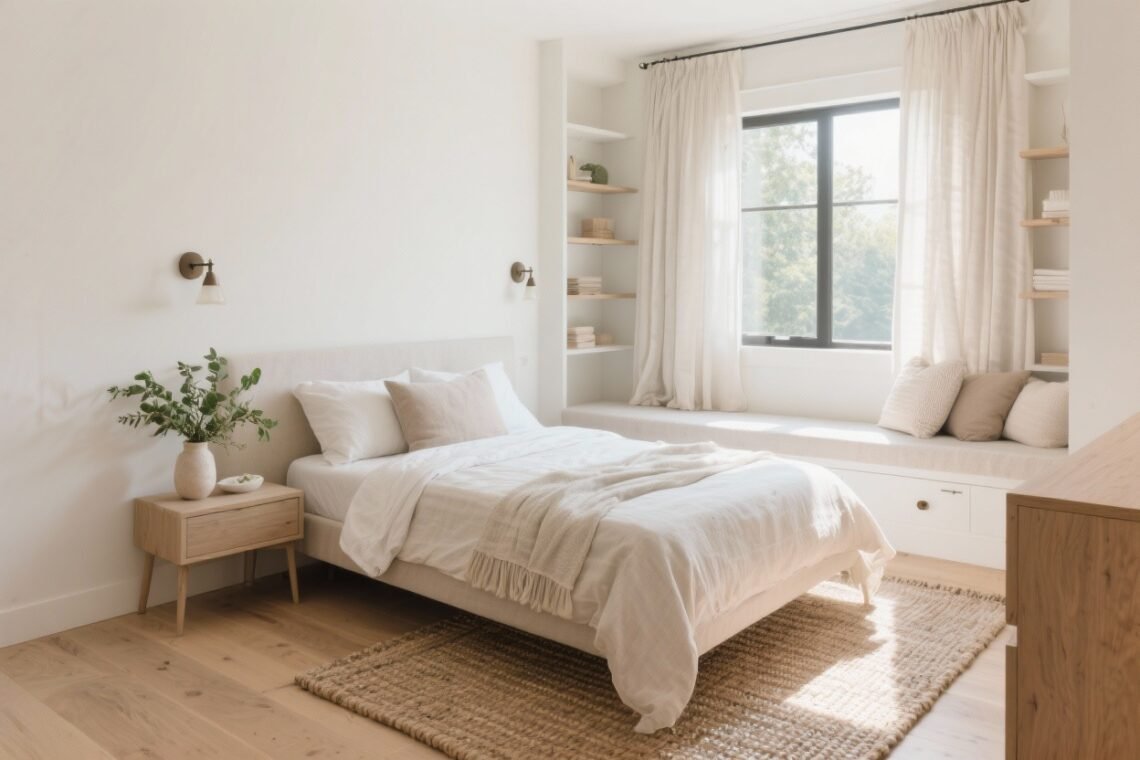
Your small bedroom isn’t a problem—it’s a design opportunity. Think cozy boutique hotel vibes, not dorm room chaos. With a few smart moves, you can style a space that feels bigger, calmer, and way more intentional. Ready to level up your tiny sleep zone?
1. Edit Ruthlessly, Then Style What’s Left

Let’s start with the unsexy part: editing. Because in a small room, clutter is the enemy. Keep only what you love or actually use. Everything else? Donate, store, or relocate.
Make Space Before You Make It Cute
- One-in, one-out rule: Bring in a new throw pillow? Another one has to go. FYI, it works.
- Hide the daily mess: Add a lidded basket for chargers, books, and rogue socks so surfaces stay clean.
- Choose fewer, larger decor pieces: One bold vase beats five tiny trinkets that read as clutter.
Once you’ve cleared the visual noise, your room instantly feels bigger—and you haven’t even moved a wall.
2. Choose Furniture That Pulls Double Duty

In small bedrooms, furniture has to work overtime. If it doesn’t store, fold, or multitask, it’s not earning its floor space. Go for sleek silhouettes with hidden perks.
Smart Picks That Do More
- Storage bed: Drawers underneath are gold for off-season clothes, extra bedding, or gym gear.
- Floating nightstands: They free floor space so your room looks lighter and easier to clean.
- Desk-nightstand hybrid: A narrow console can be both a workspace and bedside table. Win.
- Ottomans with lids: Seating plus storage for blankets and winter slippers, IMO the coziest combo.
Think airplane cabin energy: everything has a place, and nothing is bulky for no reason.
3. Scale, Height, and Layout: The Space-Expanding Trifecta

Good layout is half the battle. Don’t cram your bed against a wall unless you have to. Centering it (even slightly) creates symmetry and a more polished vibe.
Use Visual Tricks To “Raise” the Room
- Lift the eye: Hang curtains high and wide—just below the ceiling and beyond the window frame—to make windows look larger.
- Low-profile bed: A lower headboard can make ceilings feel taller. Keep the frame slim.
- Scale matters: Choose a bed that actually fits. A queen can work, but if it’s tight, size down to a full and gain walking space.
Mirror placement also matters. A tall mirror across from a window bounces light and creates depth. It’s the oldest small-space trick because it works.
4. Work a Calm Color Story (With Strategic Contrast)
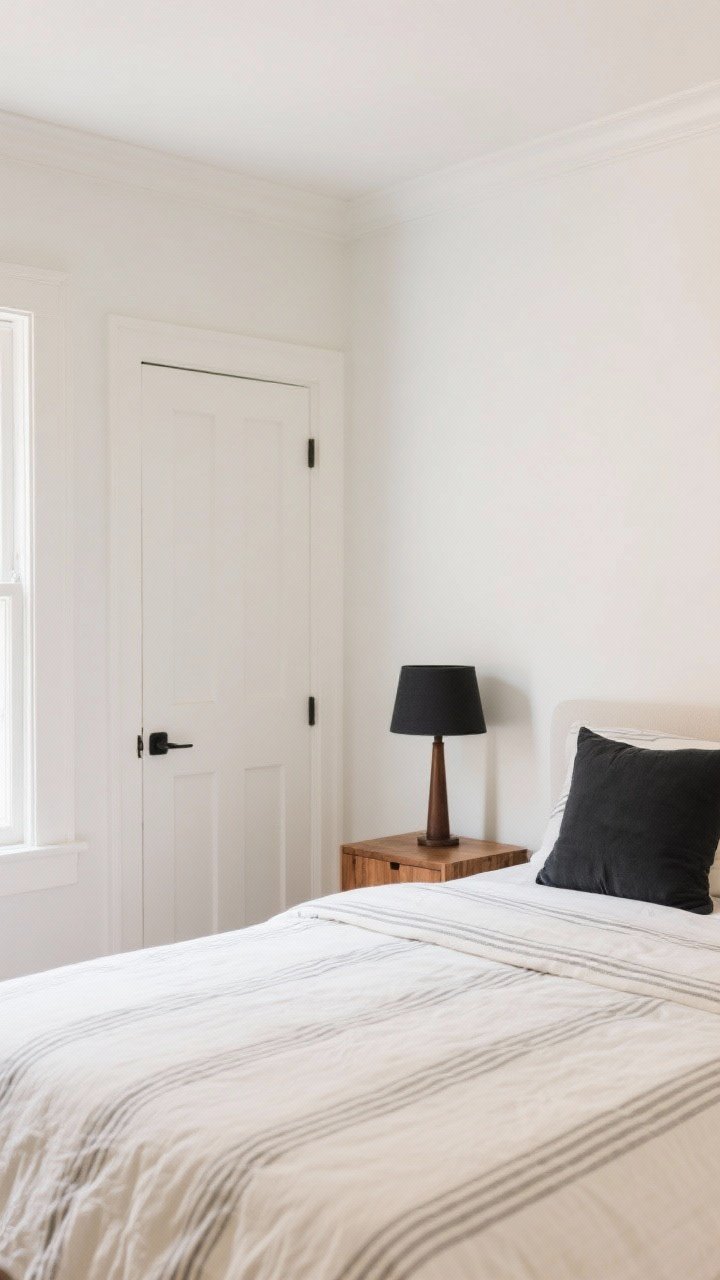
Color can make or break a small bedroom. Go for a serene palette—think soft whites, warm taupes, misty blues, or pale sage—and add contrast with accents.
Paint and Palette Tips
- Wrap the room: Paint walls, doors, and trim the same color to blur edges and visually expand the space.
- Choose a tight palette: 3–4 colors max. Example: warm white, sand, charcoal, and oak wood tones.
- Create depth: Add a deeper tone in small doses—like a charcoal pillow or dark wood lamp—to keep things from feeling flat.
- Ceiling love: A very pale version of your wall color on the ceiling can make it feel higher and cohesive.
Don’t fear pattern—just keep it tight and repeated. A subtle stripe or micro-floral in bedding or curtains adds personality without visual chaos.
5. Layer Textures Like a Boutique Hotel
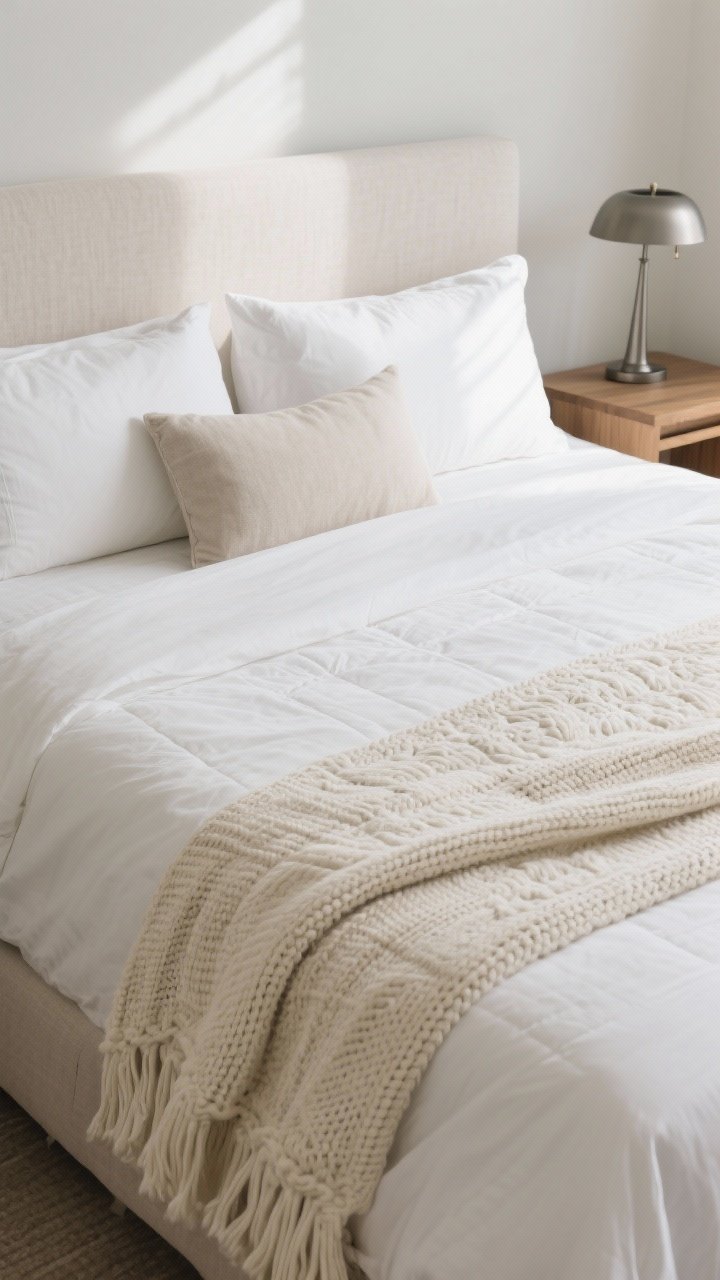
Small bedrooms shine when they feel tactile and cozy. If color is quiet, texture can do the talking. Mix soft, nubby, and smooth finishes for richer style.
Texture Formula That Always Works
- Crisp base: Start with smooth cotton or linen sheets as your foundation.
- Cozy middle: Add a quilt or lightweight coverlet for dimension without bulk.
- Top layer: A folded throw at the foot of the bed—chunky knit in winter, gauzy weave in summer.
- Contrast materials: Pair a linen headboard with a matte metal lamp and a wood nightstand for balance.
Keep pillows edited: two sleeping pillows, two euro shams, and one lumbar. That’s it. Any more and it’s a workout, not a bed.
6. Master Lighting Like a Stylist

Lighting is the secret sauce. You want layers, not a single overhead spotlight. Think mood, functionality, and a little glam.
Layered Lighting, Zero Clutter
- Wall sconces or plug-in sconces: Free up the nightstand and add hotel vibes. Look for adjustable arms for reading.
- Soft overhead glow: Swap harsh bulbs for warm white LEDs (2700–3000K) and add a dimmer. Game changer.
- Accent lighting: A petite table lamp or LED strip under a floating shelf adds depth without taking space.
- Reflect light: Place a mirror near, not opposite, a light source to bounce glow around the room.
Pro tip: match metal finishes across lamps and hardware for a cohesive look—mix no more than two finishes for calm energy.
7. Style Smart: Art, Rugs, and Those Final Touches
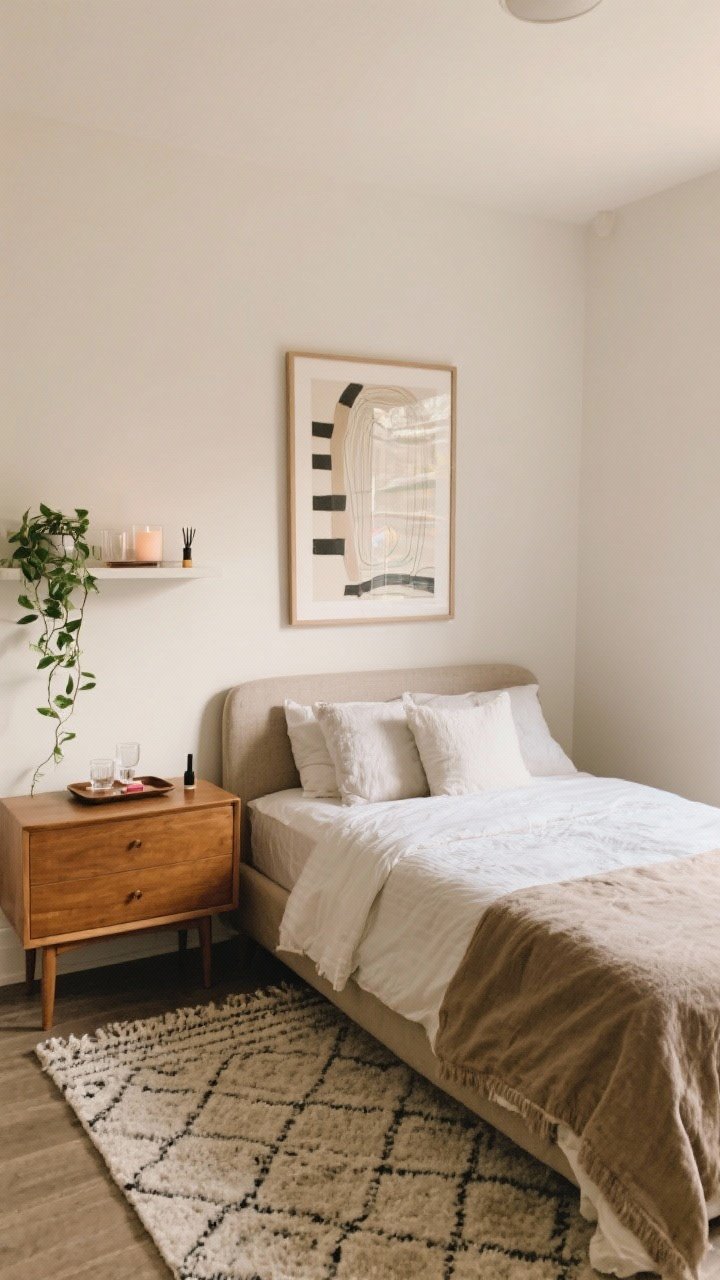
This is where your personality comes in. Keep it curated, not crowded. Choose a few standout pieces and let them breathe.
Art That Fits the Space
- Go big or grouped: One larger piece above the headboard feels calmer than a bunch of tiny frames.
- Vertical emphasis: Tall art or a stacked pair draws the eye up and expands the room visually.
- Lean art: If you have a shelf or dresser, leaning a frame adds dimension without more holes in the wall.
Rugs That Make the Room
- Size up: A too-small rug shrinks the room. Aim for 6×9 under a full, 8×10 under a queen where possible.
- Layer smart: If you have wall-to-wall carpet, add a flatweave rug on top for texture and a defined “zone.”
- Pattern choice: Subtle patterns hide dust and add interest without overwhelming the eye.
Finishing Touches That Matter
- Greenery: A small plant or branch brings life. Try a trailing pothos on a shelf.
- Tray on the nightstand: Corral glasses, a candle, and lip balm so it looks styled, not messy.
- Scent story: Linen spray or a diffuser makes your small space feel luxe. Tiny room, big vibes.
Final FYI: leave a little empty space. A blank wall or clean corner makes the whole room feel calmer and larger.
You don’t need a giant bedroom to get giant style. With smart furniture, a tight color palette, layered lighting, and just the right textures, your small space can feel intentional, airy, and seriously chic. Now go fluff that duvet like you mean it—and enjoy your mini sanctuary.