The Hygge Handbook: Decorate Your Way to Comfort, Happiness, and Well-Being
If your bedroom is currently just a place where you collapse at night and frantically get ready in the morning, we’re about to change that. Your bedroom should be your personal retreat, a space so peaceful and inviting that you actually look forward to bedtime and wake up feeling refreshed rather than hitting snooze five times.
The Danes take their bedrooms seriously, and for good reason. Quality sleep is fundamental to well-being, and your environment plays a huge role in how well you rest. But hygge bedroom design goes beyond just promoting good sleep. It’s about creating a space that feels like a sanctuary from the moment you walk in until you drift off, and again when you wake up to start your day.
In this chapter, we’re going to transform your bedroom into a true hygge haven. We’ll explore everything from choosing the right bed linens (and yes, this matters more than you think) to creating the perfect lighting for both relaxation and functionality. You’ll learn how to design a space that helps your mind and body transition into sleep mode naturally, without relying solely on melatonin supplements or boring yourself with your phone.
One of the biggest challenges in modern bedrooms is the temptation to use them as multipurpose spaces, especially if you’re living in a smaller home or apartment. We’ll address how to maintain hygge principles even if your bedroom doubles as a home office, workout space, or all of the above. The key is creating clear zones and knowing when to establish boundaries that protect your sleep sanctuary.
Color plays a crucial role in bedroom hygge, and we'll discuss why certain palettes promote relaxation while others might be keeping you awake. You'll discover how to choose colors that resonate with you personally while still supporting the room's primary purpose: rest and rejuvenation. We're not talking about following strict rules but understanding how color affects your mood and sleep quality.
Texture is just as important in the bedroom as it is in your living room, maybe even more so. We’ll talk about layering bed linens, choosing the right pillows (and how many you actually need versus how many look good), and incorporating soft materials throughout the space. From your rug choice to your window treatments, every texture contributes to that overall sense of cozy comfort.
The bedroom is also where you’ll want to be most mindful about eliminating distractions and creating a space that truly supports rest. We’ll discuss practical strategies for managing technology in the bedroom, creating bedside setups that work for your lifestyle, and incorporating storage solutions that keep clutter at bay without requiring you to become a minimalism extremist.
Natural elements and materials take center stage in hygge bedroom design. You’ll learn how to bring nature indoors through thoughtful material choices, appropriate plants that won’t disrupt your sleep, and subtle nods to the natural world that create a grounding effect. Wood, linen, cotton, and wool become your best friends in creating an authentic hygge bedroom.
We’ll also explore the often-overlooked aspects of bedroom hygge, like proper ventilation, temperature control, and the importance of darkness for quality sleep. These practical considerations might not be as exciting as choosing throw pillows, but they’re essential for creating a space that genuinely supports your well-being.
Personal touches make your bedroom uniquely yours, and we'll discuss how to incorporate meaningful items, photos, and decorative elements without creating visual clutter that interferes with the room's peaceful vibe. It's about finding that sweet spot between personality and serenity.
By the time you finish this chapter, you’ll understand exactly how to create a bedroom that serves as your personal sanctuary. You’ll have practical strategies for improving your sleep environment, ideas for making your space more inviting, and the confidence to design a bedroom that supports both restful nights and peaceful mornings. Your bedroom transformation starts here.
Creating the Foundation: Bed, Linens, and Layering for Ultimate Comfort
Your bed is the star of your bedroom, and in hygge design, it’s treated with the respect it deserves. This isn’t about spending thousands on a luxury mattress (though if you can, great), but rather about creating layers of comfort that make you actually excited to climb into bed each night. The Danes understand that a well-made bed with quality linens isn’t just about aesthetics. It’s about creating a sensory experience that signals to your body and mind that it’s time to relax and recharge.
Choosing Natural Fiber Bedding That Breathes
When it comes to sheets and duvet covers, natural fibers are your best friends for hygge comfort. Cotton, linen, and bamboo all breathe beautifully, helping regulate your body temperature throughout the night. Linen sheets might feel a bit rough at first, but they soften with each wash and become incredibly cozy over time. They’re also naturally moisture-wicking, which means you won’t wake up feeling clammy on warmer nights.
Cotton percale offers that crisp, hotel-like feel, while cotton sateen provides a softer, slightly warmer option for cooler months. The key is avoiding synthetic materials that trap heat and moisture. Your sheets should feel good against your skin the moment you slip into bed, not after you’ve adjusted to them for ten minutes.
Thread count matters less than you think, by the way. Anything between 200 and 400 thread count in quality cotton or linen will feel fantastic. Don’t fall for marketing hype about thread counts in the thousands. Those sheets are often made with twisted fibers that don’t actually feel better.
The Art of Layering for Year-Round Comfort
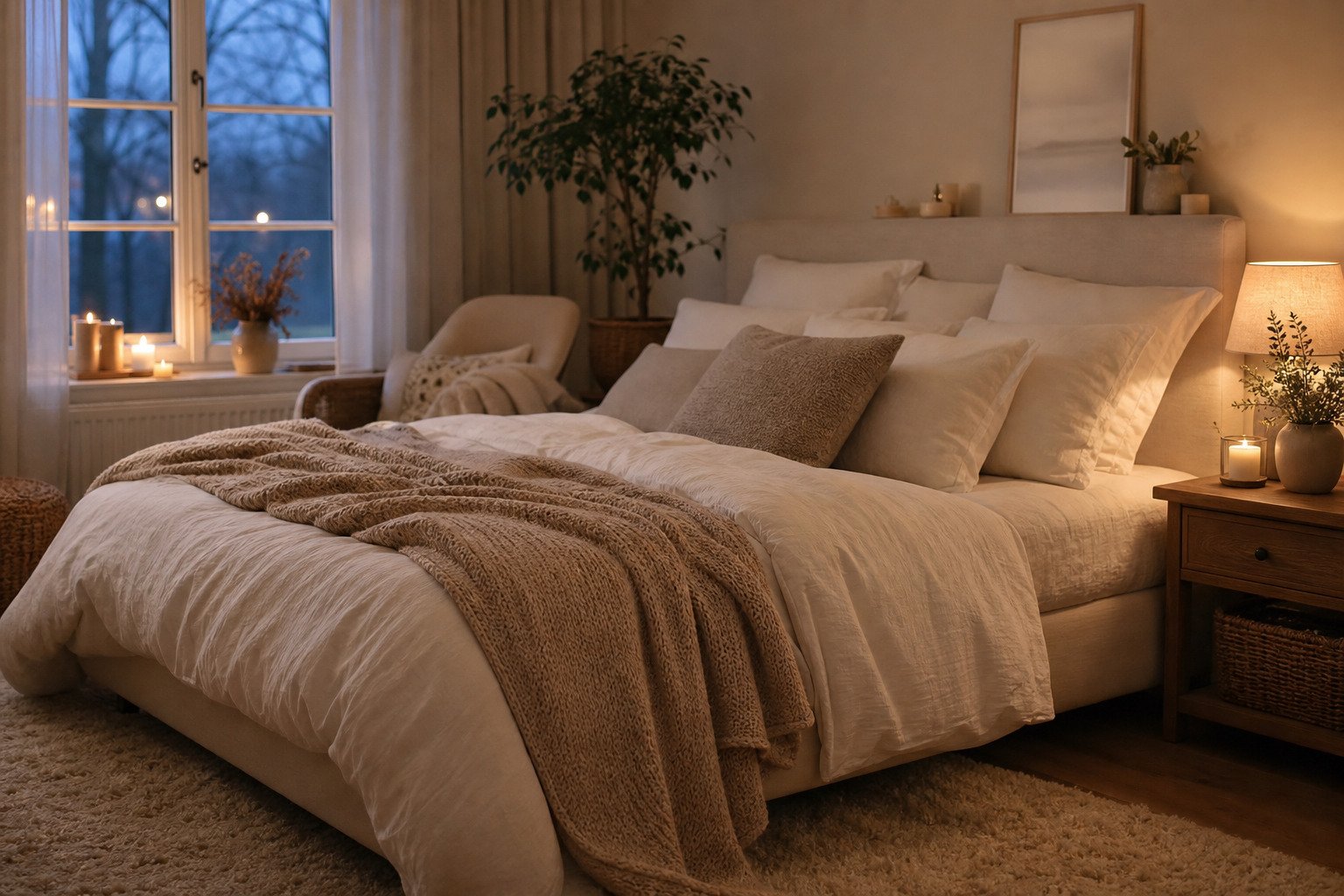
Hygge bedding is all about layers you can adjust based on the season and your personal comfort needs. Start with your fitted sheet, then add a flat sheet if you like one (many people are ditching them these days, and that's fine). Next comes your duvet with a washable cover. Choose a duvet with natural fill like down or down alternative that you can use year-round, then add a lightweight cotton blanket or quilt for extra warmth when needed.
This layering approach means you can kick off or pull on layers throughout the night without waking up your partner or disrupting your sleep. During summer, you might sleep with just the top sheet and a light cotton blanket. In winter, pile on that duvet and maybe add a chunky knit throw at the foot of the bed.
The texture variety also adds visual interest and that signature hygge coziness. Think about adding a linen duvet cover in a soft, muted color like sand, dusty blue, or warm gray. These colors feel calming and won’t compete with the rest of your bedroom design.
Pillows: Finding Your Perfect Sleep Setup
Here’s where things get personal, because pillow preferences vary wildly from person to person. The hygge approach is to have what you actually need for comfortable sleep, not what looks good in a styled photo. You might need just one pillow, or you might be a three-pillow person. That’s completely fine. The important thing is choosing pillows with quality fill that supports your neck and sleeping position properly.
Side sleepers typically need firmer, higher loft pillows. Back sleepers do better with medium support. Stomach sleepers need something flatter. Natural fill options like down or down alternative are great because they conform to your head and neck without feeling too firm.
Consider having a couple of decorative pillows in soft fabrics like velvet or linen, but keep them minimal. Two or three accent pillows maximum. You should be able to make your bed in under two minutes without needing a tutorial. Those beds with seventeen pillows might look impressive, but they're not practical or particularly hygge. Storage is also key. Where do those decorative pillows go at night? Have a designated spot, like a bedroom bench or a basket, so they're not ending up on the floor.
Lighting Your Bedroom for Evening Relaxation and Gentle Mornings
Lighting can make or break the hygge vibe in your bedroom, and it’s one area where many people get it wrong. Overhead lighting alone creates a harsh, uninviting atmosphere that doesn’t support relaxation or quality sleep. The goal is to create multiple lighting sources at different levels, giving you control over the ambiance throughout your evening routine and when you wake up. Think about how your bedroom feels in natural morning light versus under a bright ceiling fixture at 10 PM. That difference is what we’re trying to manage with intentional lighting design.
Layering Light Sources for Maximum Flexibility
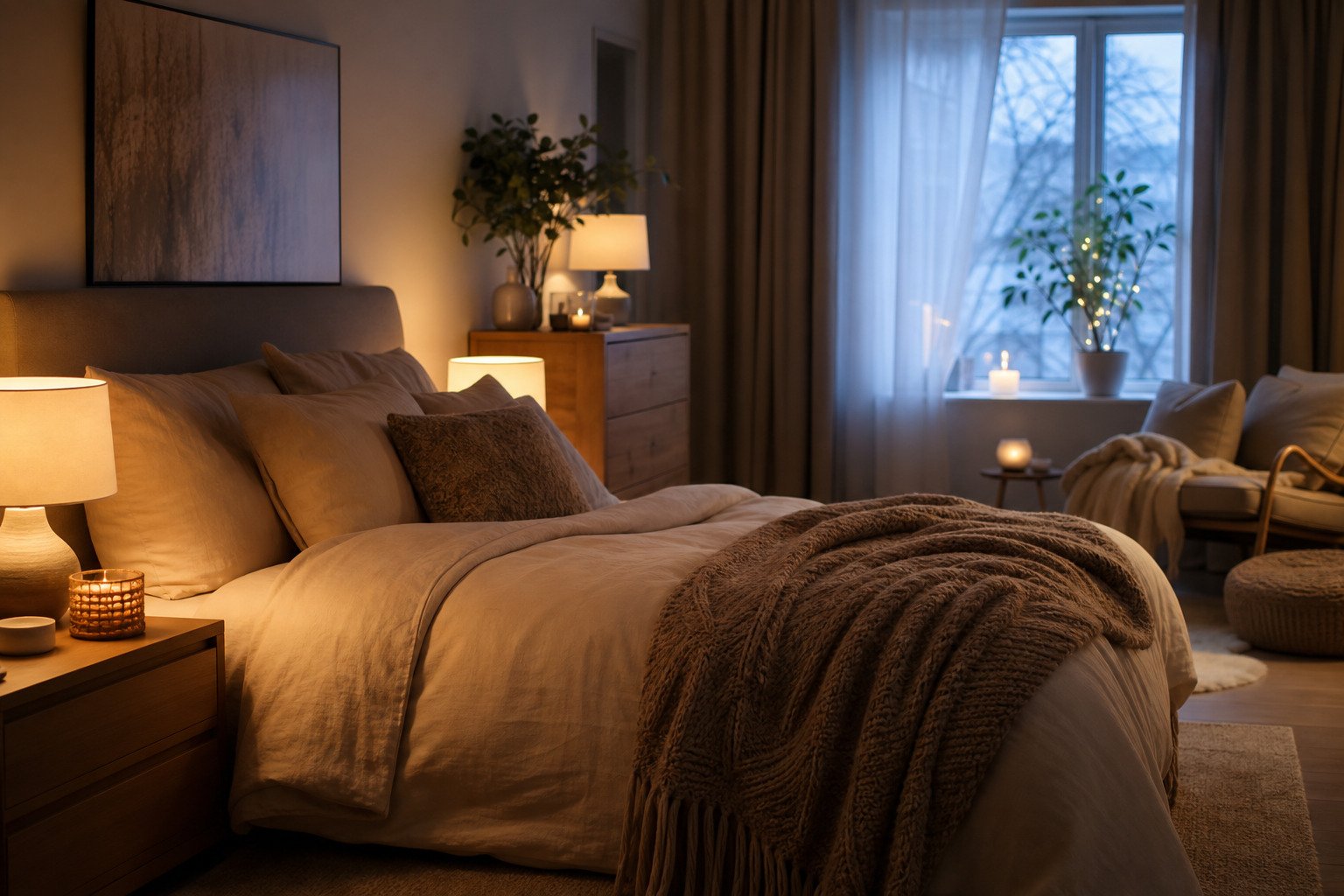
Your bedroom needs at least three different light sources, and ideally more. Start with bedside lamps on each nightstand. These are essential for reading and creating that warm, low glow in the evening. Choose lamps with warm-toned bulbs (2700K to 3000K) that mimic candlelight rather than the harsh blue-white light of daylight bulbs.
Table lamps with fabric shades diffuse light beautifully and create soft shadows that feel calming. If you have space, add a floor lamp in a corner or near a reading chair. This gives you another lighting option that doesn’t require turning on overhead lights. Consider installing a dimmer switch on your overhead light so you can adjust it when you need more illumination for tasks like folding laundry or finding something in your closet.
Wall sconces are another great option, especially if nightstand space is limited. They free up surface area while still providing that important bedside lighting. The key is never relying on just one light source. Multiple lights at lower intensities create depth and warmth that a single bright light simply cannot achieve.
The Magic of Candlelight in the Bedroom
Yes, candles in the bedroom are absolutely a hygge essential, and yes, they’re safe if you follow basic precautions. The flickering light of candles creates an unmatched ambiance that helps signal to your brain that it’s time to wind down. Place candles on surfaces where they won’t be knocked over, keep them away from curtains and bedding, and never fall asleep with them burning.
Use candle holders or lanterns for added safety and style. Battery-operated candles have come a long way and can be a good alternative if you’re worried about open flames, though they don’t quite capture the same magic. Real candles with natural wax like soy or beeswax burn cleaner and often smell better than paraffin candles.
Choose unscented or lightly scented options for the bedroom to avoid interfering with sleep. Light a couple of candles while you're getting ready for bed, reading, or just relaxing in the evening. The ritual of lighting candles becomes part of your wind-down routine. Just remember to blow them out before you actually get into bed.
Managing Morning Light and Window Treatments
While you want your bedroom dark for sleeping, you also want the option to let in natural morning light when you’re ready to wake up. This is where your window treatment choices become crucial. Blackout curtains or blinds are fantastic for blocking streetlights and early sunrise, helping you sleep deeper and longer.
But pair them with sheer curtains or leave them easy to open so you can let light in when you want it. Natural light in the morning helps regulate your circadian rhythm and makes waking up feel less jarring. If your bedroom gets harsh direct sunlight, consider light-filtering shades that diffuse brightness while still allowing some natural light through.
Linen curtains in particular are perfect for this. They provide privacy while maintaining that soft, natural feel that's so essential to hygge design. For bedrooms facing busy streets or bright streetlights, a layered approach works best. Install blackout roller shades or blinds for nighttime darkness, then hang linen or cotton curtains over them for daytime softness. The goal is controlling light on your terms.
Incorporating Natural Materials and Creating a Clutter-Free Sanctuary
A hygge bedroom feels grounded and peaceful, and that sense of calm comes largely from your material choices and how you manage the stuff in your space. Natural materials connect us to the outside world and create warmth without overwhelming the senses. Meanwhile, managing clutter isn’t about becoming a minimalist monk, but rather about creating systems that keep your sanctuary feeling serene. Let’s look at how to bring nature indoors and keep chaos at bay without sacrificing personality or function.
Wood, Wool, and Other Natural Textures
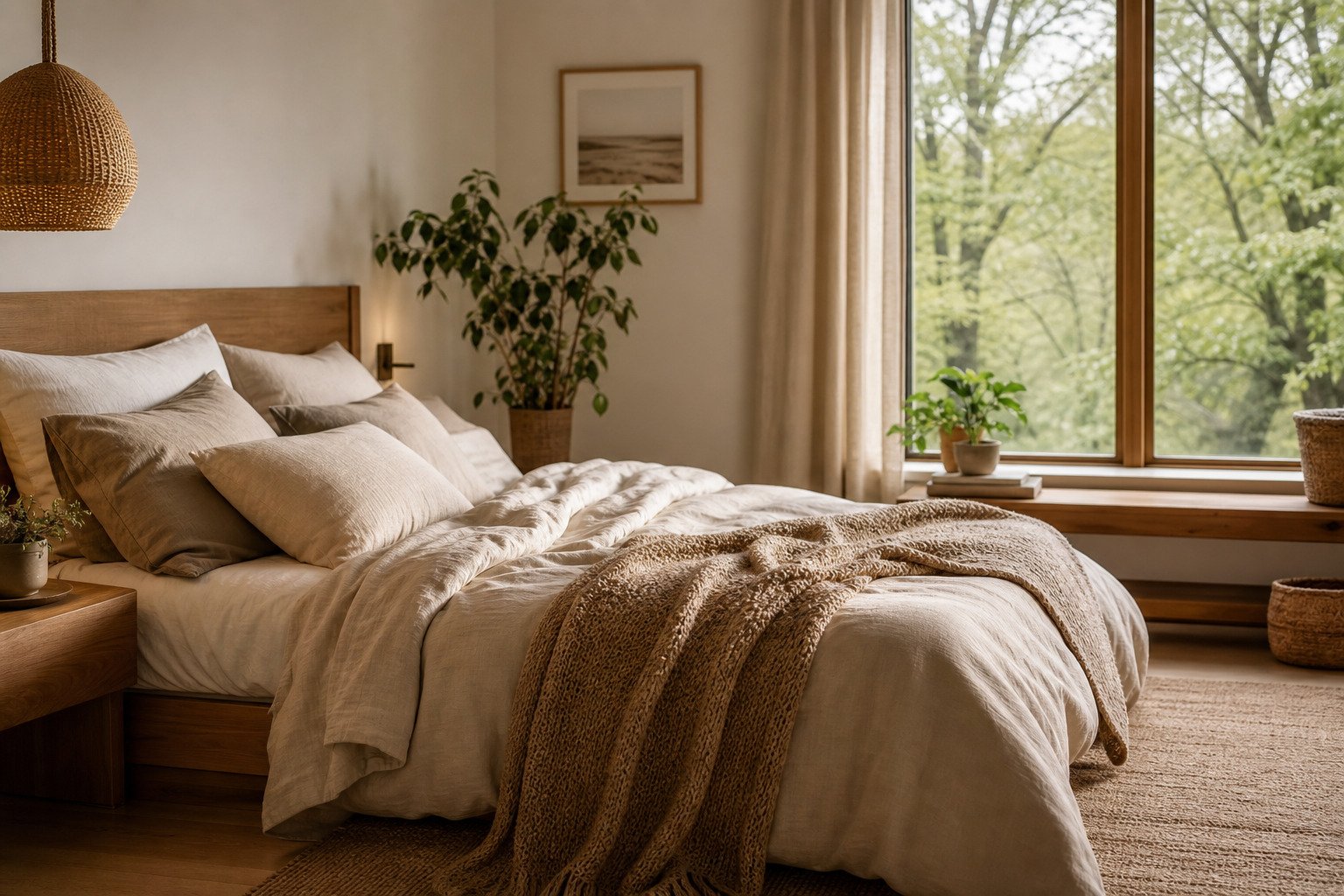
Incorporating wood into your bedroom brings instant warmth and that essential connection to nature that hygge is all about. This doesn’t mean buying all new furniture, though. A wooden bed frame, nightstands, or even just a wooden tray on your dresser adds that organic element. Look for pieces with visible grain and natural finishes rather than heavily stained or painted wood that hides the material’s inherent beauty.
Wool appears in hygge bedrooms through throw blankets, area rugs, and sometimes even wall hangings. A chunky knit wool throw at the foot of your bed adds texture and provides extra warmth when you need it. Wool rugs feel amazing underfoot when you get out of bed in the morning and help insulate your floor, making the room feel cozier overall.
Other natural materials to consider include jute or sisal baskets for storage, linen curtains and bedding, cotton throw pillows, and even sheepskin rugs. These materials aren't just aesthetically pleasing—they actually perform better than synthetic alternatives, lasting longer and aging beautifully. A well-made wool blanket gets softer over time. A solid wood nightstand can last decades. These materials represent that hygge principle of investing in quality pieces that serve you well rather than constantly replacing cheaper items.
Strategic Storage That Maintains Peace
Clutter is the enemy of hygge, but so is a sterile, empty space that doesn’t feel lived in. The solution is having enough storage to keep everyday items organized and out of sight while still leaving room for personality. Start by assessing what actually needs to be in your bedroom. Clothes, obviously. Bedside essentials like books, glasses, phone charger. Maybe some personal care items. But does your exercise equipment need to be here? Your work files? Your craft supplies?
If your bedroom doubles as other spaces due to size constraints, use furniture that provides hidden storage. An ottoman at the foot of the bed can store extra blankets and pillows. A bed frame with drawers underneath keeps off-season clothes tucked away. Floating nightstands with drawers hide charging cables and random odds and ends.
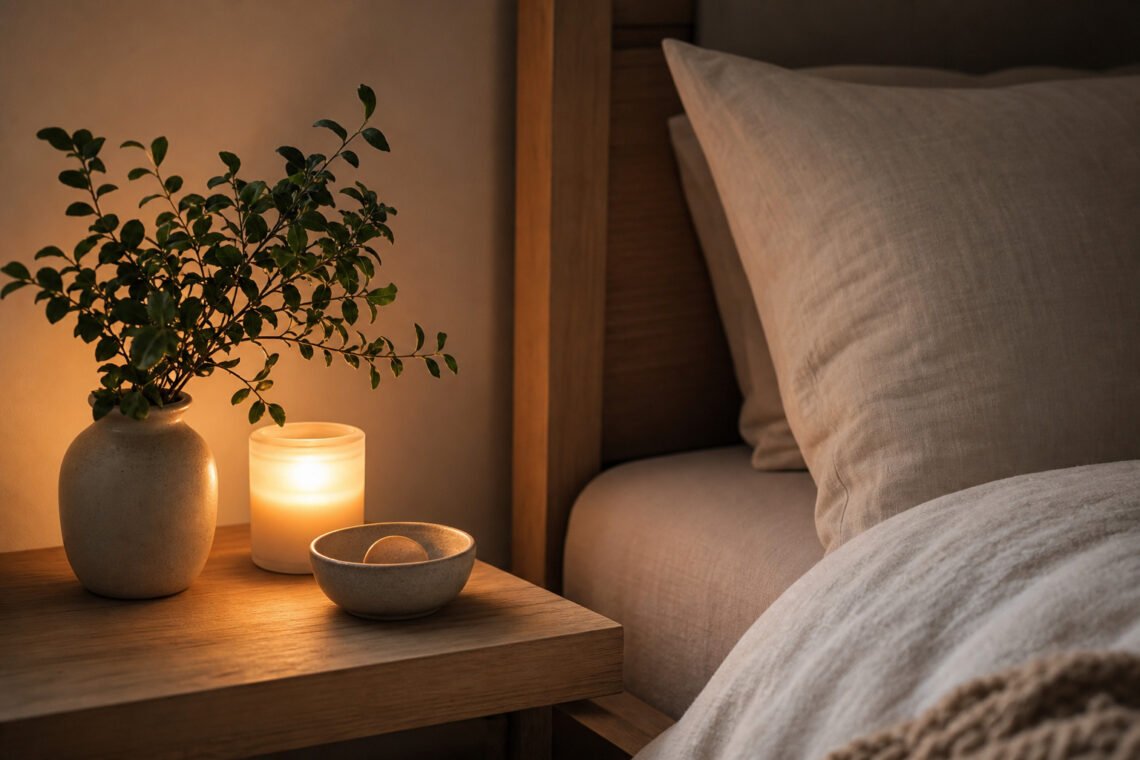
The goal is having surfaces that aren't covered with stuff. Your nightstand should have room for a lamp, maybe a book or two, a small plant, and your water glass. That's it. Everything else goes in the drawer. For clothes, if your closet is overflowing, it might be time to assess whether you actually wear everything you own. Keeping only clothes you genuinely like and wear makes getting dressed easier and keeps your space feeling more organized. Use matching hangers and organize by type or color if that speaks to you. Storage solutions should be functional first and pretty second, but ideally both.
Adding Greenery Without Sabotaging Sleep
Plants in the bedroom get debated sometimes, but the right plants can absolutely enhance your hygge space. The key is choosing varieties that won’t disrupt your sleep or require tons of maintenance. Snake plants and pothos are nearly indestructible and tolerate the lower light levels many bedrooms have. They also help purify air, though you’d need quite a few plants to make a significant difference.
Keep plants away from your bedside where they might feel intrusive or where you might knock them over. A medium-sized plant on a dresser or in a corner adds life to the space without overwhelming it. If you’re not great with plants, start with just one. Better to have a single thriving plant than three struggling ones that stress you out.
You can also incorporate botanical elements through artwork or pressed flowers in frames. Dried flowers and grasses add texture and a natural element without needing water or light. A simple branch in a vase brings the outside in with zero maintenance required. The goal isn't creating an indoor jungle—it's adding organic elements that make your space feel more alive and connected to nature. Even a small succulent on your nightstand can provide that link to the natural world that's so central to hygge living.