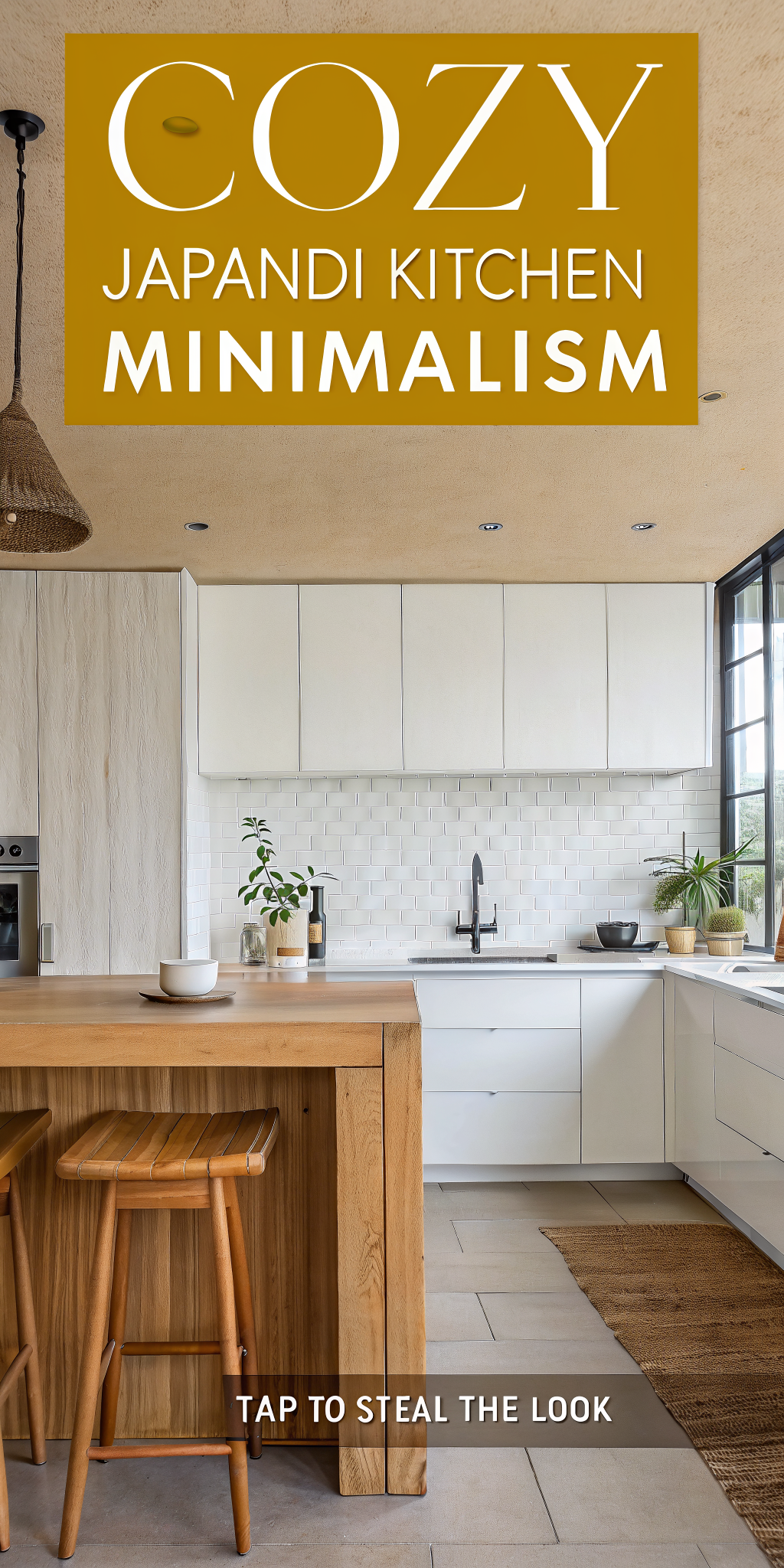
Japandi kitchens are having a serious moment, and for good reason. This Japanese-Scandinavian fusion creates spaces that are minimal without feeling cold, functional without being boring, and seriously gorgeous without trying too hard. Let me show you how to nail this aesthetic in your own kitchen.
1. Warm Oak and Matte Black Serenity
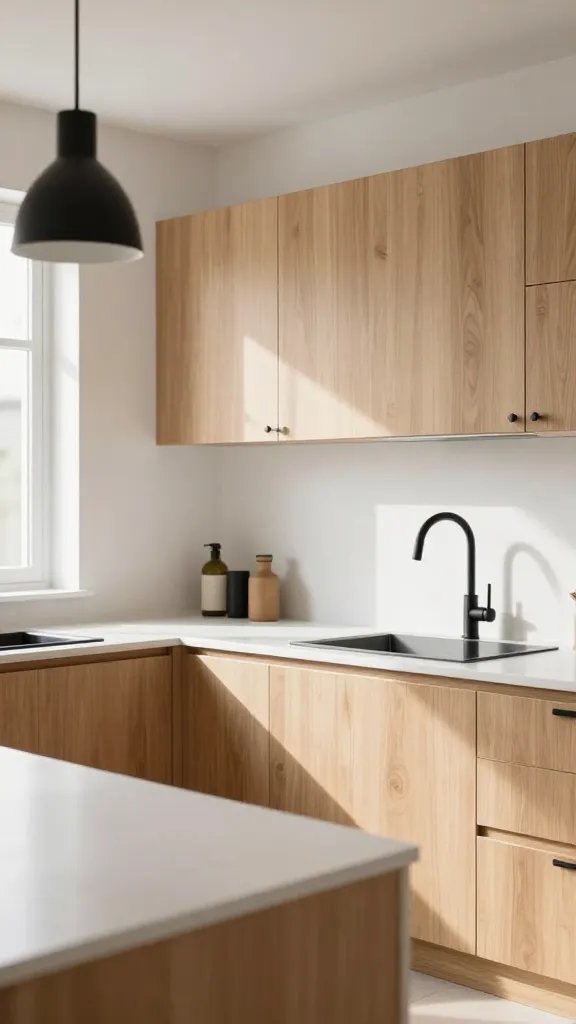
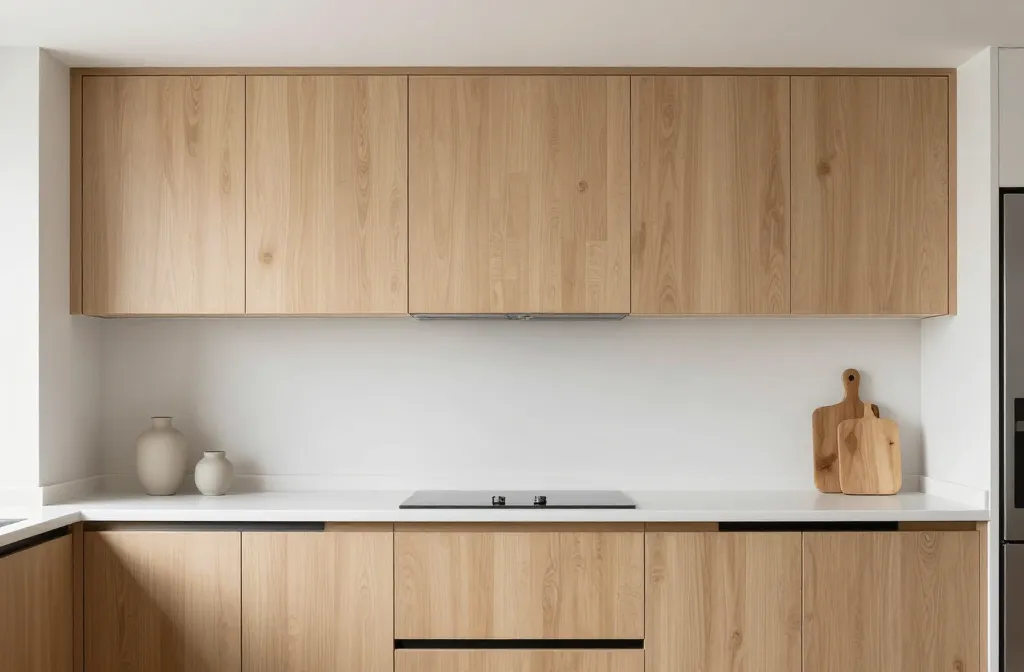
Picture this: light oak cabinetry paired with matte black hardware and fixtures that pop against a clean white backdrop. This design brings together the warmth of Scandinavian wood with Japanese restraint, creating a kitchen that feels both inviting and incredibly zen.
The key here is choosing flat-front oak cabinets with minimal grain for that sleek look. Add a matte black faucet, cabinet pulls, and maybe a black pendant light or two above your island. Keep your countertops simple with white quartz or light concrete.
Essential Elements:
- Light oak flat-panel cabinets with horizontal grain
- Matte black hardware and light fixtures
- White or light gray countertops
- Minimal open shelving in matching oak
This design works beautifully if you want a kitchen that feels modern but not stark. The wood keeps things cozy while the black adds just enough edge.
2. Two-Tone Tranquility With Sage and Cream
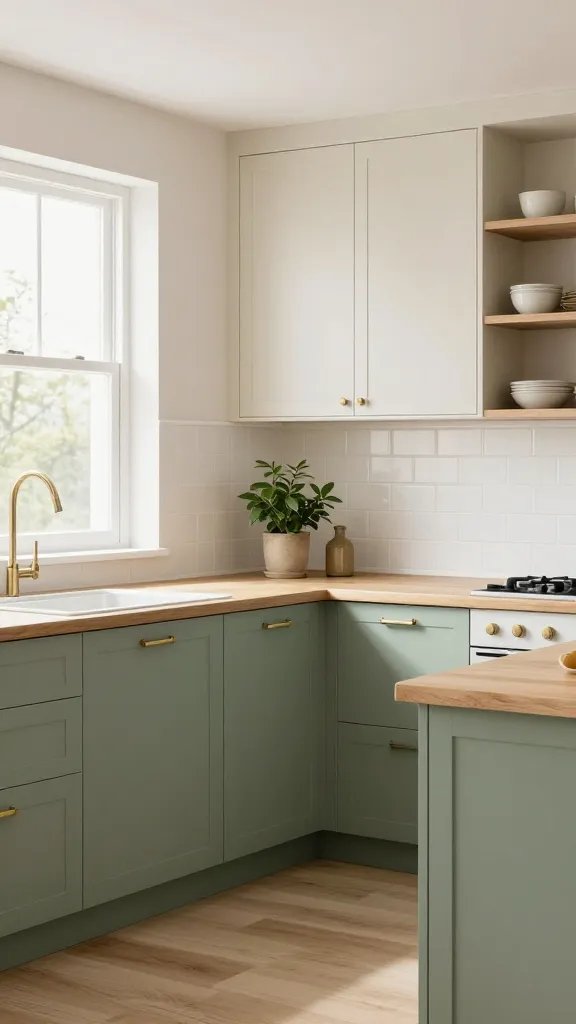
Swap the typical black and white for something softer. Sage green lower cabinets paired with cream upper cabinets create a kitchen that feels fresh and calming without losing that Japandi minimalism.
This palette works especially well with brass or aged bronze hardware that adds warmth without going full industrial. Keep your backsplash simple with white subway tiles or go for a textured plaster finish for extra character. A butcher block countertop on your island brings in natural warmth while the perimeter can stay crisp with white stone.
The beauty of this approach? It feels timeless and sophisticated while still being approachable. Perfect for anyone who finds all-white kitchens a bit too sterile but doesn’t want bold colors everywhere.
3. Wabi-Sabi Textured Wall Statement
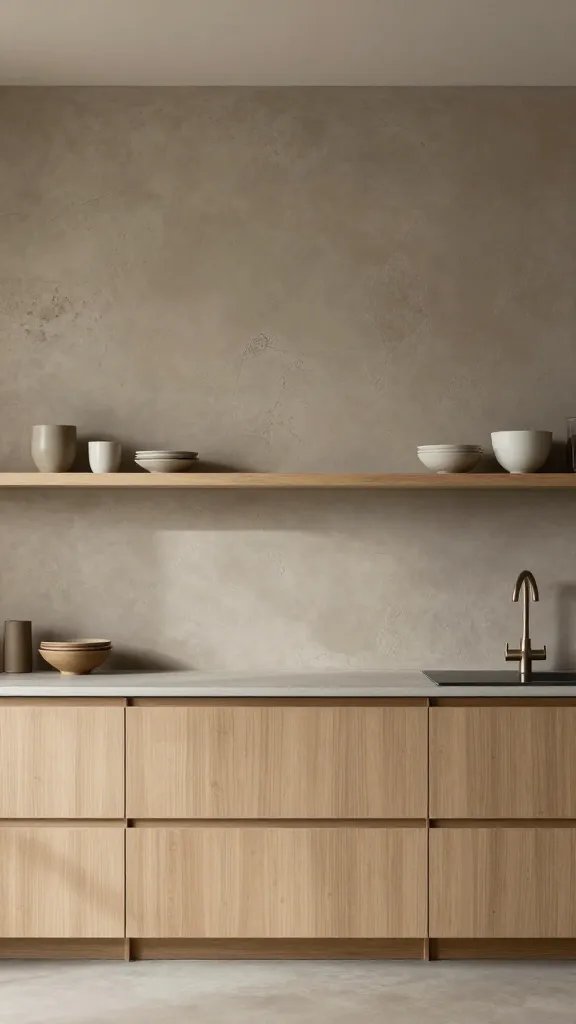
Embrace imperfection with a stunning textured plaster accent wall in warm gray or taupe. This design celebrates the wabi-sabi philosophy of finding beauty in natural imperfection, which is totally at the heart of Japandi style.
Pair your textured wall with simple flat-front cabinets in either white or pale wood. The contrast between the organic, handcrafted wall texture and the clean cabinetry lines creates visual interest without clutter. Add wooden open shelves floating against the textured wall to display your most beautiful dishware.
Styling Tips:
- Display handmade ceramic pieces in neutral tones
- Keep only your prettiest items visible
- Use wooden or ceramic containers for everyday items
- Add a single vase with a simple branch arrangement
Trust me, this look is absolutely stunning in person. The textured wall adds so much depth and warmth that you won’t miss having tons of decor.
4. Minimalist Monochrome With Natural Wood Accents
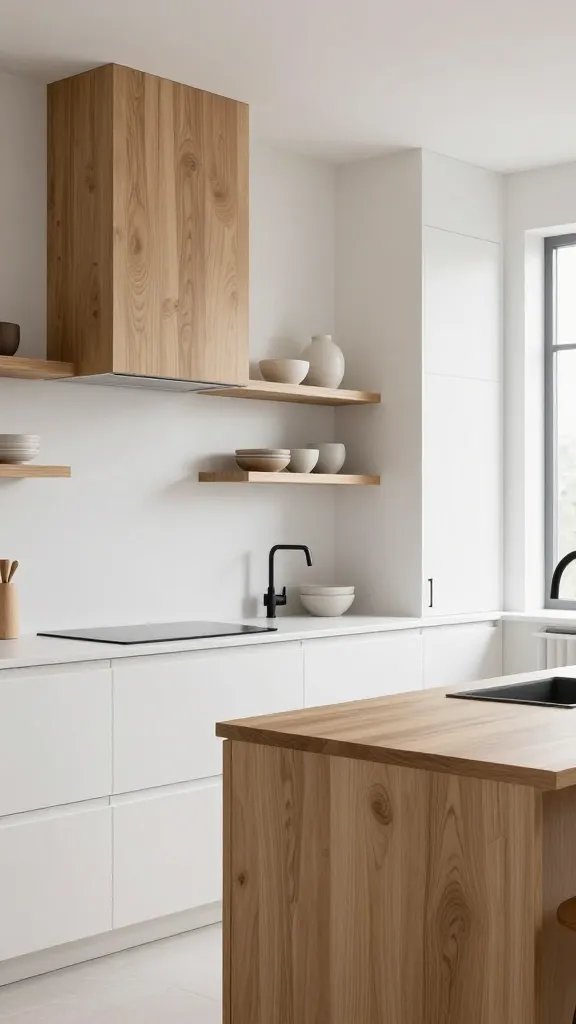
Go bold with an almost entirely white kitchen that’s saved from feeling sterile by strategic natural wood elements. We’re talking white cabinets, white walls, white counters, but then you bring in warmth through a wooden range hood, wood-topped island, and floating wood shelves.
The trick is choosing wood with beautiful grain and character. White oak or light ash works perfectly. Add simple black iron hardware and maybe a single black faucet to ground the space. Keep everything else whisper-quiet with your color choices.
This design is for the true minimalist who still wants their space to feel warm and lived-in. It’s clean, it’s calm, and it’s absolutely gorgeous when done right.
5. Charcoal and Blonde Wood Drama
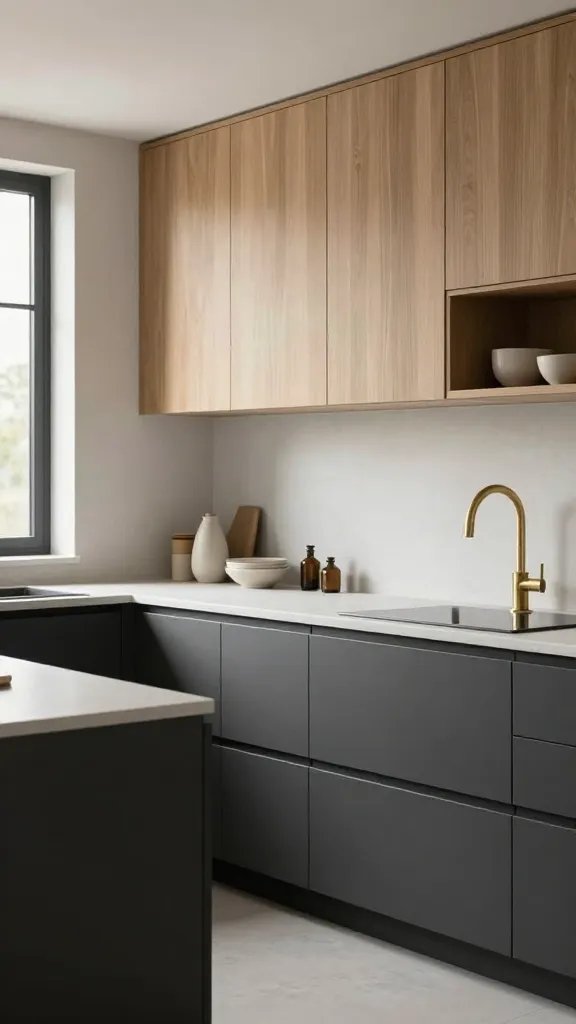
Flip the script with dark charcoal gray cabinets on the bottom and blonde wood cabinets up top. This creates incredible visual weight while maintaining that Japandi balance between light and dark.
The dark base cabinets ground your kitchen and hide everyday wear beautifully, while the light upper cabinets (or open shelving) keep the space from feeling heavy. Use white or light concrete countertops to bridge the two tones. Brushed brass or copper hardware adds warmth against the charcoal.
Color Balance:
- Charcoal or deep gray-brown for lower cabinets
- Light ash or blonde oak for uppers
- White concrete or quartz countertops
- Warm metallic accents throughout
This approach feels moody and sophisticated while still being functional and family-friendly. Seriously, those dark lowers will be your best friend with kids around.
6. Japanese Tea House Inspired Simplicity
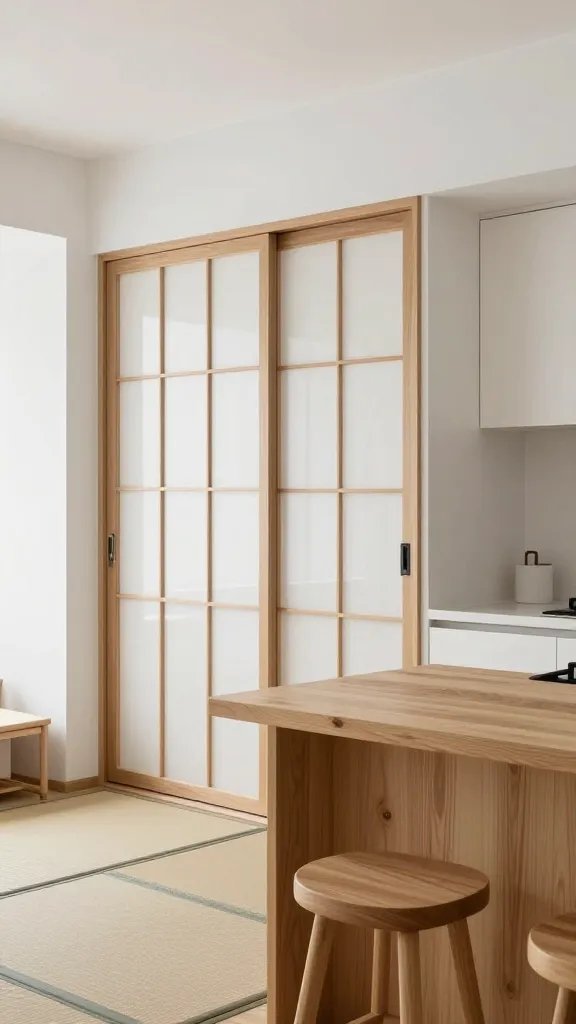
Channel authentic Japanese design with shoji screen-inspired cabinet doors featuring wood frames with frosted glass or fabric inserts. This design brings traditional Japanese elements into a modern kitchen without going full theme park.
Keep the rest of the kitchen minimal with natural wood countertops, simple white walls, and tatami-style floor mats in key areas. Add a low wooden stool or two for casual seating. The cabinet design becomes your statement while everything else stays beautifully simple.
Choose walnut or darker oak for the shoji-style frames to create depth and visual interest. This look is perfect if you’re drawn to authentic Japanese design but want it to feel modern and livable.
7. Concrete and Cedar Modern Fusion
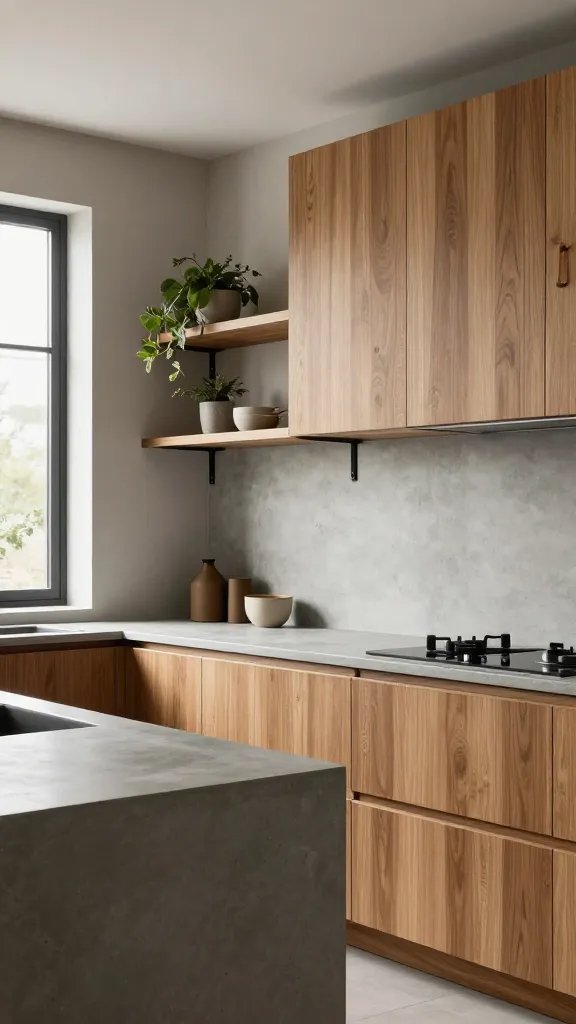
Bring together industrial elements with natural warmth through concrete countertops and a concrete backsplash paired with cedar or redwood cabinets. The combination sounds bold, but it’s incredibly balanced and very Japandi when done right.
The concrete brings that Scandinavian love of industrial materials while the rich wood adds Japanese warmth. Keep cabinet fronts flat and simple, and use integrated handles or simple leather pulls to maintain clean lines. Add black metal shelving brackets for any open storage.
This design works beautifully in loft spaces or homes with modern architecture. It’s edgy without being cold, natural without being rustic.
8. Neutral Linen and Walnut Warmth
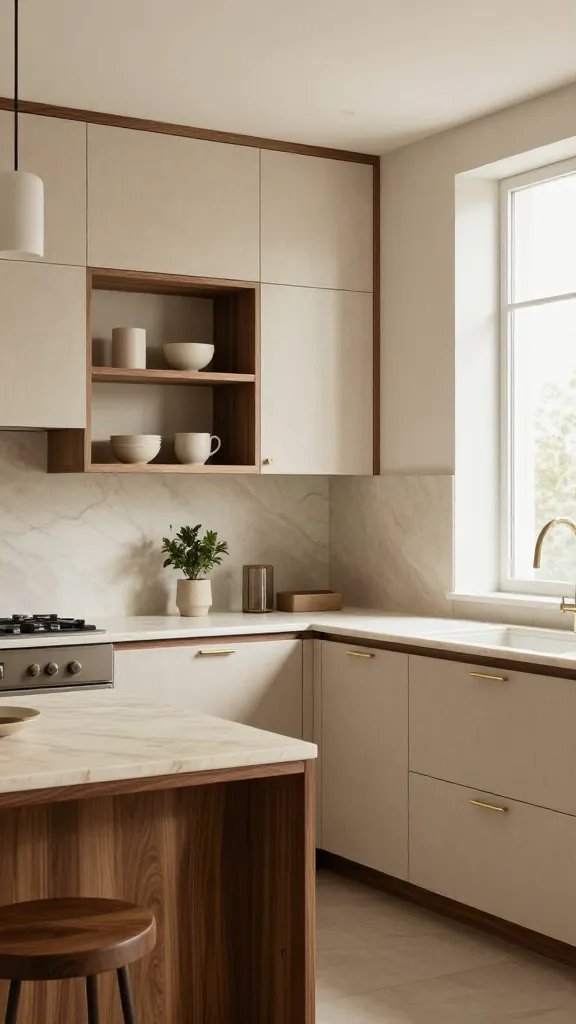
Soften your kitchen with linen-colored cabinets that feel like a warm hug paired with rich walnut accents. Think buttery beige cabinet fronts with walnut floating shelves, walnut trim details, and maybe a walnut-topped island.
This palette creates a kitchen that feels incredibly calming and sophisticated. Add cream or white marble countertops with subtle veining, and keep hardware simple in brushed gold or aged brass. The linen cabinets can be matte or have a subtle texture for added interest.
Finishing Touches:
- Natural linen Roman shades or minimal blinds
- Walnut cutting boards and serving pieces on display
- Cream ceramic canisters and containers
- Single stem in a simple vase
This is the kitchen equivalent of a cashmere sweater – soft, luxurious, and endlessly comfortable. Perfect for anyone who wants minimalism with maximum coziness.
9. Black Frame and Glass Elegance
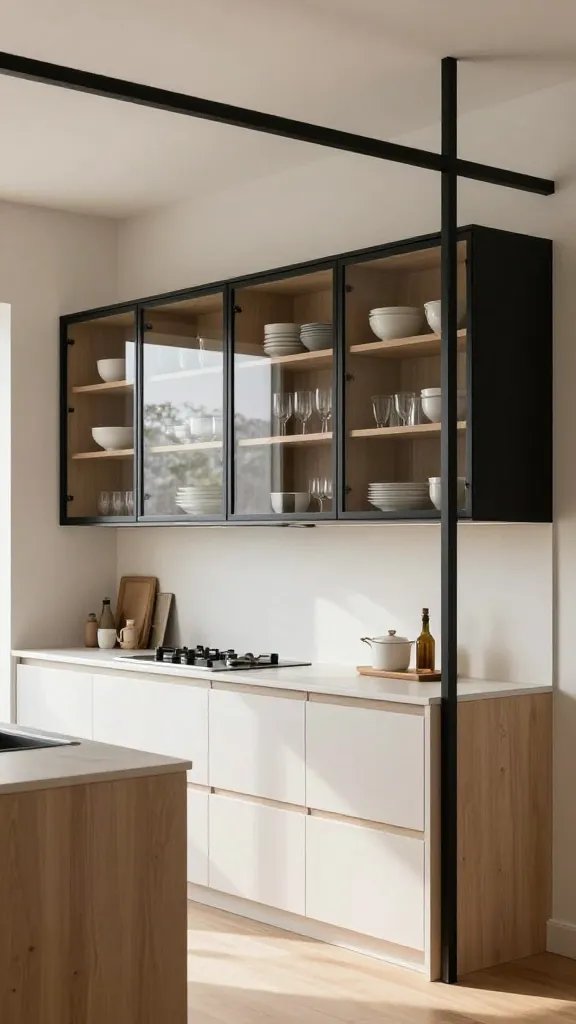
Create architectural interest with black-framed glass cabinet doors on upper cabinets while keeping lowers solid in white or pale wood. This design adds a gallery-like quality to your kitchen while staying true to Japandi principles.
The black frames create strong lines that guide the eye, while the glass keeps things feeling open and light. Style the interior of these cabinets carefully with your most beautiful dishes and glassware in coordinating neutral tones. White oak or painted white lower cabinets keep the base grounded.
Add black pendant lights above the island to echo the frame color, and keep countertops simple in white or light gray. This look is basically minimal with a dash of sophistication – FYI, your kitchen will photograph amazingly.
10. Scandinavian Birch and Japanese Minimalism
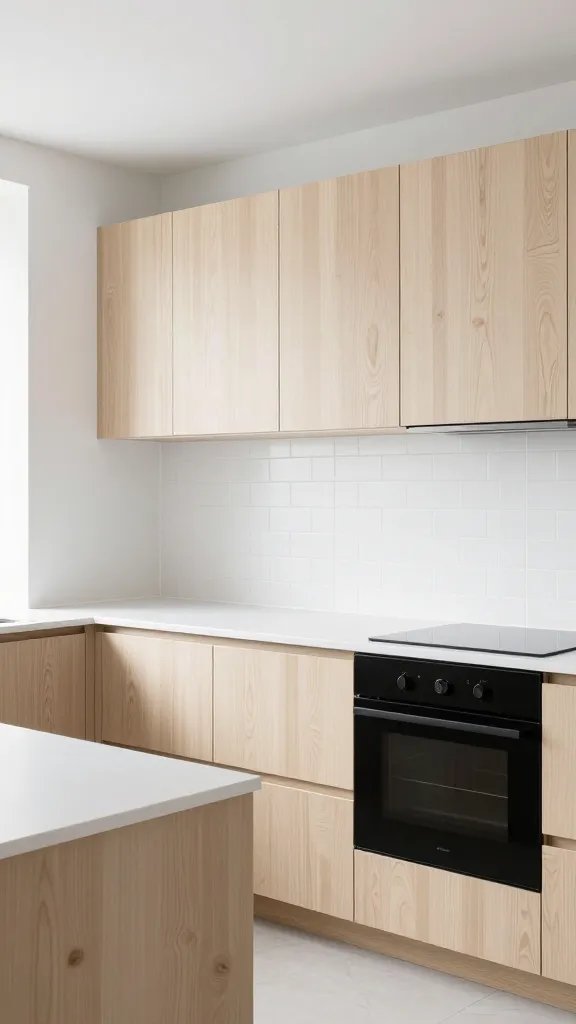
Embrace the palest woods with birch plywood cabinets that show off their beautiful edge grain. This design celebrates the Scandinavian love of light wood while maintaining Japanese-level restraint in details and decor.
The birch brings incredible lightness to your space, making even small kitchens feel airy. Keep countertops in white quartz or Corian, and add pops of depth with black metal hardware and matte black appliances. A simple white tile backsplash lets the beautiful wood grain shine.
This kitchen feels fresh, young, and incredibly modern. It’s perfect for smaller spaces or anyone who wants their kitchen to feel as bright and open as possible.
11. Earthy Terracotta Accent Kitchen
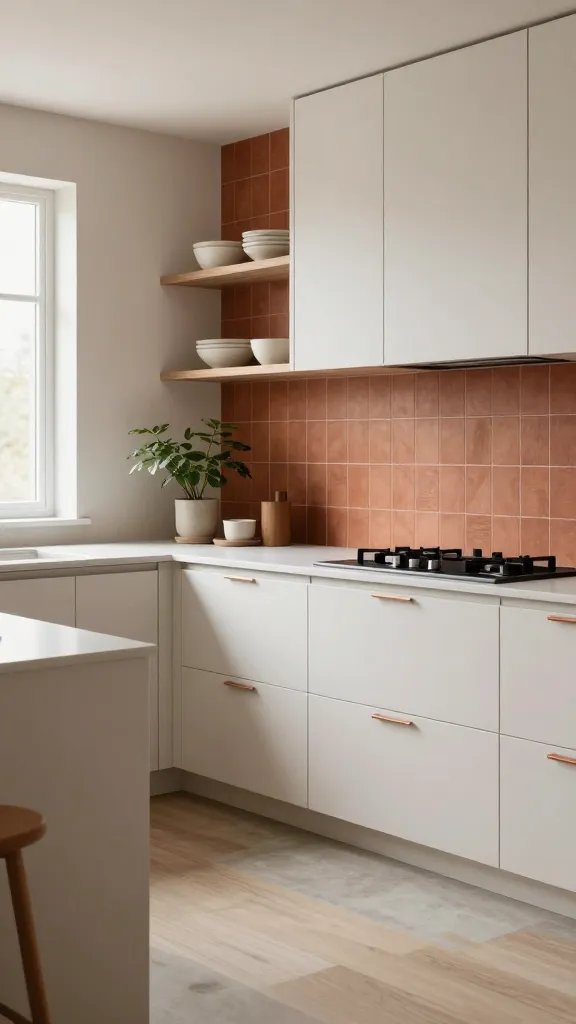
Who says Japandi has to be all blacks, whites, and woods? Bring in warmth with terracotta tile backsplash or a terracotta accent wall paired with white oak cabinets and white countertops. The earthy orange-brown adds soul without overwhelming the space.
Keep the terracotta element contained to one feature area – maybe behind your range or along the full backsplash if your kitchen is small. Everything else stays minimal and neutral. Add copper hardware to tie in with the warm tones, or go with black iron for contrast.
Key Elements:
- Terracotta zellige or handmade tiles for texture
- White oak or light wood flat-front cabinets
- White or cream solid surface countertops
- Copper or black metal fixtures and hardware
This approach adds personality while maintaining that calm, minimal vibe. Perfect for anyone who finds pure neutrals a bit too safe.
12. Floating Everything Zen Space
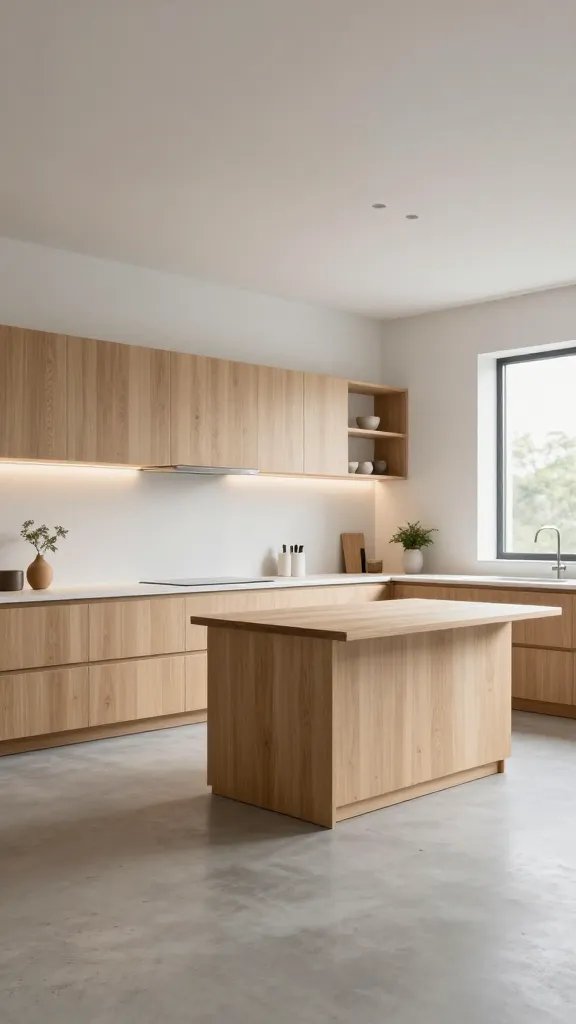
Create ultimate lightness with floating cabinets all around – no base cabinets touching the floor except where absolutely necessary. This design maximizes the airy, zen feeling that makes Japandi so appealing.
Go with light wood floating cabinets mounted to white walls, with just a small floating island for your main work surface. The floor stays visible, making your kitchen feel significantly larger. Use recessed handles or push-to-open mechanisms to keep surfaces completely smooth.
Add under-cabinet lighting to enhance the floating effect and provide task lighting. Keep a few floating shelves for display, but maintain serious restraint with what you put on them. This design is definitely for the committed minimalist who’s ready to pare down their kitchen stuff.
13. Natural Stone and Pale Wood Harmony
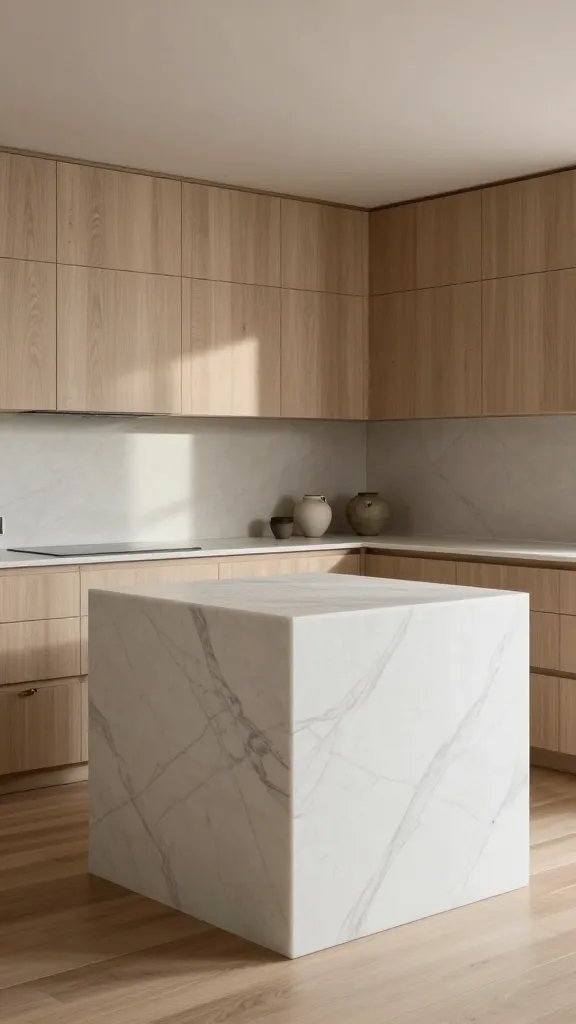
Bring in organic luxury with a natural stone island – think marble or soapstone – surrounded by pale ash wood cabinets. The veined stone adds natural drama while the light wood keeps things from feeling too heavy or formal.
Choose stone with subtle, organic veining rather than bold patterns. White marble with gray veining or light gray soapstone works beautifully. Keep the rest of your counters in a coordinating solid surface to let the island shine. Use simple wood or leather hardware to maintain the natural material story.
This kitchen feels expensive and sophisticated but still approachable. The natural materials age beautifully, which fits perfectly with the wabi-sabi aspect of Japandi design.
14. Minimalist Galley With Maximum Impact
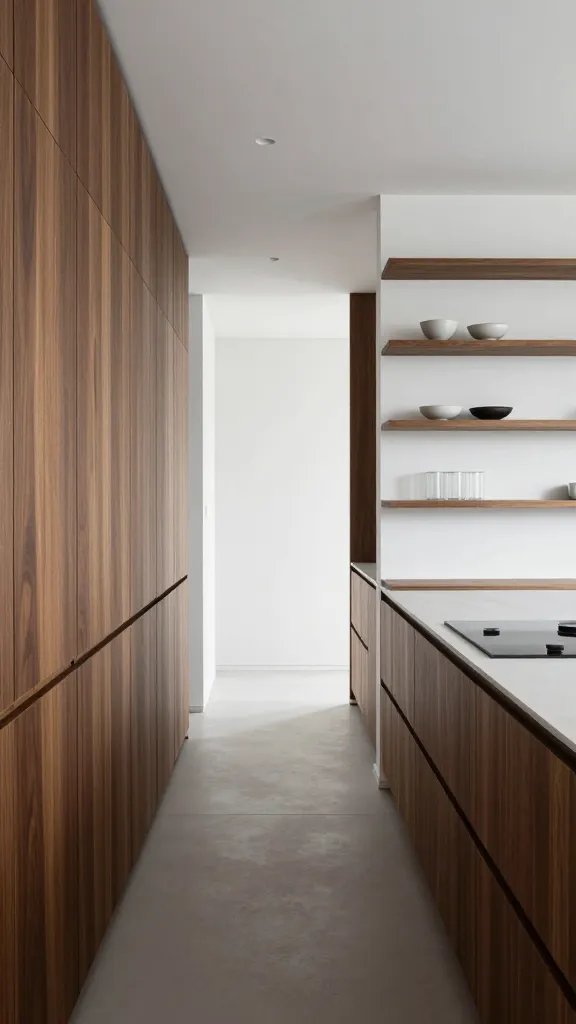
Make a small galley kitchen absolutely stunning with one wall of deep wood cabinets and one wall of open shelving with white backing. This asymmetrical approach creates interest in a limited space while maintaining Japandi balance.
The solid cabinet wall provides all your storage and hides the mess, while the open shelving wall becomes a curated display of beautiful essentials. Use walnut or dark oak for warmth, and keep the open shelving minimal with matching wood shelves. White or light gray flooring keeps the narrow space feeling open.
Add a single pendant light centered above your work zone, and keep countertops in white or light stone. This design proves that small kitchens can be just as stunning as sprawling ones when you’re thoughtful about every element.
15. Textural Neutral Layering Masterpiece
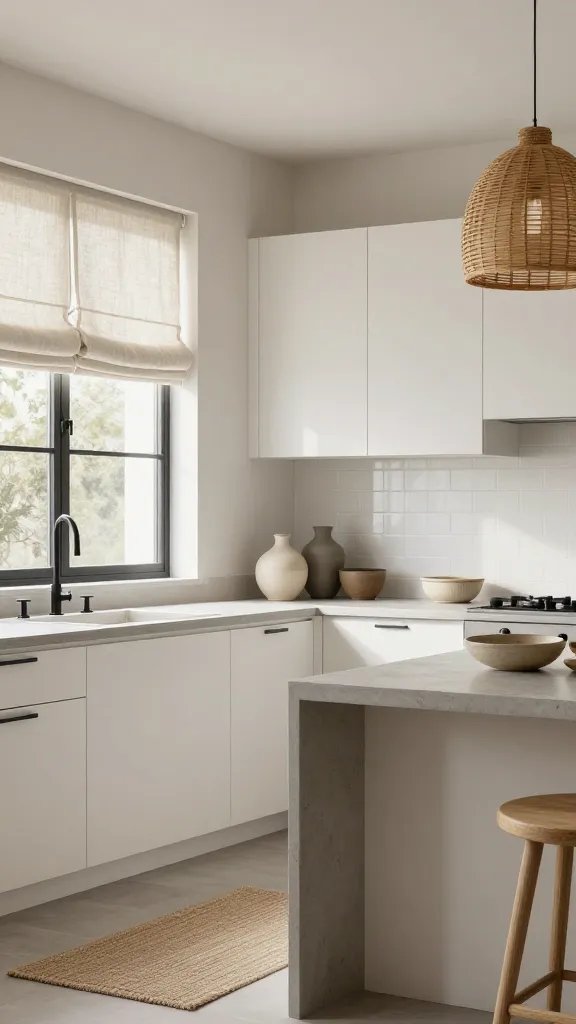
Create depth without color through textural variety in all-neutral materials. Think smooth white cabinets, rough concrete counters, soft linen Roman shades, glossy white tile backsplash, and matte black hardware all playing together in perfect harmony.
The magic here is in the different finishes and textures creating visual interest while the unified neutral palette maintains calm. Add woven pendant lights, a jute rug runner, and ceramic vessels in various neutral tones. Every surface has a different texture, but everything works together.
Texture Mix:
- Smooth painted or lacquered cabinet fronts
- Rough or honed concrete or stone counters
- Soft textile window treatments
- Woven natural fiber lighting or accessories
- Mixed matte and gloss finishes throughout
This is Japandi at its absolute finest – restrained in color but rich in sensory experience. It’s sophisticated, it’s calming, and it never gets boring because there’s so much subtle detail to discover.
Ready to transform your kitchen into a Japandi sanctuary? Start with the elements that speak to you most – whether that’s introducing natural wood, simplifying your color palette, or embracing beautiful minimalism. Your dream kitchen is totally achievable, one thoughtful choice at a time.