

Ever feel like your internal clock is totally out of whack? What if I told you your own backyard could be the secret weapon to finally getting some decent shut-eye? Get ready to transform your outdoor space into a sleep sanctuary, because these five tips are about to revolutionize your nights.
1. Greet the Dawn, Ditch the Drowsiness: Your Morning Light Oasis

Seriously, ditching the snooze button for natural light exposure first thing in the morning is a game-changer for your circadian rhythm. It signals to your brain that the day has begun, helping to regulate your sleep-wake cycle more effectively. Think of it as hitting the “reset” button for your body’s internal clock.
Creating a dedicated spot in your garden where you can comfortably soak up those early rays is key. This isn’t just about being outside; it’s about intentional design that encourages you to embrace the morning light without effort. Who knew gardening could be so good for your sleep?
Key Elements for Your Morning Zone:
- East-facing seating: Maximize direct sun exposure.
- Unobstructed views: Clear sightlines to the horizon.
- Comfortable seating: A bench, adirondack chair, or even a cozy floor cushion.
- Morning-friendly plants: Bright, cheerful blooms or fragrant herbs to awaken the senses.
Your goal here is to make it irresistible to step outside. Imagine a place so inviting, you can’t help but grab your coffee and head straight for it, even before checking your phone. This simple routine can significantly improve your sleep quality over time, trust me.
How to Recreate This Look
- Position a weather-resistant bench or a pair of lounge chairs in an area of your garden that receives direct morning sun.
- Clear any tall shrubs, trees, or structures that might block the early morning light from reaching your chosen spot.
- Add a small, sturdy side table for your coffee mug and a book, making the space functional and appealing for a few quiet moments.
Picture This
The first golden rays of sun stream across your face as you sip warm tea, the morning dew still clinging to the vibrant petunias. Birds chirp a gentle symphony, and the air is crisp, carrying the faint scent of blooming jasmine. This is your personal sunrise ritual, a peaceful beginning that promises a better night’s rest.
By consciously seeking out that morning light, you’re telling your body, “Hey, it’s go time!” This helps suppress melatonin production during the day, so when night falls, your body is ready to produce it in full force, leading to deeper, more restorative sleep.
2. Midday Movement Magic: Energize Your Body & Mind

You know that afternoon slump? The one where you just want to curl up under your desk? Your garden can be the perfect antidote! Incorporating spaces for light to moderate physical activity and mental engagement in your outdoor design actively boosts your energy levels, improves mood, and ultimately, helps you sleep better at night. It’s all about breaking up sedentary periods and getting your blood flowing.
Think beyond just a pretty garden; envision a dynamic space that encourages you to move, stretch, and engage. This isn’t about hardcore workouts, but rather gentle, consistent activity that keeps your circadian rhythm humming along nicely. Plus, getting some fresh air while you’re at it? Double win!
Activities to Incorporate:
- Raised Garden Beds: Bending, kneeling, and reaching are great low-impact movements.
- Winding Pathways: Perfect for a leisurely stroll or even some outdoor yoga.
- Active Zones: A small patch for bocce ball, cornhole, or just throwing a frisbee.
- Creative Projects: Potting benches for repotting, or a dedicated art nook.
Designing for movement doesn’t mean turning your garden into a gym. It means creating subtle invitations to get up and do something. A strategically placed weeding tool near a flower bed, or a comfortable mat rolled out on a patio, can make all the difference. Remember, consistency is more important than intensity here.
How to Recreate This Look
- Install a series of accessible raised garden beds at varying heights to encourage different postures and movements while gardening.
- Design a meandering gravel or paver pathway that invites short walks and exploration around your garden’s different features.
- Designate a small, flat area, perhaps near a shady tree, as a “stretch zone” where you can do some light yoga or calisthenics.
Picture This
You’re gently pruning a rose bush in your raised bed, feeling the sun on your back and the earthy scent of soil. Later, you take a leisurely stroll along a winding path, admiring your handiwork, before settling onto a soft mat for a few invigorating stretches under the dappled shade of a mature oak. Your body feels awake, but not overtaxed.
By moving your body outdoors during the day, you’re not only burning off excess energy but also strengthening your body’s natural sleep signals. It helps reduce stress, too, which is a major culprit for restless nights. So, get out there and move!
3. Sunset Serenity: Crafting Your Chill-Out Zone
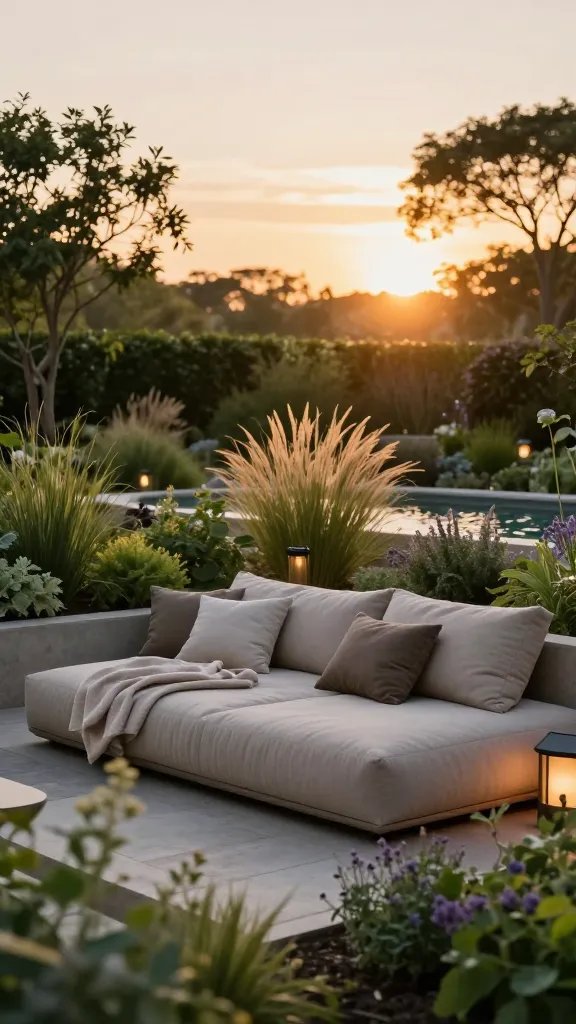
As the day winds down, your garden should transition from an active space to a haven of calm. This is where you prepare your body and mind for sleep, consciously signaling that it’s time to relax and de-stress. We’re talking about a dedicated “chill-out zone” designed to lower your heart rate and ease you into a state of blissful tranquility.
Forget harsh overhead lights and loud noises. Your evening garden should be a place where the senses are gently soothed, not stimulated. It’s about creating an ambiance that whispers, “It’s okay to let go now.”
Key Elements for Evening Unwinding:
- Dimmable, Warm Lighting: Think string lights, solar lanterns, or subtle path lights.
- Comfortable, Plush Seating: Deep cushions, outdoor rugs, and soft throws.
- Soothing Sounds: A small water feature, wind chimes, or rustling grasses.
- Aromatherapy Plants: Lavender, chamomile, jasmine, or honeysuckle.
- Privacy Screens: Hedges, pergolas, or trellises for a sense of enclosure.
The goal is to reduce visual and auditory stimulation. This helps your body naturally increase melatonin production, the hormone essential for sleep. IMO, this is where your garden truly becomes a therapeutic space.
How to Recreate This Look
- Install low-level, warm-toned LED string lights or solar-powered lanterns around your seating area, ensuring they are dimmable or provide soft, ambient glow.
- Place a comfortable outdoor sofa or a pair of deeply cushioned armchairs, complete with soft throw pillows and blankets, in a secluded corner of your garden.
- Introduce a small, self-contained water feature or plant rustling ornamental grasses nearby to provide gentle, natural background sounds.
Picture This
The last sliver of sun dips below the horizon, casting a soft, orange glow. You’re nestled on a plush outdoor sofa, wrapped in a cozy throw, listening to the gentle gurgle of a nearby fountain. The air is filled with the sweet, calming scent of lavender, and soft, warm string lights twinkle above, creating a magical, dreamlike atmosphere.
This dedicated wind-down space encourages a consistent evening routine, which is incredibly beneficial for sleep. By creating a clear distinction between your active day and restful night, you’re training your body to expect sleep, making it easier to drift off when you finally head indoors.
4. Sensory Symphony for Sleep: Tune In, Unwind

Our senses play a huge role in how we perceive the world, and they can be powerful tools for either stimulating us or calming us down. For better sleep, we want to lean into the calming side. Your garden can be a masterful conductor of a sensory symphony designed to lull you into a state of deep relaxation, preparing your mind and body for restorative sleep.
It’s about intentionally choosing elements that engage your senses in a soothing way, rather than overwhelming them. Think soft textures, gentle sounds, and calming aromas – a holistic approach to unwinding.
Sensory Elements to Cultivate:
- Sound:
- Water Features: Gentle trickles or steady flows mask urban noise.
- Rustling Plants: Ornamental grasses, bamboo, or aspen trees create natural whispers.
- Wind Chimes: Opt for deeply toned, resonant chimes, not tinkly ones.
- Scent:
- Aromatic Herbs: Lavender, rosemary, mint, lemon balm.
- Night-Blooming Flowers: Jasmine, honeysuckle, gardenia, night-scented stock.
- Eucalyptus: A refreshing, clearing scent.
- Touch:
- Textured Plants: Lamb’s ear, soft grasses, fuzzy succulents.
- Smooth Stones/Pebbles: For paths or decorative elements.
- Soft Fabrics: Outdoor cushions, throws.
By carefully curating these sensory experiences, you create an environment that naturally encourages your nervous system to calm down. It’s like a lullaby for your brain, but in garden form!
How to Recreate This Look
- Install a small, recirculating fountain or bird bath near your evening relaxation zone to provide the calming sound of gently flowing water.
- Plant a variety of fragrant herbs like lavender and chamomile, along with night-blooming jasmine, within easy reach of your seating area to release soothing aromas as evening falls.
- Incorporate plants with interesting textures, such as Lamb’s Ear or ornamental grasses, along pathways or near benches, inviting gentle touch and visual interest.
Picture This
A gentle breeze rustles through tall grasses, creating a soft, continuous whisper. The air is thick with the intoxicating, sweet perfume of jasmine, mingling with the subtle, earthy scent of damp soil. You run your fingers over the velvety leaves of Lamb’s Ear, feeling the coolness of smooth river stones beneath your bare feet, utterly immersed in the garden’s calming embrace.
Engaging your senses in a peaceful way helps distract your mind from daily stressors and worries, allowing you to fully disconnect and prepare for sleep. This intentional sensory design isn’t just beautiful; it’s profoundly therapeutic for your sleep health.
5. Embrace the Night: Smart Lighting for Deeper Sleep
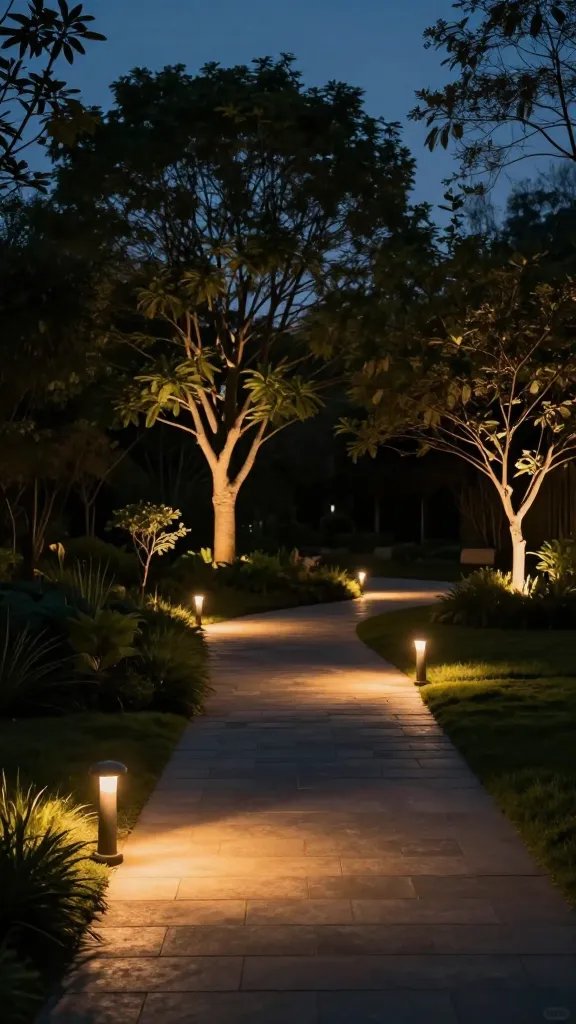
Okay, let’s talk about light pollution. It’s not just a city problem; even subtle, poorly placed garden lights can mess with your sleep. Your body needs darkness to produce melatonin, the hormone that tells you it’s time to sleep. Designing your garden with smart, sleep-friendly lighting is absolutely crucial for optimizing your circadian rhythm.
We’re aiming for a balance here: enough light for safety and ambiance, but not so much that it interferes with your natural sleep cycle. Think subtle, strategic, and warm-toned. Seriously, this might be the most overlooked aspect of sleep-friendly garden design!
Smart Lighting Principles:
- Downward-Facing Fixtures: Direct light downwards to illuminate paths and features without spilling upwards into the night sky or your windows.
- Warm Color Temperatures: Opt for lights in the 2200K-2700K range (yellow/orange hues) which are less disruptive to melatonin production than blue-rich white lights.
- Dimmers & Timers: Essential for adjusting intensity and ensuring lights turn off automatically as bedtime approaches.
- Motion Sensors: For security lights, ensuring they only activate when needed, minimizing unnecessary light exposure.
- Minimal Use: Less is often more. Only light what’s necessary for safety and enjoyment.
Avoid bright, white, or blue-toned lights in the evening. These mimic daylight and can trick your brain into thinking it’s still daytime, suppressing melatonin and making it harder to fall asleep. Your garden should ideally become a dark, starry haven after hours.
How to Recreate This Look
- Replace any upward-shining or overly bright garden lights with low-level, downward-facing path lights or bollards that cast a soft, warm glow.
- Install smart string lights or solar lanterns with warm color temperatures (2200K-2700K) that can be dimmed or set on a timer to turn off automatically by a specific hour.
- Ensure any security lighting has motion sensors and is positioned to illuminate only specific areas when triggered, preventing constant light pollution.
Picture This
As darkness fully descends, your garden transforms. Only a few strategically placed, warm-toned path lights softly illuminate the way, casting gentle shadows. The sky above is a canvas of twinkling stars, unobscured by harsh light. Your bedroom window looks out onto a serene, dark landscape, inviting deep, uninterrupted slumber.
By being mindful of your outdoor lighting, you’re actively supporting your body’s natural sleep processes. It’s a simple, yet powerful, way to ensure your garden contributes to your best sleep ever, rather than hindering it.
There you have it! Your garden isn’t just a pretty space; it’s a powerful tool for wellness. By implementing these five circadian-friendly design tips, you’re not just creating a beautiful outdoor oasis, you’re investing in better sleep and a healthier, happier you. So, what are you waiting for? Get out there and start designing your way to dreamland!