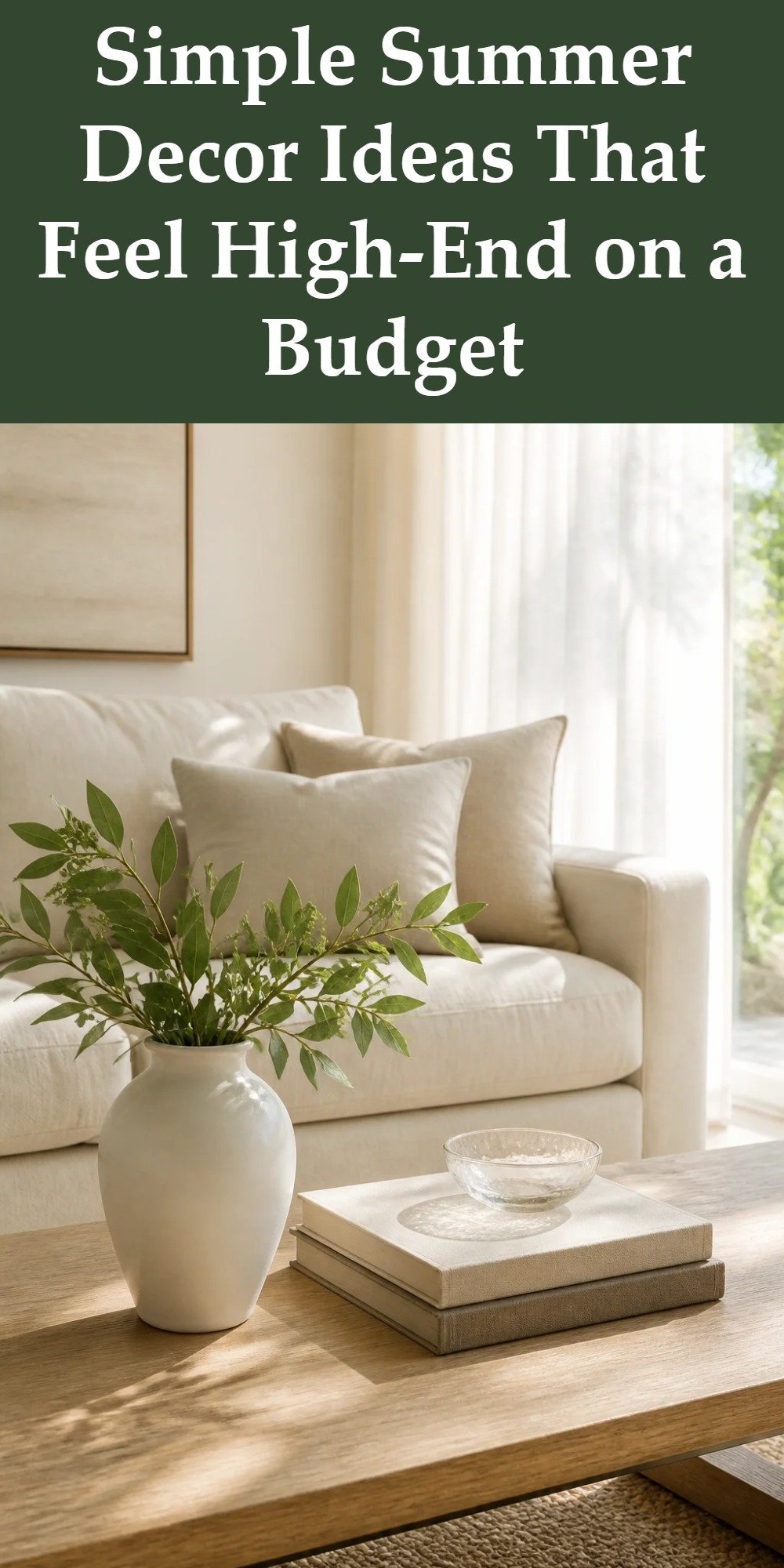
You know that feeling when you walk into a beautifully styled home and think, “How did they make it look so expensive?” Here’s the secret: it’s not about spending more—it’s about doing less, but doing it intentionally. This summer, I’m sharing the surprisingly simple tricks that’ll make your space look like it belongs in a luxury magazine, no renovation required.
Why Less Really Is More When It Comes to Summer Decor
Let’s talk about the elephant in the room—or rather, all the stuff cluttering up your room. The fastest way to make any space look more expensive? Clear out the visual noise.
I’m not talking about becoming a minimalist overnight or Marie Kondo-ing your entire house. I’m talking about looking at that bookshelf, console table, or coffee table with fresh eyes and asking yourself: “Is everything here earning its spot?”
Start by removing pieces you’ve stopped actually seeing. You know the ones—the decorative bowl you bought three years ago, the extra picture frame that seemed like a good idea at the time, the candles you never light. When you edit down to only what you genuinely love, something magical happens.
The items that remain suddenly look more important. More curated. More intentional. And that intentionality? That’s what luxury interior designers charge thousands of dollars to create.
The Breathing Room Principle
Here’s what changed everything for me: I started thinking about negative space as an actual design element. When every surface is covered, nothing gets to shine. But when you leave breathing room around your favorite pieces, they become focal points instead of just part of the background.
Try this—pick one surface in your home and remove half of what’s on it. Live with it for a day. I’m betting you’ll love how much calmer and more sophisticated it looks.
How to Use Color Psychology for an Elevated Summer Feel
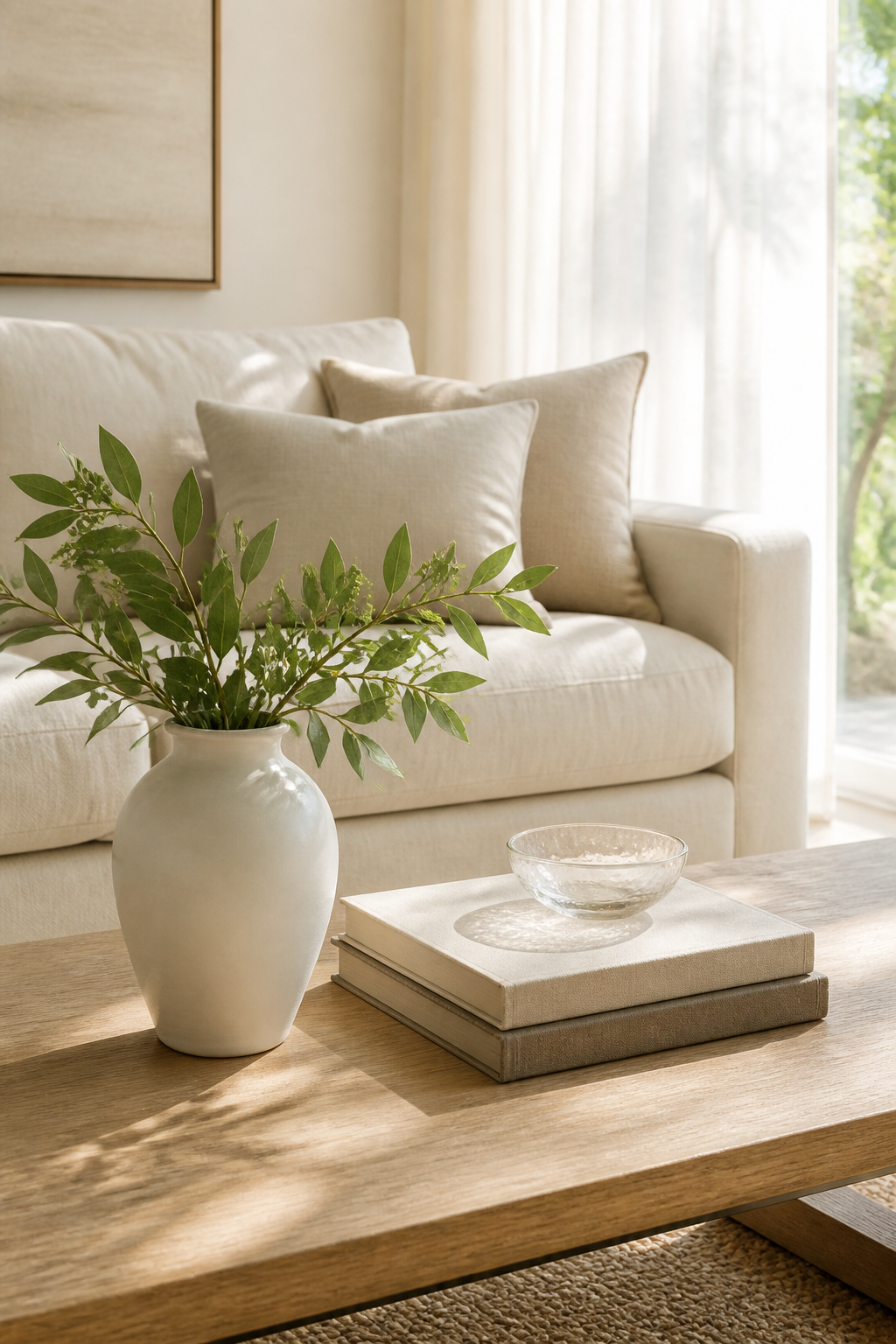
Color is doing way more heavy lifting in your home than you realize. And during summer, when natural light is abundant and we’re craving that breezy, resort-like vibe, your color choices matter even more.
The trick isn’t repainting your walls or buying new furniture. It’s swapping out the small, changeable elements in softer, lighter tones. Think creamy whites, warm sandy beiges, soft grays, and touches of watery blue or sage green.
Easy Color Swaps That Make a Big Impact
Pillow covers are your best friend here. Seriously, this is the easiest high-end update you can make. Swap out those jewel tones or dark colors for linen textures in neutral shades, and watch your whole room transform.
- Replace darker throw blankets with lightweight cotton or linen in cream or soft white
- Switch out colorful table runners for natural woven materials
- Swap bright artwork for prints with softer, muted palettes
- Change out heavy curtains for sheer whites or light naturals
The beauty of softer colors in summer is how they interact with light. They reflect it instead of absorbing it, making your entire space feel brighter, airier, and yes—more expensive. Light-filled rooms always photograph better too, FYI, which is why Pinterest is full of them.
Bringing the Outdoors In: Fresh Elements That Elevate Everything
Want to know the styling secret that high-end hotels and designer showrooms use constantly? Fresh, natural elements. And I don’t mean elaborate floral arrangements that cost a fortune.
A simple bowl of lemons on your kitchen counter. A few stems of eucalyptus in a glass vase. Branches from your backyard arranged in a tall pitcher. These aren’t just pretty—they signal that someone is actively caring for this space, which immediately makes it feel more special.
Budget-Friendly Natural Styling Ideas
You don’t need a weekly flower subscription to make this work. Hit up your local grocery store or farmer’s market and look for:
- Single-variety stems (one type of flower or greenery looks more sophisticated than mixed bouquets)
- Seasonal fruit displayed in wooden or ceramic bowls
- Potted herbs that serve double duty as decor and cooking ingredients
- Branches or greenery from your own yard (free!)
The imperfection of natural elements is exactly what makes them work. A slightly asymmetrical branch arrangement or a lemon with a little stem still attached? That’s not messy—that’s organic and authentic. And authenticity always looks expensive.
The Art of Intentional Styling (Not Just Decorating)
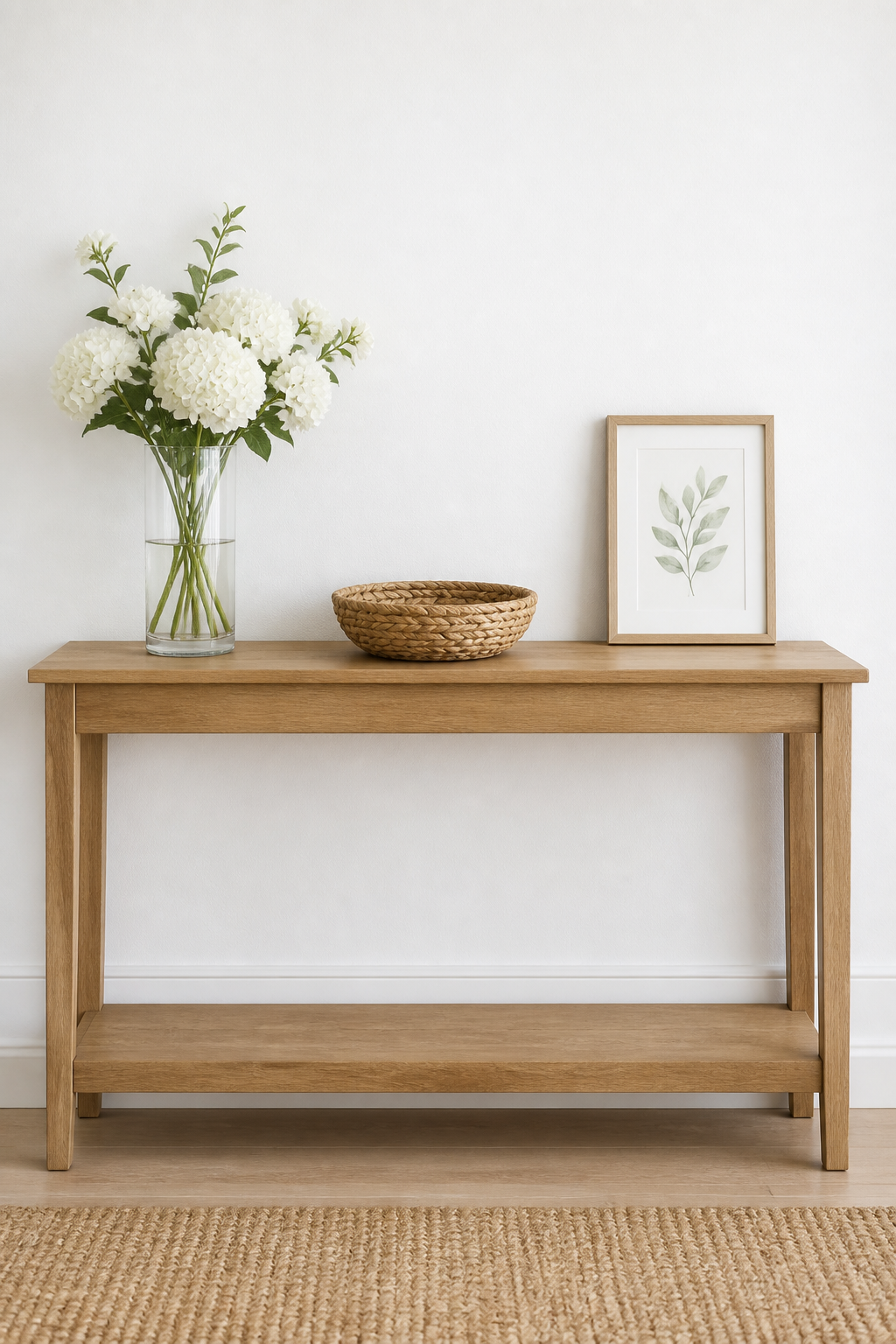
Here’s where we separate the amateurs from the pros. Decorating is putting things around your home. Styling is creating purposeful little moments that tell a story.
Instead of spreading decor evenly across every surface, try grouping items in small, thoughtful vignettes. This is styling 101, and it’s a game-changer.
The Rule of Three (and How to Break It)
Designers often use odd-numbered groupings because they’re naturally pleasing to the eye. Try grouping three items together with varying heights:
- A stack of beautiful books
- A candle in a simple holder
- A small vase with fresh stems
But here’s the thing—you can also use just one statement piece if it’s beautiful enough. A single oversized bowl. One gorgeous candle. A sculptural vase on its own. Sometimes one perfect item beats three good ones every time.
The key is leaving space around your groupings. Don’t crowd them. Let them breathe. That negative space is what makes each piece look chosen and special rather than just randomly placed.
Ask Better Questions When Styling
Before you place something down, pause and ask: “Do I actually love this here, or am I just filling space?” If you’re just filling space, put it away. The restraint to leave something off the table is what separates okay rooms from stunning ones.
Let There Be Light: The Free Design Element You’re Ignoring
I’m about to save you hundreds of dollars. Ready? The most powerful design tool you have costs absolutely nothing—it’s natural light.
If you’re blocking your windows with heavy curtains, oversized furniture, or clutter, you’re working against yourself. Natural light makes everything in your home look better. It softens colors, highlights textures, and creates depth.
Maximizing Natural Light Without Renovations
- Open your curtains wider than you think you should – Push them all the way to the edges of your window frame, not just partway
- Move furniture away from windows – Even six inches can make a difference in how light flows
- Clean your windows – Seriously, when’s the last time you did this? Dirty glass blocks more light than you’d think
- Use mirrors strategically – Place them across from windows to bounce light deeper into the room
- Choose sheer or light-filtering window treatments – You can have privacy without darkness
In summer especially, that golden hour light streaming through clean windows will make even the simplest decor look incredible. It’s literally free luxury, and you’re probably already paying for it in your rent or mortgage—might as well use it.
Small Changes That Create a Cohesive, High-End Look
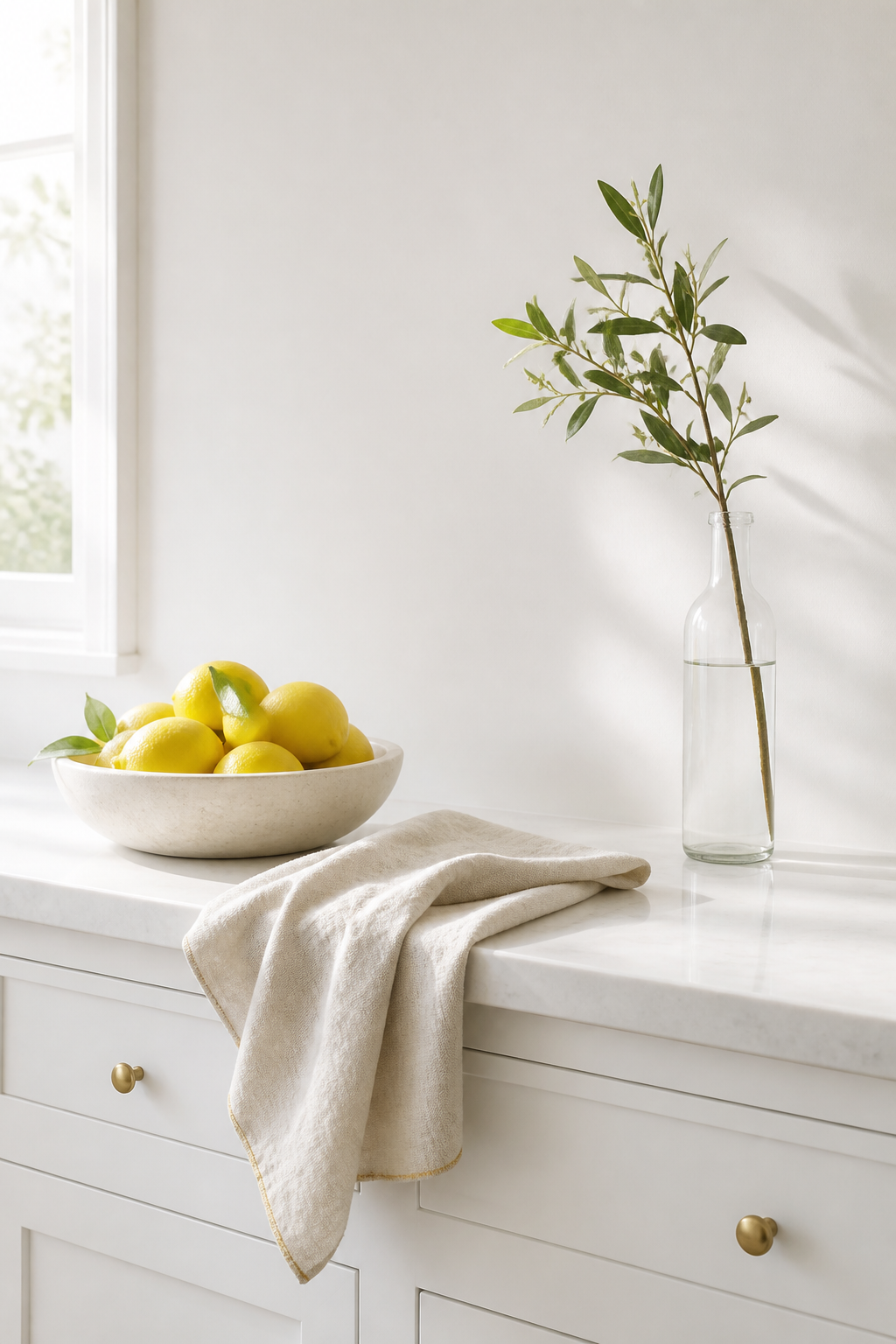
The difference between a room that feels thrown together and one that feels designed often comes down to cohesion. Everything doesn’t need to match perfectly, but it should feel like it belongs together.
Creating Visual Harmony
Look around your space and notice if there’s a common thread. Maybe it’s a color that appears in three different places. Maybe it’s a material like wood or brass that repeats. Maybe it’s a style aesthetic like coastal or modern farmhouse.
When you’re adding new pieces or editing what you have, ask if they support that thread. IMO, a room with a clear point of view always looks more expensive than one that’s all over the place stylistically.
Texture Is Your Secret Weapon
Since we’re working with softer, neutral colors for that elevated summer vibe, texture becomes even more important. Layer different materials to keep things interesting:
- Smooth ceramics with rough linen
- Glossy surfaces with matte finishes
- Natural wood with soft textiles
- Metal accents with organic elements
This layering creates visual interest without relying on bold colors or busy patterns. It’s sophisticated, it’s calming, and it photographs beautifully (hello, Pinterest-worthy rooms).
The Power of Restraint in Summer Decorating
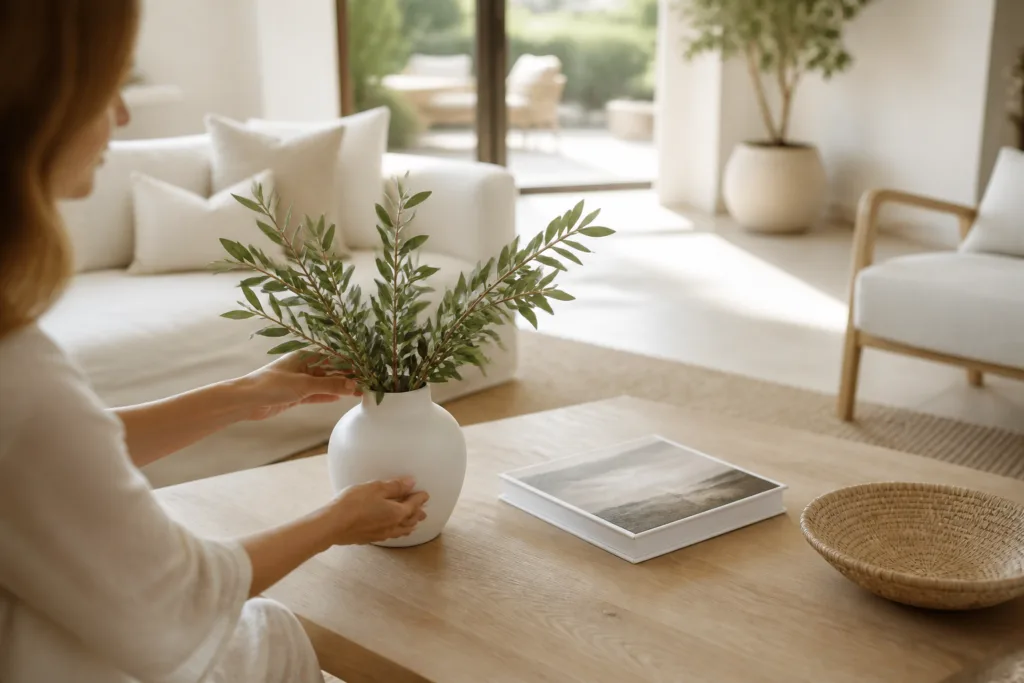
Here’s what I’ve learned: elegant decorating isn’t about having the best things or the most things. It’s about choosing carefully and then having the discipline to stop.
That coffee table doesn’t need five things on it. Three is probably plenty. Maybe even one. Your shelves don’t need to be completely full—in fact, they definitely shouldn’t be.
Restraint is luxury. It says, “I’m confident enough in my choices that I don’t need to keep adding more.” It lets each piece you do have feel special and seen.
This summer, try editing instead of adding. Remove instead of rearrange. Simplify instead of style harder. I promise you’ll be amazed at how much more expensive and intentional your home feels.
Frequently Asked Questions About Creating an Elevated Summer Home
How can I make my home look expensive on a budget?
The quickest way to create an expensive look without spending money is to declutter and edit what you already have. Remove excess decor, stick to a cohesive color palette of neutrals, and let natural light in. These cost-free changes create the clean, intentional look associated with high-end design. When you do spend, invest in a few quality basics like linen pillow covers or a beautiful vase rather than lots of cheaper items.
What colors make a room look more expensive in summer?
Soft, light neutrals create the most elevated summer feel—think creamy whites, warm beiges, soft grays, and touches of muted blue or green. These colors reflect light beautifully, make spaces feel larger, and provide a calm, sophisticated backdrop. They also photograph well and have staying power beyond seasonal trends, which is exactly what makes them look expensive.
How do I style my home without making it look cluttered?
Focus on groupings rather than spreading decor everywhere. Create small, intentional vignettes with three to five items, and leave generous space around each grouping. Before placing any item, ask yourself if you truly love it in that spot or if you’re just filling space. Use the editing principle: when you think you’re done styling, try removing one more thing. That restraint is what creates a curated, high-end look.
What are the best fresh elements to add to summer decor?
Simple is always better than elaborate. Try a bowl of fresh citrus fruits, single-variety flower stems in a clear vase, potted herbs, or greenery from your own yard. Eucalyptus, hydrangeas, and garden roses are all budget-friendly options that look expensive. The key is keeping arrangements simple and unfussy—one type of element looks more sophisticated than a mixed bouquet.
How can I make my small space feel more high-end?
Light and restraint are especially important in small spaces. Maximize natural light by keeping windows unobstructed and using sheer curtains. Stick to a limited color palette to create visual calm. Edit ruthlessly—small spaces can’t handle clutter and still look expensive. Use mirrors to reflect light and create depth, and choose fewer, better-quality pieces rather than filling every corner.
What’s the biggest mistake people make with summer decorating?
Trying to do too much. People often think “decorating for summer” means adding beach-themed items, bright colors, and lots of accessories. But the most elevated summer homes actually do the opposite—they simplify, lighten up, and let natural elements and sunlight do the work. The biggest transformation comes from removing and editing, not from adding more.
Your Home, Elevated and Entirely Yours
The beautiful thing about these simple changes is that they’re not really about following rules or copying someone else’s style. They’re about creating space—literally and visually—for your home to feel like the calm, beautiful retreat you deserve.
You don’t need a bigger budget, a complete makeover, or designer connections. You just need to edit with intention, embrace simplicity, and let the light in. Those small, thoughtful choices? They’re what transform a house into a home that feels both elevated and authentically yours.
So go ahead—clear that coffee table, swap those pillow covers, grab some fresh stems from the market, and watch your space transform. Pin this for later when you need a refresh, and remember: the most beautiful homes aren’t the ones with the most stuff. They’re the ones where every piece gets to shine.