
You don’t need a 2-hour sunrise ritual to feel okay. You need a morning that respects your brain before demanding anything from it. Think less “optimize everything,” more “let’s not spiral by 9 a.m.” You can build that kind of morning in small, doable steps—and it’ll actually stick.
Start by ditching the chaos

Your mind hates frantic energy.
If your morning starts with doom-scrolling and panic toast, your nervous system clocks that vibe and rides it all day. Let’s reset. What to try instead:
- Delay your phone for the first 15–30 minutes. Your brain needs a warm-up, not a firehose of hot takes.
- Prep one tiny thing at night: clothes, breakfast, or your to-do list.Future You will send a thank-you note.
- Pick a “first anchor” habit: water, light, or breath. Start with one. That’s enough.
Your 3-minute “calm the noise” routine
- Open blinds.Look outside for 60 seconds. Natural light = brain gets the memo that it’s daytime.
- Drink water. Add a pinch of salt or lemon if you’re fancy.Caffeine later, calm now.
- Take 5 slow breaths. Count 4 in, 6 out. Yes, it feels basic.It also works.
Build a mental warm-up, not a bootcamp
You don’t need to meditate for 30 minutes. You need a gentle ramp from groggy to focused. Think “brain stretches,” not CrossFit for your soul. Choose one:
- 60-second body scan: Start at your forehead, drop your shoulders, unclench your jaw.Repeat down to your toes.
- Micro-journaling: Write 3 lines: What I feel, what I need, what matters today.
- Gratitude with a twist: Note 1 good thing you didn’t control. Builds acceptance, not toxic positivity.
A 5-minute mind-primer (IMO the sweet spot)
- Write the one thing that moves your day forward. Only one.
- Identify the first 10-minute step for it.
- Write a nice sentence to yourself like you’re not your own enemy. “You got this” counts.Cheesy and effective.

Move just enough to change your mood
We’re not training for the Olympics before 8 a.m. We’re flipping the neurotransmitter switch from meh to okay. Movement clears mental cobwebs and dampens anxiety. Pick your vibe:
- 2-minute mobility: Neck circles, shoulder rolls, hip hinges.Your spine will write poetry.
- 10-minute walk outside if possible. No pace goal. Let your eyes land on far-away things—it calms your nervous system.
- Stairs as cardio: Go up and down for 5 minutes.Free mood boost, zero equipment.
Pair movement with a mental cue
– On each exhale, say “down.” You’re literally telling your system to settle. – Play one song you love and move to the beat. No choreography, no shame, full vibes.
Nourish your brain, not just your hunger
Blood sugar rollercoasters can wreck your focus and mood. You don’t need a biohacking pantry; just build a basic breakfast that treats your brain kindly. Simple combos that work:
- Protein + fiber: Eggs + berries, yogurt + chia, tofu scramble + whole-grain toast.
- Healthy fats: Nuts, avocado, olive oil drizzle.Brain loves these.
- Hydration before caffeine: Coffee hits gentler when you’re not a raisin.
FYI: Coffee strategy that avoids jitters
– Wait 60–90 minutes after waking. Cortisol drops, caffeine lands smoother. – Eat something first if you get anxious on an empty stomach. Your future group chat self will thank you.
Protect your attention like it’s your rent money
Boundary-setting sounds intense; in practice, it’s just a few switches.
Your morning can feel peaceful without full-on monk vibes. Try these guardrails:
- No inbox before intention: Write your one thing first. Then open email.
- Notifications off until a set time (e.g., 9 a.m.). Your brain doesn’t need pop-up whack-a-mole.
- Use a “Focus First” playlist or ambient noise.Soundscapes can gatekeep your attention in a good way.
The 20-minute focus block
– Sit down, set a timer, and do only the first step of your priority. – When your brain wants to bail, say “not yet” and return once. If it bails again, you’re done. Celebrate anyway.
You kept the promise.
Choose one connection ritual
Humans don’t thrive in isolation. You don’t need a heartfelt novel every sunrise, but a small connection calms the mind and sets a kinder tone. Options that don’t feel like homework:
- Send one “thinking of you” text—no need for a reply. It counts.
- Two-minute cuddle with your partner, kid, or pet.Oxytocin > anxiety.
- Talk to yourself like a teammate: Out loud, one encouraging sentence. Dorky? Sure.Effective? Also yes.
Design your environment to do half the work
Willpower is fickle. Systems are loyal.
If your space makes the right choice easier, you win by default. Low-effort tweaks:
- Set out your “first anchor” where you wake: water bottle, book, journal, or walking shoes.
- Keep your phone far away from your bed. Use a $10 alarm clock. Revolutionary stuff.
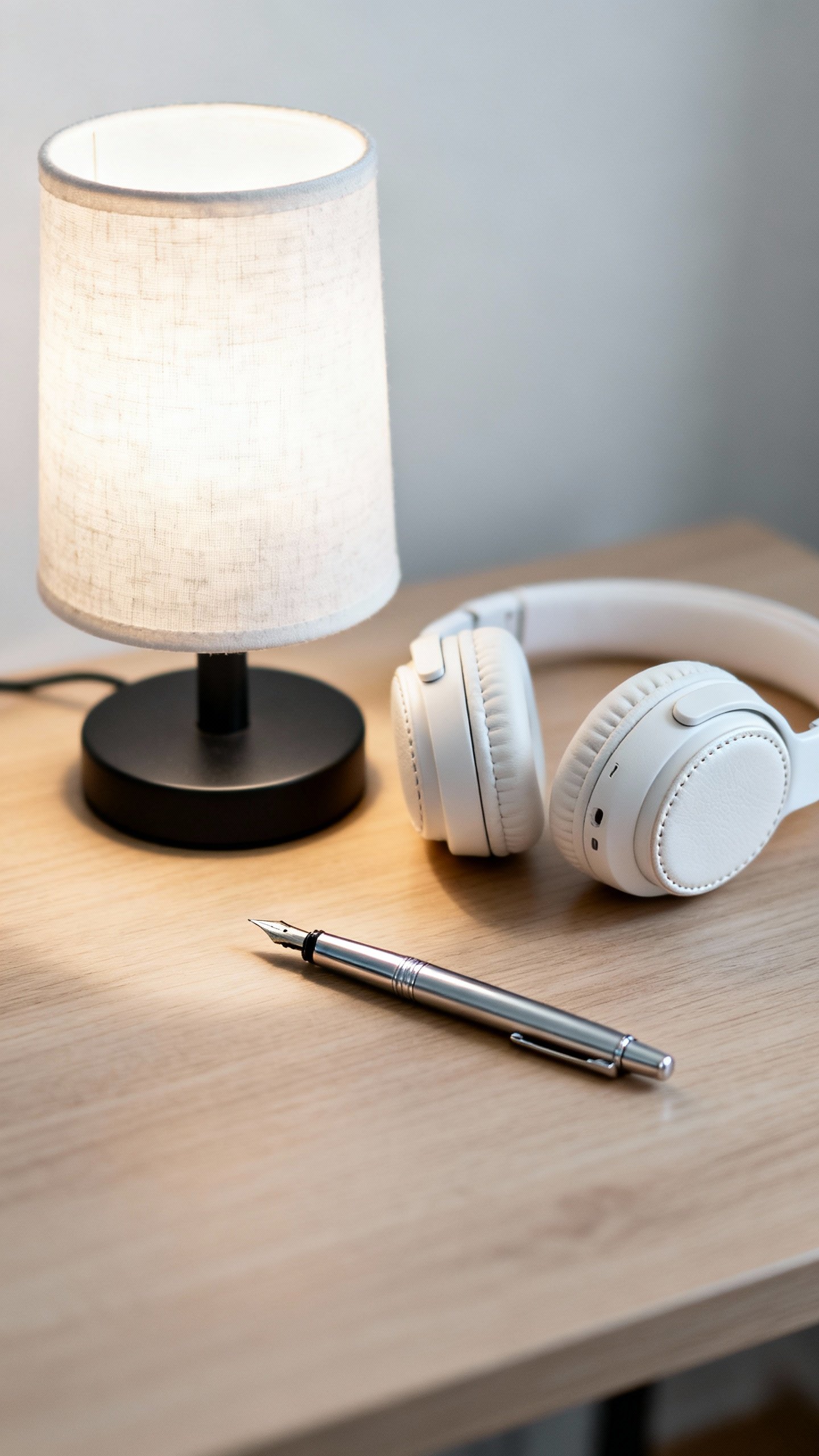
- Make a “no-think” station with a lamp, pen, paper, and headphones.When you sit there, your brain knows the script.
Habit stacking example (IMO the easiest way to start)
– After I open the blinds, I drink water. – After water, I write three lines. – After writing, I step outside for 3 minutes. That’s it. Three moves, five to ten minutes, big payoff.
Sample morning routines (mix and match)
5-minute minimum viable calm
- Open blinds + water
- Three-line journal
- One song stretch
15-minute steady start
- Light exposure + 5 breaths
- Protein snack and coffee plan
- Write the one thing + first 10-minute step
30-minute mental wellness booster
- 10-minute walk outside
- Short breakfast (protein + fiber)
- 20-minute focus block on your priority
FAQ
What if mornings already feel cramped?
Shrink the routine.
Pick one anchor habit that takes two minutes and guard it. The consistency matters more than the length. You can always add later once it sticks.
Do I need to wake up earlier?
Not necessarily.
If earlier means less sleep, skip it. Sleep is the top-tier mental health tool. Reallocate existing time—like trading 10 minutes of scrolling for light, water, and breath.
What if I mess up and miss a day?
You didn’t break anything.
Treat it like brushing your teeth—you just do it again tomorrow. No guilt, no dramatic reinvention. Consistency comes from low-pressure repetition.
Can I combine this with a workout?
Absolutely.
Just keep the “mental warm-up” first: light, breath, intention. Then lift, run, or stretch. You’ll focus better and avoid the “I just sprinted but why am I still frazzled?” feeling.
How fast will I notice a difference?
Often in a week, sometimes in a day.
You’ll likely feel calmer, less twitchy, and more decisive. The real magic shows up after a month when you realize your mornings don’t run you—you run them.
What if I hate journaling?
Don’t journal. Use voice notes, a sticky note, or a single question: “What matters today?” You can also do mental reps in the shower.
The tool serves you, not the other way around.
Conclusion
Your morning doesn’t need to be fancy to be powerful. If you give your brain light, water, a quiet minute, and one clear intention, you change the tone of the whole day. Start tiny, stack slowly, and protect your attention like it’s precious—because it is.
FYI, you don’t need a perfect routine; you just need one that you’ll actually do.