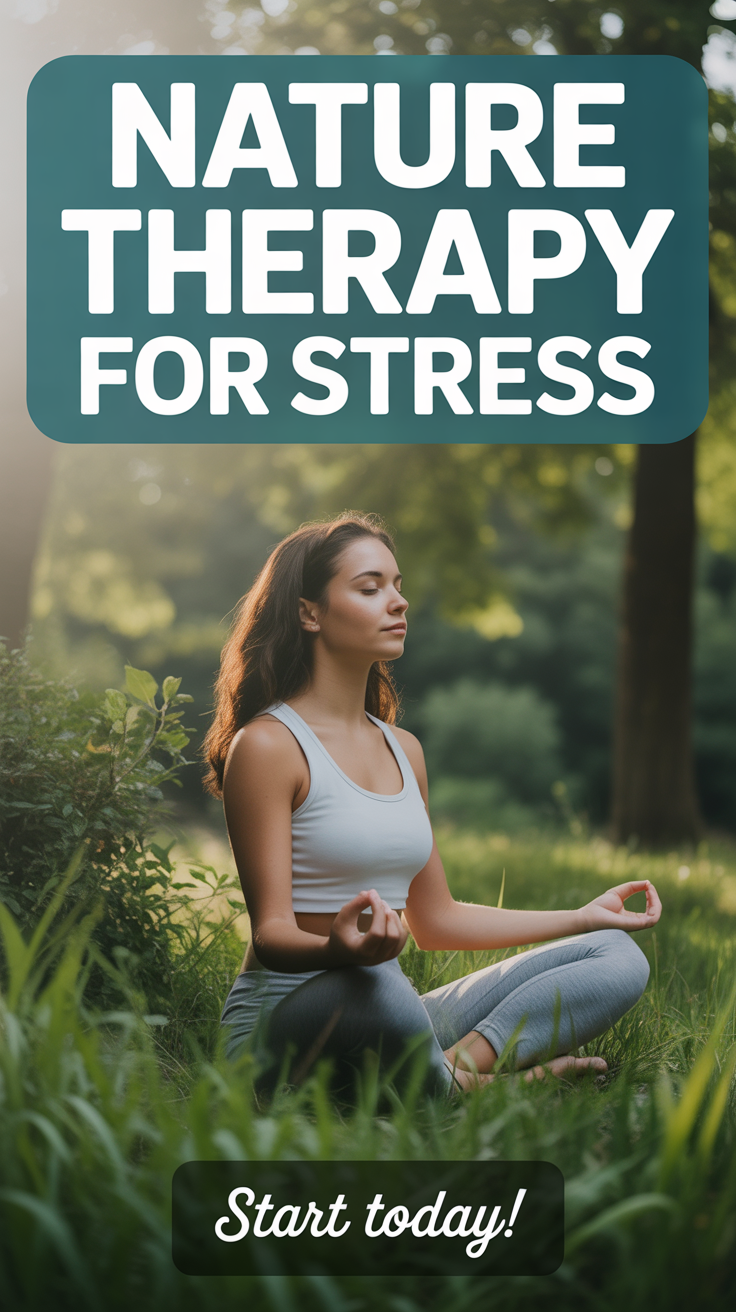
Stress loves to spiral. One tough email, a messy house, a doomscroll session, and suddenly you’re a human tornado. When your brain won’t stop spinning, nature therapy can snap you back fast.
Step outside, touch the earth, listen to the wind, and remember you have a body—not just a shrieking mind. That’s the grounding we’re chasing here.
What “Nature Therapy” Actually Means

Nature therapy isn’t a woo-woo ritual. It’s simply using the outdoors to reset your nervous system.
You step into a natural space—park, backyard, balcony with a scraggly plant—and intentionally engage your senses. That’s it. The magic comes from attention, not location. You don’t need a mountain summit. You can ground yourself in a city park bench if you work with what you’ve got.
Why it works (brain-wise)
– Sensory regulation: Natural sounds, colors, and textures reduce overstimulation and help your brain downshift. – Movement = nervous system reset: A slow walk, a long exhale, and your body says, “We’re safe.” – Presence beats rumination: When you focus on wind on your skin or the smell of rain, your brain has less bandwidth for anxious loops.
Quick Grounding Routines You Can Do Today
You don’t need an hour.
You need 3–10 minutes and a willingness to be present. Pick one and test-drive it.
1) The 5-4-3-2-1 Nature Scan
Stand or sit outside and name: – 5 things you see (cloud shapes count) – 4 things you feel (breeze, bark texture, your feet in shoes) – 3 things you hear (birds, distant traffic, leaves) – 2 things you smell (soil, your coffee) – 1 thing you taste (sip water or notice your mouth) Do it slowly. Breathe.
Yes, you’ll feel a little ridiculous. Yes, it works.
2) Barefoot Earth Time
Grass, sand, soil—get your feet on it. Feel the temperature, the unevenness, the pressure.
Wiggle your toes and shift your weight with tiny movements. Give it two minutes. Notice how your shoulders drop without asking for permission.
3) Tree Lean + Box Breathing
Find a tree. Lean your back against it like it’s a reliable friend.
Then breathe: – In for 4 – Hold for 4 – Out for 4 – Hold for 4 Repeat 6–8 rounds. You’ll feel your body respond. IMO this combo is sneaky-powerful.
4) Micro Hike, Macro Awareness
Walk 5–10 minutes at a snail’s pace.
Track one sense at a time: – 60 seconds: only sound – 60 seconds: only sight – 60 seconds: only touch (air on skin, clothes, ground) Rotate through 2–3 rounds. You’ll finish feeling like you just “defragged” your brain. FYI, you’ll also look suspiciously peaceful, which is a fun plot twist for your day.

Make It Routine Without Making It Boring
Grounding works best when you don’t treat it like a chore.
Build it into your life quietly and consistently.
- Anchor it to existing habits: Every time you finish a call, step outside for 90 seconds and do three slow breaths.
- Use weather as a prompt: Light rain? Go smell the air. Windy?
Feel it on your face for one minute. Sun? Close your eyes and soak the warmth.
- Keep a “nature go-bag”: Small towel, water, a light jacket.
Zero excuses.
- Pick a “sit spot”: Same bench, same tree, same stoop. Familiarity helps your nervous system settle faster.
Gamify, but gently
– Do a 7-day “two-minute ground” streak. – Take one photo a day of something alive. – Track a single tree through the seasons. Yes, this turns you into a tree nerd.
No, that’s not a bad thing.
Nature Therapy for Different Moods
Different nervous system states respond to different inputs. Match your practice to your vibe.
If you feel wired and anxious
– Choose shade, water, and repetitive sounds (waves, rustling leaves). – Try a slow exhale focus: inhale 4, exhale 6–8. – Stay low stimulation: avoid crowded paths.
If you feel numb or flat
– Go for morning sun and movement. – Use a brisk sensory scan: find three bright colors, two strong scents, one interesting texture. – Add light challenge: a small hill, a new route, or a time goal.
If you feel overwhelmed
– Pick one sense—usually touch—and anchor there. Hold a smooth stone.
Press your palm to tree bark. Notice temperature and pressure. – Keep it short and repeatable: 90 seconds, several times a day.

Urban Nature Counts (Don’t @ Me)
No forest? No problem.
You can ground in tiny wild pockets.
- City parks and street trees: Focus your attention on trunk patterns, leaf veins, or bird calls between sirens.
- Balcony botanizing: Pot a hardy plant. Watering and touching soil equals built-in grounding.
- Window nature: Track the sky for 60 seconds. Watch clouds move.
That’s still nature. IMO purity tests are overrated.
- Soundscapes: Nature audio can help when you’re stuck inside. Pair it with a plant or a found stone for a tactile cue.
Safety, Comfort, and Accessibility
Let’s keep your grounding safe and actually doable. – Allergies or sensitivities? Choose hard surfaces and keep wipes or meds handy.
Avoid high-pollen times. – Mobility limitations? Use seated grounding in a courtyard or near an open window. Focus on skin-level sensations and breath. – Extreme weather? Short bursts. Shade in heat, wind-block in cold.
Or do “window grounding” with the window cracked for fresh air. – Boundaries matter: If a space feels sketchy, skip it. Your nervous system can’t settle if you don’t feel safe.
What to notice as you progress
– You find the outside “slows down” faster. – Your body cues become clearer: jaw unclenches, breath deepens. – You reach for grounding before spirals start. That’s the win.
Level-Up: Add Meaning Without Getting Mushy
Once you’ve got the basics, sprinkle in a little personal ritual. – Start and end a walk with a phrase: “Arriving here.” “Leaving lighter.” Simple, not spooky. – Micro gratitude: Name one living thing that made your day better: the maple, the moss, the loud but charming crow. – Track the tiniest changes: New buds, different bird calls, soil after rain.
You’ll rebuild your attention span by accident.
Common Mistakes to Avoid
– Multitasking the moment to death: No emails, no podcasts during grounding time. This is not cardio. – Going big too fast: Don’t plan a 3-hour hike if two minutes overwhelms you. Start small, stay consistent. – Judging your experience: If you feel nothing, that’s data.
Try a different sense or time of day. Curiosity beats performance.
FAQ
How long should a nature therapy session last?
Short answer: 2–10 minutes works great for grounding. Longer walks help, but consistency matters more than duration.
If you only have 90 seconds between meetings, take them. Your nervous system loves micro-doses.
Do I need a forest to get benefits?
Nope. Parks, yards, balconies, and even open windows count.
Focus on quality of attention over postcard views. One leaf, fully noticed, beats a thousand ignored trees. FYI, you can do real grounding on a city sidewalk with a pocket stone.
What if I feel silly doing this?
Welcome to the club.
Try subtle practices: breathe while leaning on a railing, touch a leaf like you’re just curious, or do a silent sensory scan. The goal isn’t to look enlightened; it’s to feel human again.
Can I combine nature therapy with other techniques?
Absolutely. Pair it with breathing exercises, gentle stretching, or a short gratitude note.
If you already do therapy or meditation, consider nature sessions your “field practice.” They reinforce each other.
How soon will I notice results?
Often immediately—think 1–3 minutes for a noticeable downshift. Deeper benefits build over a few weeks of regular practice. Track simple cues: slower breath, less jaw tension, easier focus after you come back inside.
What if the weather is terrible?
Adapt, don’t quit.
Two minutes by a cracked window, a look at the rain’s texture, or a hand on a potted plant still helps. Use a coat, umbrella, or sunhat like a grown-up and carry on.
Conclusion
Grounding with nature doesn’t need gear, credentials, or a perfect trail. It needs attention, a bit of curiosity, and a willingness to pause.
Step outside, connect with one real thing, and let your body remember safety. Do that often and, IMO, you’ll feel steadier than any to-do list could ever make you.