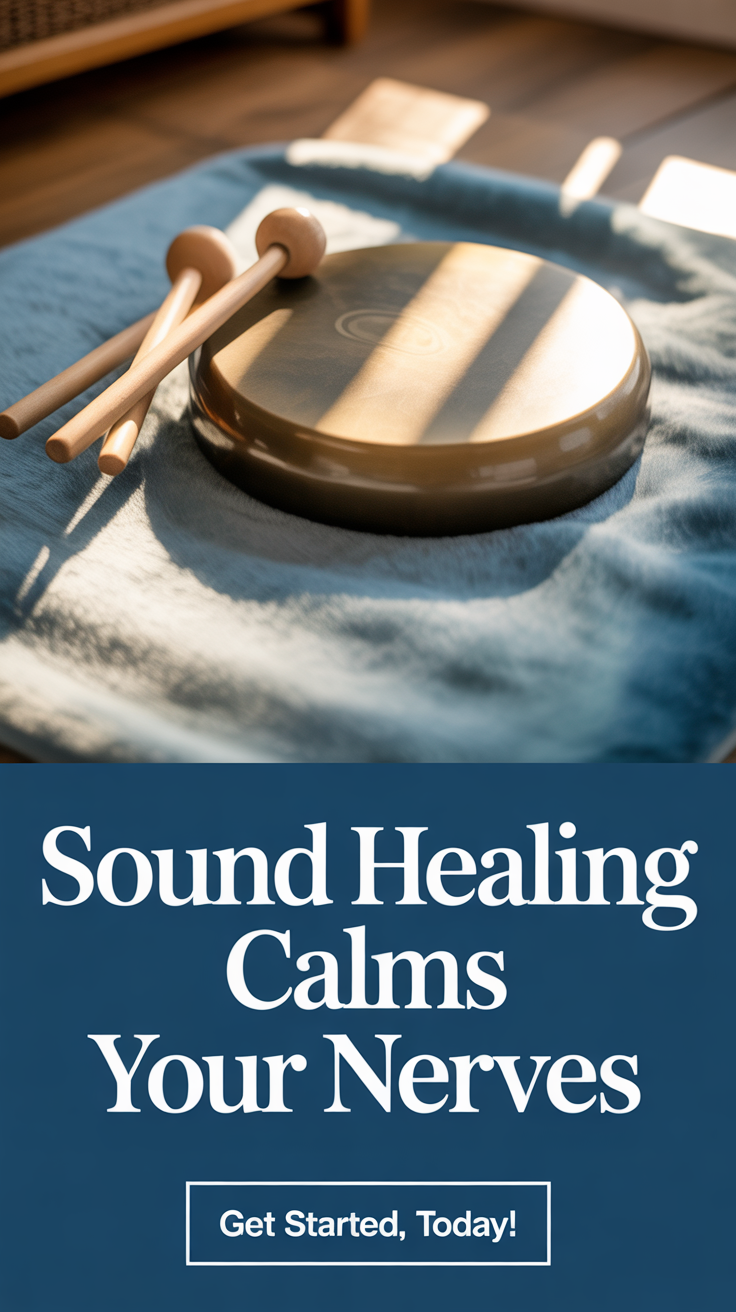
You already use sound to regulate yourself—you hum while you cook, you blast music on a drive, you sigh when stressed. Sound healing just makes that instinct intentional. Think of it as tuning your nervous system like a guitar: small adjustments, better resonance.
No crystals required (unless you’re into that).
What “Sound Healing” Actually Means
Sound healing uses specific sounds, rhythms, and vibrations to help your body and mind shift states. You don’t need perfect pitch or a gong the size of a small moon. You just need attention and tools that feel good. At its core, sound healing helps you:
- Slow down your breathing and heart rate
- Interrupt racing thoughts and rumination
- Release muscle tension and emotional static
- Build a reliable self-regulation routine
You can do this with your voice, simple instruments, or even your phone.
IMO, your voice is the most underrated healing instrument you own.
The Nervous System, But Make It Simple
Your nervous system loves rhythm. When you hear steady, soothing sounds, your body starts to mirror that calm pattern. That’s called entrainment.
You don’t have to “believe” in it—it just happens because biology. What shifts when you use sound:
- Breath gets deeper and slower
- Vagus nerve activation increases (hello, relaxation response)
- Muscles unclench (especially jaw, neck, shoulders)
- Brain waves drift from high-alert beta into chill alpha/theta zones
Quick test
Hum for 60 seconds. Feel the vibration in your chest and face. Notice your exhale lengthen.
That’s self-regulation in action, no app subscription needed.

Your Starter Kit: Instruments You’ll Actually Use
You can start with zero gear, but if you like gadgets (same), here are easy options. No-gear options:
- Humming (mmm sound)
- Chanting simple tones like “OM” or “AH”
- Counting breaths out loud (4 in, 6 out)
Budget-friendly tools:
- Tuning fork (128 Hz or 256 Hz) for gentle vibration on chest or palm
- Chime or tingsha to start and end sessions
- Shaker or small drum for grounding rhythms
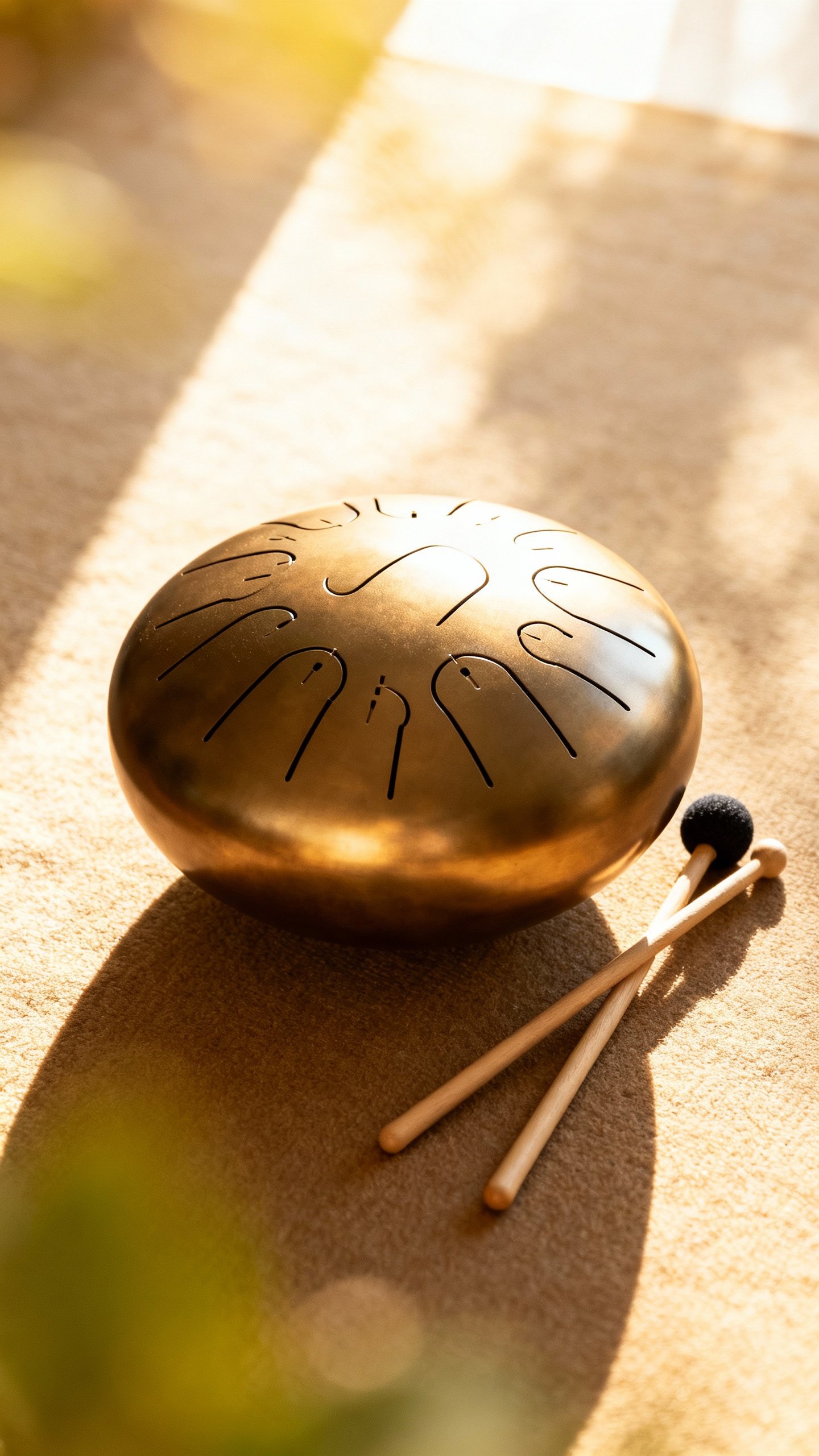
- Steel tongue drum for soothing melodies without musical training
Digital helpers:
- White/brown noise for focus or sleep
- Binaural beats or isochronic tones (FYI: science is mixed, but many people enjoy them)
- Guided sound baths on YouTube or apps
Pro tip
Buy instruments you love the sound of at low volume. If it grates when quiet, it won’t magically feel good later.
Five Simple Practices To Try This Week
No marathon sessions. Think tiny rituals that stack over time.
- 60-Second Hum Reset
Sit tall.Inhale through your nose. Hum on the exhale with lips closed. Repeat 8–10 times.Aim the buzz into your cheekbones and chest. Check your jaw—drop your tongue from the roof of your mouth.
- Box Breathe + Chime
Strike a chime. Inhale 4, hold 4, exhale 4, hold 4.Repeat for 3–5 minutes. Use the chime again to close. It’s like bookends for your nervous system. - Heartbeat Drum
Lightly tap your chest or a small drum in a lub-dub rhythm.Slow it down gradually. Your body follows. Great before bedtime. - Morning Tone
Choose one vowel: “OO,” “OH,” or “AH.” Sing it softly for three breaths, then switch.Notice which tone feels most grounding. Keep that one for the week. - Noise Nest for Focus
Play brown noise quietly while you work. It masks distractions and reduces nervous-system pinging.Start at low volume; you want cocoon, not concert.
How long should you practice?
Start with 3–7 minutes daily. Consistency beats intensity. Think toothbrush, not spa day.
Make It Sensory: Stack Sound With Breath and Touch
Layering senses amplifies regulation. Fancy term: multisensory integration.
Non-fancy: it works. Try this combo:
- Left hand on heart, right hand on belly
- Slow inhale, hum the exhale
- Gently sway or rock your body
- Eyes half-closed or soft gaze
You’ll feel more present, less floaty. And yes, it looks a bit odd. We’re choosing calm over cool.
Choosing Sounds That Fit Your Nervous System
Not all soothing sounds soothe everyone.
You’re unique, not a spreadsheet. Ask yourself:
- Do low, warm tones relax me more than bright, high ones?
- Do I like rhythm (drum, heartbeat) or drone (hum, bowl)?
- Do nature sounds calm me more than melodic music?
Build your personal menu
Make three playlists:
- Grounding (drums, low drones, brown noise)
- Soothing (ocean waves, soft piano, tongue drum)
- Reset (chimes, bowls, short hum tracks for quick breaks)
FYI, low, repetitive sounds usually ground; airy, shimmering tones often uplift. Test and note what actually helps you, not what sounds “spiritual” on Instagram.
Common Mistakes (And Easy Fixes)
Too loud → Keep volume just above whisper-level. Your nervous system prefers gentle invitations, not sonic smackdowns.
Too long → Short, frequent sessions beat rare 60-minute sound baths.
Forcing breath → If you get lightheaded, shorten exhale humming.
Comfort first, ego never.
Ignoring body feedback → If a sound irritates you, stop. You’re not failing; you’re calibrating.
All head, no body → Add touch or movement when you feel stuck in your thoughts.
DIY vs. Group Sound Baths
Both work.
They serve different vibes. DIY wins when you want:
- Fast resets during work or travel
- Control over volume and timing
- Daily nervous-system training
Group sessions win when you want:
- Big, immersive experience
- Community co-regulation (other people’s calm helps your calm)
- Accountability to actually lie down and relax
IMO, use both. Daily tiny practices plus a monthly sound bath = great combo.
Safety, Science, and Skepticism
You don’t need to check your critical thinking at the door. Sound healing ranges from well-grounded (breath, humming, rhythm) to more speculative claims.
Stay curious and notice your results. General safety notes:
- Keep volume low, especially with headphones
- Avoid heavy low-frequency vibrations if you have migraines or vestibular issues
- If you’re pregnant or have epilepsy or a heart condition, consult your clinician before intense sessions
Feel free to enjoy the practice without buying into lofty promises. If you feel calmer, sleep better, and reset faster, that’s success.
FAQ
How quickly should I notice benefits?
Many people feel calmer within 1–3 minutes of humming or rhythm work. Sleep and focus changes show up after a week of daily practice.
Track simple metrics like mood, tension level, or sleep quality to see your trend.
Do I need perfect pitch or musical talent?
Nope. Sound healing isn’t a talent show. Your nervous system responds to vibration and rhythm, not music theory.
If you can breathe, you can hum. If you can tap, you can drum.
What’s the difference between binaural beats and isochronic tones?
Binaural beats require headphones and use two slightly different tones in each ear to create a perceived beat. Isochronic tones use a single pulsing tone you can hear on speakers.
Some folks love them; some find them annoying. Go by your experience, not hype.
Can I overdo it?
Yes—mostly with volume or intensity. Keep sessions short at first (3–10 minutes), rest your voice if it feels strained, and avoid blasting bowls or gongs near your ears.
Calm doesn’t need to be loud.
What if certain sounds make me anxious?
Totally normal. Skip them. Choose lower tones, slower rhythms, or nature sounds.
Add grounding touch (hand on heart) and slow your exhale. Your menu, your rules.
How do I bring this into a busy day?
Attach micro-sessions to existing habits: hum after brushing your teeth, chime before emails, drum-tap before bed. Tiny, repeatable, low-effort.
That’s how regulation sticks.
Conclusion
Sound healing isn’t magic—it’s mechanics with a side of beauty. You use rhythm and vibration to teach your nervous system how to settle, again and again. Start small, keep it gentle, and build a personal sound menu that feels like home.
And if anyone asks what you’re doing, just say you’re tuning your instrument—because you are.