Slow Living & Mindfulness Guide: Transform Your Daily Glowup
You don’t need a cabin in the woods or a $400 linen robe to slow down. You need a tiny bit of intention, a few doable habits, and permission to opt out of the default “go faster” setting. Ready for a glow-up that actually sticks and doesn’t require a 5 a.m. ice bath?
Let’s make slow living and mindfulness your new secret sauce—without getting weird about it.
What “Slow” Actually Means (And Doesn’t)
Slow doesn’t mean lazy. It means you choose depth over speed, presence over autopilot, and quality over chaos. You still get stuff done—you just stop treating your life like a never-ending fire drill.

Sound nice? It is. Mindfulness simply means you pay attention to what you’re doing while you’re doing it. You notice your breath, your body, your environment.
You stop multitasking your way into exhaustion. That’s it. No incense required (unless you want vibes).
Your Calm-First Morning
Let’s rebrand your mornings from “sprint” to “soft start.” You don’t need an hour-long routine.
You need five minutes of clarity before the day smacks you in the face.
- One-minute breath check: Inhale for 4, hold for 4, exhale for 6. Repeat five times. That’s one minute.
Nervous system says thank you.
- Choose your top three: Write three priorities on a sticky note. If everything is a priority, nothing is.
- Phone discipline: No scrolling until you’ve done the two steps above. Reward yourself after.
The 10-Minute Ritual
Pick one: a short walk, stretching, or making coffee with full attention.
Do it without podcasts, without texts, without juggling ten tabs in your brain. The point: focus. FYI, your day feels slower because your brain isn’t immediately juggling chaos.
Design Your Day for Presence
You don’t need full monk-mode.
You need rhythm. When your brain knows what’s coming next, it stops panicking and starts performing.
- Batch your tasks: Group similar tasks together—emails at 10 and 3, errands after lunch, creative work first thing.
- Set “focus windows”: 25–50 minutes of deep work + a 5–10 minute break. Repeat twice.
That’s a productive morning right there.
- Create micro-pauses: Before each new task, take one breath and ask: “What matters now?” It’s tiny and it works.
The “Not Now” List
Park good ideas you can’t tackle today. Keep a running list titled “Not Now, But Soon.” You reduce FOMO without cluttering your day. IMO, this alone lowers stress by 20%.
Mindful Movement You’ll Actually Do
You don’t need a gym contract or a 10K training plan.
You need movement that feels like care, not punishment.
- Walk with intention: No phone, steady pace, eyes up. Notice colors, sounds, temperature. That’s meditation on legs.
- Stretch to a song: Pick two songs, stretch slowly, breathe deeply.
Short, sweet, done.
- Kitchen tai chi (kind of): While the kettle boils, roll your shoulders, circle your ankles, twist gently. Stack habits and win.
Mind-Body Check-In Script
Ask yourself: “Where do I feel tight? What emotion sits there?
What would 1% softer feel like?” Then try to soften that area for three breaths. You don’t fix everything. You just release a little tension.
That’s the game.
Slow Food, Fast Benefits
You don’t need to study Ayurveda to eat mindfully. You just stop inhaling lunch while doomscrolling.
- Plate it, don’t graze: Even snacks get a plate or bowl. It signals “meal time,” not “mindless munching.”
- First five bites, no distractions: Taste, texture, temperature.
Then chat, show, scroll—whatever. But start slow.
- Cook one thing with care: A simple soup. Roasted veg.
Scrambled eggs done right. Presence in the kitchen bleeds into the rest of your day.
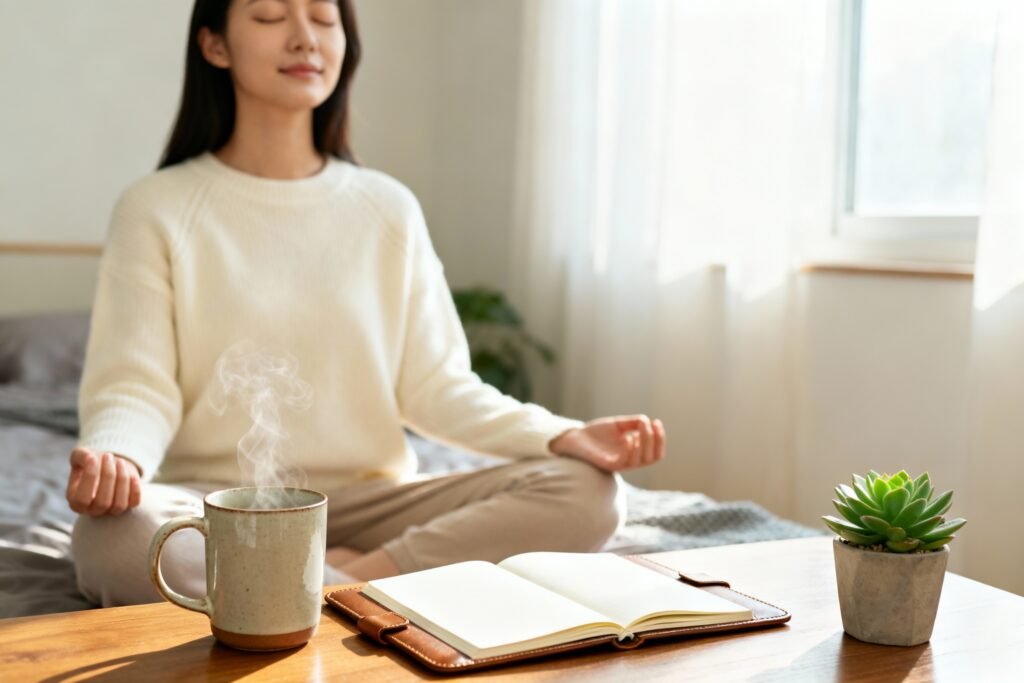
A Two-Minute Tea Meditation
Hold the mug. Feel the warmth.
Smell the steam. Sip, swallow, pause. You just grounded your nervous system better than a frantic espresso could.
IMO, it’s the cheapest therapy.
Curate Your Inputs (Protect Your Energy)
You can’t slow your life if your mind gets spammed. Edit your inputs like a bouncer at a VIP door.
- Clean your feeds: Mute accounts that spike anxiety or push hustle theater. Follow creators who calm or inspire.
- Notifications on purpose: Turn off anything that doesn’t directly relate to people you love or work you’re doing now.
- Set info windows: Check news once in the morning, once late afternoon.
You stay informed without bathing in dread.
The One-Screen Rule
Pick a screen. If you watch a show, you watch the show. If you scroll, you scroll.
No double-screen frenzy. Your brain sighs in relief.
Make Your Space Do the Heavy Lifting
Your environment can either calm you or clown you. Optimize it for ease and attention.
- Clear your surfaces: Empty table = clear mind.
Visual noise equals mental noise.
- Micro-zones: Reading chair. Work corner. Tea station.
You reduce decision fatigue when spaces have a purpose.
- Ambient cues: Soft lamp for nights, upbeat playlist for chores, candle for winding down. Your brain learns the signals.
The 10/10 Reset
Set a 10-minute timer twice a day. Reset the main zone: dishes, counters, floor, couch.
You keep chaos from turning into a weekend-long cleanup saga. Future you sends a thank-you note.
Boundaries: The Unsexy Superpower
Slow living crumbles without boundaries. You need a few simple lines in the sand.
- Office hours (even at home): Wrap your day with a tiny ritual—shut the laptop, write tomorrow’s top three, leave the room.
- Response windows: Tell people when you reply: “I check messages at 11 and 4.” Then actually do that.
- Social pace: One big plan per day.
Stack more and your tank empties fast.
How to Say No Without Being Weird
Try: “That sounds great, but I’m at capacity.” Or, “I’d love to, but I can’t give it the attention it deserves.” Clear. Kind. Final.
Make It Stick: Tiny Habits, Big Payoff
Consistency beats intensity.
Build slow into your day with simple anchors.
- Attach habits to existing routines: Breathe when you lock the door. Stretch before you shower. Gratitude after you brush teeth.
- Track wins, not streaks: Jot down one thing you did slowly each day.
Streaks break; wins build momentum.
- Review weekly: What felt good? What felt forced? Keep the good, ditch the rest.
FYI, experimentation counts as progress.
FAQ
Is slow living realistic with a busy job or kids?
Yes, because you don’t slow everything—you slow moments. One-minute breaths, mindful meals, 10-minute resets, and boundaries around notifications make a huge difference. You don’t need free time; you need intention in the time you already have.
Will I fall behind if I slow down?
You’ll likely do better.
Presence improves focus, and focus ships work that frantic energy can’t. When you stop context-switching, you reclaim hours you used to leak into distraction. Slower pace, faster progress—wild, right?
How do I start if I hate meditation?
Skip the cushion.
Try mindful walking, tea meditations, or breath breaks. Anything that keeps your attention on one thing counts. Meditation is a tool, not a personality trait.
What if my family or coworkers don’t get it?
Model it.
Set clear expectations and keep them. People adapt when they see your boundaries stick and your mood improve. Also, invite them into small practices—shared walks, tech-free meals, or “focus windows” at work.
Do I have to quit social media?
Nope.
Curate it. Mute aggressively, set use windows, and stick to the one-screen rule. You can enjoy the internet without letting it rent your brain at premium rates.
How long until I feel different?
Many people feel calmer within a week of consistent tiny changes.
Give it 30 days for deeper shifts: better sleep, steadier focus, easier decisions. Small hinges, big doors.
Conclusion
You don’t need a sabbatical to reclaim your life. You need small, repeatable moments of attention that add up to peace and momentum.
Slow living and mindfulness create an everyday glow—not flashy, just steady. Start with one breath, one bite, one boundary. Then watch your days stretch and your energy come back, like, “Oh hey, there you are.”
Summary
Slow Living & Mindfulness: Your Everyday Glow-up
Discover the transformative power of intentional living with this comprehensive guide to slow living and mindfulness. This post unveils practical strategies for breaking free from hustle culture and cultivating a more meaningful, present-centered life.
Key Features:
- Actionable daily mindfulness practices that fit any schedule
- Step-by-step guidance for decluttering your physical and mental space
- Simple rituals for savoring everyday moments
- Techniques to reduce stress and overwhelm naturally
Benefits:
Transform your routine from chaotic to calm while boosting mental clarity, emotional balance, and overall well-being. Learn to prioritize quality over quantity, make space for what truly matters, and develop sustainable self-care habits that stick.
What Makes It Unique:
Unlike generic wellness advice, this approach blends ancient mindfulness wisdom with modern slow living principles, offering a realistic framework for busy people seeking authenticity. No extreme lifestyle overhauls required-just gentle, sustainable shifts that create lasting change from the inside out.
Perfect for anyone ready to exchange burnout for balance and rediscover joy in life’s simple pleasures.