Stuff multiplies when you’re not looking. One day you own a coffee mug. Next day you’re drinking out of a souvenir thimble because your cabinets staged a ceramic coup.
Minimalism and slow living slam the brakes on that chaos. You keep what matters, you drop the rest, and suddenly your brain stops buzzing like a fridge.
What Minimalism Actually Means (FYI: It’s Not Beige Everything)
Minimalism doesn’t mean you toss your books or live with two forks. It means you choose fewer, better things and spend your time on what lights you up.
You prioritize quality over quantity, space over clutter, and presence over pressure. Slow living pairs with minimalism like coffee and Saturday mornings. You move at a human pace, not a hamster-wheel pace.
You savor. You say no without writing a 400-word apology email. You build a life that fits like your favorite hoodie.
Minimalism myths worth ditching
- Myth: Minimalists hate stuff. Reality: They hate pointless stuff.
- Myth: Minimalism costs a fortune. Reality: Buying less saves money.
- Myth: It’s only for single people with lofts. Reality: Families can do it too (yes, even with toddlers who collect rocks).
The Peace Equation: Less Input = More Clarity
Your brain gets tired making decisions.
Every shirt, knickknack, and half-used conditioner demands attention. Cut the noise and you cut the decision fatigue. That’s why less stuff often equals fewer stress spikes.
You know that fresh-start feeling after cleaning your car? Multiply that by your entire home. You see empty surfaces, your shoulders drop, and somehow you breathe like a mammal again.
Where clutter hides (and how to unmask it)
- Visual clutter: Too many items on countertops, open shelves, sticky notes, and cables.
- Digital clutter: Tabs, notifications, photos you never look at, subscriptions you forgot.
- Calendar clutter: Obligations that sounded fine last month but make you want to flee now.
Start Small: The 15-Minute Reset
You don’t need a weekend purge marathon.
Try a 15-minute timer and one mini-mission. Consistency beats heroics every time, IMO.
- One drawer: Keep, toss, donate. No sentimental items yet.Warm-ups only.
- The “daily surface” sweep: Clear your dining table or desk completely.
- Bag by the door: Keep a donation bag ready. Add one item per day.
Want a quick win? Attack your bathroom cabinet.
Consolidate duplicates, toss expired stuff, and keep only what you use. Boom—five minutes, instant clarity.
The “one in, one out” rule (with teeth)
For every new thing you bring in, something leaves. If you really want to level up, go “one in, two out” until you hit your comfort zone. Guard your space like it matters—because it does.
Design Your Space for Calm
You can make your home work for you with a few smart tweaks.
No interior designer needed.
- Zones > rooms: Create specific zones for reading, work, hobbies. Stuff stays in its zone.
- Closed storage: Hide visual clutter behind doors and drawers. Out of sight, less mental load.
- Surface rules: Keep flat surfaces 80% clear.Use trays to corral the essentials.
- Lighting: Soft lamps > ceiling glare. Your nervous system will send thank-you notes.
- Materials: Choose durable, simple items you actually like touching. Tactile joy is real.
Curate, don’t decorate
Pick a few objects with stories and highlight them.
Let them breathe. Empty space is not wasted—it’s the pause that makes the music.
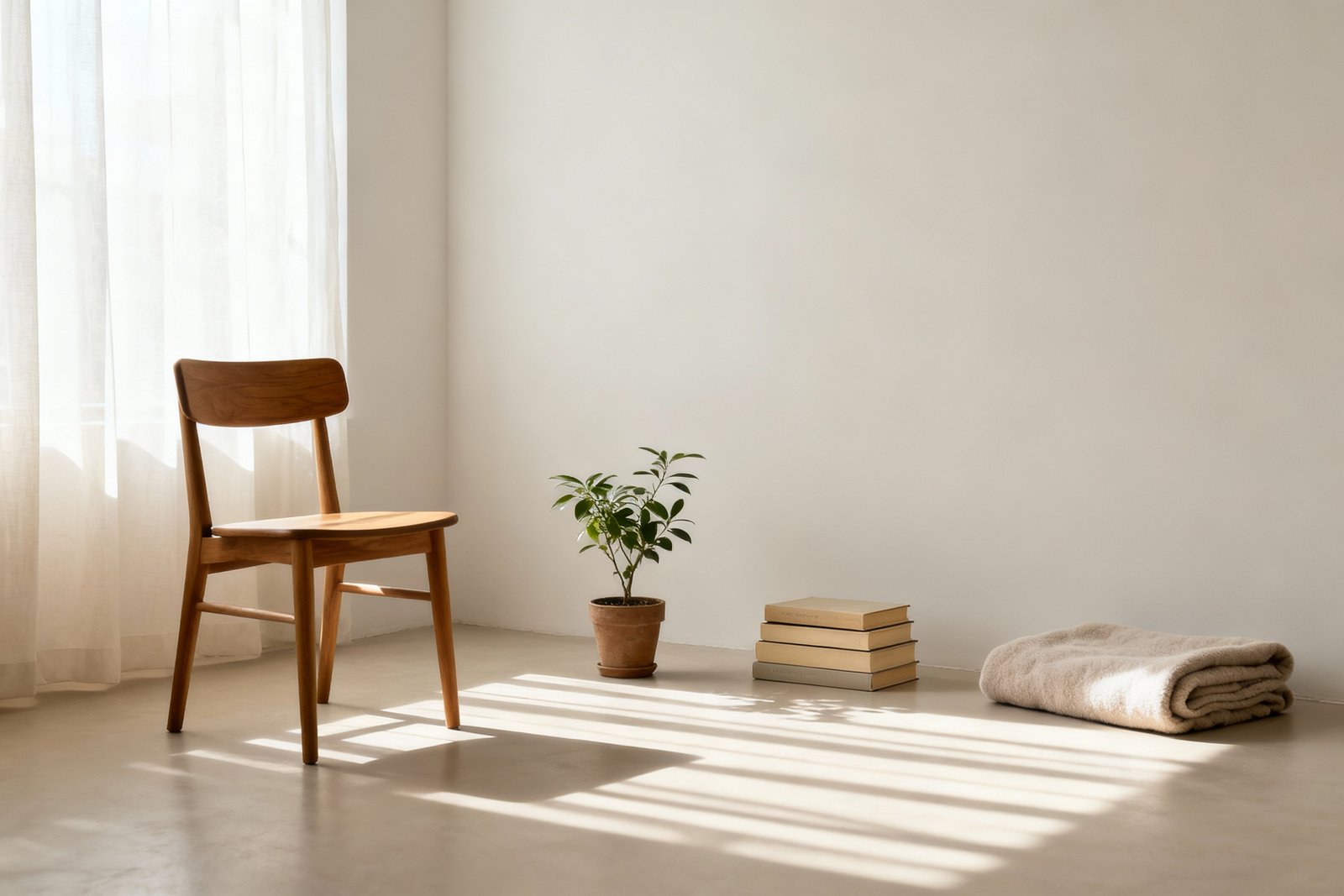
Slow Living in Real Life (Not a Cottagecore Fantasy)
Slow living isn’t a vibe-only aesthetic. It’s a schedule shift and a mindset upgrade. You pause before reflexively saying yes.
You build margins around your day so interruptions don’t wreck you.
- Anchor rituals: Morning coffee without a phone, a short evening walk, a midday stretch.
- Batch decisions: Plan meals once. Choose outfits weekly. Save your brainpower for interesting stuff.
- Tech boundaries: Notifications off by default.Check messages at set times. Your attention is premium real estate.
- Transition moments: Two minutes to reset between tasks. Breathe, sip water, change your posture.
Time blocking (but kinder)
Block time for focused work, admin, and rest.
Protect the rest block like it’s revenue-generating—because it is. Rested you does better everything, FYI.
Your Minimalist Closet: Fast Wins, Zero Tears
Clothes multiply like wire hangers. Simplify your wardrobe and mornings will stop feeling like a game show.
- Pick your uniform: Not identical outfits—just a repeatable vibe.Fit, fabric, and color that love you back.
- Choose a palette: Two neutrals, two accents. Everything mixes, nothing argues.
- Audit by reality: Keep what you wore last month. Question the “someday” heels.
- Upgrade essentials: Fewer pieces, better quality.Comfort is not optional, IMO.
- Seasonal box: Store off-season items out of sight. Instant calm in your closet.
Don’t toss sentimental clothes on a whim
Create a small keepsake box for meaningful items. Photograph the rest and let them go.
You keep the memory, not the dry-cleaning bill.
Money, Sustainability, and the “Enough” Line
Minimalism quietly improves your finances. You stop impulse buying and you stop replacing junk. When you buy, you choose well and you maintain it.
It also helps the planet, but let’s keep it real: the greenest purchase is the one you don’t make. Use what you have first. Repair, borrow, swap with friends. Libraries exist for a reason, and yes, they have more than books now.
Find your “enough”
“Enough” is personal.
It’s the point where your stuff supports your life without managing you. If you can clean your space in under an hour and find what you need fast, you’re close.
Common Traps (And How to Dodge Them)
Minimalism can go sideways if you treat it like a competition. Less isn’t a moral victory; it’s a tool.
- Over-decluttering: Don’t purge tools you’ll rebuy in a month.Choose function over flex.
- Perfection paralysis: You don’t need the “perfect” storage bins to start. Use a shoebox and move on.
- Identity clutter: Hobbies you’ve outgrown still take space. Keep the ones you practice, not the ones you post about.
- Shame spiral: Clutter happens.Reset, don’t ruminate.
FAQ
What’s the difference between minimalism and slow living?
Minimalism focuses on owning fewer, better things. Slow living focuses on pacing—how you spend your time and attention. Together, they create a life with space and intention.
Do I need to get rid of my books or collections?
Nope.
Keep what you love and use. Curate and display your favorites, then release the duplicates, the “meh” items, and the guilt. Minimalism is about alignment, not austerity.
How do I handle gifts without feeling rude?
Set expectations early: “We’re minimizing, so experiences or consumables work best.” When you receive something that doesn’t fit, thank the giver, then rehome it. Gratitude doesn’t require storage space.
What if my partner isn’t into this?
Lead by example in your own zones.
Avoid lecturing—invite, don’t force. Celebrate shared wins like a clear entryway and easier mornings. Agreement grows from experience, not arguments.
How do I keep momentum after the first purge?
Schedule monthly mini-resets.
Keep a donation bag open. Revisit one category each quarter. And track wins: time saved, money not spent, nagging tasks gone.
Progress likes proof.
Can minimalism work with kids?
Yes, if you focus on systems, not scarcity. Rotate toys, keep storage at kid height, and involve them in decisions. Teach “one in, one out” as a game.
Kids thrive on clarity and routine.
Conclusion
Minimalism and slow living aren’t about owning nothing and meditating on a floor cushion (unless that’s your jam). They’re about owning your choices—your space, your time, your attention. Start tiny, keep going, and notice how your life feels roomier even if your square footage stays the same.
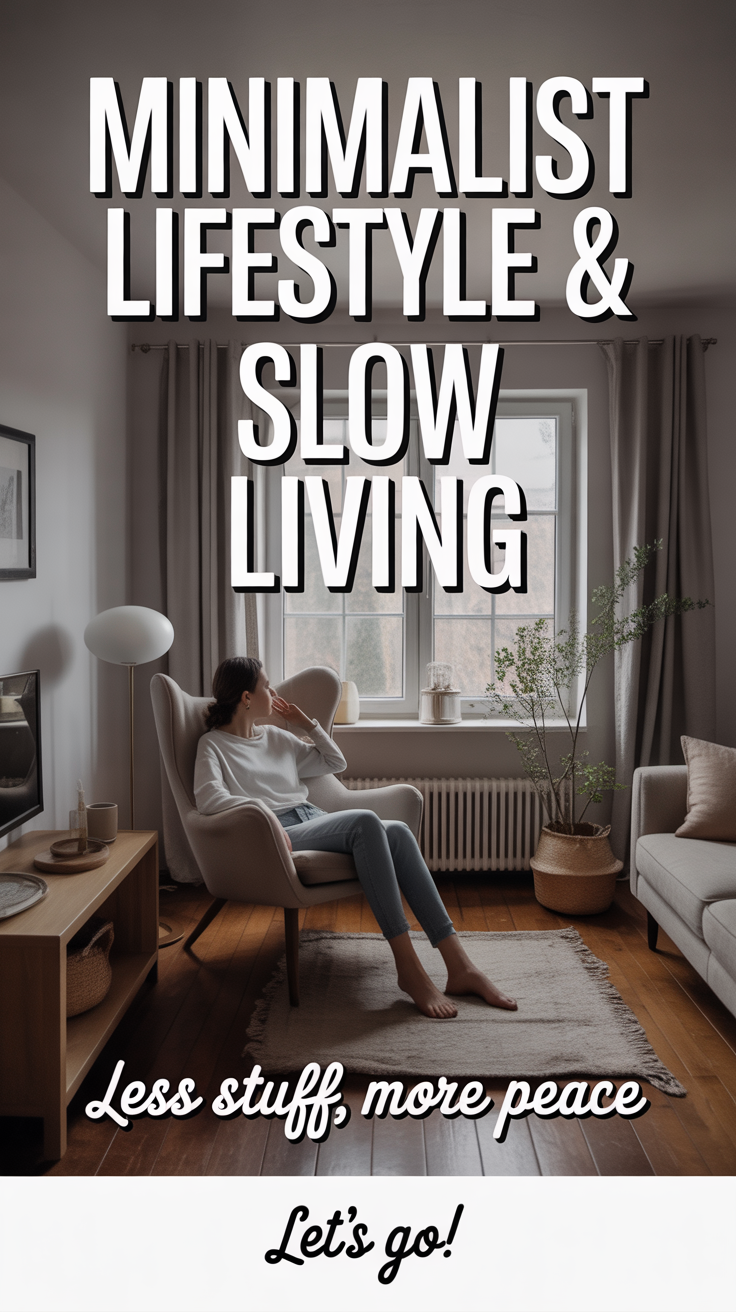
Less stuff, more peace. That’s the trade worth making.