You don’t need a designer budget to turn your kitchen into a cozy, cottagecore dream. You just need a good eye, a few Saturday thrifting trips, and a willingness to embrace the perfectly imperfect. Let’s make your kitchen feel like it belongs in a countryside storybook—without it looking like a museum or costing your rent.
1. Curate A Collected Look (Not A Costume)

Cottagecore isn’t about buying a full matching set and calling it a day. It’s about layering history, texture, and personality until it feels like your kitchen has a story to tell. Aim for pieces that look like they’ve been loved—because they have.
What To Hunt For
- Stoneware crocks for utensils (bonus points for faded maker’s marks).
- Mix-and-match china with floral or transferware patterns—no matchy-matchy sets.
- Cutting boards with real wear, not “distressed factory chic.”
- Woven baskets for produce and tea towels.
- Copper or enamelware to warm up shelves and hooks.
Keep it grounded with a few modern basics so it doesn’t veer into antique shop chaos. Think: a sleek kettle next to a vintage sugar jar. Balance, friend.
2. Style Open Shelves Like A Charming Little Shop
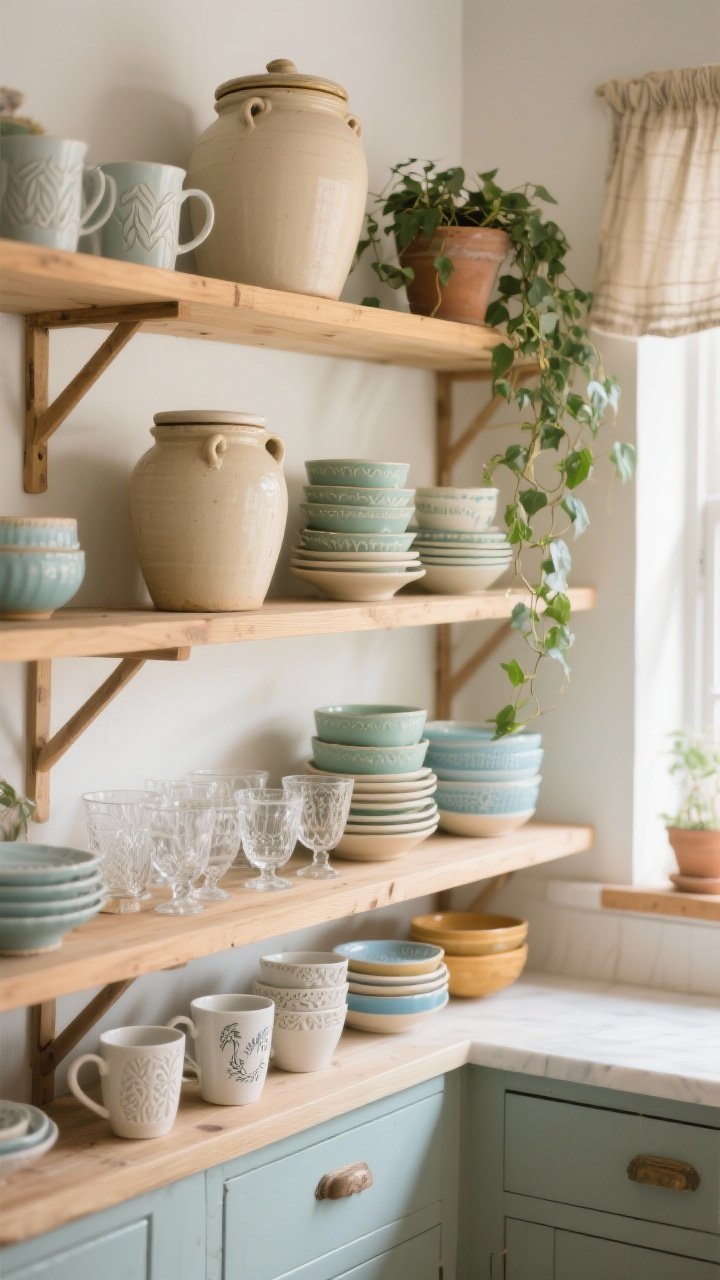
Open shelving is cottagecore’s playground. Done right, it’s cozy and practical; done wrong, it’s dusty chaos. The trick is editing and repeating colors so it looks intentional.
Shelf Styling Formula
- Anchor each shelf with one substantial item (crock, stack of bowls, lidded jar).
- Group in odd numbers (3s and 5s) for that casual-but-considered feel.
- Repeat tones like cream, sage, soft blue, and warm wood for cohesion.
- Add greenery—a trailing ivy or a small potted herb softens hard lines.
- Front-load the pretty: florals, embossed glass, etched mugs—yes please.
FYI: Keep daily-use items within reach and tuck delicate things higher up. You’re styling a kitchen, not a museum shelf.
3. Make Textiles Do The Heavy Lifting

Textiles add instant warmth without much commitment. Swap a few pieces and suddenly your kitchen whispers, “Tea and pie?”
Thriftable Textiles To Look For
- Block-printed or floral curtains—even a small café curtain brings cottage charm.
- Vintage tea towels with embroidery or stripes—hang on hooks or oven handles.
- Ruffled seat cushions for stools or a bench (mix checks with florals—trust me).
- Table runners from old linens—frayed edges are character, not flaws.
Pro tip: If you can’t find the perfect pattern, grab vintage sheets and DIY simple curtains. Even no-sew hem tape will do. We’re crafty, not complicated.
4. Turn Everyday Tools Into Decor
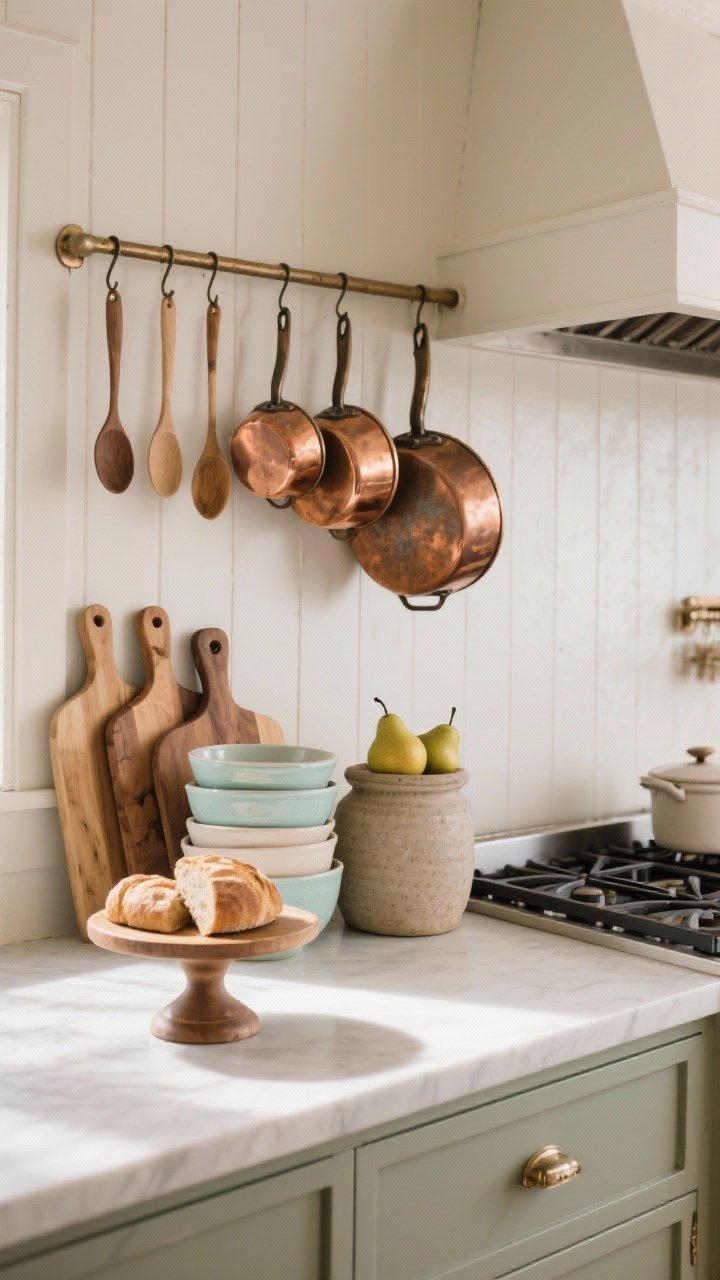
In a cottagecore kitchen, useful is beautiful. Show off the pieces you actually cook with and give them a moment to shine.
Display Ideas That Work Hard
- Hang copper pans from a rail or pot rack—polish lightly or let them patina.
- Corral wooden spoons in a heavy stoneware crock by the stove.
- Lean cutting boards in layered sizes for texture and easy grabbing.
- Stack mixing bowls—pastels, stoneware, or enamel for that sweet, homey look.
- Use a cake stand for fruit or bread to add height and charm.
IMO, when your tools double as decor, you win on both style and storage. It’s the most cottagecore thing ever.
5. Create Sweet Little Vignettes (That Don’t Collect Dust)
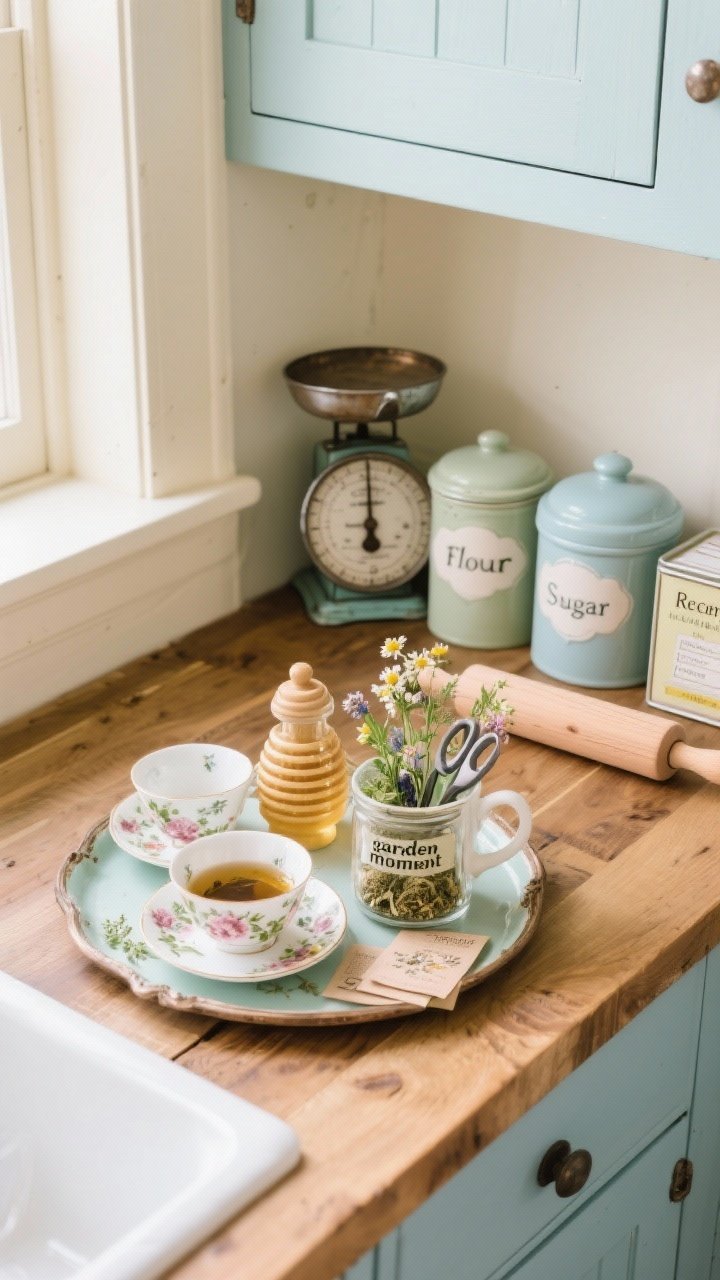
Vignettes are mini scenes that make your kitchen feel lived-in and intentional. Keep them tight, cute, and functional so they don’t turn into clutter traps.
Vignette Recipes
- Tea Station: vintage tray + floral teacups + honey pot + small jar of loose tea.
- Baking Corner: old scale + ceramic canisters + wooden rolling pin + recipe tin.
- Garden Moment: jar of wildflowers + seed packets + herb snips in a mug.
- Coffee Nook: enamel canister for beans + thrifted sugar bowl + demitasse cups.
Rotate seasonally: swap florals for dried wheat in fall, add citrus in winter, and bring in peonies in spring. Cottagecore, but make it calendar-savvy.
6. Embrace Patina, But Keep It Practical
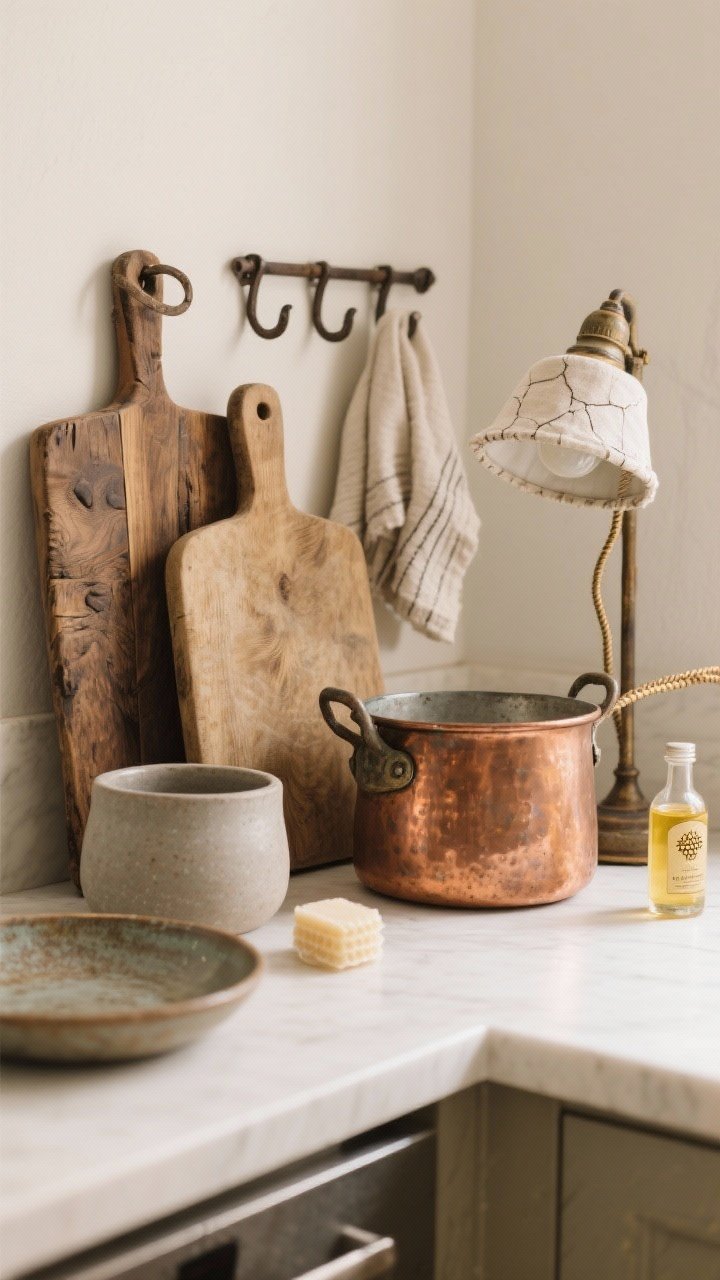
There’s a fine line between “well-loved” and “sanitation inspection waiting to happen.” Choose patina with purpose—pieces that look aged, but are safe for a kitchen.
Patina Rules To Live By
- Choose real materials: wood, copper, iron, linen, stoneware. They age gracefully.
- Skip cracked glaze on food-contact pieces. Display? Sure. Serve food? Hard pass.
- Sanitize vintage finds: glass and ceramic get hot, soapy washes; wood gets vinegar and mineral oil.
- Rewire vintage lamps used as cozy counter lighting. Safety > vibes.
- Use food-safe finishes on cutting boards and spoons—mineral oil or beeswax.
Remember: rustic doesn’t mean rusty where you prep food. You want charm, not tetanus.
7. Add Story With Art, Books, And Little Surprises
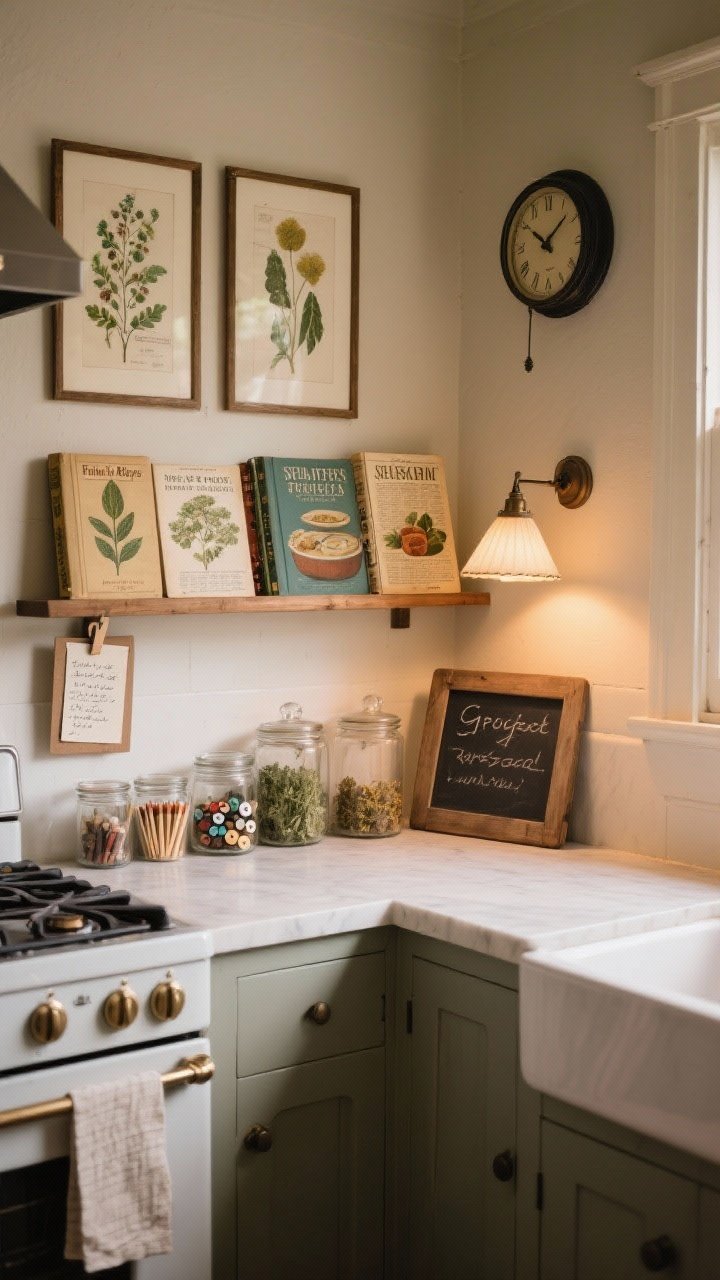
The best cottagecore kitchens feel like someone interesting lives there. Add pieces that tell your story—without spending big.
Story-Starting Touches
- Vintage cookbooks with illustrated covers—stacked or on a plate stand.
- Framed botanical prints or old seed catalog pages for subtle color.
- Recipe cards from family tucked into a clip frame by the stove.
- Old jars filled with buttons, matches, or dried herbs—tiny nostalgia hits.
- Charming clocks or a petite lamp for that soft, warm glow at night.
FYI: A small chalkboard or enamel sign makes grocery lists feel cuter, which absolutely increases the odds you’ll remember the eggs. Science (kind of).
Final Thought: Cottagecore isn’t about copying a Pinterest photo—it’s about building a kitchen that feels kind, slow, and you. Start with one shelf, one vignette, one thrift run. Keep what you love and let the rest go. Your cottage kitchen will unfold, story by story—and that’s the real charm.