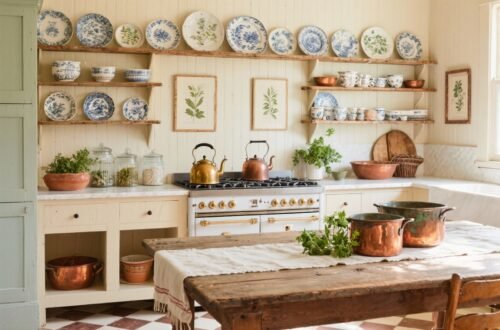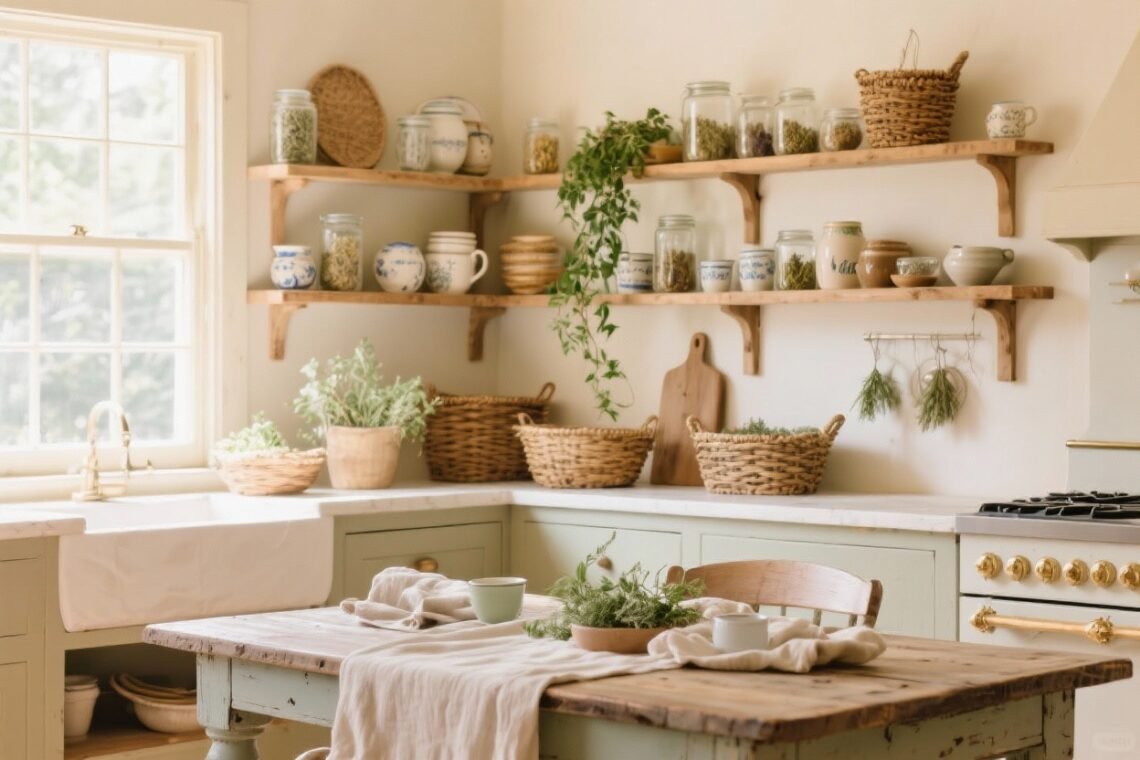
You want a kitchen that looks like a warm hug and smells faintly of cinnamon and fresh bread? Same. Open shelving is the fastest way to give your space that dreamy cottagecore vibe—think vintage charm, natural textures, and a lived-in look that still feels chic. Let’s make your shelves do the most without looking like a cluttered thrift store haul.
1. Curate Like A Cottagecore Collector
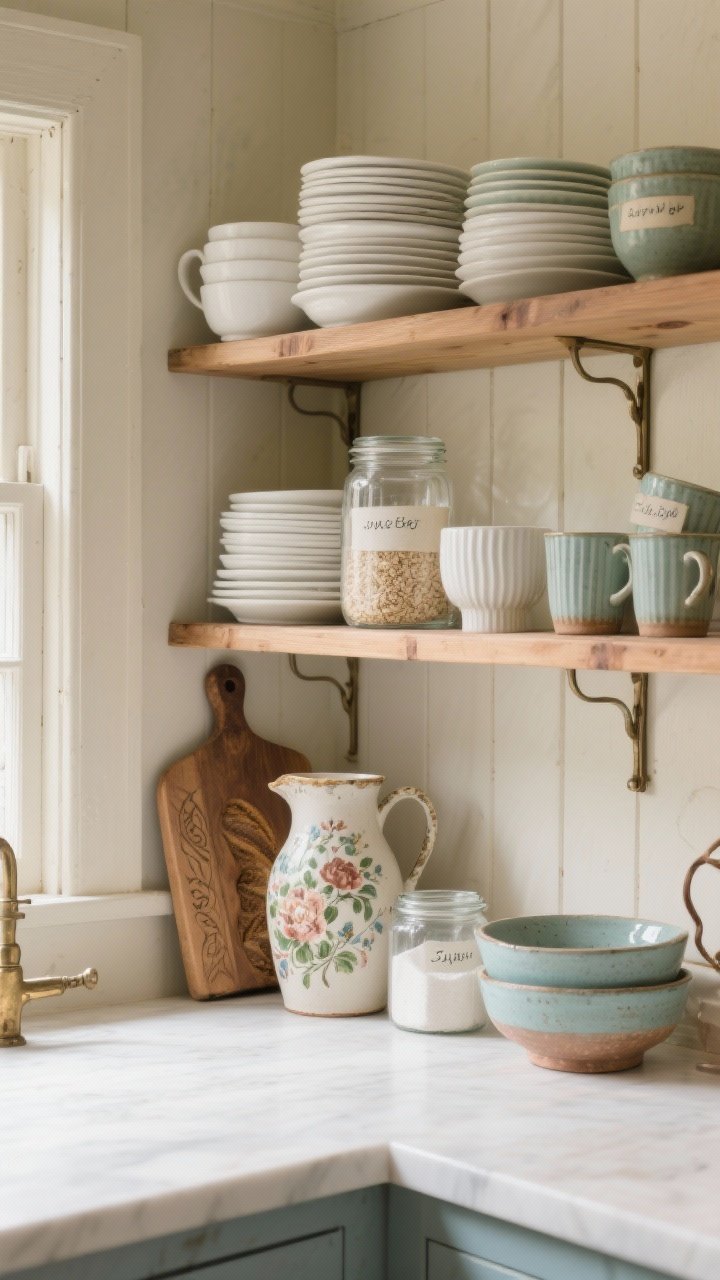
Open shelves are basically your kitchen’s Instagram feed—what you put on display sets the mood. Choose pieces that look beautiful and work hard. If it doesn’t spark joy or earn its keep, it doesn’t get a spot.
Start With A Palette
- Keep it soft: Creams, sage, muted blues, and warm woods.
- Add a few accents: A splash of copper, a tiny floral motif, or worn brass.
Pick The Right Heroes
- Everyday ceramics: Stacks of white plates, stoneware bowls, and ribbed mugs.
- Transparent storage: Clear glass jars for flour, oats, and sugar—label them for the cozy apothecary moment.
- One or two showpieces: A vintage teapot, a floral pitcher, or a carved bread board.
2. Layer Textures Like A Storybook Kitchen
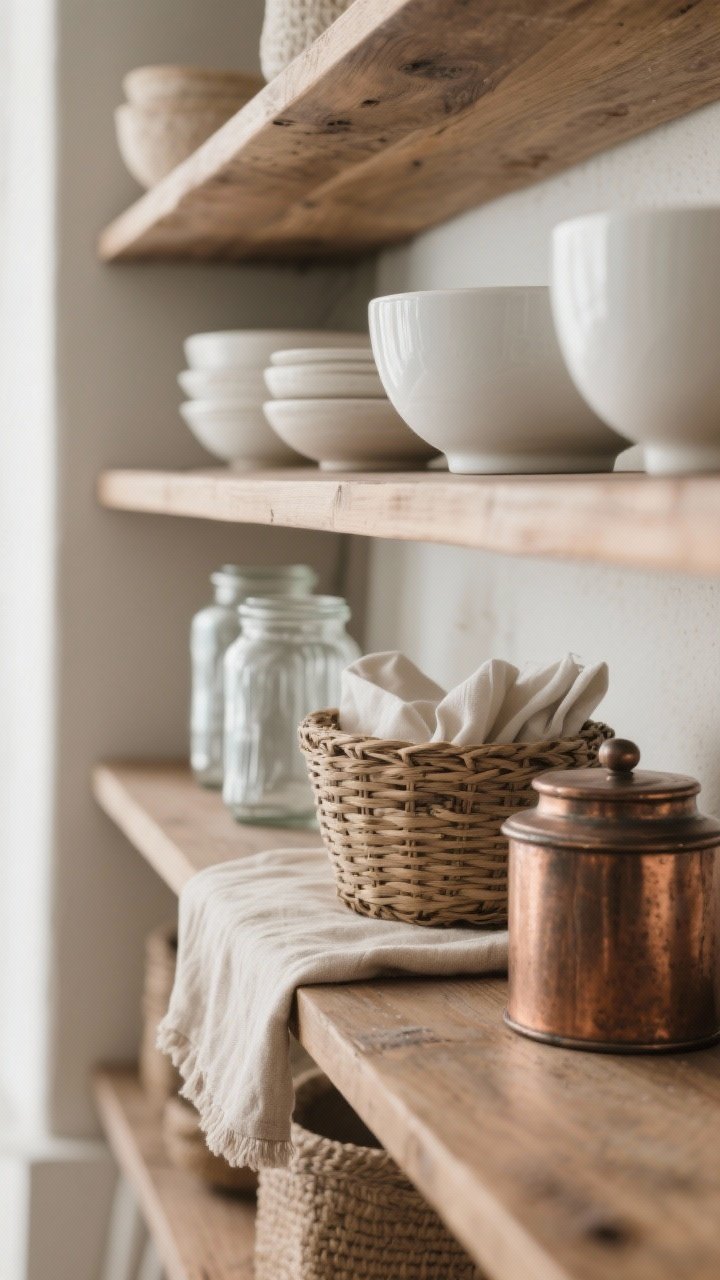
Flat displays = flat energy. Cottagecore thrives on tactile layers that feel collected over time. Mix rough with refined so your shelves don’t look like a showroom.
Texture Combos That Work
- Wood + Ceramic: Warm wood shelves, smooth ceramic bowls—classic and cozy.
- Glass + Woven: Glass jars in front, a woven basket tucked beside for napkins.
- Linen + Metal: A folded linen runner under a copper canister for contrast.
FYI, texture also hides dust better. Your future self says thanks.
3. Style In Trios (And Add Soft Symmetry)

You don’t need a design degree—just remember the rule of three. Arrange items in odd-numbered groups and play with height for that effortless “I woke up like this” look.
The Trio Formula
- Tall + Medium + Low: A pitcher, a stack of plates, and a small jar.
- Vary shape: Mix round bowls with a rectangular cutting board and a curved mug.
- Soft symmetry: Echo similar shapes on opposite shelves, but don’t copy-paste.
Pro tip: Lean a cutting board or framed print behind your trio to anchor the moment. It’s like mascara for your shelf—instant definition.
4. Embrace Useful Decor (Because Cute Should Also Cook)
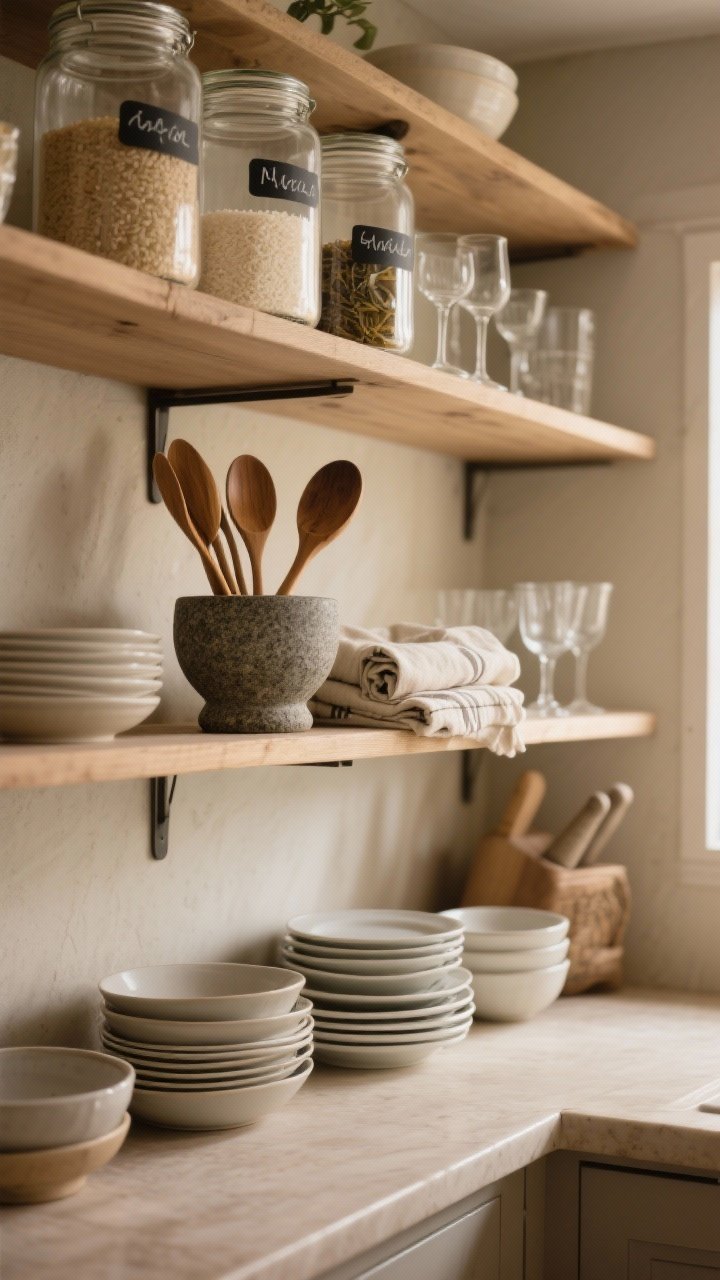
Cottagecore isn’t about dust-collecting knickknacks. It’s about pieces you actually use, displayed beautifully. Think functional, but make it adorable.
Pretty Yet Practical
- Decant pantry basics: Flour, rice, tea—stored in glass jars with handwritten labels.
- Everyday tools as decor: Wooden spoons in a crock, a mortar and pestle, linen tea towels.
- Stack smart: Plates and bowls at arm’s reach; delicate items higher up.
IMO, your shelves should cut your cooking time by keeping essentials visible, not just photogenic.
5. Add Flea-Market Finds And Heirloom Vibes
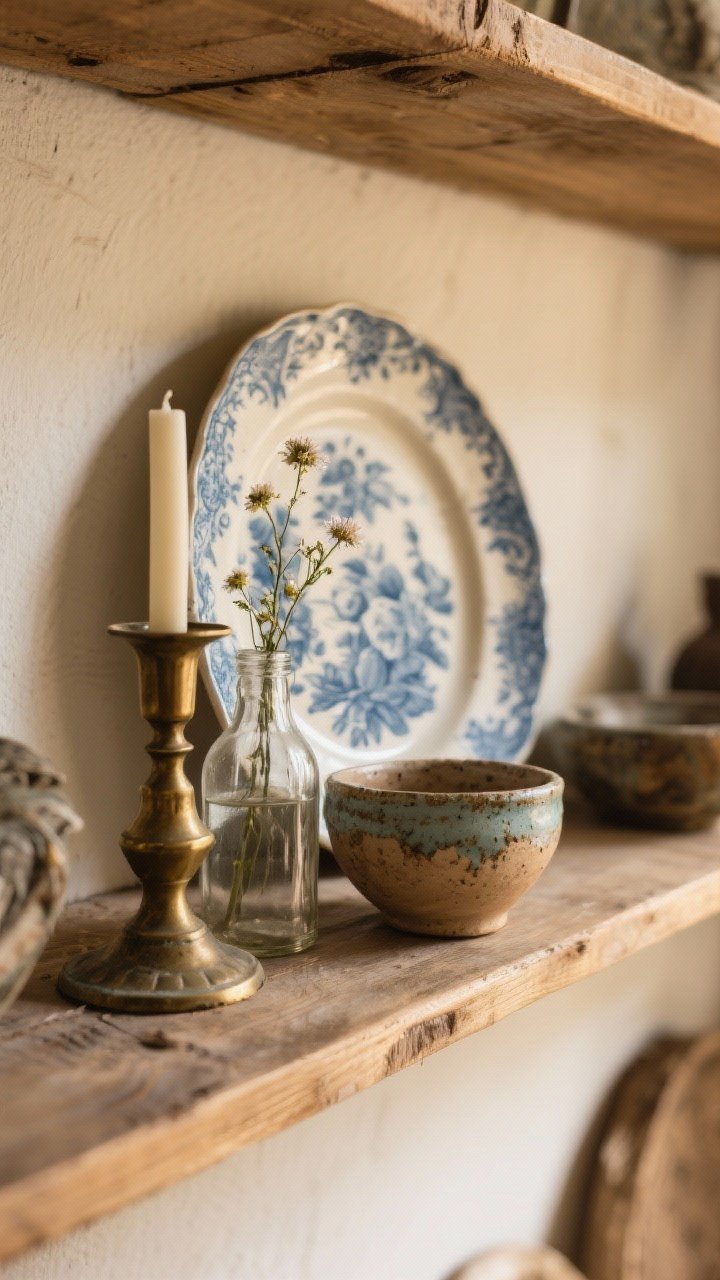
New is nice, but cottagecore loves a little history. Bring in vintage pieces that feel storied—even if you grabbed them last weekend at the thrift store.
What To Hunt For
- Vintage transferware: Blue or green patterned plates are insta-charm.
- Old glass bottles: Use for olive oil or tiny wildflowers.
- Patinated metals: Brass candlesticks or a copper pot for warmth.
- Handmade pottery: Imperfect glaze? That’s the good stuff.
Mix old and new so it doesn’t feel like a time capsule. One antique piece per shelf is the sweet spot.
6. Bring Nature Indoors (The Cottagecore Secret Sauce)
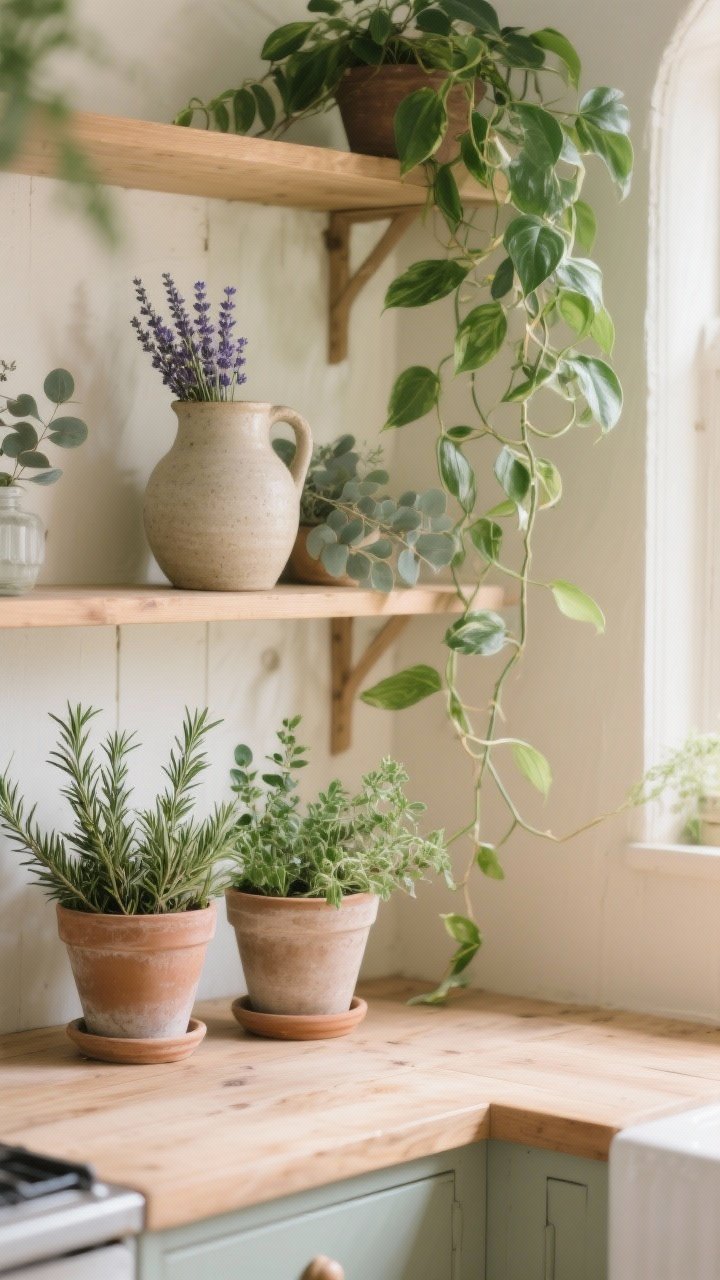
Nothing sells the aesthetic like a touch of nature. Greens soften the lines and make your shelves feel alive—literally.
Low-Maintenance Greenery
- Herbs: Potted rosemary or thyme—use them while you cook.
- Trailing plants: Pothos or ivy to drape gently across a corner.
- Dried elements: Lavender sprigs, wheat bundles, or eucalyptus in a jug.
No green thumb? Faux stems are fine. The vibe police aren’t coming.
7. Create Little Ritual Stations
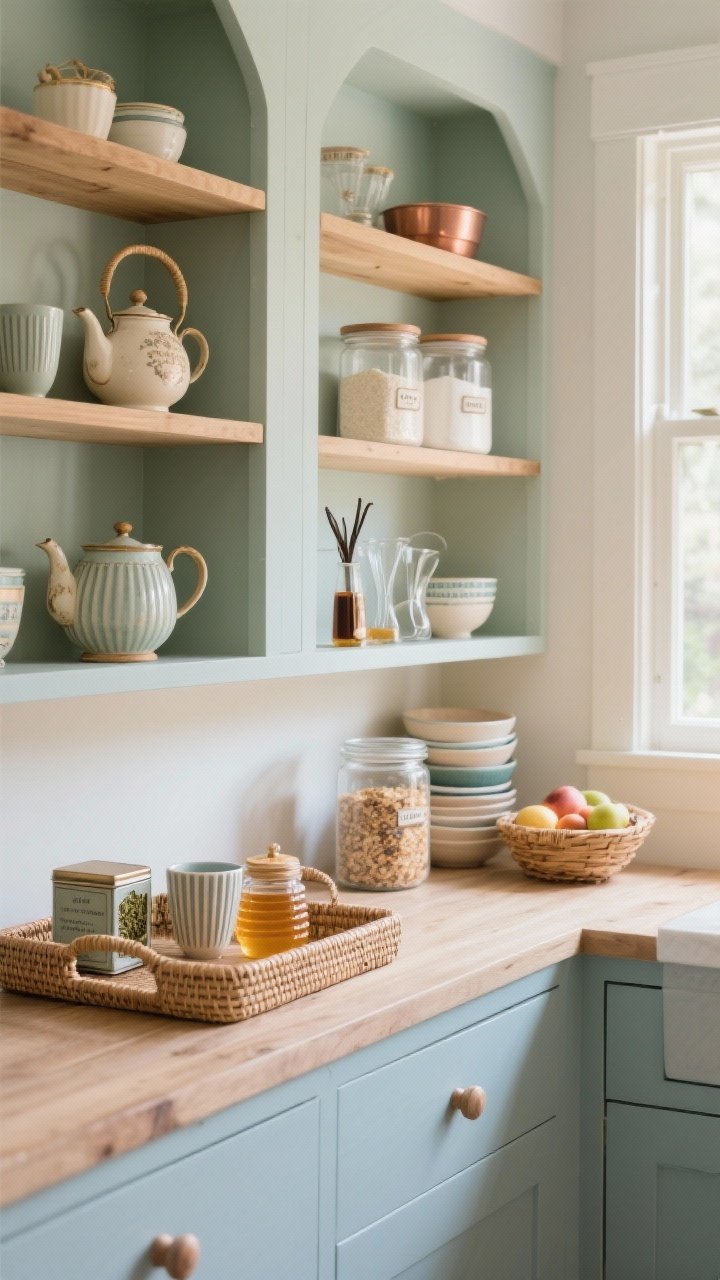
Make your shelves work around your routines. Tiny “stations” keep things tidy and make daily moments feel special—like a cottagecore main character, minus the goats.
Ideas To Steal
- Tea nook: Teapot, favorite mugs, honey jar, and a tin of loose-leaf.
- Baking corner: Flour and sugar canisters, measuring cups, vanilla extract.
- Breakfast perch: Cereal jars, stack of bowls, a small basket for fruit.
Corral each station with a tray or shallow basket so everything looks intentional, not random.
There you have it: cozy, charming shelves that make your kitchen feel like a storybook—without the chapter where you spend three hours dusting. Edit often, keep it functional, and let your pieces tell the story of how you actually live. Now go brew something warm and admire your handiwork—you did that.