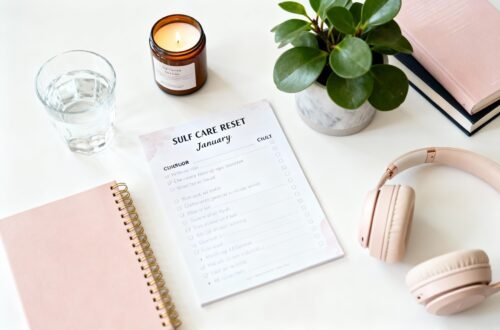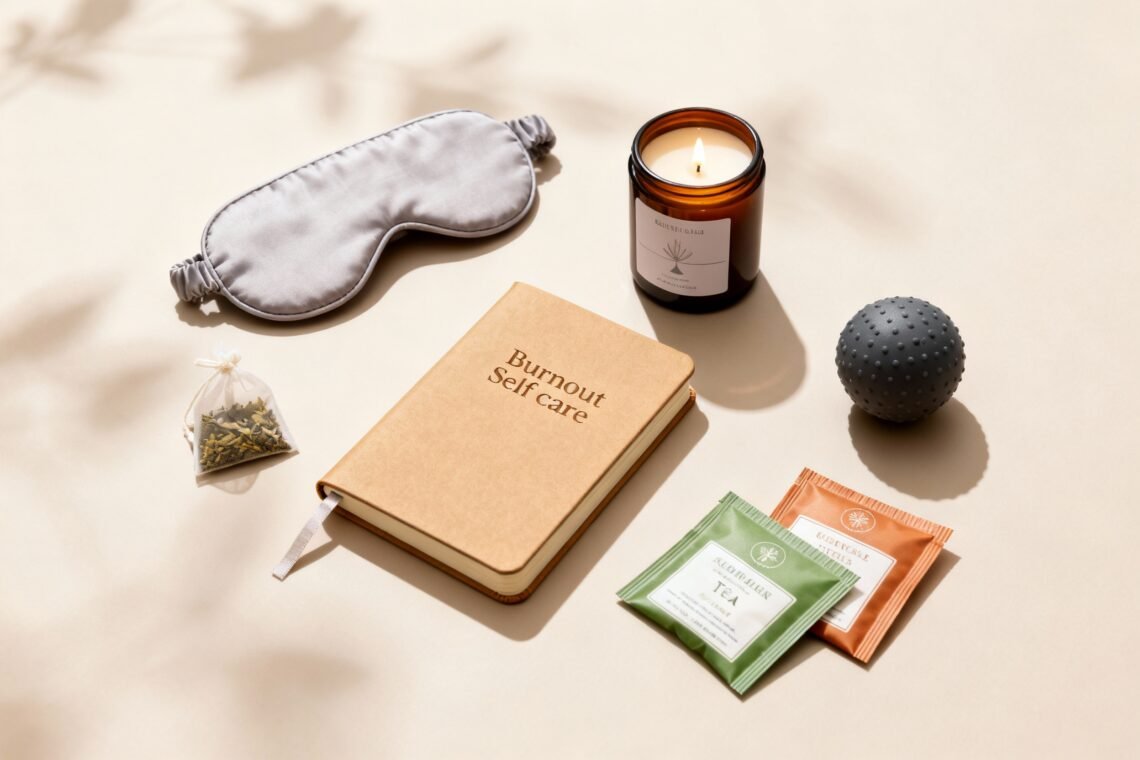
Your brain feels like 47 tabs are open, music autoplayed in three of them, and a meeting just popped up at 7:15 am. You don’t need a spa weekend. You need a tiny, realistic kit that fits into a chaotic day and doesn’t require “becoming a new person.” Let’s build a Burnout Self-care Kit that helps your overstimulated brain breathe, even when your to-do list looks like a CVS receipt.
What Exactly Is a Burnout Self‑care Kit?
Think of it like a go-bag for your nervous system.
It’s a small collection of tools, scripts, and micro-habits you can use on autopilot when your brain feels cooked. No journals to fill, no 5 a.m. routines, no shame spirals. Here’s the goal: reduce input, simplify choices, and restore a sense of control in tiny, repeatable steps.
- Tiny = doable: 30–90 seconds per habit, maximum.
- Modular: pick 1–2 items per situation, not everything.
- Predictable: same cues, same actions, minimal decision-making.
The Core Kit: Five Tiny Habits That Actually Work
These require zero “motivation.” You just do them when a cue happens.
1) The Two-Breath Reset
When your heart races or your inbox pings like a slot machine, try this:
- Inhale through your nose for 4 counts.
- Exhale slowly through pursed lips for 6–8 counts.
- Repeat once. That’s it.
Why it works: Longer exhales signal your nervous system to stand down.
Two breaths won’t fix your life, but they’ll create a 10-second window where you can choose your next move.
2) The Sensory Switch
Overstimulated? Cut one sensory input for 60 seconds.
- Mute notifications.
- Turn off one light or dim your screen.
- Put your phone face down under a book. Yes, physically hide it.
IMO: A tiny drop in sensory load beats a 20-minute meditation app you’ll never open.
3) The 3-Item Triage
When everything screams “urgent,” write three bullet points:
- One task you can finish in 10 minutes.
- One message to send or delete.
- One thing you’ll postpone without guilt.
Crossing off the 10-minute task builds momentum.
Postponing something on purpose restores choice. The message clears mental clutter. Boom—forward motion.
4) The 20-Second Body Check
Ask: What hurts?
What’s tense?
- Roll your shoulders three times.
- Unclench your jaw on purpose.
- Place one hand on your chest, one on belly; inhale once, exhale once.
FYI: Physical reset helps even when your stress started in your calendar, not your body.
5) One-Drink Rule
Drink a full glass of water or tea whenever you change activities. Starting a call? Water.
Ending a call? Water. It anchors transitions and combats “headache because I forgot I’m human.”
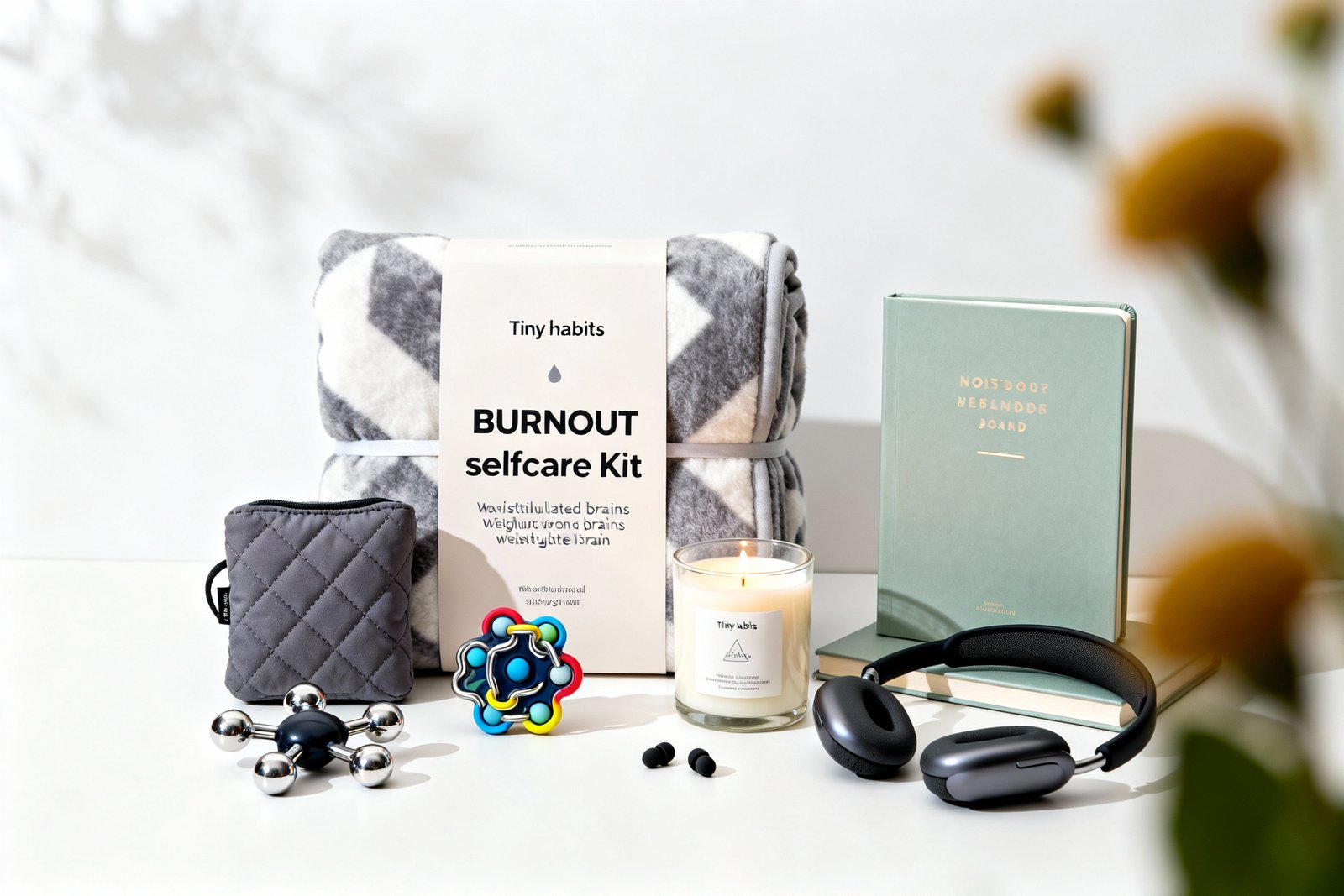
Build Your Kit: Low-Overhead Tools
You don’t need a shopping spree.
You need a mini stash within arm’s reach.
- Noise management: foam earplugs, noise-canceling headphones, or a brown noise playlist.
- Visual calm: sticky notes for the 3-Item Triage, a small desk plant, or a neutral desktop background.
- Comfort anchors: a soft sweater, fidget ring, smooth stone, or lip balm. Tiny physical “safe” cues help.
- Energy snacks: nuts, jerky, fruit, or a protein bar. Glucose crashes love drama.
- Quick scent: mint, eucalyptus, or citrus.Scent interrupts spirals fast.
Starter Pack Script
Tape this where you can see it:
- Two breaths.
- Mute one thing.
- Write three bullets.
- Drink water.
- Unclench jaw.
That’s your kit. No mood required.
Habit Pairing: The Autopilot Trick
New habits stick when you pair them with a routine cue you already do. Don’t invent time.
Attach instead.
- After I open my laptop, I do two breaths.
- After I hit “Join meeting,” I turn my phone face down.
- After I pee, I drink water. (The classic.)
- After I send a tough email, I stretch my shoulders three times.
Start with one pairing for a week. Then add another. Stack slowly.
We’re building sandbags against the flood, not a dam overnight.
Boundaries For Busy Humans (Who Hate Boundaries)
You don’t need a manifesto. You need one sentence that buys you space. Use a default script and tweak as needed.
Default Scripts You Can Copy
- Work: “I can start this after 2 pm.If that timing doesn’t work, let’s find someone else to jump in.”
- Social: “This week’s packed. Rain check for next week?”
- Family: “I can help for 30 minutes today. After that I’m offline.”
- Self-talk: “Not today, but soon.I’m choosing recovery over chaos.”
Pro tip: Put your scripts in text expanders or Notes so you don’t invent new words when stressed.
Micro-Rest: Recovery You’ll Actually Do
Full rest days feel mythical. Micro-rest keeps you functional.
- Visual rest: Stare out a window for 60 seconds. No phones allowed.
- Social rest: Set a 15-minute “silent commute” rule.Music only, no calls.
- Cognitive rest: Do one brainless chore—fold towels, wipe a counter, sort mail for five minutes.
- Sensory rest: Shower with the lights dimmed, or no music in the car for one trip.
The 3×3 Rule
Three times a day, for three minutes: reduce one input, move one joint, drink something. That’s nine minutes. Your brain notices.
Protect Your Mornings, Salvage Your Nights
Burnout spikes when days start frantic and end scrolling.
We’ll fix both without 5 a.m. heroics.
Morning: The First Five Minutes
- Open curtains or step outside. Light = “Hello, brain, we’re awake.”
- Two breaths. One glass of water.
- Write your 3-Item Triage on a sticky note, not in your head.
Night: The Last Five Minutes
- Set tomorrow’s clothes or pack one bag.Reduce morning decisions.
- Plug your phone across the room. Alarms still work; doomscrolling doesn’t.
- Write one “win” from today. Keep it petty if needed: “I sent the email.”
IMO: Boring routines beat fancy ones because you’ll repeat them.
When Burnout Hits Hard: A Mini Protocol
You’re at your limit.
Do this in order, no thinking:
- Two-Breath Reset.
- Hide phone; start 5-minute timer.
- Drink water while you stand near a window.
- Write the 3-Item Triage. Circle only the 10-minute task.
- Finish the 10-minute task. Stop when the timer ends.Reassess.
If you still feel fried, repeat the timer and do a low-cognitive chore. You’re not “wasting time.” You’re stabilizing the system.
FAQ
What if I forget to use the kit when I’m stressed?
Assume you will forget. That’s normal.
Put cues everywhere: sticky notes, lock screen reminders, a wristband, a browser start page with your five-step list. Pair one habit with each daily anchor (open laptop, bathroom break, lunch). The cue saves you when willpower fails.
How long until I feel better?
You’ll feel small relief in minutes, which matters.
Bigger shifts take 2–3 weeks of consistent tiny habits. Burnout built up over months; sustainable recovery comes from repeatable micro-wins, not a single grand gesture.
Can I do this if my schedule is chaos?
Yes, because every habit fits inside 30–90 seconds. You don’t need a perfect block of time.
You just need to notice a cue and perform the micro-action. Chaos actually makes tiny habits more powerful, because big plans never survive contact with reality.
What if my burnout comes from people, not tasks?
Use boundary scripts and sensory switches. Before hard conversations, do two breaths and decide on one line you’ll repeat.
After, schedule micro-rest (silent walk, dimmed lights). People stress is still nervous-system stress; the same tiny tools help your body downshift.
Isn’t this just procrastination with extra steps?
Nope. Procrastination avoids reality.
The kit creates a small calm bubble so you can meet reality without melting. You still complete a 10-minute task, send a message, and decide what to postpone on purpose. That’s executive function, not avoidance.
Do I need therapy too?
If burnout melts your functioning, therapy helps—and you deserve support.
The kit handles day-to-day regulation. Therapy tackles root causes, patterns, and boundaries with backup. Both together?
Chef’s kiss.
Wrap-Up: Make It Small, Make It Boring, Make It Yours
You don’t need a perfect system. You need a reliable handful of tiny moves that you repeat on your worst days. Build your Burnout Self-care Kit with two breaths, a sensory switch, the 3-Item Triage, quick body checks, and one drink per transition.
Keep scripts ready, stash your tools nearby, and anchor everything to cues you already do. Small and boring wins, and your overstimulated brain will thank you—quietly, which is the whole point.