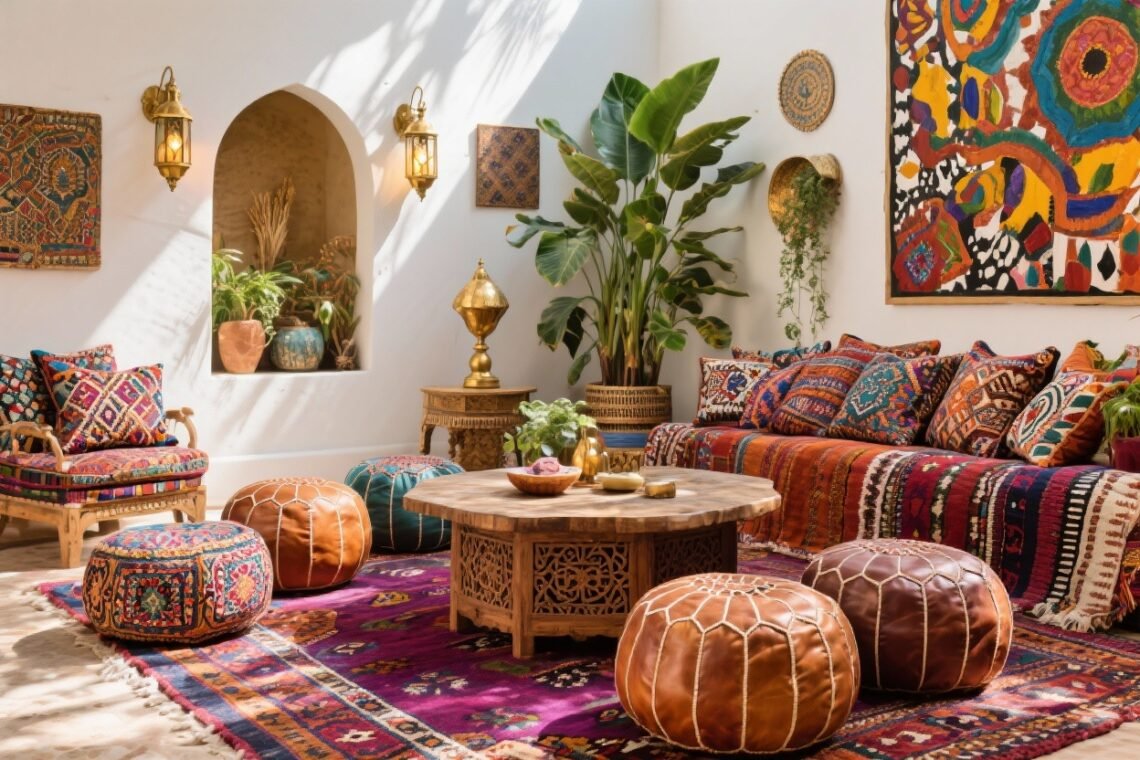
You want cozy-meets-glam, not museum-level minimalism. Enter: Moroccan poufs and ottomans. They bring color, texture, and instant seating without crowding the vibe. Let’s turn your living room into that deliciously layered, lived-in space you can’t stop showing off. Ready?
1. Start With A Bold Base (Then Let The Poufs Shine)

Maximalism loves a strong foundation. Think patterned rugs, saturated walls, or a statement sofa in velvet. Once the base is bold, your Moroccan poufs and ottomans become the playful finishing notes instead of visual clutter.
Quick ideas
- Choose a large patterned rug (Beni Ourain, Boujad, or kilim) to anchor the room.
- Paint or wallpaper one accent wall—deep teal, paprika, or terracotta work beautifully.
- Go for a sofa in a rich fabric so your poufs pop without getting lost.
2. Mix Pouf Shapes And Heights For Depth

If you’ve only got one pouf, cool. But mixing round leather poufs with low kilim ottomans adds dimension and makes your seating layout feel intentional. Varying heights also keeps your eye bouncing around—in a good way.
Try this trio
- One classic round leather pouf (camel or cognac).
- One square kilim ottoman with pattern.
- One floor cushion in lush velvet or embroidered cotton.
FYI: Different heights = layered comfort. People can sit, perch, or prop their feet without fighting for space.
3. Layer Textures Like A Pro
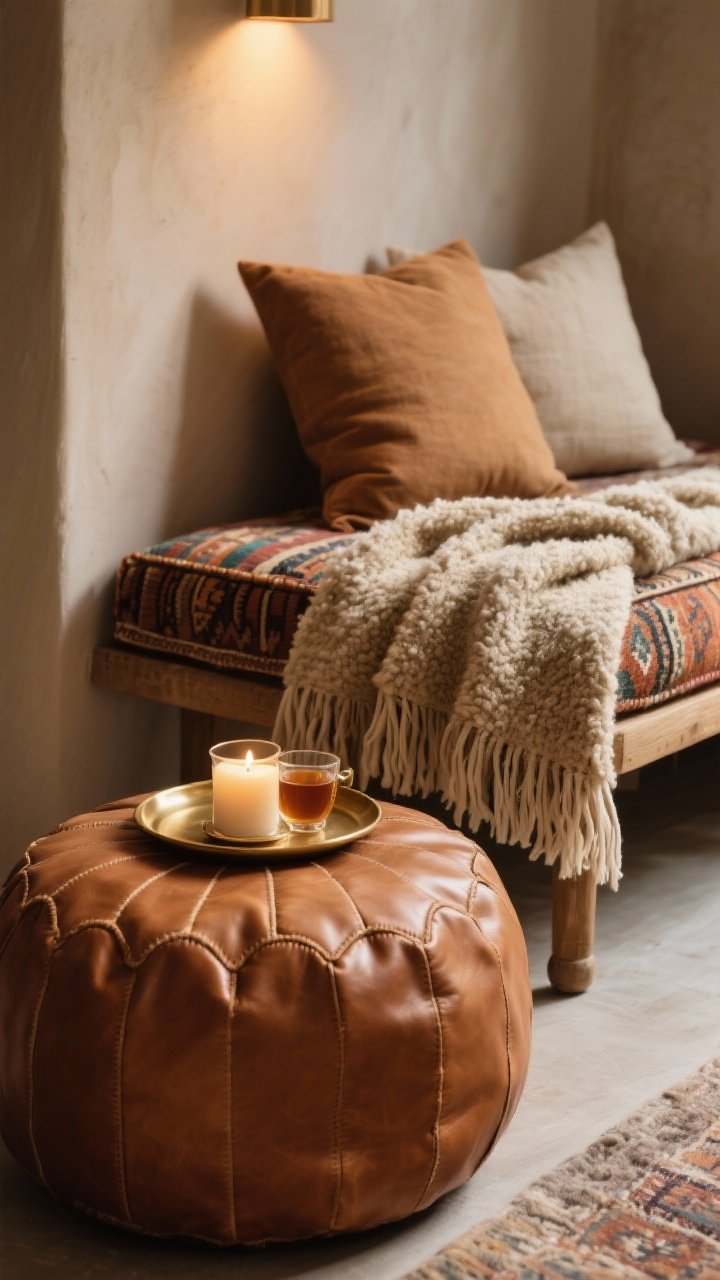
Maximalist doesn’t mean “throw everything at the wall.” It’s about thoughtful contrast. Pair smooth leather poufs with nubby wool rugs and fringed pillows for cozy, tactile variety.
Texture cheat sheet
- Leather: sleek and durable—great for high-use poufs.
- Kilim: flat-woven and patterned—ideal for ottomans and bench cushions.
- Wool/Bouclé: soft and chunky—use for throws or pillows.
- Metal/Brass: add shine via trays or side tables for a glam moment.
Pro tip: Add a brass tray on a sturdy pouf to double as a side table. Instant multi-tasker.
4. Play With Pattern, But Keep A Rhythm
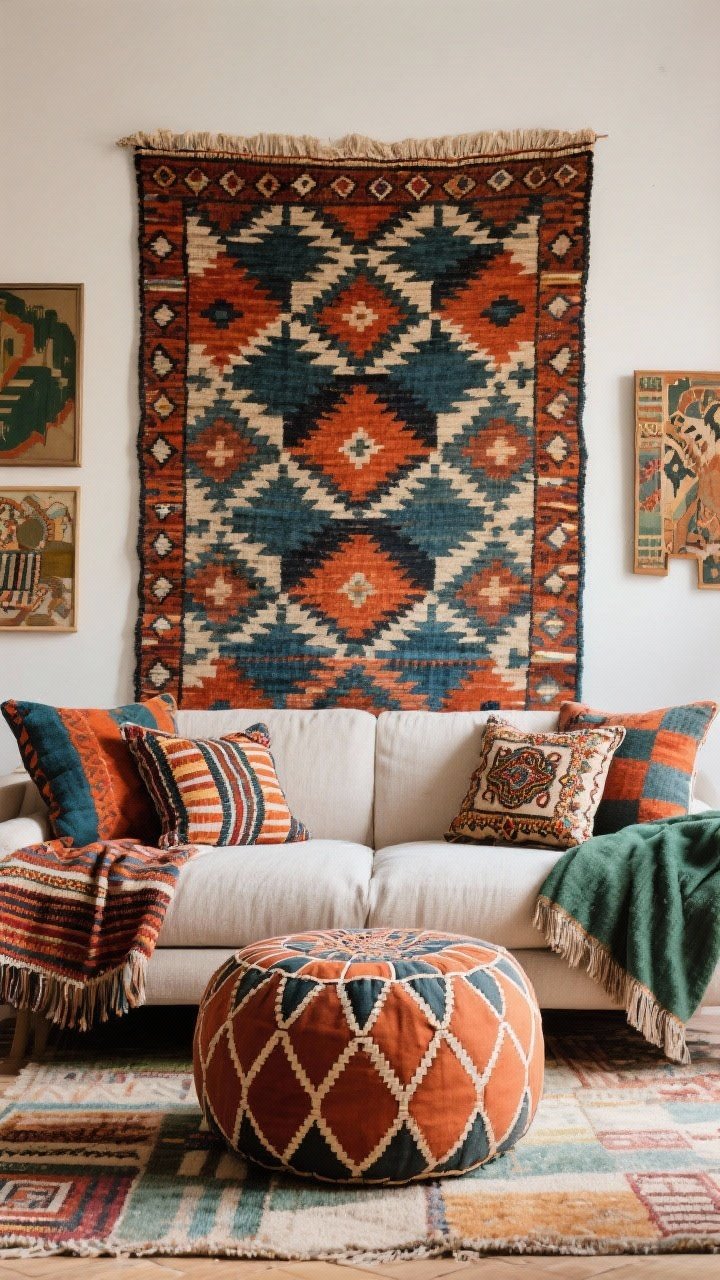
Moroccan decor is pattern heaven. To avoid chaos, pick a pattern rhythm—like big, medium, small—and repeat it across the room. Consistency keeps your maximalist look cohesive.
How to balance patterns
- Large: the rug or drapes (bold geometry or tribal motifs).
- Medium: poufs or ottomans in kilim stripes or diamonds.
- Small: pillows or throws with tiny motifs or embroidery.
Repeat colors across patterns—like paprika, indigo, and olive—so everything feels intentionally mixed, not random.
5. Create Conversation Zones With Pouf Clusters
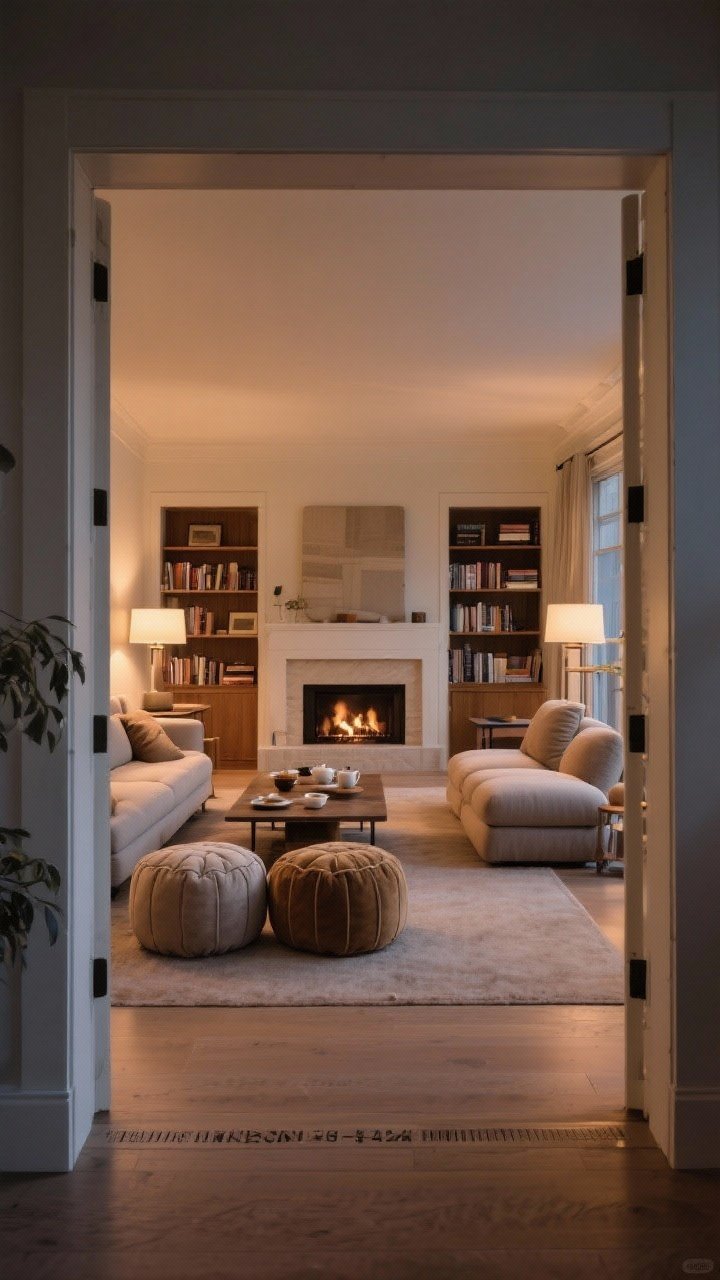
Ottomans and poufs are brilliant for flexible seating. Use them to carve out conversation nooks without moving bulky furniture every weekend.
Layout ideas
- Two poufs flanking a low coffee table for casual tea or game nights.
- One ottoman at the end of a sofa as a chaise extension.
- Three-pouf cluster near a bookshelf or fireplace for a cozy reading corner.
Keep walkways clear by leaving 18–24 inches between larger furniture and poufs. Your shins will thank you.
6. Color Story: Spice Market, But Make It Curated
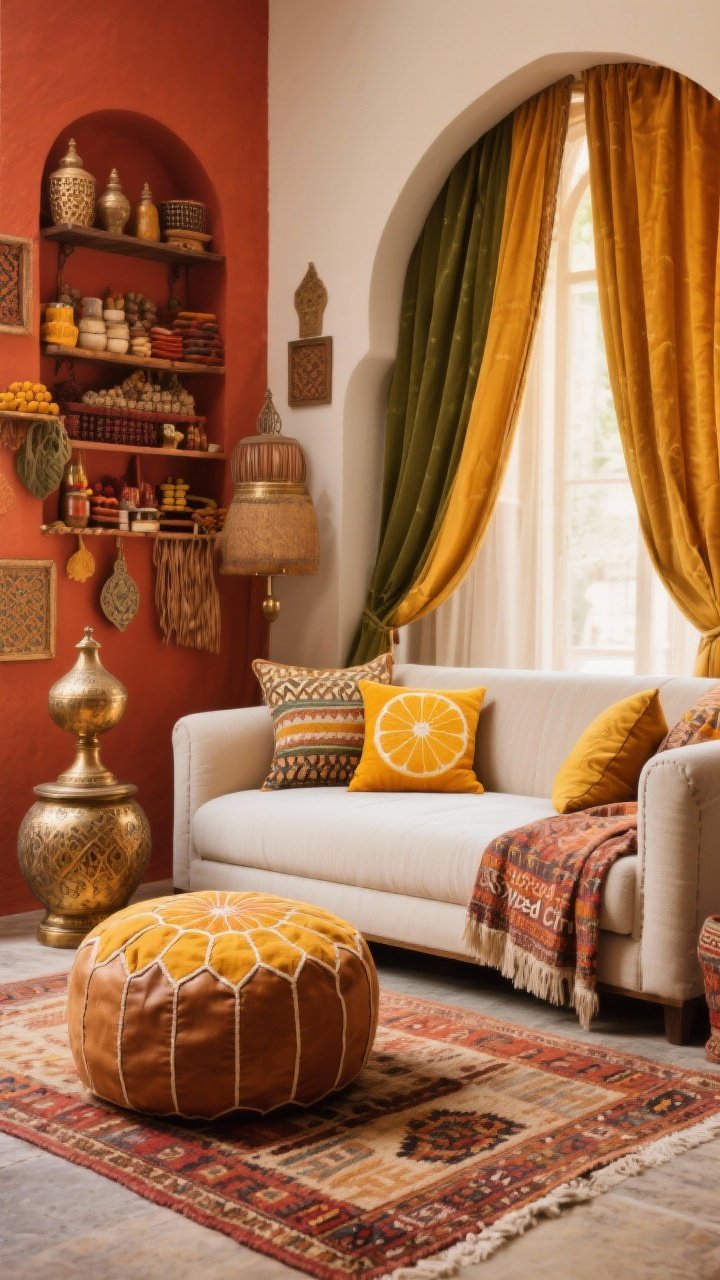
More color? Always. But a cohesive palette prevents visual burnout. Think spice market tones: saffron, cumin, pomegranate, and deep indigo. Choose 3–4 colors and let your poufs be the accents.
Palette examples
- Desert Glow: Camel, terracotta, blush, antique brass.
- Midnight Souk: Indigo, emerald, ivory, burnished gold.
- Spiced Citrus: Paprika, saffron, olive, cream.
Use the 60–30–10 rule: 60% main color (walls/rug), 30% secondary (sofa/curtains), 10% accents (poufs, pillows, art). It’s maximalist math, IMO.
7. Blend Old And New For Soul
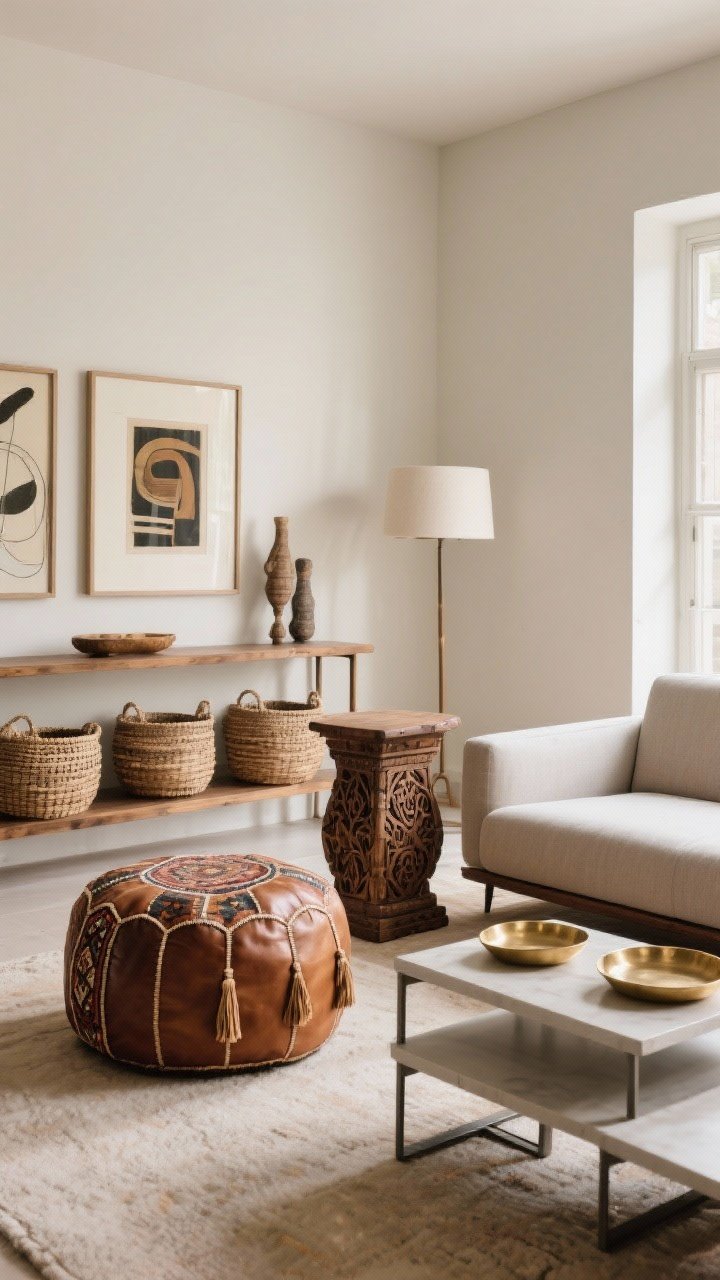
Moroccan style shines when it feels collected. Pair vintage kilim ottomans with modern sofas, or place a new leather pouf next to an antique wood side table. Old and new together = instant character.
What to mix
- Vintage textiles with modern lighting (arc lamps, sculptural sconces).
- Hand-carved trays with sleek nesting tables.
- Woven baskets with contemporary art prints.
Look for handcrafted details—embossed leather, tassels, or hand-stitched seams. Those imperfections? They’re the charm.
8. Style Your Poufs As Functional Decor (Not Just Footrests)

Yes, they’re comfy. But your Moroccan poufs can also be trays, pedestals, or color anchors. Use them like the Swiss Army knife of seating.
Multi-use hacks
- Tray table: Add a round brass tray for drinks and candles.
- Plant stand: Elevate a potted monstera or olive tree for height variation.
- Art perch: Stack a couple of coffee-table books and a small sculptural piece.
- Entry moment: Place a pouf near the door for shoe-tying and drop zones.
Just make sure leather poufs are stuffed firmly if they’ll hold trays or decor. Saggy poufs aren’t great side tables—shocking, I know.
9. Light It Like A Riad
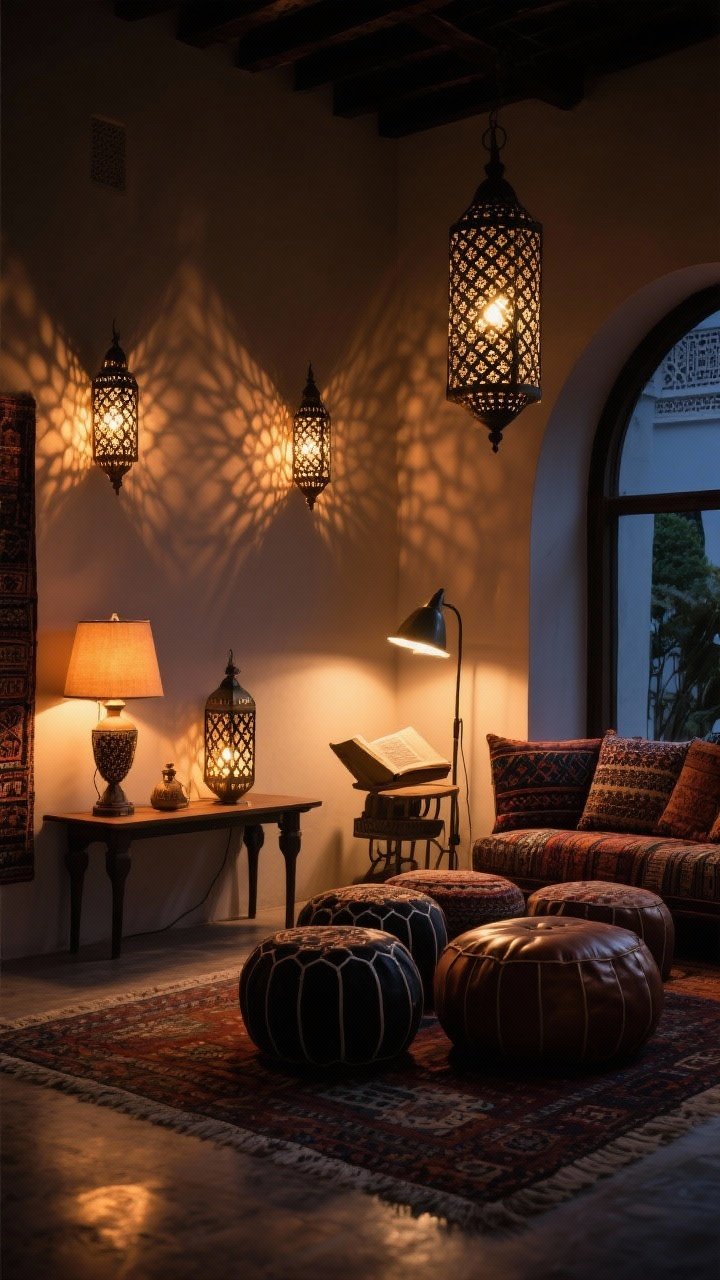
Lighting can make or break the vibe. Layer warm, low-level light for that soft, glowing Moroccan feel. Overhead lighting? Keep it dimmable or decorative, not interrogation-level bright.
Lighting layers to copy
- Ambient: Warm-toned bulbs in lamps or lanterns.
- Accent: Pierced metal lanterns that cast patterned shadows (so magical).
- Task: A reading lamp near your pouf cluster or ottoman chaise setup.
Place a lantern or candle on a pouf with a tray for mood lighting. Instant atmosphere, no electrician needed.
10. Care, Stuffing, And Sustainability Tips (Because Adulting)
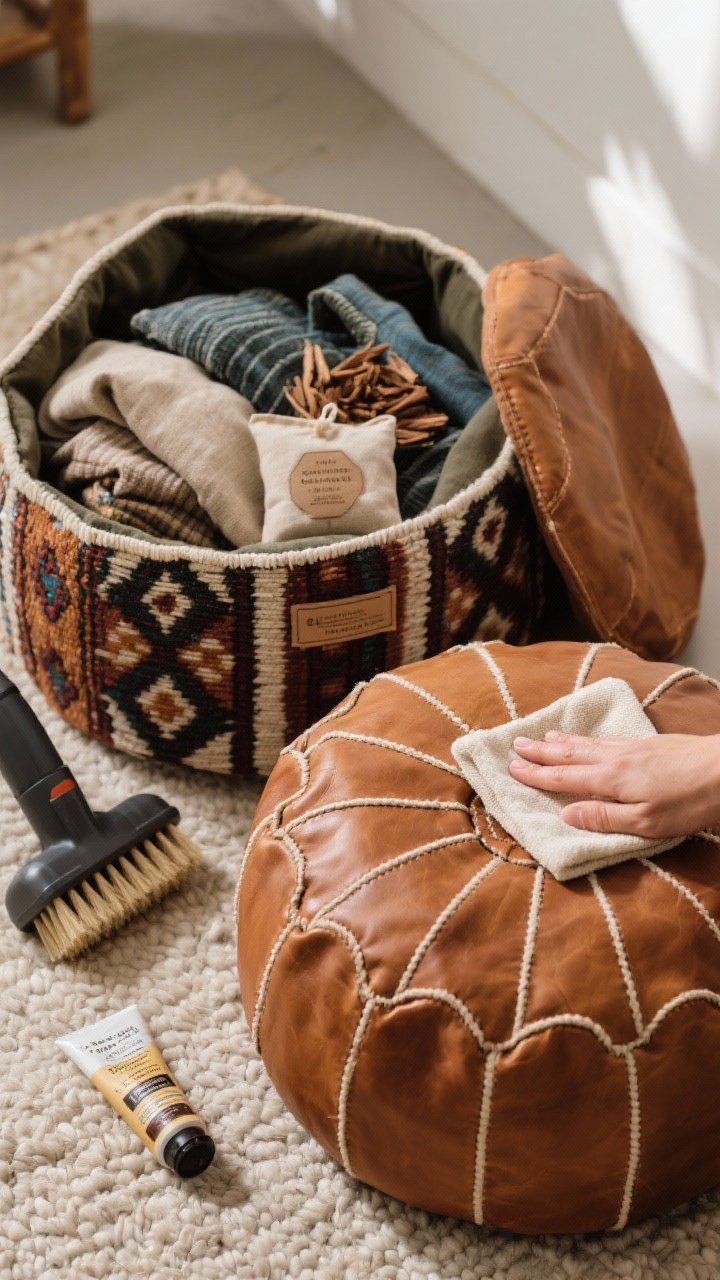
Your poufs will be loved. Keep them looking fresh with simple maintenance and smart stuffing. Bonus points if you make it sustainable.
Care basics
- Leather: Wipe with a damp cloth; condition every few months to prevent cracking.
- Textile/kilim: Spot-clean and vacuum with a brush attachment. Rotate to even out wear.
- Sun: Keep out of direct sun to avoid fading (or accept a sun-kissed patina—your call).
Stuffing that works
- Recycled textiles: Old blankets, towels, or clothing—eco-friendly and firm.
- Poly-fill or foam: Gives structure; mix with soft textiles for comfort.
- Cedar chips sachets: Tuck a sachet inside to deter moths and add a subtle scent.
Ethical sourcing matters. Look for brands that highlight artisan-made and fair trade practices. Your living room will look good and feel good—win-win.
Final thought: Maximalism with Moroccan decor ottomans and poufs isn’t about rules—it’s about rhythm. Build a bold base, layer textures, mix patterns with purpose, and let those poufs do the most. You’ve got this—now go fluff, style, and invite people over so they can “casually” ask where you got everything.



