Nothing makes a farmhouse feel like a hug quite like a little patina and personality. The secret sauce? Vintage touches that actually look lived-in, not staged. We’re talking pieces with stories, textures that invite you to kick off your shoes, and finishes that whisper, “I’ve seen things.” Ready to warm up your country farmhouse without turning it into a museum? Let’s raid the past—strategically.
Start with Wood That Wears Its Years
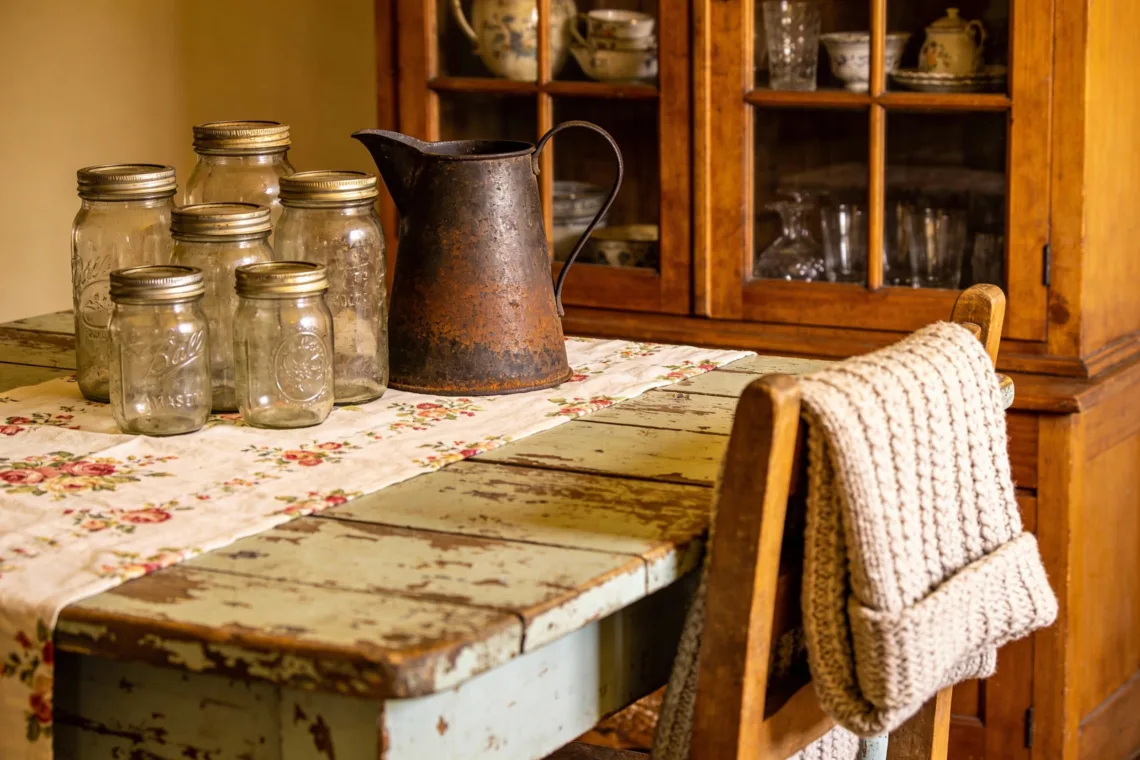
Old wood sets the tone instantly. It adds warmth, depth, and that “someone loved this before me” energy you can’t fake.
- Reclaimed beams or mantel: Even one chunky beam changes the room’s entire mood.
- Antique farm tables: Scuffs and water rings? That’s character, not damage.
- Vintage bread boards: Stack them on a counter for instant texture and function.
How to Use Old Wood Without Going Full Rustic Overload
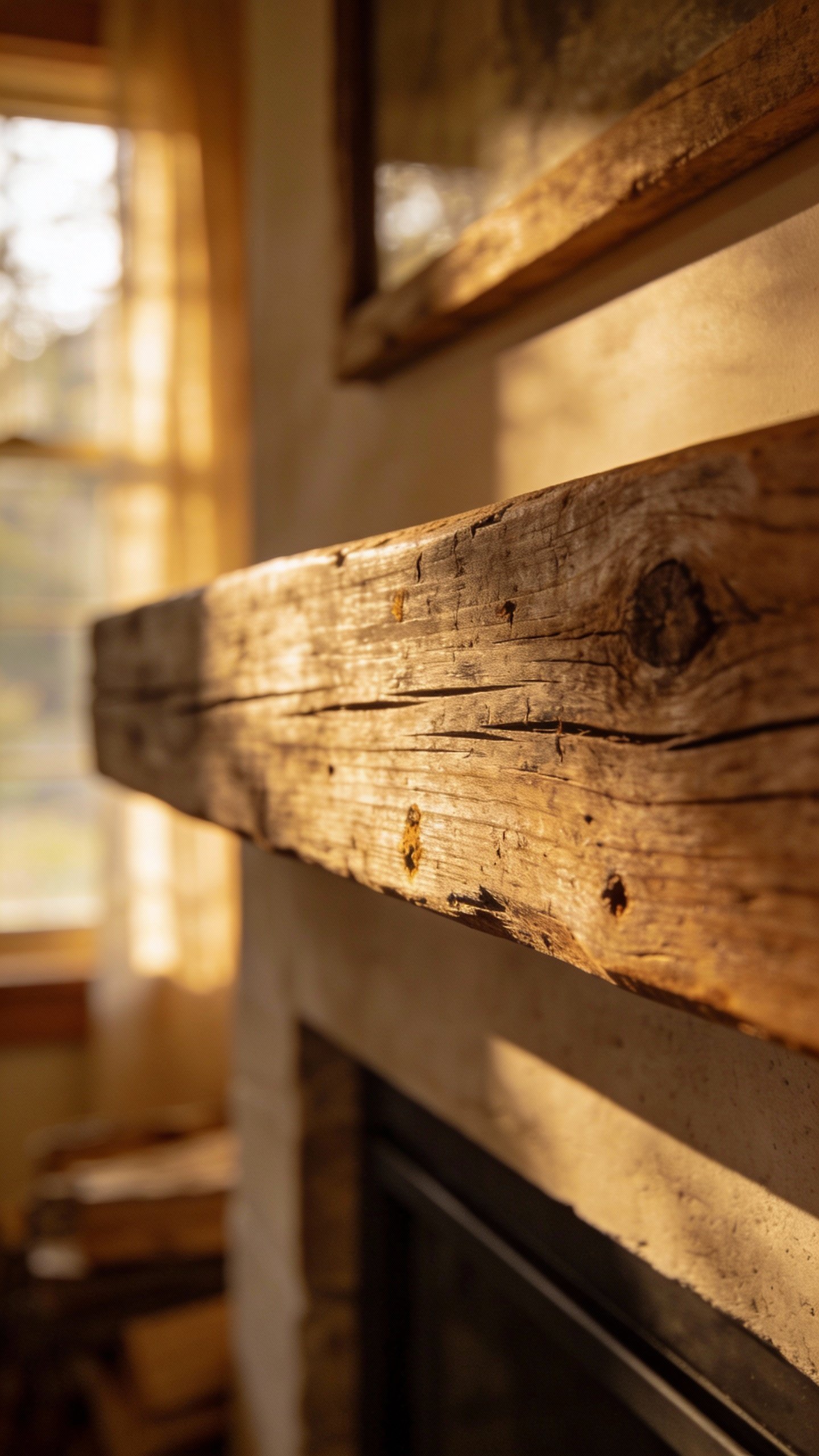
Balance heavy textures with clean lines. Pair a weathered table with simple slipcovered chairs. Choose one hero piece per room—like a reclaimed mantel—so your home feels curated, not cosplay. And FYI: seal old wood lightly to prevent splinters without killing the patina.
Layer Cozy Textiles with History
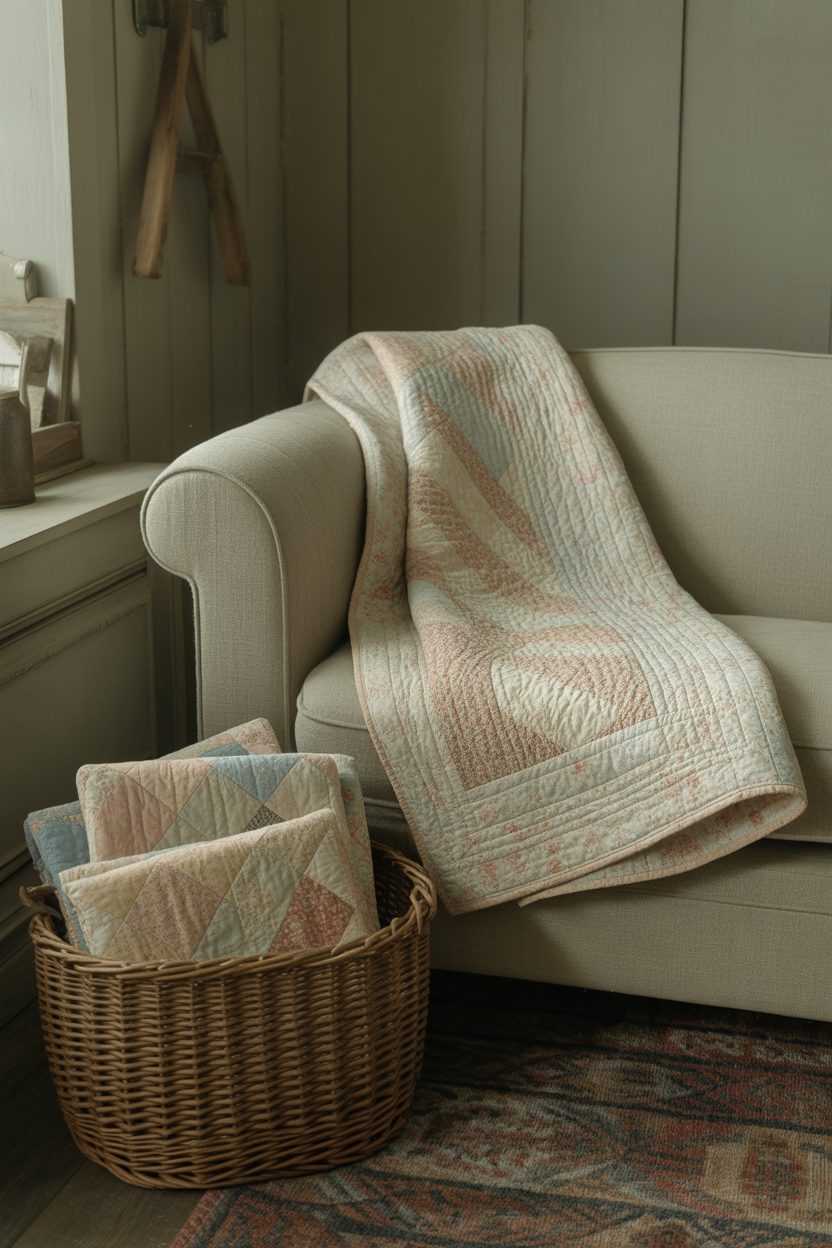
Textiles turn a charming house into a lived-in home. The more layered, the warmer it feels.
- Quilts and coverlets: Toss a faded quilt over a sofa arm or stack them in a basket. Boom—instant nostalgia.
- Grain sack pillows: The typography adds subtle graphic interest.
- Rag rugs and braided rugs: Soft underfoot, ultra farm-core, and perfect for kitchens or mudrooms.
Mix Old and New Without the Clash
Stick to a tight color palette. Think creamy whites, warm beige, denim blues, moss green. Mix textures, not patterns. If a quilt boasts a bold pattern, pair it with linen or canvas. IMO, a crisp white slipcover plus a vintage quilt equals chef’s kiss.
Put Vintage Storage to Work
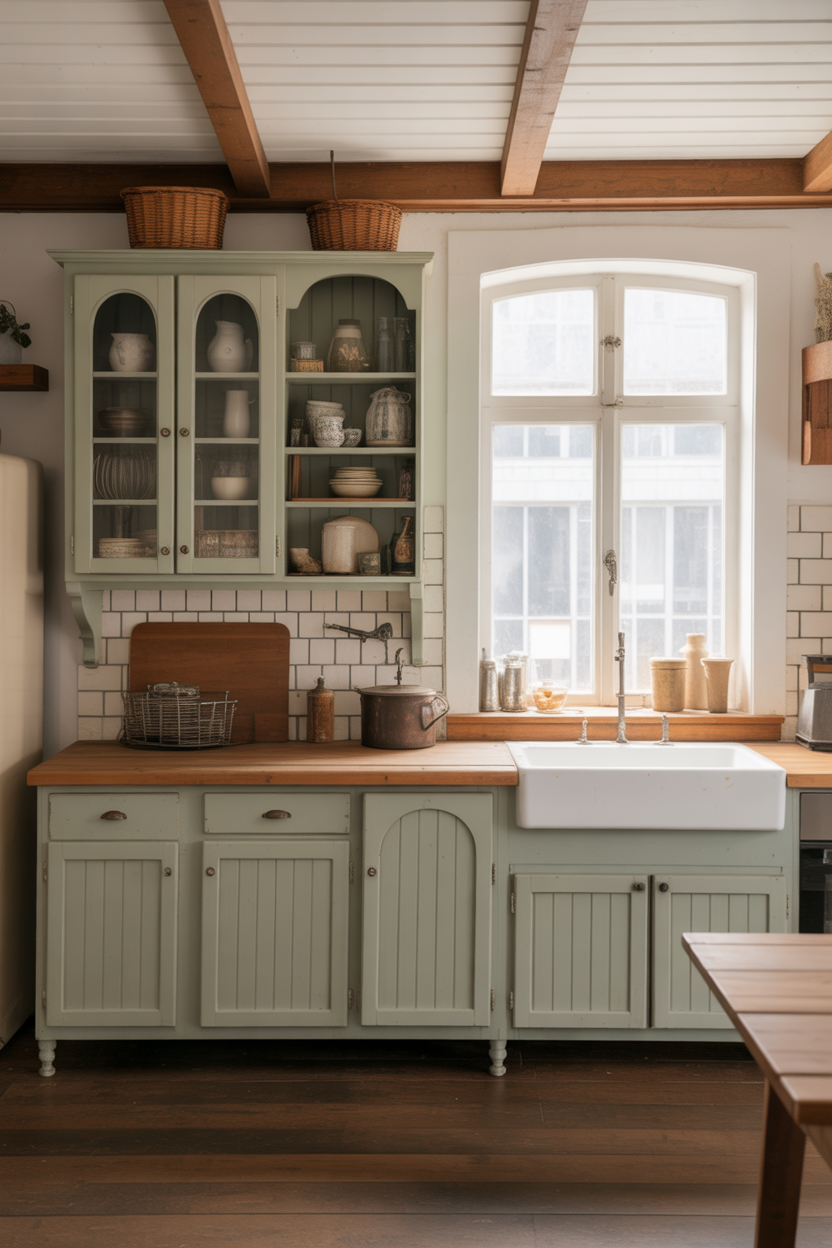
Storage can be gorgeous, which, if you’ve ever owned a farmhouse with approximately zero closets, is excellent news.
- Apothecary cabinets: Those tiny drawers? Perfect for flatware, tea, and random junk we pretend we don’t have.
- Wire baskets and lockers: Corral produce, towels, or kids’ shoes without killing the vibe.
- Pie safes and Hoosier cabinets: Functional history that doubles as a focal point.
Styling Tip: Label, But Make It Cute
Use enamel tags or handwritten labels. It keeps the charm, prevents chaos, and makes guests think you’re wildly organized. You don’t have to tell them about the junk drawer.
Hang Stories on the Walls
If your walls feel flat, bring in vintage art and accents. No need for fancy antiques—just pieces with personality.
- Oil landscapes and portraits: Even small ones cozy up a room fast.
- Framed needlework or botanical prints: Charming, affordable, and easy to mix.
- Old mirrors: A little foxing (a.k.a. that speckled patina) adds soul and softens light.
Gallery Wall Without the Stress
Lay everything out on the floor first. Mix frames: wood, black, distressed white. Keep spacing irregular for that collected-over-time look. FYI, a single large mirror anchors a gallery nicely and keeps it from feeling chaotic.
Let Your Lighting Tell a Story
Lighting sets the whole mood—cozy or sterile. Let’s avoid dentist office vibes.
- Schoolhouse pendants: Clean lines, vintage heart—ideal for kitchens.
- Milk glass sconces: Soft glow that flatters literally everyone.
- Lantern-style fixtures: Outdoor charm, indoor warmth.
Mix Metals Like a Pro
Blend brass, iron, and aged nickel. Aim for one dominant finish and one accent. If your hardware leans black iron, add a warm brass table lamp for contrast. Dimmer switches? Mandatory, not optional.
Set a Table That Feels Like Sunday
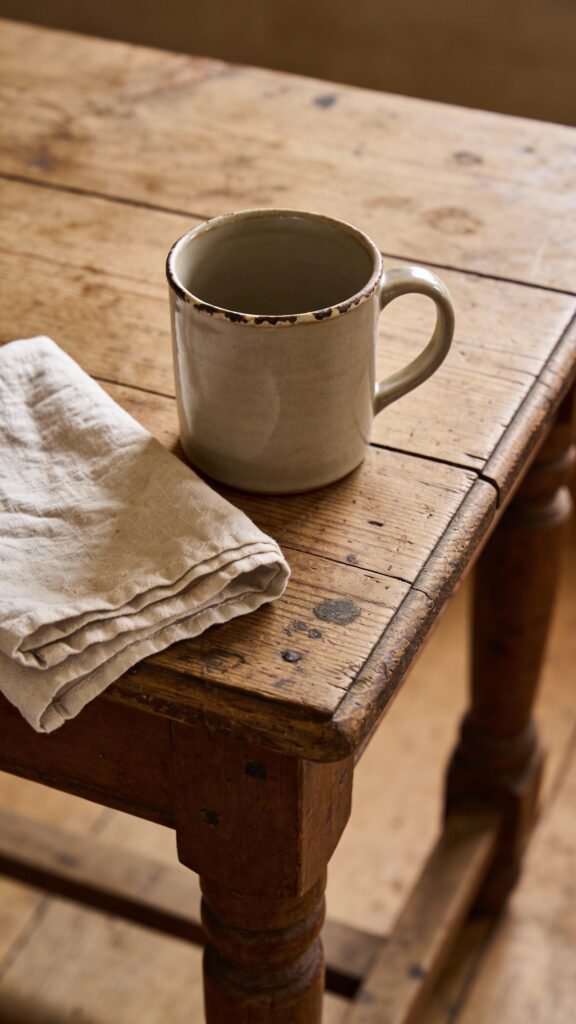
Vintage tableware turns everyday meals into mini rituals. It’s hospitality with a dash of nostalgia.
- Ironstone and transferware: Mix patterns in a cohesive color family (blue and white never fails).
- Mismatched flatware: Looks curated, not chaotic, when you keep tones consistent (all silver, for example).
- Amber glass or mason jars: Warm up the table and catch candlelight beautifully.
Centerpieces That Don’t Try Too Hard
Think pitchers with wildflowers, a wooden dough bowl with seasonal fruit, or vintage books topped with a tiny crock. No giant arrangements that block faces—we’re here to talk to people, not stare at eucalyptus.
Doors, Hardware, and the Quiet Details
Small swaps bring major warmth and authenticity.
- Antique door knobs and latches: They feel good in your hand and add instant character.
- Hooks and pegs: Use shaker pegs for hats, baskets, and dried herbs.
- Rugs and runners: A faded Persian runner in a hallway? Cozy magic.
Paint Colors That Love Vintage
Choose warm neutrals with earthy undertones: creamy ivory, greige, soft sage, muted denim. Test swatches at different times of day. Old wood and metals look better against warm backdrops—cool whites can read sterile.
Keep It Collected, Not Cluttered
The key to farmhouse charm? Editing. Not every treasure needs a stage.
- Create vignettes: Three to five items per surface—vary height, texture, and shape.
- Store the rest: Rotate seasonally to keep things fresh.
- Tell a story: A stack of cookbooks, a brass candlestick, and a vintage whisk says “I bake” without screaming it.
Where to Find the Good Stuff
Hit estate sales early, join local buy/sell groups, and befriend antique dealers. Also, check the back of the shop. The front is curated; the back is where the deals live. IMO, patience pays off—don’t buy the first “vintage-inspired” thing you see online.
FAQ
How do I mix vintage pieces with modern furniture without clashing?
Anchor the room with modern basics—think simple sofas, clean-lined beds—and layer vintage accents on top. Stick to a cohesive color palette so everything speaks the same language. Use vintage as your texture and soul, not the entire sentence.
What’s the best way to clean and care for antique wood?
Dust with a soft cloth and use a gentle beeswax polish a few times a year. Avoid soaking it or using harsh cleaners. If the surface looks thirsty, a light coat of tung oil can revive it without creating a plastic-y finish.
Are “vintage-inspired” items okay, or do I need the real deal?
You can absolutely mix both. Buy real when the patina matters (tables, cutting boards, mirrors), and use vintage-inspired for lighting or textiles when budget or availability gets in the way. The goal is warmth, not an authenticity test.
How do I avoid the farmhouse looking kitschy?
Limit literal farmhouse motifs (no wall-to-wall roosters, please). Focus on materials—wood, stone, linen, iron—instead of slogans or novelty signs. Choose pieces with function and history over theme-y decor.
What colors work best with vintage farmhouse style?
Warm neutrals rule: creamy whites, soft taupes, sage greens, denim blues, and muted charcoal. Layer in natural wood and aged metals for depth. A pop of barn red or mustard can add energy when used sparingly.
Any quick upgrades for renters?
Absolutely. Swap in vintage lamps, hang art with removable strips, roll out a faded runner, stack old bread boards on the counter, and use freestanding cabinets or peg rails. You get the vibe without touching the walls permanently.
Wrap-Up: Warmth You Can Feel
Vintage touches add the heartbeat your farmhouse craves. Bring in soulful wood, layered textiles, timeworn storage, and lighting with history. Edit thoughtfully, keep the palette warm, and let every piece earn its place. Do that, and your home stops trying to look cozy and actually becomes it—FYI, that’s the goal.