You don’t need more willpower. You need fewer excuses and a playbook that your brain actually follows. Procrastination isn’t laziness—it’s an avoidance strategy with excellent PR.
Let’s dismantle it with habits that make momentum automatic and keep your workday from turning into a scrolling marathon.
Rewire Your Start: Make “Tiny First Steps” Your Default
You don’t need to climb the mountain. You need to put on your shoes. Set the bar laughably low and sneak past your brain’s resistance.
Aim for “open the doc and write one sentence” or “sort three emails.”
- Use the 2-Minute Rule: If a task takes under two minutes, do it now. If it’s bigger, do a two-minute starter.
- Make it obvious: Keep your tools ready—notes app open, project file pinned, headphones on your desk.
- Stack it: Attach your tiny step to a routine you already do: after coffee, write one line.
The Mental Trick: Start Ugly
Promise yourself you’ll make version 1 awful on purpose. Lower the quality bar so you can raise the quantity bar.
You can’t edit a blank page, but you can delete garbage with pride.
Turn Time Into Sprints, Not Slogs
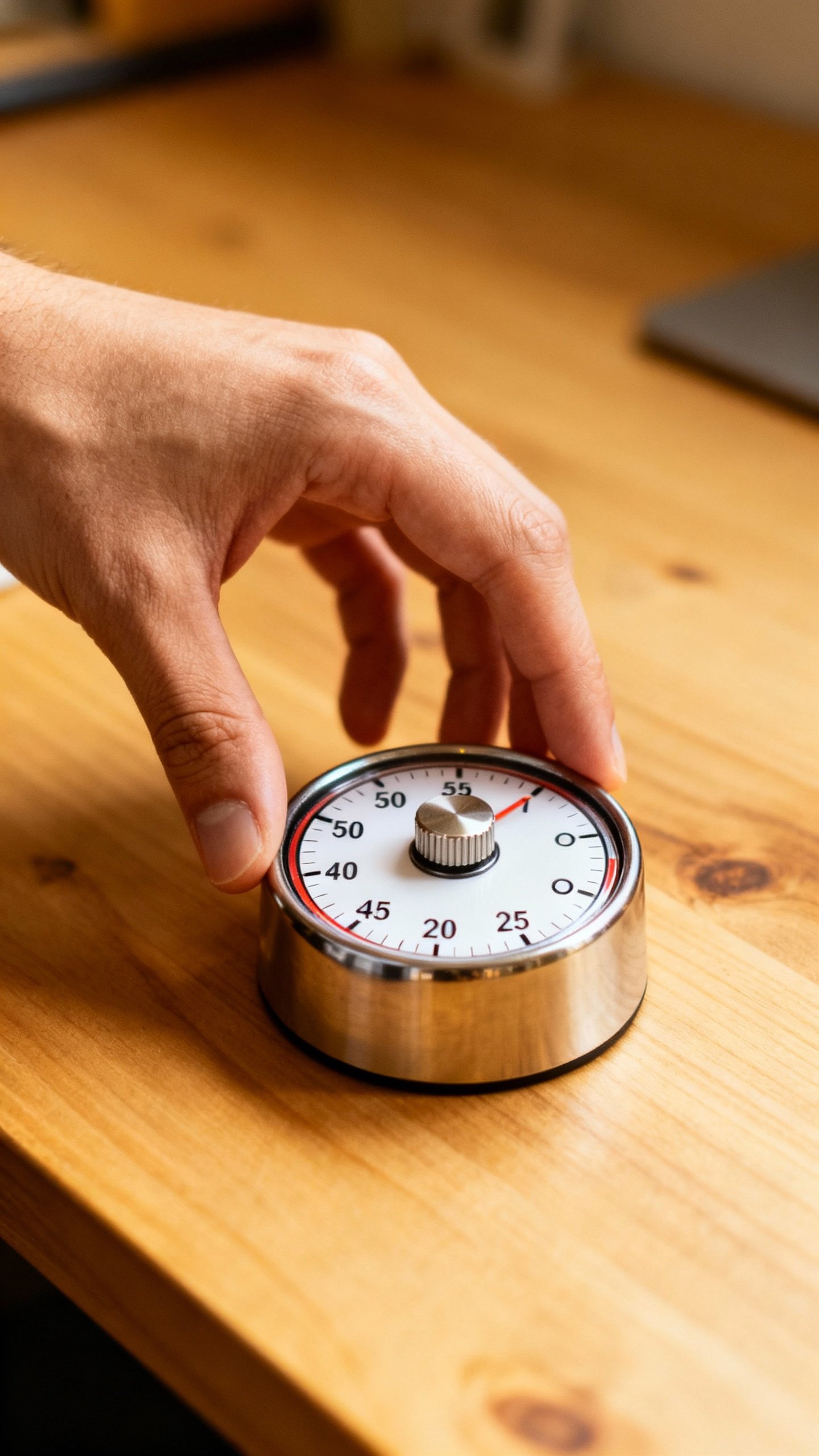
You don’t need eight hours of laser focus—you need 25 minutes where you don’t betray yourself. Then you get a short break. Repeat.
- 25/5 cycles: Work 25 minutes, break 5.
After four cycles, take a longer 20-30 minute break.
- Single-target sprints: Pick one task per sprint. Multitasking is just task-switching with worse branding.
- Start the timer before you feel ready: Action creates motivation, not the other way around.
Upgrade the Breaks
Step away from your screen. Stretch, drink water, breathe for 60 seconds.
Yes, TikTok counts as a break—but it will eat your soul. Choose wisely.

Design Your Friction: Make Good Habits Easy, Bad Habits Annoying
You can’t out-willpower a well-designed distraction. Change the environment so the right choice wins by default.
- One-tab rule: Keep one browser tab open during a sprint.
Your future self will send a fruit basket.
- App blockers: Use tools that block social feeds for set windows. Remove the decision fatigue.
- Visual cues: Keep the project document front and center. Hide nonessential apps from your dock.
FYI: Notifications Aren’t Neutral
Every ping costs attention tax.
Mute non-urgent alerts, stop badges, and schedule “catch-up” windows for messages.
Motivation Is a Mood Swing—Use Systems Instead
If you depend on “feeling like it,” your to-do list will mutiny. Build systems that run even when your energy dips.
- Daily non-negotiables: Pick three tasks you will complete no matter what. Keep them realistic.
- Weekly planning sprint: Every Sunday, plan your top 3 for each day.
Avoid surprise chaos.
- Theme your days: Admin Monday, Deep Work Tuesday, Calls Wednesday. Your brain loves patterns.
IMO: Calendar > To-Do List
If it matters, schedule it. Put work blocks on your calendar and protect them like doctor appointments.
Your to-do list is a buffet; your calendar is a reservation.

Use Rewards Like a Pro (Not Like a Golden Retriever)
You’re not bribing yourself—you’re training your brain to pair effort with dopamine.
- Immediate micro-rewards: After a sprint, have tea, walk outside, or listen to a favorite song.
- Visible progress: Track streaks on paper or in an app. Humans love seeing boxes checked.
- Chunk the win: Celebrate milestones, not just outcomes. Shipped draft?
That’s a win.
Make It Social
Tell a friend what you’ll finish by noon. Send them a “done” message. Friendly accountability beats silent shame.
Fix Your Energy First: Sleep, Food, Movement
You can’t out-productivity a tired brain.
If your energy crashes, procrastination looks like self-preservation.
- Sleep like it’s part of the project: 7–9 hours, consistent times. No heroics.
- Feed the brain: Protein and fiber early. Save the sugar rollercoaster for celebrations.
- Move daily: 10-minute walk between sprints unlocks fresh ideas and better focus.
Hydration Is Not a Personality
But water helps.
Drink a glass at the start of each sprint. Low effort, high yield.
Make Decisions Once, Not 20 Times a Day
Every decision drains fuel. Automate how you start, when you break, and what “done” looks like.
- Checklists: Build a small checklist for recurring tasks.
Follow it instead of reinventing wheels.
- Define “done”: Write down completion criteria: word count, deliverable, or deadline.
- Batch decisions: Answer emails at 11 and 4. Plan meals on Sunday. Reduce daily friction.
The “Next Action” Habit
End each work block by writing the next physical action.
Tomorrow-you will thank today-you for the breadcrumb trail.
Tackle Resistance With Emotional Honesty
Procrastination often hides fear: of failure, success, or boredom. Name the feeling and move anyway.
- Ask: what am I avoiding? Unclear task? Break it down.
Fear of judgment? Draft privately first.
- Use a “worry slot”: Schedule 10 minutes later to stress about it. Get back to work now.
- Perfectionism check: Set A-, not A+, as the target for the first draft.
When You Stall, Downshift
If you can’t do the task, do the task-adjacent: outline, gather references, rename files.
Keep the gears moving.
The 10 Habits, Recapped
- Tiny first steps
- Timed sprints with real breaks
- Environment design and friction control
- Systems over motivation
- Smart rewards and visible progress
- Sleep, nutrition, and movement
- Make decisions once (checklists and batching)
- Define “done” and next actions
- Emotional honesty about resistance
- Social accountability and streaks
FAQs
How do I stay consistent when my schedule changes a lot?
Anchor your habits to triggers, not times. Instead of “write at 8 a.m.,” do “write after coffee.” Keep a portable setup and aim for minimum viable work blocks (even 10 minutes). Consistency beats intensity.
What if timers stress me out?
Flip it: use a “soft container.” Start a playlist and work until it ends.
Or set a timer for your break instead of your work. The goal is rhythm, not pressure.
How do I stop checking my phone every five minutes?
Outsmart it. Put the phone in another room, face down.
Use app blockers during sprints and give yourself designated “scroll windows.” Reward yourself for staying off it with something non-digital, IMO.
Is multitasking always bad?
For deep work, yes. For shallow tasks, batching similar items can help. But switching contexts destroys focus.
Single-thread your sprints and batch the busywork later.
What if I miss a day and lose my momentum?
Use the “never miss twice” rule. Skip days happen; make the next day tiny and winnable. Reset the streak without drama.
Progress over perfection, every time.
How long until these habits feel natural?
Most people feel a shift within two weeks if they keep the steps small and consistent. Full autopilot takes longer, but early wins come fast when you stack tiny actions daily, FYI.
Conclusion
You don’t need a personality transplant. You need smaller starts, smarter systems, and a few rules that nudge you forward when motivation ghosts you.
Pick two habits from this list and start today—badly, quickly, without ceremony. Momentum beats procrastination every single time.