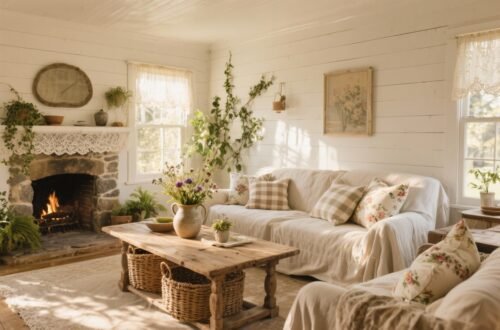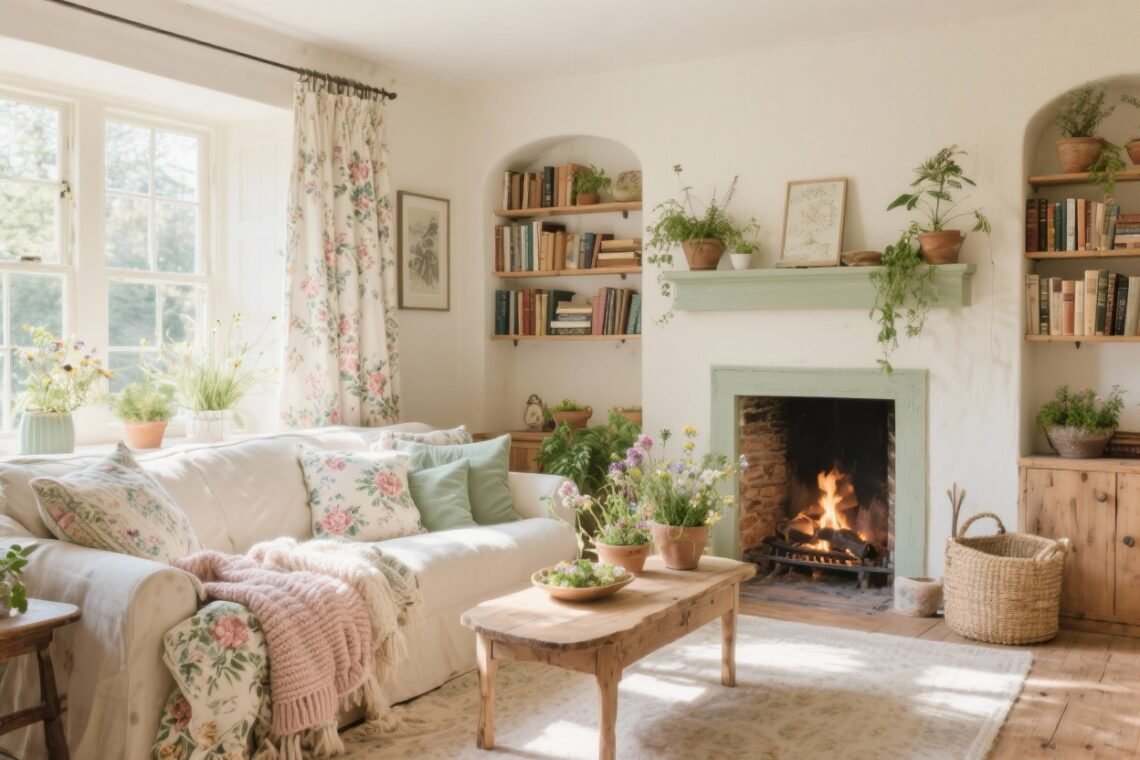
You don’t need a farmhouse or a flock of chickens to tap into cottagecore calm. You just need a few thoughtful shifts that make your space feel slower, softer, and way more you. Ready to swap stress for cozy? Let’s turn your home into a gentle exhale.
1. Curate Calm With Nature-First Materials
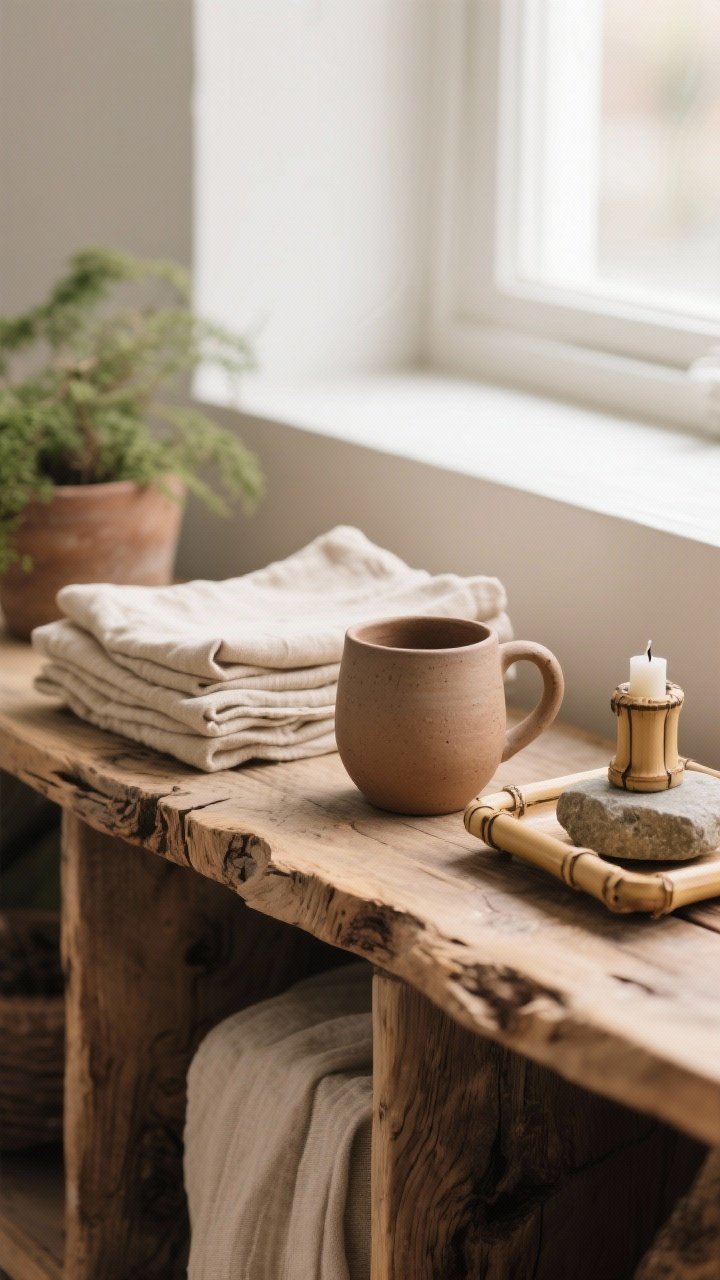
Cottagecore is basically a love letter to nature. Bringing in natural materials—like wood, linen, clay, and stone—grounds your space and your mood. Textures you can actually feel cue your brain to chill. Plastic? It’s giving airport lighting vibes.
Why It Helps Your Mind
Natural finishes reduce sensory overload. Your eyes and hands pick up “safe, familiar, calm” from the organic textures. It’s subtle but powerful—like a hug from your environment.
Try This
- Swap synthetics for linen curtains, cotton throws, and wool pillows.
- Add wood with a raw-edge shelf, thrifted side table, or bamboo tray.
- Use earthy ceramics for everyday items—mugs, planters, candleholders.
- Layer natural tones (oatmeal, moss, clay) instead of bright whites for a softer look.
2. Invite Living Things Into Your Routine
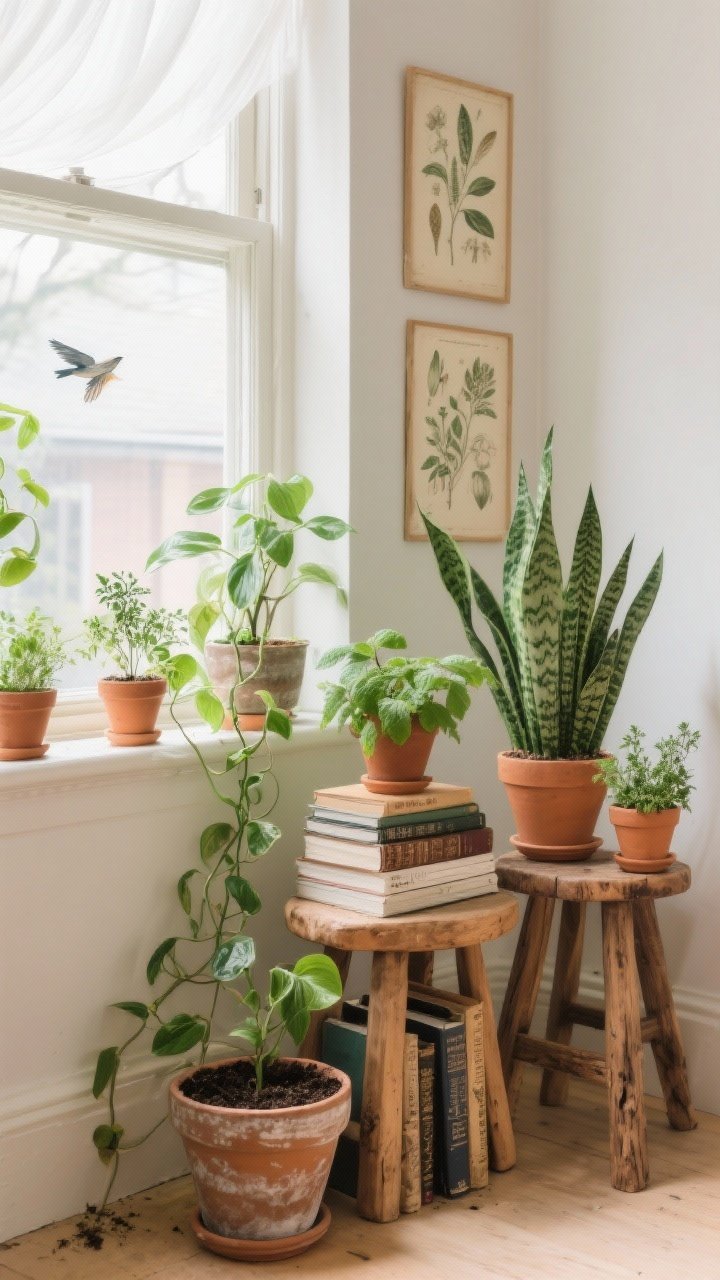
Plants are the unofficial cottagecore mascot—and they’re mood boosters, FYI. Even a small herb pot on the windowsill gives your brain a green break and your day a little rhythm. Bonus: watering them is a calming ritual that nudges you off your phone.
Why It Helps Your Mind
Biophilic design connects us to nature, lowering stress and improving focus. It turns daily care into mindful micro-moments—spoonfuls of calm, no meditation app required.
Try This
- Start easy with pothos, snake plant, or ZZ plant. Herbs like thyme and mint are low-drama MVPs.
- Cluster plants at different heights to create a mini indoor garden—think stools, stacks of books, windowsills.
- Bring in botanical art if you’re not a plant parent. Vintage floral prints still give you that green hit.
- Open the windows for fresh air and birdsong. Instant pastoral soundtrack, IMO.
3. Create Little Ritual Zones (Micro-Sanctuaries)
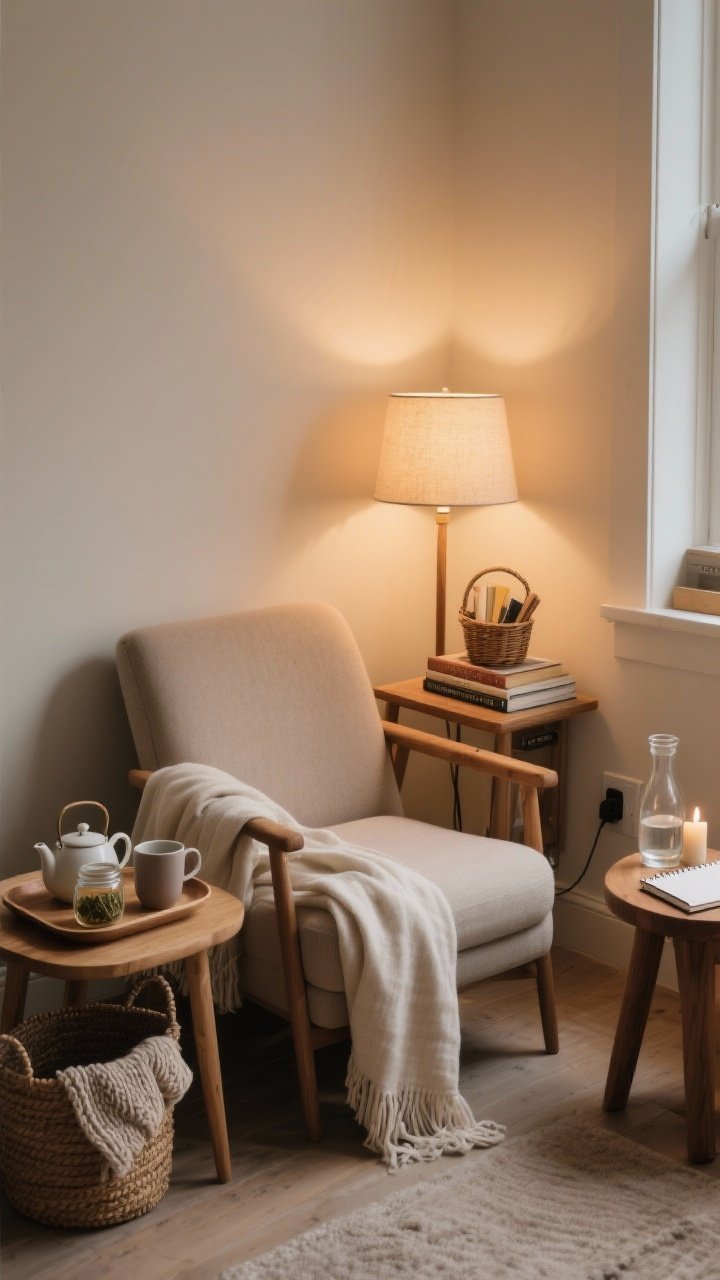
Your home should have pockets of peace. Cottagecore thrives on slow rituals—tea at 4, journaling by lamplight, a Sunday bake. Turn those habits into tiny sanctuaries so your brain knows where to relax on cue.
Why It Helps Your Mind
Defined spaces reduce decision fatigue and anchor healthy routines. When your environment whispers “it’s reading time,” you stop doomscrolling and start decompressing.
Try This
- Reading nook: cozy chair, soft throw, warm lamp, and a small basket of books. No chargers allowed.
- Tea tray: a pretty tray with a teapot, favorite mug, linen napkin, and a jar of loose leaf.
- Craft corner: basket for knitting, sketchbook, or embroidery. Keep it visible so it actually happens.
- Nightstand ritual: carafe of water, a candle, and a simple notebook for a two-minute brain dump.
4. Embrace Imperfection And Hand-Touched Charm
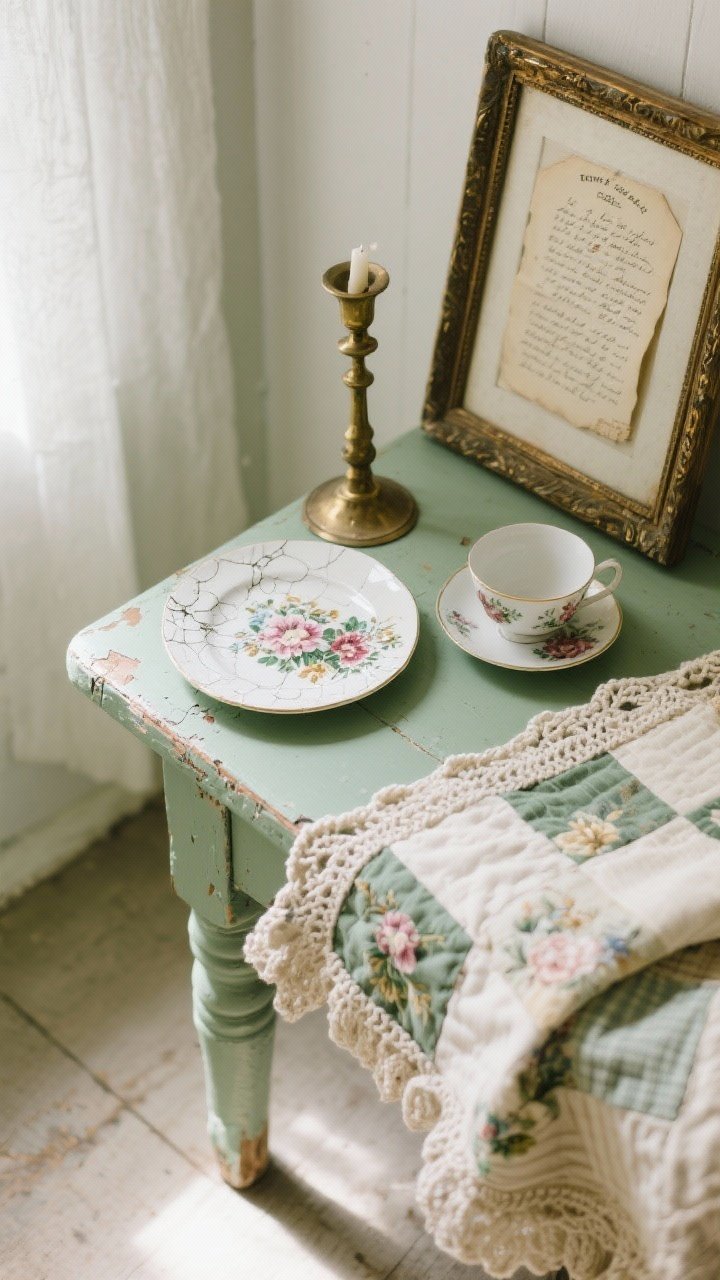
Cottagecore celebrates wabi-sabi: the beauty of the imperfect and handmade. A mismatched teacup, a slightly wobbly thrifted chair, or a patchwork quilt tells a story—and stories make spaces feel safe and personal.
Why It Helps Your Mind
Perfection is stressful. Imperfect, hand-touched items signal comfort and authenticity. Your home stops performing and starts soothing—like a friend in sweats, not a stranger in a suit.
Try This
- Thrift intentionally: look for patinated brass, floral plates, and heirloom frames with character.
- DIY small fixes: paint a stool sage green, replace knobs with ceramic ones, stitch a simple cushion cover.
- Display memory pieces: grandma’s mixing bowl, a framed recipe card, a well-loved book stack.
- Layer textiles: quilts, crochet throws, ruffled pillows—soft things that say “come as you are.”
5. Light Like A Cottage At Golden Hour
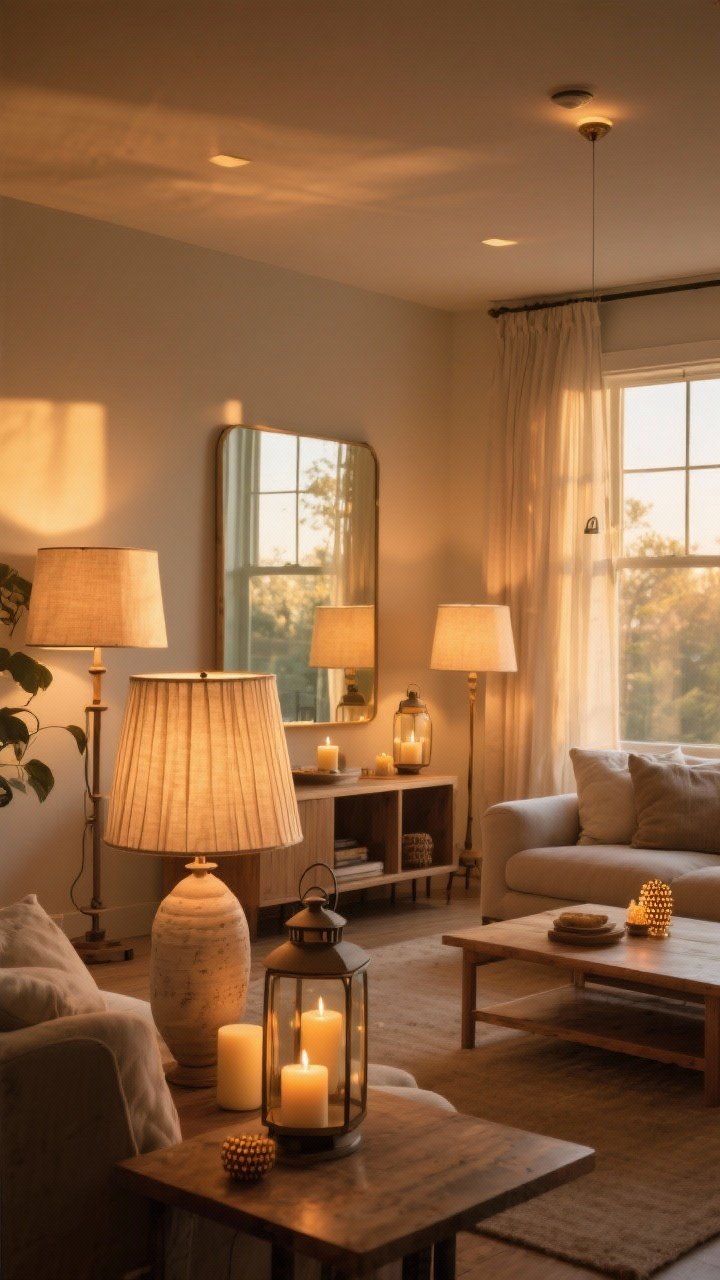
Harsh overhead lights can tank your mood. Cottagecore lighting is all about warmth and layers so your space glows like sunset on a farmhouse porch. Yes, even if you live in a studio.
Why It Helps Your Mind
Warm, low-level light cues relaxation and reduces eye strain. Multiple light sources create comfort zones and help you wind down at night—goodbye, buzzy brain.
Try This
- Use lamps, not ceiling lights: table and floor lamps with warm bulbs (2700K–3000K) are your besties.
- Add softness: pleated shades, linen lampshades, or a lantern-style lamp for cozy texture.
- Candle moments: beeswax or soy candles in ceramic holders for an extra layer of glow.
- Window magic: sheer curtains to diffuse daylight; mirrors opposite windows to bounce it around.
Pro Tip: Layer It All Together
Want the quick recipe? Natural textures + plants + a ritual zone + imperfect treasures + warm lighting. That’s your cottagecore mental health stack—no farmhouse required, just intention.
Final word: Start small. One plant, one lamp, one thrifted gem. Your space doesn’t need to be a movie set; it just needs to feel like a soft place to land. And that’s the real cottagecore flex.