You’ve tried all the productivity hacks. The color-coded calendar, the 5 a.m. club, the app that pings you every 12 minutes. You’re efficient, yet somehow fried.
What if the problem isn’t your discipline, but your pace? Let’s slow things down — not to get less done, but to get the right things done without feeling like a toaster set to “incinerate.”
Why Slow Living Doesn’t Mean Slow Output
Slow living gets a bad rap. People imagine knitting in a meadow while deadlines gently pass by.
Cute, but wrong. Slow living means you move with intention, not inertia. You pick fewer, better moves, and you stop letting urgency boss you around. Here’s the twist: slowing the pace often speeds up your progress. You reduce context-switching, stop chasing dopamine from tiny tasks, and save energy for real work.
It’s like switching from frantic tapping to steady drumming — same rhythm, less noise.
Start With Fewer Priorities (No, Fewer Than That)
If everything matters, nothing does. You need ruthless clarity on what actually moves the needle.
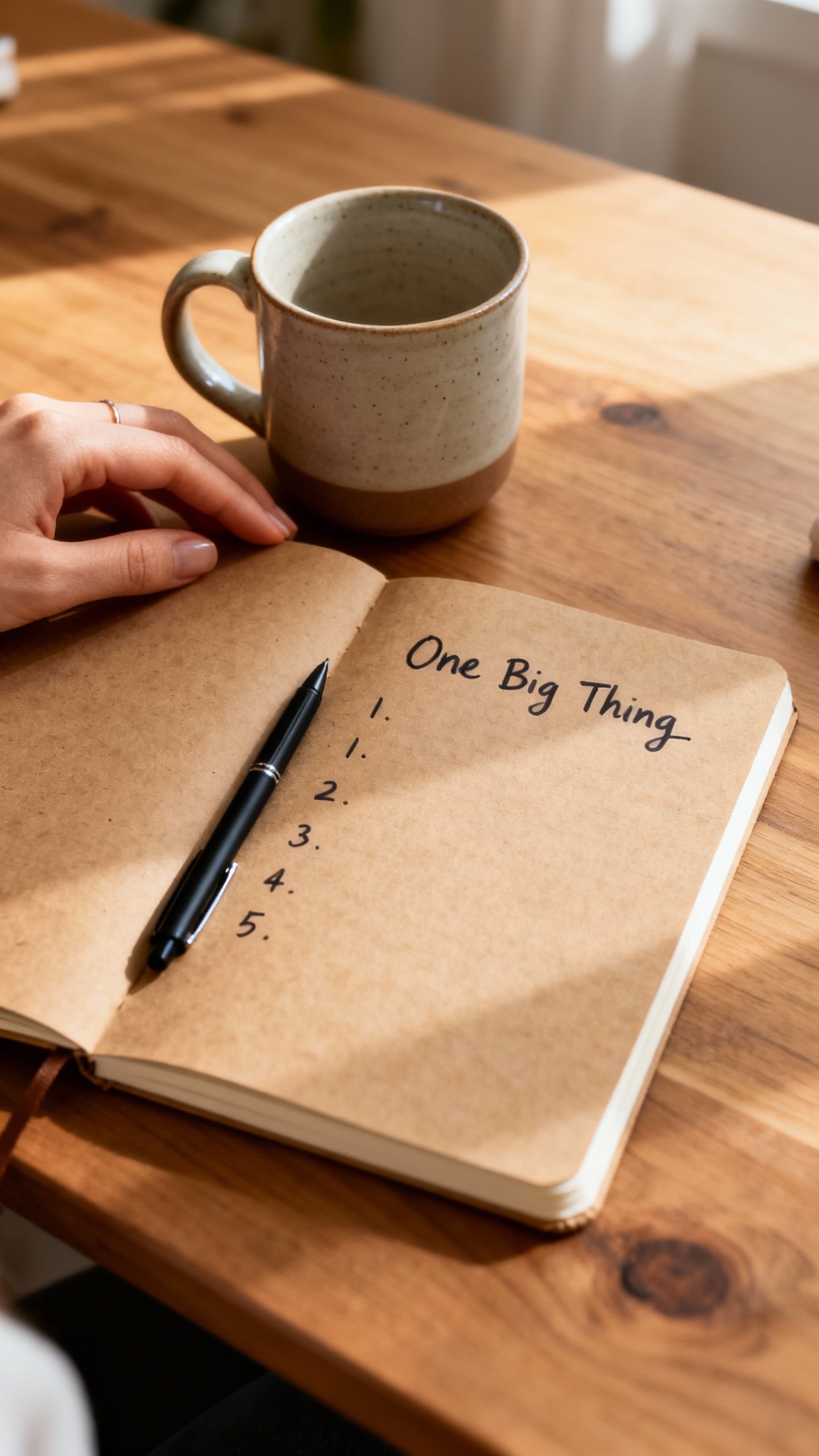
- Choose a daily “One Big Thing.” One task that, if done, makes the day a win. Everything else?
Optional ornaments.
- Set three weekly outcomes. Not tasks. Outcomes. “Draft proposal” beats “Work on proposal.” Language shapes focus.
- Say no without apologizing. If it doesn’t align with your outcomes, it’s a future you can’t afford. FYI: polite doesn’t mean vague.
How to Pick Your “One Big Thing”
Ask three questions:
- Does this create leverage? (Will it make other work easier or unnecessary?)
- Is there a real deadline? (Not vibes.
Actual dates.)
- Will I regret not doing this in a week? If yes, do it now.
Design Your Day Like a Chef, Not a Squirrel
Chefs prep before the rush. Squirrels just panic elegantly.
You want chef energy.
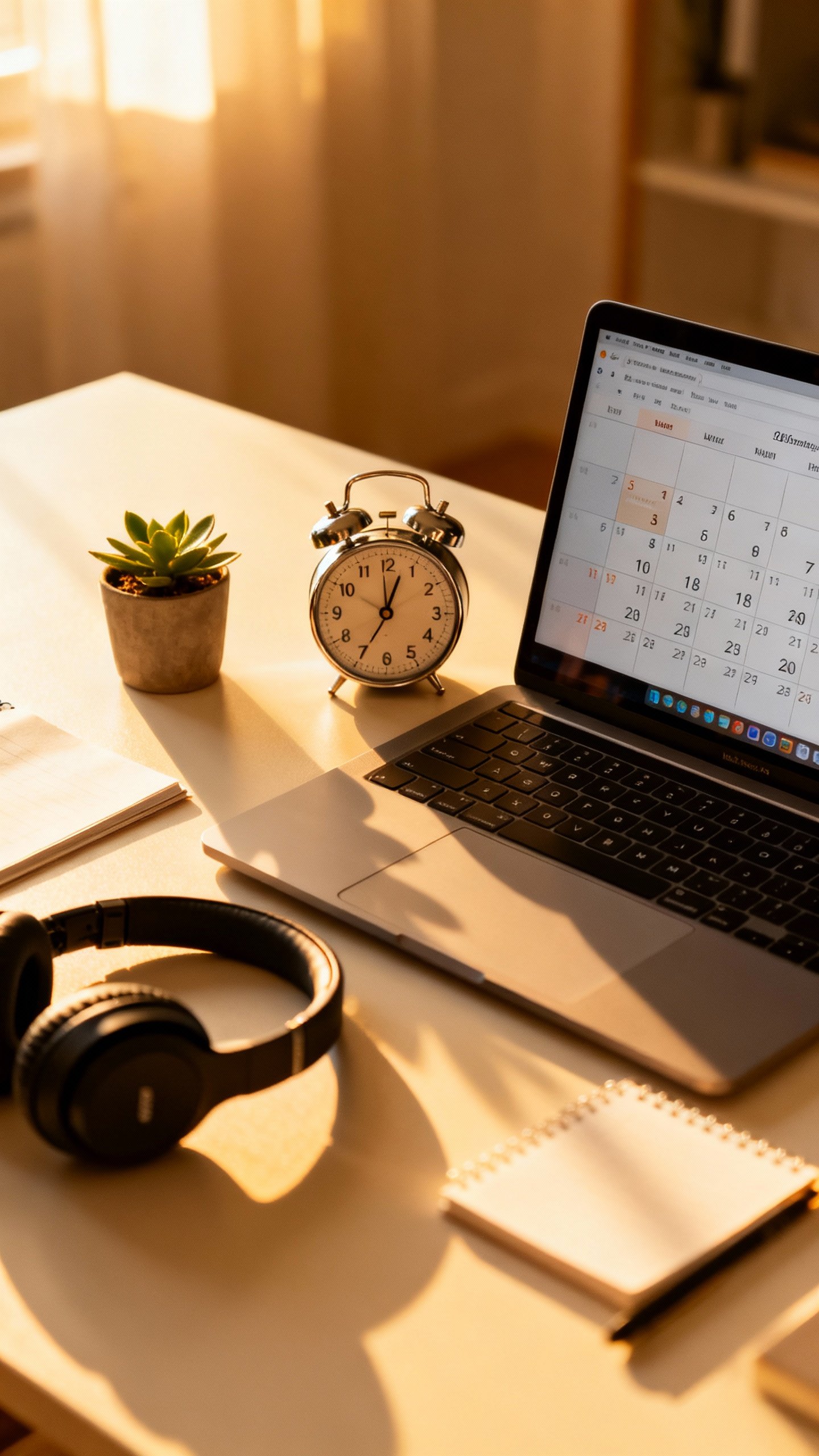
- Time-block in “seasons.” Morning = creation. Afternoon = collaboration. Late day = admin.
Keep each season sacred.
- Batch everything. Emails and messages only 2-3 times a day. Meetings on specific days if possible. Your brain loves predictability.
- Build soft buffers. Add 10-15 minutes between blocks.
Breathe, walk, stare at a plant. Your nervous system will thank you.
The 3-Block Day
Try this:
- Focus Block (90–120 minutes): Deep work on your One Big Thing.
- Support Block (60–90 minutes): Secondary tasks that maintain momentum.
- Admin Block (30–60 minutes): Inbox, scheduling, quick replies, finance stuff.
Guard the Focus Block like it owes you money.
Make Rest a Feature, Not a Reward
You don’t “earn” rest; you require it to do good work. Athletes don’t sprint nonstop.
Neither should you.
- Micro-breaks every 45–60 minutes. Stand, sip water, look away from screens. Yes, it feels silly. Do it anyway.
- Midday reset. Ten minutes of stillness or a short walk.
No phone. Your brain will unclench.
- Evening ramp-down. Create a simple shutdown ritual: write tomorrow’s One Big Thing, clear your desk, close your laptop physically.
The “Tiny Restore” Toolkit
Keep these handy:
- Box breathing: 4–4–4–4 count for a minute.
- Eye break: Look at something 20 feet away for 20 seconds.
- Stretch reset: Neck rolls, shoulder circles, hip openers. Zero equipment, huge payoff.

Declutter Your Workflows (Because Chaos Is Loud)
Clutter kills focus.
Simplify your tools so your brain can do actual work.
- Use one capture tool. Notes, tasks, ideas — one app or notebook. Not seventeen. IMO, the best tool is the one you open without thinking.
- Standardize your templates. Email responses, project kickoffs, weekly check-ins.
Save them once, reuse forever.
- Automate the boring stuff. Calendar booking links, recurring bill payments, file naming rules. Save time and decision fatigue.
Weekly Reset: The 30-Minute Ritual
Every week, do this:
- Review wins and misses (no drama, just data).
- Update your three outcomes for next week.
- Prep your calendar blocks and meeting notes.
- Clear your inbox to “to-review” and schedule when you’ll review it.
Do it the same time every week. Consistency turns chaos into background noise.
Work With Your Natural Energy, Not Against It
You’re not a machine; you’re a human with rhythms. Use them.
- Find your peak window. When do you do your best deep work?
Guard it. Schedule hard tasks there and nothing else.
- Match tasks to energy. High energy = creative/strategic work. Medium = collaboration.
Low = admin or learning.
- Respect your off-switch. End the day a little earlier than you think. Leave fuel in the tank for tomorrow.
Track Without Overthinking
For one week, jot down:
- Time of day
- What you worked on
- Energy rating (1–5)
Patterns will pop. Adjust your blocks accordingly.
Communicate Your Slow Boundaries
Slow living fails if your calendar still looks like a cluttered closet.
Teach people how to work with you.
- Set response expectations. “I check email at 11 and 4. If urgent, text.” Short, clear, repeat it often.
- Batch meetings. Offer windows, not your entire week. “I’m available Tue/Thu afternoons.” You’ll get respect, not rebellion.
- Protect deep-work time. Block it publicly. Title it “Focus — do not schedule.” People tend to honor what looks official.
Polite Scripts That Actually Work
- “I’m heads-down on a deliverable this morning.
I’ll circle back after 2.”
- “I can’t take this on right now. If it’s flexible, I can revisit next week.”
- “Let’s keep this async to save us both time.”
Measure What Matters (And Ignore Vanity Metrics)
You can check 40 boxes and still move nowhere. Track results, not noise.
- Outcome metrics: shipped drafts, launched features, client decisions, sales conversations booked.
- Process metrics: number of focus blocks completed, days you honored your shutdown ritual.
- Well-being metrics: sleep quality, energy levels, number of “non-urgent yeses” you avoided.
If your metrics don’t guide action, they’re just decoration. Keep a simple dashboard you review weekly.
FAQ
Will slowing down make me fall behind?
Short term, it may feel that way because you’ll stop reacting to every ping.
But you’ll quickly notice better output, fewer mistakes, and less burnout. Slower pace, cleaner execution. Net win.
How do I do this if my job is nonstop meetings?
Batch meetings into specific windows, and negotiate at least one 60–90 minute deep-work block daily.
Use async updates (docs, Looms, shared notes) to cut status meetings. FYI, most recurring meetings survive out of habit, not necessity.
What if I have kids or caregiving responsibilities?
Build around your real life, not an ideal schedule. Use micro-focus blocks (25–40 minutes), and stack “prepped” tasks that require low setup.
Communicate your availability clearly and protect one weekly planning slot like it’s gold.
Which apps should I use?
Use the simplest stack you trust: one task manager, one calendar, one notes app. That’s it. The fewer tools you juggle, the more work you actually ship.
IMO, any app that requires a tutorial to do basic stuff probably slows you down.
How do I keep from slipping back into chaos?
Create rituals that catch you: weekly reset, daily shutdown, and a morning check-in on your One Big Thing. When you drift, restart the rituals first. Don’t rebuild the system from scratch every time you get busy.
Can I still be ambitious with a slow living approach?
Absolutely.
You just stop spreading ambition across 19 projects at once. You channel it. Think laser, not floodlight.
Conclusion
You don’t need a new app or a personality transplant.
You need fewer priorities, calmer rhythms, and workflows that respect your biology. Slow living doesn’t dull your edge; it keeps it sharp without grinding you down. Start with one change — your One Big Thing tomorrow — and let the calm compound.