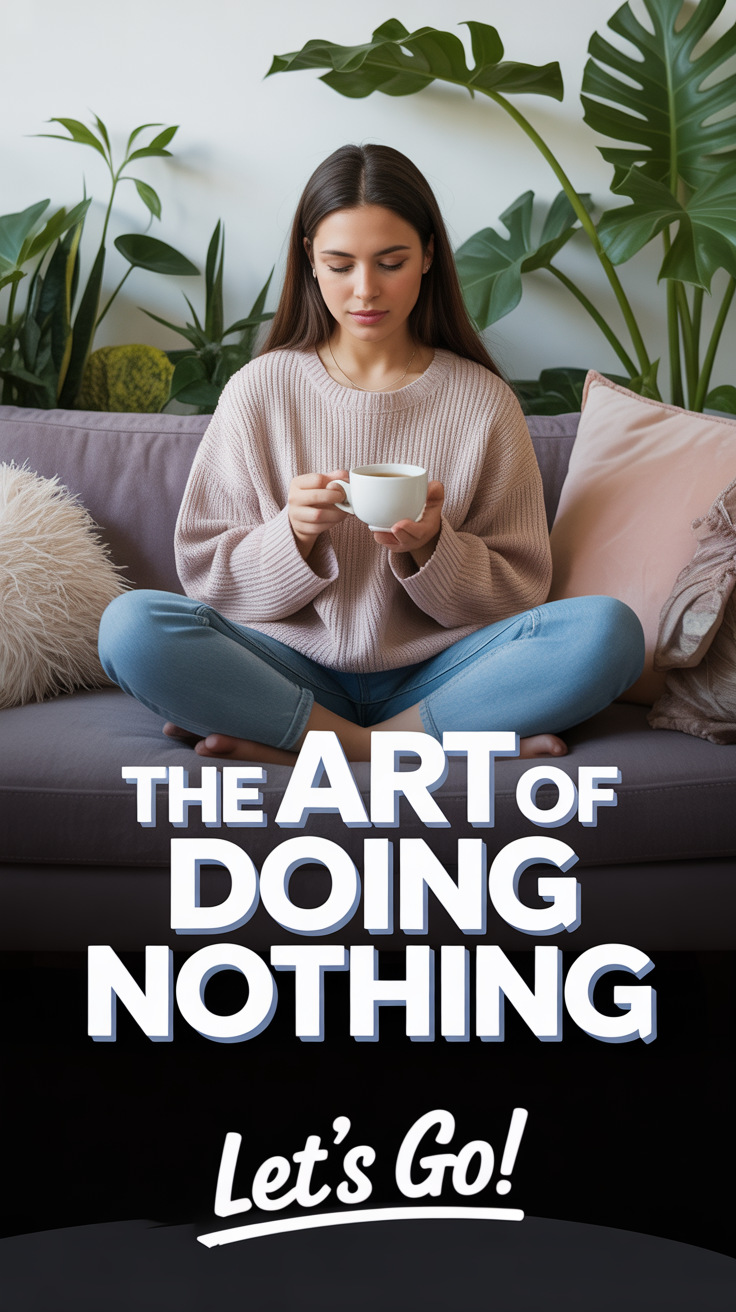
You don’t need another productivity hack. You need permission to stare out the window and do absolutely nothing. Wild concept, right?
The Dutch have a word for it: niksen. It means you can sit, breathe, and watch dust motes like a philosopher without feeling guilty—or like you should monetize it.
What Exactly Is Niksen?

Niksen translates loosely to “doing nothing,” but it doesn’t mean laziness. You choose to pause.
You allow your brain to idle without a goal, a metric, or a hidden agenda. Key idea: you’re not meditating, you’re not optimizing, you’re not “recharging” as a tactic. You’re simply existing. That’s weirdly radical in a world that treats downtime like a moral failure.
Why Doing Nothing Works
Your brain loves idle time.
When you stop cramming it with inputs, the “default mode network” kicks in and makes surprising connections. That’s when random ideas land—like how to fix that sticky email or where you left your keys. Benefits you’ll actually notice:
- Lower stress: Your nervous system gets a breather. You stop doom-scrolling and start exhaling.
- More creativity: Boredom fertilizes new ideas.
Your brain needs white space to doodle.
- Better focus later: After a mini-niksen break, deep work feels less like swimming through molasses.
- Sanity points: Not everything needs to be a side quest. FYI, fun counts.
But Isn’t This Just Procrastination?
Nope. Procrastination avoids a task with distractions.
Niksen embraces stillness without swapping one stimulation for another. Think “sit and stare” vs. “avoid and scroll.”
How to Practice Niksen Without Going Stir-Crazy
You don’t need candles, chants, or a subscription. You just need permission and a tiny bit of structure. Try these:
- Pick a small window: Start with 3–5 minutes.
Set a gentle timer if you must.
- Park your phone: Out of reach. Yes, out of reach. You’ll live.
- Sit somewhere comfy: Chair, couch, sunny patch on the floor—no rules.
- Let your eyes wander: Watch light on the wall, clouds, or your pet being weird.
- Don’t “fix” thoughts: Let them float.
You’re not solving anything on purpose.
If your brain keeps asking, “What’s the point?” congratulate it on being a productivity addict. Then ignore it for three minutes.
Where Niksen Fits in a Busy Day
Drop micro-niksen into transition points:
- Before opening your inbox in the morning
- Between meetings (especially after chaos)
- Post-lunch when your brain’s in nap mode
- Right before you leave work to reset your mood
Niksen vs. Meditation vs.
Resting With a Purpose
Let’s not confuse vibes. Each practice helps in different ways.
- Meditation: Usually involves technique (breath focus, body scan). Goal: awareness and equanimity.
- Rest with a purpose: A break designed to recharge—naps, walks, stretching.
- Niksen: No technique, no goal.
You park your ambition and let your brain idle.
IMO: Mix all three. Meditate for regulation, rest to recover, niksen to wander. You don’t need a loyalty card for one camp.
Signs You’re Accidentally Meditating
If you start counting breaths or “bringing your attention back,” you’ve drifted into meditation.
Not bad! But if you want pure niksen, let your focus splatter like watercolor.

Common Obstacles (And How to Dodge Them)
Your mind will fight you at first. That’s normal.
Give it snacks (aka compassion).
- Guilt: You’ll think you should be doing something “useful.” Reframe: This is brain hygiene.
- Restlessness: Start smaller. Try 90 seconds. Increase later.
- Phone twitch: Put it in another room or use Do Not Disturb.
Your thumb needs a break.
- “I’m bad at this” vibes: You can’t be bad at nothing. If you sat still for 60 seconds, you nailed it.
What If My Brain Spirals?
If worry hijacks your nothing-time, use a gentle landing:
- Place a hand on your chest—feel the rise and fall.
- Look for five colors in your environment.
- Name three sounds you hear.
Then return to doing nothing. Softly.
No scolding.
Make Niksen a Habit (Without Ruining It)
Habits help, but don’t turn niksen into a KPI. Keep it loose and friendly. Lightweight ideas:
- Anchor it: Pair niksen with tea, sunlight, or your favorite chair. Your brain loves cues.
- Go analog: Keep a “nothing” spot by a window with a plant and a cozy blanket.
- Set soft reminders: Calendar nudges that say “stare out the window” work surprisingly well.
- Track feelings, not minutes: Afterward, jot one word: calmer, lighter, less stabby.
That’s your feedback loop.
Niksen At Work (Yes, Really)
You can normalize it without announcing, “I’m doing nothing now.” Try:
- Close your laptop between tasks and stare at a distant point for two minutes.
- Walk to the window with no phone. Look at clouds. Return with a brain.
- Block a five-minute “buffer” before big decisions.
Let the choice simmer.
What Niksen Looks Like In Real Life
Need ideas that aren’t secretly productive? Here you go:
- Watching the steam from your coffee curl like a tiny ghost
- Listening to rain without also listening to a podcast
- Lying on the rug and following shadows on the ceiling
- Sitting on a park bench and people-watching without judgment
- Letting your thoughts do interpretive dance while you… don’t
Important: If your hands reach for a book, a hobby, a to-do list—catch them. You can read and knit later.
Niksen asks nothing of you.
Results You Might Notice (And When)
You won’t get a certificate. But you’ll likely feel lighter within a week if you do a few minutes daily.
- Week 1: Less frazzled, fewer knee-jerk replies, micro-bursts of creativity.
- Week 3: Better boundaries, more intentional focus windows, easier sleep onset.
- Month 2: A subtle baseline calm—like your brain upgraded its RAM.
FYI: If life feels like a blender set to “puree,” niksen won’t fix everything. But it will help you stop sticking your hand in the blades.
FAQ
Isn’t boredom bad for mental health?
Some boredom hurts when it comes from chronic understimulation or isolation.
Niksen is chosen and time-limited. You create a safe, cozy space to idle, which reduces stress and supports mental clarity. It’s boredom with boundaries—and a soft couch.
How long should I do niksen?
Start with 3–5 minutes, 1–3 times a day.
If you enjoy it, stretch to 10–15 minutes occasionally. The goal isn’t endurance. It’s a reset.
When you feel a natural “ah, that’s enough,” you’re done.
Can I listen to music while doing nothing?
If the music fades into the background and you aren’t analyzing it, sure. Ambient or instrumental works best. If you find yourself curating playlists in your head, that’s a different activity.
No judgment—just not niksen.
What if doing nothing makes me anxious?
Totally normal. Try briefer sessions, sit somewhere you feel safe, and add a soft sensory anchor like a warm mug. If anxiety spikes consistently, consider pairing niksen with a grounding exercise or talking to a mental health pro.
You’re not failing; you’re learning your nervous system.
Do I need a special place or time?
Nope. But consistency helps. A dedicated “nothing nook” signals your brain to power down quicker.
Morning light or late afternoon slumps make ideal windows. Pick what feels natural—not performative.
Will this make me less productive?
Ironically, short bursts of doing nothing tend to boost productivity. You return with sharper focus and less mental noise.
Think of it as defragmenting your mind—old-school but effective, IMO.
Conclusion
Niksen gives you back something precious: unclaimed moments. No metrics, no optimization, no striving. Just you, a chair, and the radical idea that breathing and being count as enough.
Try three minutes today. Let your brain idle, guilt-free—and watch how the rest of your life gets a little clearer, kinder, and easier.