
You don’t need a 5 a.m. alarm to have your life together. You need mornings that actually fit your body clock, your job, and your energy. Let’s build a routine that feels good, gets results, and doesn’t make you hate the sun.
Ready to reclaim your mornings without joining the “rise and grind” cult?
Start With Your Wake-Up Window, Not a Time
Pick a wake-up window that fits your life, not Instagram. If 7:30–8:00 a.m. makes you feel human, use that. Consistency matters more than beating the sunrise. Think in windows, not minutes. A 20–30 minute range relaxes your brain and reduces the “I missed it, day ruined” mindset.
You’ll still get the stability your body loves without rigid punishment.
How to Find Your Natural Window
– Track when you wake up on days without an alarm for a week. – Note when you feel alert without caffeine (yes, it’s possible). – Average those times and choose a nearby window you can hold most days.
Build a Two-Layer Routine: Core + Optional
Let’s ditch the 10-step morning marathons. Make a small, reliable core routine you can nail on the worst days, and a few optional extras for when you feel spicy. Core routine (10–15 minutes):
- Hydrate: big glass of water with a pinch of salt or lemon
- Light: open curtains or step outside for 2–5 minutes
- Move: 5-minute mobility or a quick walk
- Plan: jot down top 1–3 priorities
Optional extras (pick 1–2):
- Longer workout or stretch
- Journaling or gratitude sweep
- Make a real breakfast (eggs, oats, smoothie)
- Reading or learning for 10 minutes
You’ll still feel accomplished with the core routine. On good days, layer on extras.
No guilt if you don’t. IMO this is the entire game.

Protect Your First 30 Minutes
If your phone owns your morning, your day already plays defense. You don’t need a monk’s discipline—just guardrails. Low-effort boundaries:
- Keep your phone in another room or use Do Not Disturb until your core routine ends.
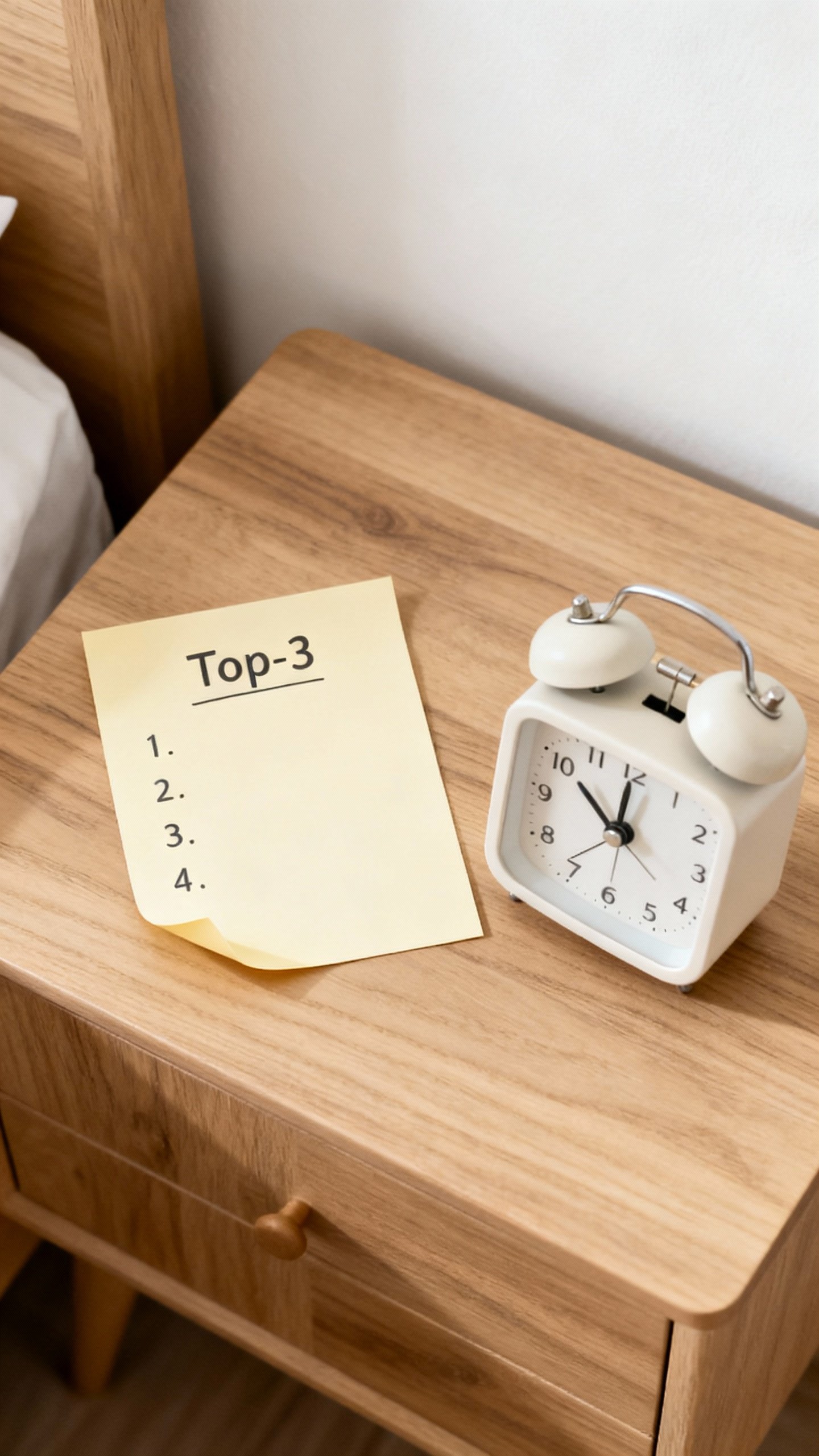
- Use a dumb alarm clock.Yes, they still exist.
- Put your top 3 morning tasks on a sticky note the night before. No thinking required.
If You Must Look at Your Phone
Set a “first tap” rule. One allowed app that doesn’t hijack your brain: – Weather – Music or podcast – Notes app to check your plan Zero doomscrolling before you hydrate. That’s the rule.
FYI, your brain thanks you.
Fuel Without Fuss
Breakfast should help you feel stable, not snacky and jittery. You don’t need to cook a full diner menu. Simple, balanced options:
- Greek yogurt + berries + granola
- Oats with protein powder + banana + peanut butter
- Eggs + toast + avocado or fruit
- Smoothie: frozen berries, spinach, protein, milk, nut butter
Short on time? Keep grab-and-go backups: – Protein bars you actually like – Prepped hard-boiled eggs – Overnight oats – Pre-made smoothie packs
Caffeine Strategy (So You Don’t Crash)
– Wait 60–90 minutes after waking for your first coffee to support natural cortisol rhythms. (Science agrees.
Your jitters won’t.) – Pair coffee with protein or fat to blunt the spike. – Consider a half-caf second cup instead of a full-caf third. Your afternoon focus will thank you.
Move Your Body, Lightly
No need to deadlift a truck at dawn. Just signal “we’re awake.” Pick one:
- 5-minute mobility flow: neck, shoulders, hips
- 10-minute brisk walk outside
- Short bodyweight circuit: 2 rounds of squats, push-ups, planks
If you love longer workouts?
Awesome. If not, a little movement still boosts mood and focus. No perfection required.
Make Mornings Start at Night
Your morning routine begins when you decide to stop binge-watching and set tomorrow up to win.
Future you has limited patience, so prep the path. Night-before checklist (5–10 minutes):
- Lay out clothes (yes, down to socks)
- Set coffee stuff or fill your bottle
- Prep breakfast or choose it
- Write the next day’s top 3 priorities
- Put your phone on DND schedule
Better Sleep = Better Mornings
– Aim for a consistent bedtime within a 30–60 minute range. – Dim screens or use night mode 60 minutes before bed. – Keep your room cool, dark, and boring. Blackout curtains can change your life, IMO.
Design Your “First Win”
Start your day with something that feels like a win. Not a heroic feat.
A quick, satisfying action that builds momentum. Examples:
- Send one important email you’ve delayed
- Read two pages of a book that inspires you
- Do one admin task you usually avoid (calendar clean-up, inbox zero for 5 minutes)
The goal? Create a tiny hit of progress so you crave the next step. Motivation follows action, not the other way around.
Adjust for Your Energy Type
Are you a morning lighthouse or a night owl with sarcasm power?
Align tasks with your natural energy, not your aspirations. If you’re a slow starter: – Keep mornings simple, quiet, and low-stimulus. – Do creative work later; mornings = admin + movement + planning. If you’re sharp early: – Protect your first 90 minutes for deep work. – Push meetings and messages back when possible. Either way, design around energy arcs, not expectations.
Sample Routines You Can Steal
10-minute “I overslept” routine:
- Hydrate while opening blinds
- 2-minute stretch
- Skim top 3 priorities
- Grab a protein bar and go
25-minute “normal weekday” routine:
- Water + 3 minutes outside
- 5-minute mobility
- Write top 3 + send one quick email
- Make eggs + toast, first coffee afterward
45-minute “I feel like thriving” routine:
- Walk outside with water
- 15-minute bodyweight workout
- Journal 5 minutes
- Protein smoothie + 10 pages of reading
FAQ
Do I need to wake up at the same time every day?
Consistency helps, but you don’t need robot precision. A 20–30 minute window works great.
If weekends drift later, cap the difference at about an hour and use morning light to reset.
What if I have kids, roommates, or chaos?
Go modular. Keep a 5–10 minute core routine you can squeeze in anywhere. Hydrate, light, and one “first win.” If mornings explode, slide movement or reading to lunch.
Small beats perfect.
Is breakfast actually necessary?
Not always. If you don’t feel hungry, you can delay it. Just make sure your first meal has protein, fiber, and some fat to keep energy steady.
If you crash mid-morning, try a small snack earlier.
How do I stop snoozing?
Put your alarm across the room. Use a light-based alarm if you wake in the dark. Give yourself a tiny “start ritual” (water by the sink, blinds open, one song) so your brain doesn’t debate the meaning of existence at 7:12 a.m.
Can I work out in the evening instead?
Absolutely.
If evenings fit better, do it then. Keep a 3–5 minute morning movement habit just to wake your body, and crush the main workout later. No fitness police will appear.
What if I travel or my schedule changes a lot?
Carry the principles, not the details.
Keep your core routine portable: water, light, 3–5 minutes of movement, and a quick plan. Use local light exposure to anchor your wake time fast.
Conclusion
You don’t need to join the 5 a.m. club to own your day. You need a routine that respects your body clock, stacks small wins, and fits your real life.
Build a solid core, sprinkle in optional extras, and protect your first 30 minutes like they’re VIP. Keep it flexible, keep it human, and watch your mornings work for you—not the other way around.