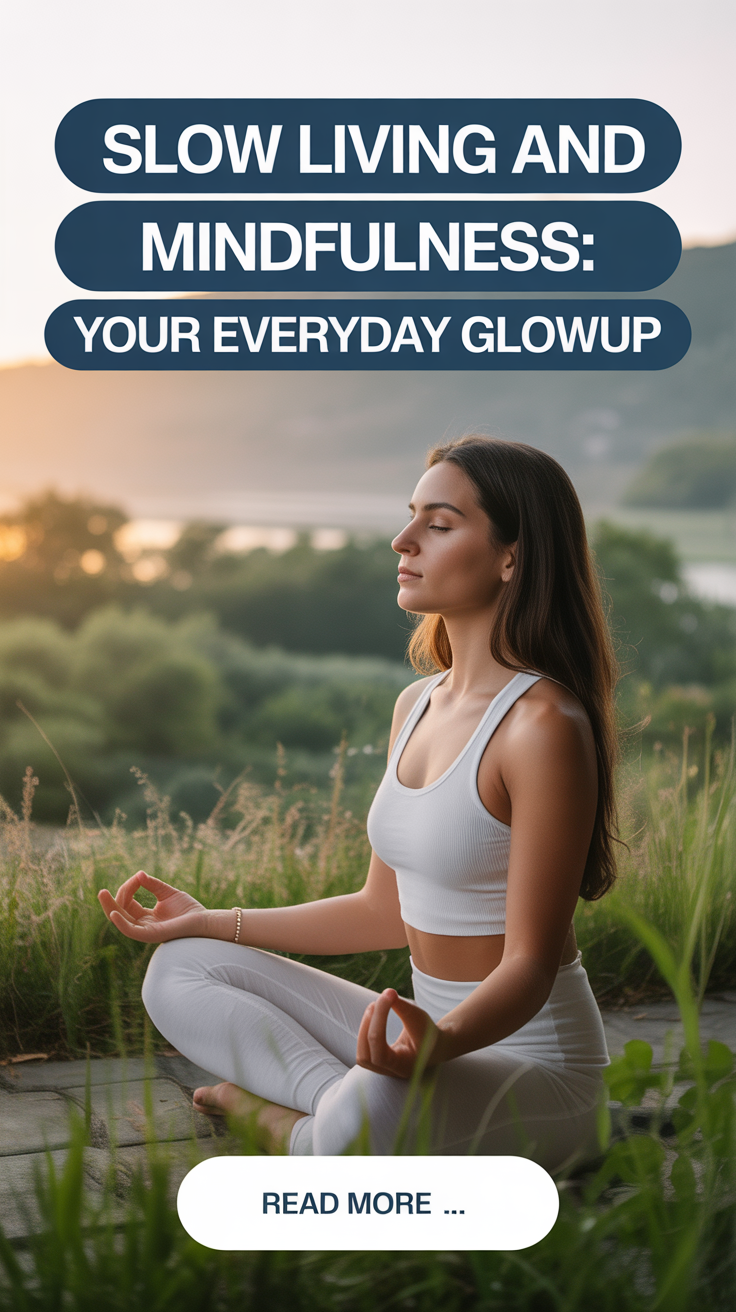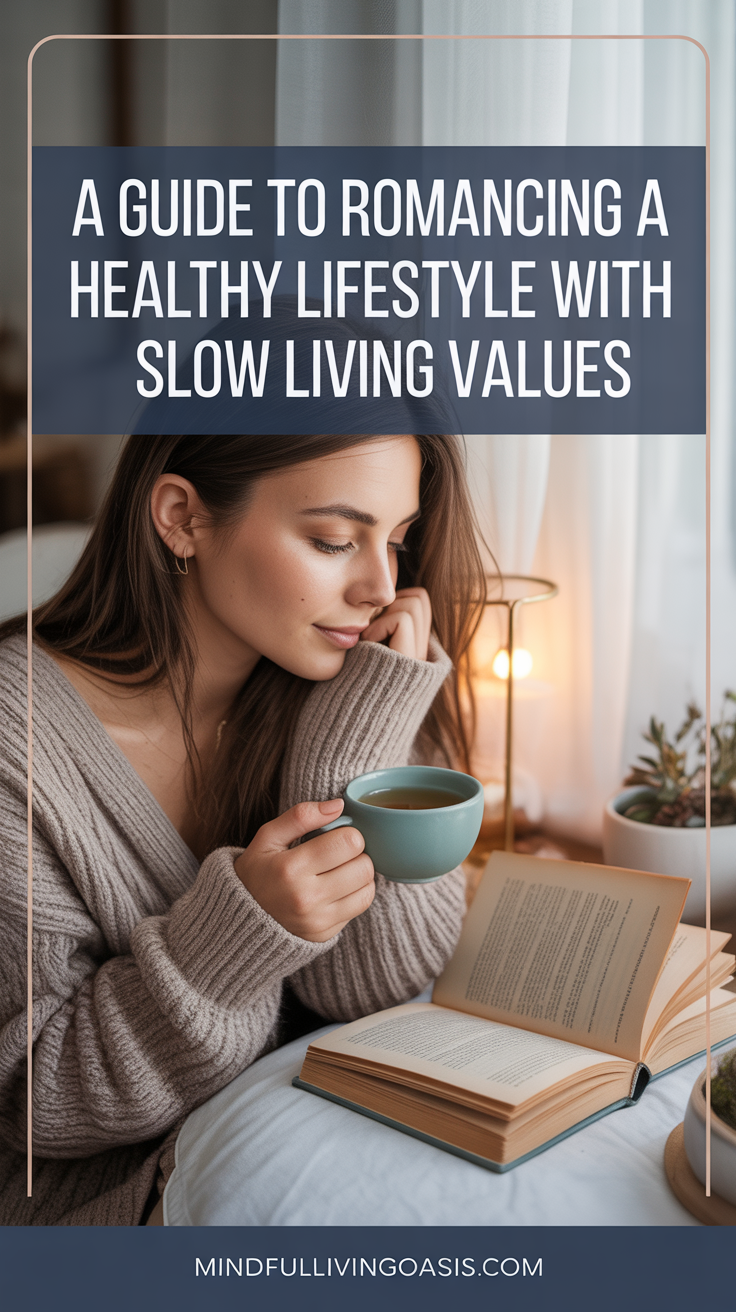
Because rushing through life is so last season
Okay, let’s be real for a second. We grew up with everything moving at like, a million miles per hour. The constant notifications, the pressure to have your life figured out by 25, the comparison spiral every time you open an app. It’s exhausting.
And honestly? I think we’re all collectively hitting a point where we’re just… over it.
There’s this shift happening, and you’ve probably felt it too. This quiet rebellion against the hustle culture we inherited. This craving for something slower, softer, more intentional. And no, it’s not about being lazy or unambitious. It’s about finally realizing that burnout isn’t a badge of honor and that maybe, just maybe, there’s a better way to move through life.
The Romanticization of Your Actual Life
Here’s the thing – slow living isn’t about being boring or giving up your ambitions. It’s about actually being there for your own life instead of just documenting it or rushing to the next thing.
We’ve gotten so good at performing life that we sometimes forget to actually live it. And that’s not a criticism – it’s just the reality of growing up in the digital age. But there’s something magical that happens when you start paying attention to the ordinary moments. When you stop treating your daily life like a waiting room for something better.
It’s making your morning coffee and actually tasting it instead of chugging it while doom-scrolling. It’s going on a walk without your AirPods sometimes (I know, scary). It’s cooking a meal from scratch on a Sunday because it genuinely feels good, not because you’re trying to get content out of it.
The aesthetic of slow living is cute, sure. But the feeling of it? That’s the real flex.
Think about the last time you did something without any agenda. No photo opportunity, no productivity angle, no story to tell later. Just you, being present, existing in a moment for its own sake. If you can’t remember, that’s okay. Most of us can’t. But that awareness? That’s the first step.
Reclaiming Your Time and Energy
Let’s talk about something that doesn’t get discussed enough: the way we’ve been conditioned to feel guilty for resting. For doing nothing. For not constantly optimizing every second of our existence.
Somewhere along the way, we internalized this idea that our worth is tied to our productivity. That we have to earn our rest by first exhausting ourselves. That taking a slow morning or an unplanned afternoon is somehow wasteful.
But here’s a thought that might feel uncomfortable at first: you don’t have to earn the right to exist peacefully. You don’t have to justify your downtime. Rest isn’t a reward – it’s a necessity. And slow living starts with unlearning the guilt that comes with simply… being.
This means getting comfortable with white space in your calendar. It means not filling every silence with noise or every free hour with tasks. It means trusting that you are enough, even when you’re not doing anything particularly impressive.
Your energy is a finite resource, and you get to be intentional about where it goes. That’s not selfish – that’s wisdom.
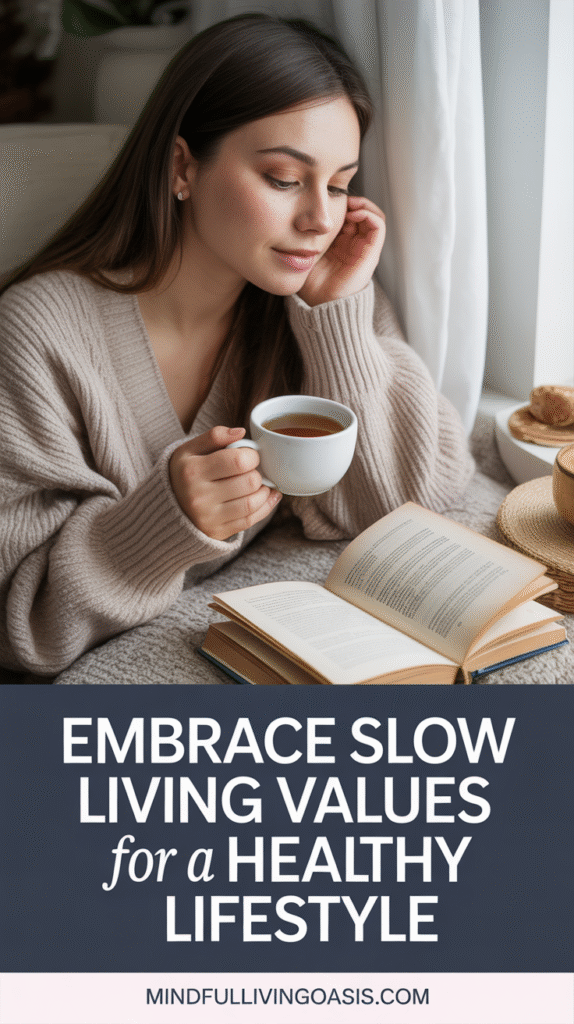
Wellness That Actually Feels Good
Can we talk about how wellness got so complicated? At some point it became this whole thing with expensive supplements and 5 AM routines and making everything into an optimization project.
The wellness industry has this way of making you feel like you’re constantly behind. Like there’s always another habit to adopt, another protocol to follow, another trend to keep up with. And while some of these things can genuinely help, the pressure to do wellness “right” can become its own source of stress.
But wellness at its core is literally just… taking care of yourself in ways that feel sustainable and right for YOU.
Not Instagram wellness. Not #ThatGirl wellness. Not “I spent $500 at Erewhon” wellness. Just… you, tuning into what your body and mind actually need, and responding with kindness.
That might look like:
Moving your body because it makes your brain feel less chaotic, not because you’re punishing yourself. Movement should feel like a gift, not a transaction. Some days that’s a pilates class, some days it’s dancing in your room, some days it’s a gentle stretch before bed. All of it counts. All of it matters.
Eating foods that make you feel alive – and yes, sometimes that’s a smoothie bowl and sometimes that’s takeout with your besties. Wellness isn’t about restriction or perfection. It’s about nourishment in all its forms. The salad you actually enjoy. The comfort food that soothes your soul. The home-cooked meal that makes you feel capable and grounded.
Setting boundaries with people, with work, with your phone (especially with your phone). Boundaries are a form of self-respect. They’re you saying “my peace matters” and actually meaning it. This might be the hardest wellness practice of all, but it’s also the most transformative.
Prioritizing rest without feeling guilty about it – sleep is not laziness, it’s literally essential. Your body heals when you sleep. Your brain processes everything when you sleep. Staying up late scrolling isn’t a flex, and neither is running on four hours of sleep. Rest is productive. Rest is necessary.
Spending time outside even when it’s just sitting on your balcony or finding a patch of grass somewhere. Nature has this way of putting things in perspective. The sky doesn’t care about your to-do list. The trees aren’t thinking about algorithm changes. There’s something grounding about being in spaces that exist completely independent of human chaos.
Hydrating like it’s your job because it literally affects everything – your skin, your energy, your mood, your focus. Simple but so easy to forget when you’re caught up in everything else.
None of this requires a complete life overhaul. It’s small shifts that add up. It’s choosing yourself in tiny ways, over and over again, until it becomes second nature.
The Art of Doing Less (But Better)
There’s something kind of radical about choosing to slow down in a world that profits from you being stressed and overwhelmed. About saying “no actually, I don’t need to be productive every second” and meaning it.
We live in an attention economy. Everything is designed to capture your focus, to keep you scrolling, to make you feel like you need more – more stuff, more achievements, more validation. Slowing down is almost an act of resistance at this point.
Slow living values aren’t about checking out of life. They’re about checking into it. Being intentional about where your energy goes. Protecting your peace like it’s the valuable thing it actually is.
It’s quality over quantity in everything – your relationships, your commitments, your purchases, your content consumption. It’s editing your life the way you’d edit your camera roll. Keeping what serves you, letting go of what doesn’t.
This might mean:
Having fewer, deeper friendships instead of a hundred surface-level connections. Investing in people who actually show up. Quality time over quantity time.
Owning less stuff but actually loving what you have. Buying things intentionally instead of impulsively. Appreciating objects instead of just accumulating them.
Saying no more often so your yeses actually mean something. Protecting your time and energy for the things that genuinely align with who you are and who you’re becoming.
Consuming content intentionally instead of letting algorithms dictate what fills your mind. Curating your feed. Taking breaks. Remembering that you control the scroll, not the other way around.
Single-tasking instead of multi-tasking because despite what we’ve been told, our brains aren’t actually designed to do multiple things well at once. Full attention on one thing is almost a superpower now.
The art of doing less is really the art of being more present for what you do choose. It’s trading breadth for depth. Scattered for focused. Busy for meaningful.
Creating Rituals That Ground You
One of the most beautiful aspects of slow living is the emphasis on rituals. Not rigid routines that stress you out, but intentional practices that anchor your days and make the ordinary feel sacred.
Rituals are different from habits. Habits are things you do automatically. Rituals are things you do with awareness, with presence, with a sense of meaning.
Your morning ritual might be as simple as making your bed and opening the curtains before checking your phone. Your evening ritual might be lighting a candle, making tea, and doing a brain dump of everything on your mind.
These don’t have to be elaborate or time-consuming. They just have to be yours. Little anchors throughout your day that pull you back to the present moment. Little ways of saying “I’m here, I’m paying attention, this matters.”
Some ritual ideas to try:
A slow morning practice – even just 15 minutes before the chaos begins. Coffee in silence. Journaling a few lines. Stretching. Setting an intention for the day.
An end-of-workday transition – something that signals to your brain that work mode is done. A walk, a shower, changing clothes, making a snack. Creating a clear line between work you and rest you.
A weekly reset – maybe it’s Sunday, maybe it’s another day. A time to clean your space, plan your week, do laundry, meal prep. Starting fresh.
A monthly check-in with yourself – reflecting on how you’re feeling, what’s working, what needs to shift. Staying connected to your own inner world.
A seasonal celebration – acknowledging the passage of time, the changing of seasons. Slowing down to notice that life is moving, that you’re moving through it.
Rituals create rhythm. And rhythm creates a sense of stability and groundedness that’s hard to find in a world that feels increasingly chaotic.
Your Relationship With Your Phone
We have to talk about this because it’s genuinely one of the biggest barriers to slow living and wellness for our generation.
Our phones are incredible tools. They connect us, inform us, entertain us. But they also have an unprecedented ability to fracture our attention, trigger comparison spirals, and steal hours from our days without us even noticing.
The average person checks their phone like 100+ times a day. That’s 100+ micro-interruptions. 100+ moments of being pulled out of whatever you’re doing into someone else’s reality.
Slow living asks us to get honest about this relationship. Not to demonize technology, but to use it intentionally instead of compulsively.
Some things that might help:
Morning phone boundaries – not checking it for the first 30-60 minutes of your day. Starting with yourself instead of with everyone else’s updates.
Designated phone-free times – meals, walks, the hour before bed. Creating pockets of uninterrupted presence.
Ruthless curation – unfollowing accounts that make you feel bad about yourself. Muting things that don’t serve you. Making your feed a place that inspires rather than depletes.
App limits and screen time tracking – not to shame yourself, but to build awareness. Knowledge is power.
Physical distance – leaving your phone in another room sometimes. Remembering that you existed before you had a smartphone and you can exist without it being literally attached to you.
This isn’t about being anti-technology. It’s about being pro-presence. It’s about reclaiming your attention as the valuable resource it is.
Finding Your Own Rhythm
The most important part? This looks different for everyone. Your version of a healthy lifestyle doesn’t need to match anyone else’s Pinterest board or TikTok algorithm.
This is crucial. Slow living and wellness aren’t one-size-fits-all. They can’t be, because we’re all different. Different bodies, different schedules, different needs, different seasons of life.
Maybe your slow living era includes journaling every night. Maybe it’s just finally keeping a plant alive. Maybe it’s batch cooking on Sundays or having device-free dinners or taking yourself on little solo dates.
Maybe it’s wild and doesn’t fit the aesthetic at all. Maybe it’s messy and imperfect and looks nothing like the calm beige feeds you’ve seen. That’s okay. That’s more than okay. That’s the point.
The point isn’t perfection. The point is presence.
It’s about asking yourself: what do I actually need? What makes me feel grounded and alive? What fills my cup? And then building a life around those answers, even when they don’t match what everyone else seems to be doing.
Your rhythm might be early mornings or late nights. It might involve lots of social time or lots of solitude. It might change with the seasons, with your circumstances, with your growth. All of that is valid. All of that is slow living. All of that is wellness.
Releasing the Pressure to Get It Right
Here’s something that took me a while to understand: you can approach slow living and wellness in a way that’s just as stressful as the hustle culture you’re trying to escape.
You can turn self-care into another item on your to-do list. You can make mindfulness feel like an obligation. You can feel like a failure when you don’t meditate or when you forget to drink water or when you spend an entire Sunday scrolling instead of doing something “intentional.”
But that defeats the whole purpose.
The essence of slow living is gentleness. Toward yourself, toward your process, toward the inevitable messiness of being human. It’s not about being perfect at being present. It’s just about trying, and trying again, and being kind to yourself when you fall back into old patterns.
You’re not going to wake up tomorrow completely transformed into someone who never stress-scrolls or overcommits or neglects their needs. Slow living is a practice, which means it’s something you return to, over and over. It’s not a destination you arrive at and stay at forever.
So release the pressure. You don’t have to have a perfect morning routine. You don’t have to look like a wellness influencer. You don’t have to have this all figured out.
You just have to be willing to keep showing up for yourself, imperfectly, with compassion.
The Ripple Effect
Something beautiful happens when you start living more slowly and intentionally. It doesn’t just affect you. It affects everyone around you.
When you’re grounded, you bring that groundedness into your relationships. When you’re rested, you have more patience and presence for the people you love. When you’re not constantly rushed and overwhelmed, you’re actually available – for connection, for conversations, for moments of joy that you might have otherwise missed.
Slow living is a gift you give yourself, but it’s also a gift you give to others. The energy you cultivate in your own life ripples outward.
And on a larger scale, choosing slowness in a fast world is a statement. It’s a rejection of systems that want to burn you out. It’s a reclamation of your humanity in a culture that often treats you as a productivity machine. It’s a quiet revolution.
You living a more intentional life gives other people permission to do the same. We need more of that. We need more examples of what it looks like to choose peace over pressure, presence over performance, depth over distraction.
Your Main Character Energy (But Make It Mindful)
Here’s what I want you to take away from this: you deserve to feel good in your daily life. Not just on vacation. Not just on the weekends. Not just when everything is going perfectly.
The everyday moments? They’re actually the whole thing. And you get to decide how you want to experience them.
Main character energy is great. But what if we reimagined it as being the main character of a slow, intentional, beautiful life? Not a chaotic, overbooked, constantly performing life. But a life where you’re truly present. Where you savor things. Where you protect your peace. Where you move through your days with awareness and gratitude instead of just trying to survive them.
That’s the real main character energy. Being fully alive in your own story instead of rushing through it to get to some imaginary destination where everything will finally feel okay.
Everything can feel okay now. Not perfect. Not without challenges. But okay. Grounded. Present. Enough.
So here’s your gentle push: Start somewhere small this week. One tiny shift toward a life that feels more intentional, more peaceful, more yours.
Maybe it’s putting your phone in another room for an hour. Maybe it’s going on a walk with no destination. Maybe it’s making your bed as an act of self-respect instead of obligation. Maybe it’s saying no to something that doesn’t serve you. Maybe it’s cooking a meal slowly, with music playing, just for the joy of it.
You don’t have to figure it all out right now. You don’t have to overhaul everything overnight. You just have to begin. One small step. One conscious choice. One moment of presence.
And then another. And then another.
Your slower, softer, more aligned era is waiting for you. Not somewhere far away. Right here. Right now. In the small moments. In the quiet choices. In the radical act of simply being present for your own life.
You’ve got this. 🤍