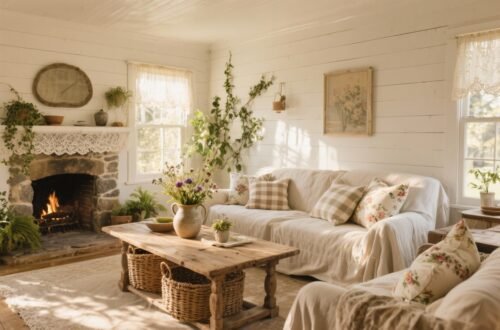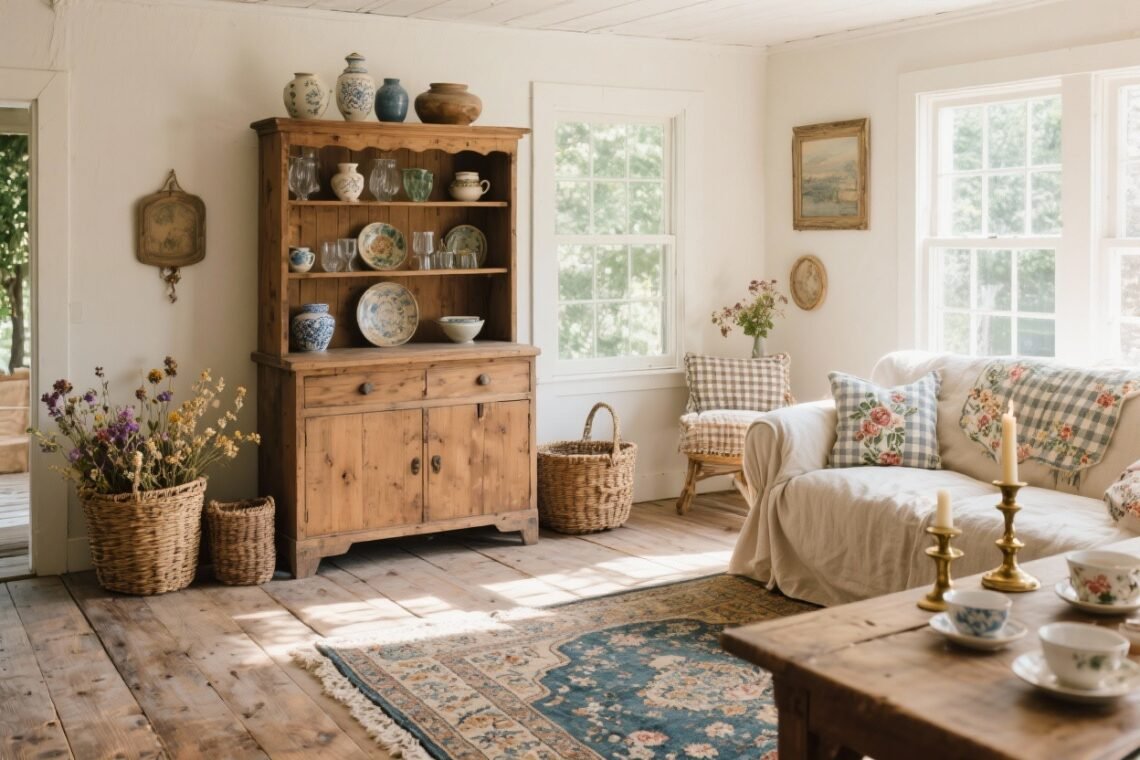
Let’s be real: you don’t need a sprawling farmhouse to live the cottagecore dream. You need character, comfort, and a few well-chosen pieces that whisper, “Yes, I make sourdough and read by candlelight.” If you’re craving slow living with a lighter footprint, these vintage finds do the heavy lifting—beautifully. Bonus: they’re kinder to the planet and your wallet. Ready to build your cozy, lived-in nest?
1. The Timeworn Farmhouse Table That Tells Stories
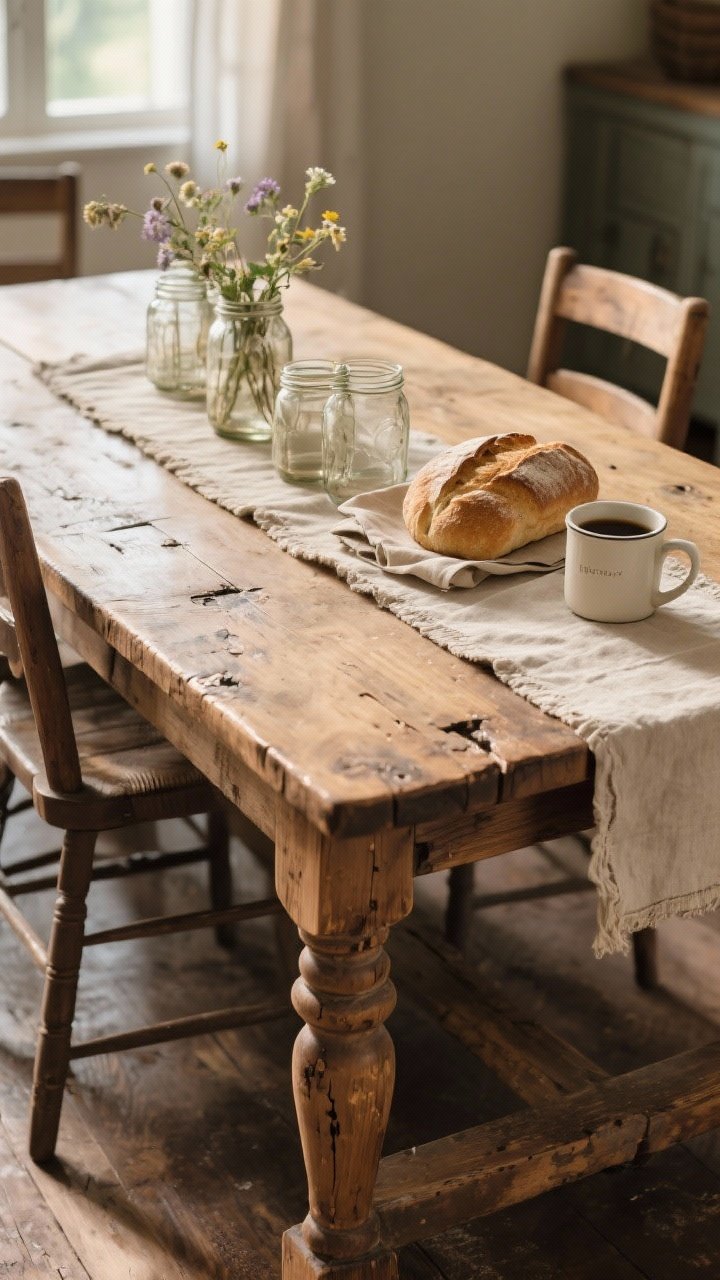
A solid wood farmhouse table is the beating heart of a slow home. It’s where coffee cools, bread rises, and friends linger for “just one more” slice. Look for something weathered, sturdy, and imperfect—dings and patina are proof of a life well-lived.
What to Look For
- Solid wood (oak, pine, maple) instead of veneer for longevity and easy refinishing.
- Turned legs or trestle bases for cottage charm and stability.
- Expandable leaves if you host often.
Slow Living Tip
- Skip the fussy tablecloth. Layer a vintage linen runner and a cluster of thrifted jars for an effortless everyday setup.
- Oil the top with food-safe mineral oil once a season to keep it glowing.
2. Mismatched Wooden Chairs With Honest Wear
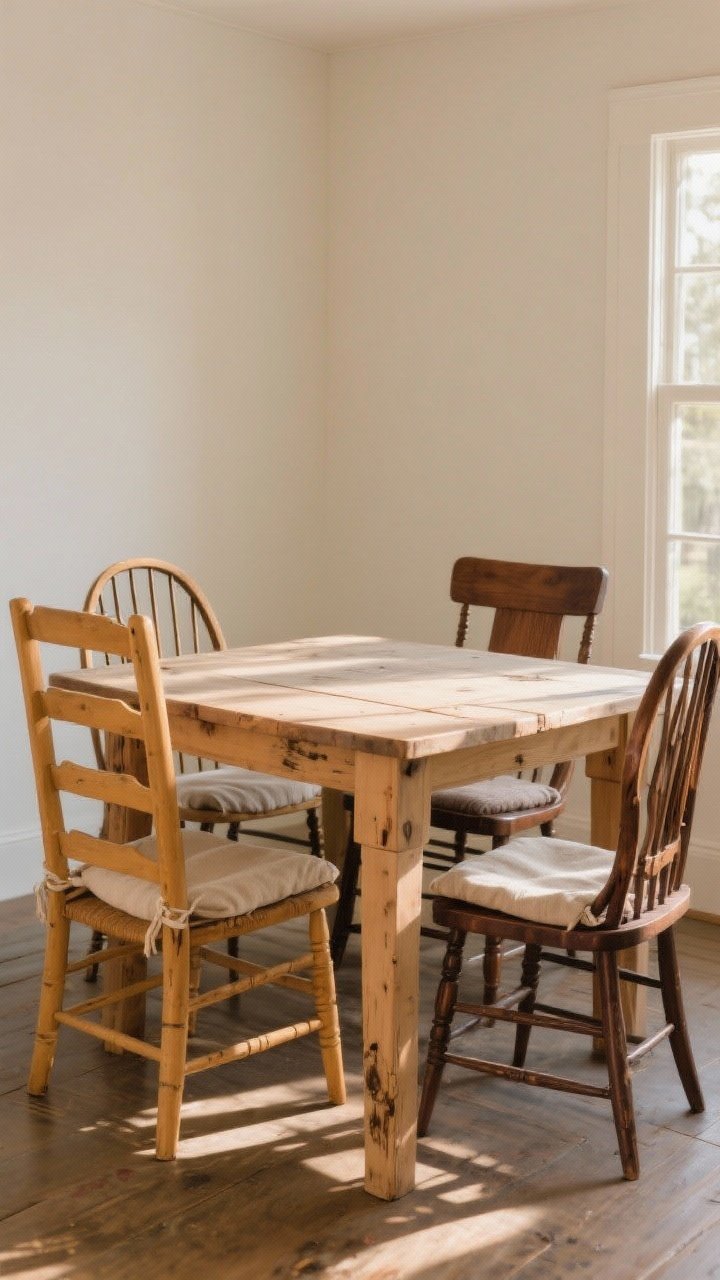
Perfectly matched sets are fine, but mismatched chairs bring instant soul. Mix ladder-backs, spindle chairs, and a stray Windsor or two. The trick? Keep the finishes cohesive or the wood tones compatible so it looks collected, not chaotic.
How To Mix Without Mess
- Stick to 2–3 wood tones max. Warm honey + deep walnut = chef’s kiss.
- Anchor the group with seat pads in natural linen for a subtle, unifying thread.
- Test for wobble—tighten joints with wood glue or add corner braces. Sustainability means making it last.
3. A Glass-Front Hutch For Everyday Beauty

The vintage hutch is the MVP of cottage storage. It keeps dishes dust-free while letting your prettiest pieces shine. Glass doors make even chipped mugs look intentional (and cute, IMO).
Styling That Feels Effortless
- Arrange by color or material: white ironstone on one shelf, green glass on another.
- Layer in woven baskets for napkins, candles, and tea tins.
- Line shelves with removable wallpaper or raw linen for cozy texture.
Eco Bonus
- Revive dull wood with beeswax polish. No harsh chemicals, all glow.
4. Quilts, Throws, And Textiles With a Past
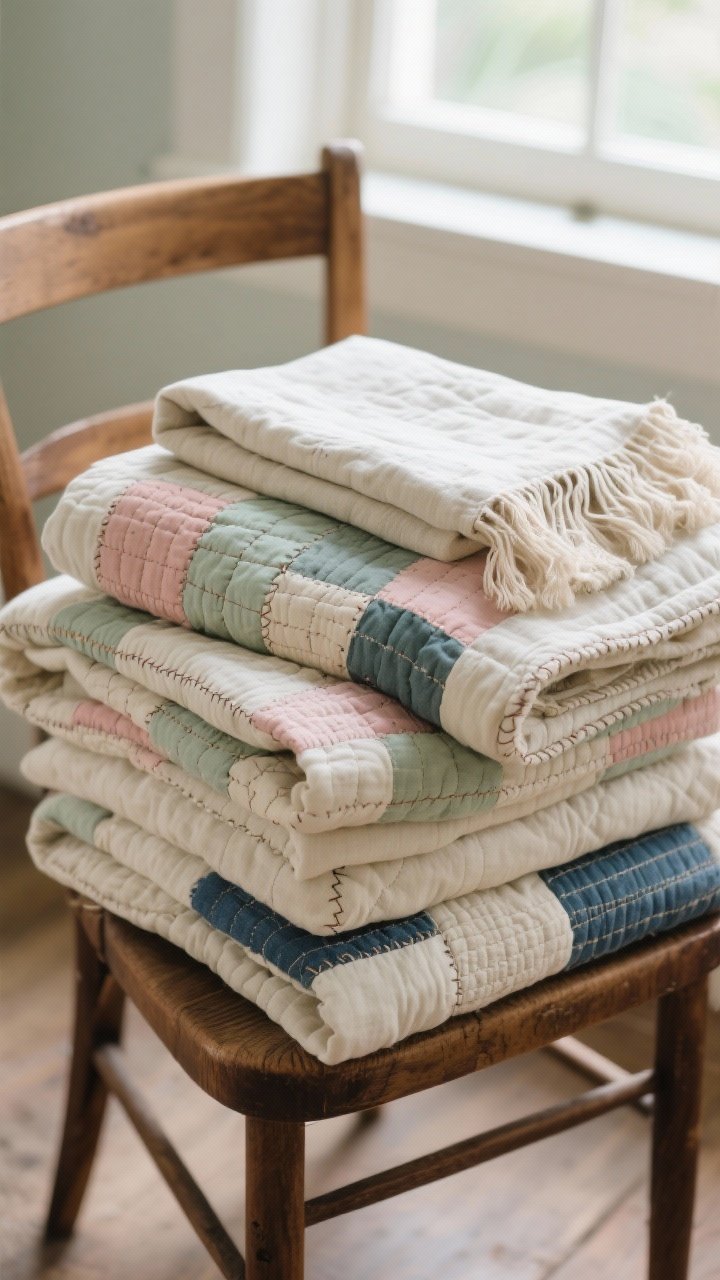
Nothing says cottagecore like a stack of handmade quilts draped over a chair. They’re functional art: cozy for naps, gorgeous as bed toppers, and perfect for porch swings.
What Makes It Sustainable
- Choose natural fibers—cotton, linen, wool—over synthetics for breathability and durability.
- Look for hand-pieced or hand-stitched quilts at estate sales and charity shops.
- Upcycle vintage linens into cushion covers or table runners (FYI: stains can hide under a patchwork heart).
Care Tips
- Wash on delicate with a gentle detergent. Air-dry flat to protect stitching.
- Rotate quilts seasonally to reduce sun fade and wear.
5. Apothecary Jars, Crocks, And Stoneware That Actually Work
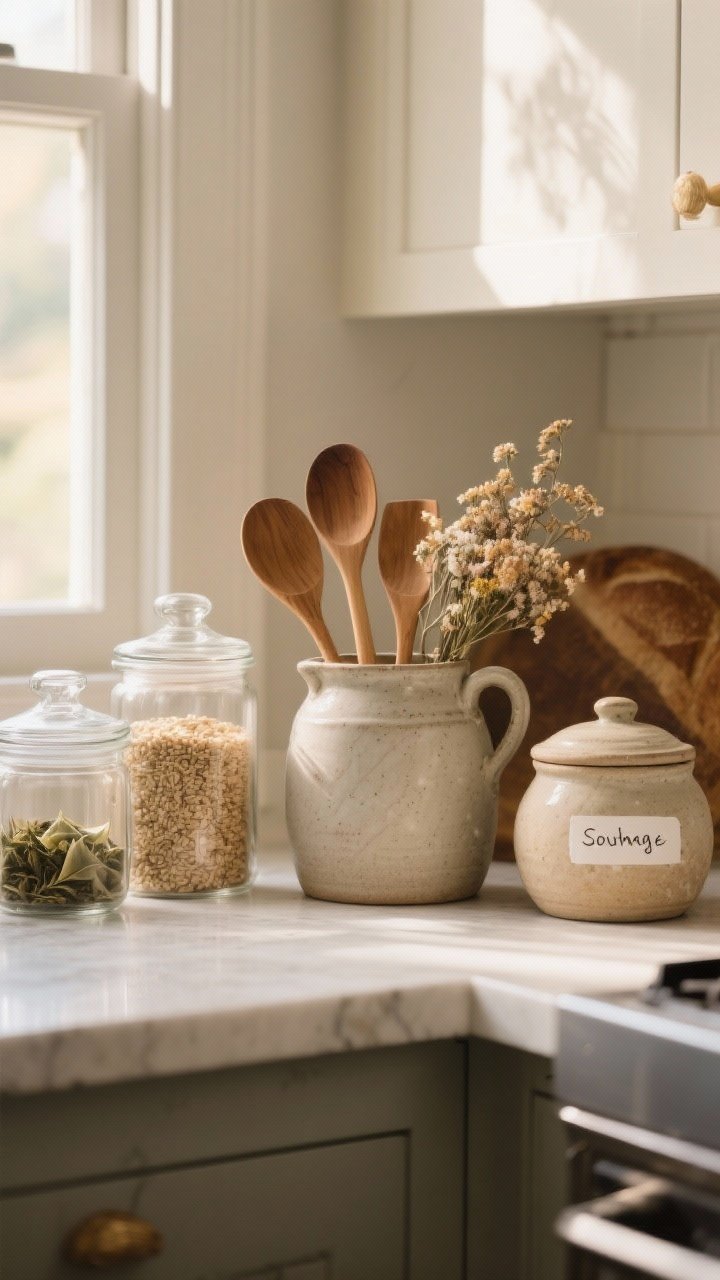
Skip plastic bins. Vintage crocks, apothecary jars, and stoneware jars store everything from wooden spoons to sourdough starters. They’re basically storage, decor, and a subtle flex that you know your way around a farmer’s market.
Put Them To Work
- Countertop: crocks for utensils, jars for grains and tea, a jug for dried flowers.
- Bathroom: apothecary jars for soaps, cotton rounds, and bath salts.
- Entry: stoneware bowl for keys and sunglasses.
Pro Tip
- Choose airtight lids or cork stoppers for pantry goods. For display-only, open tops are fine.
6. Woven Baskets That Tame The Chaos
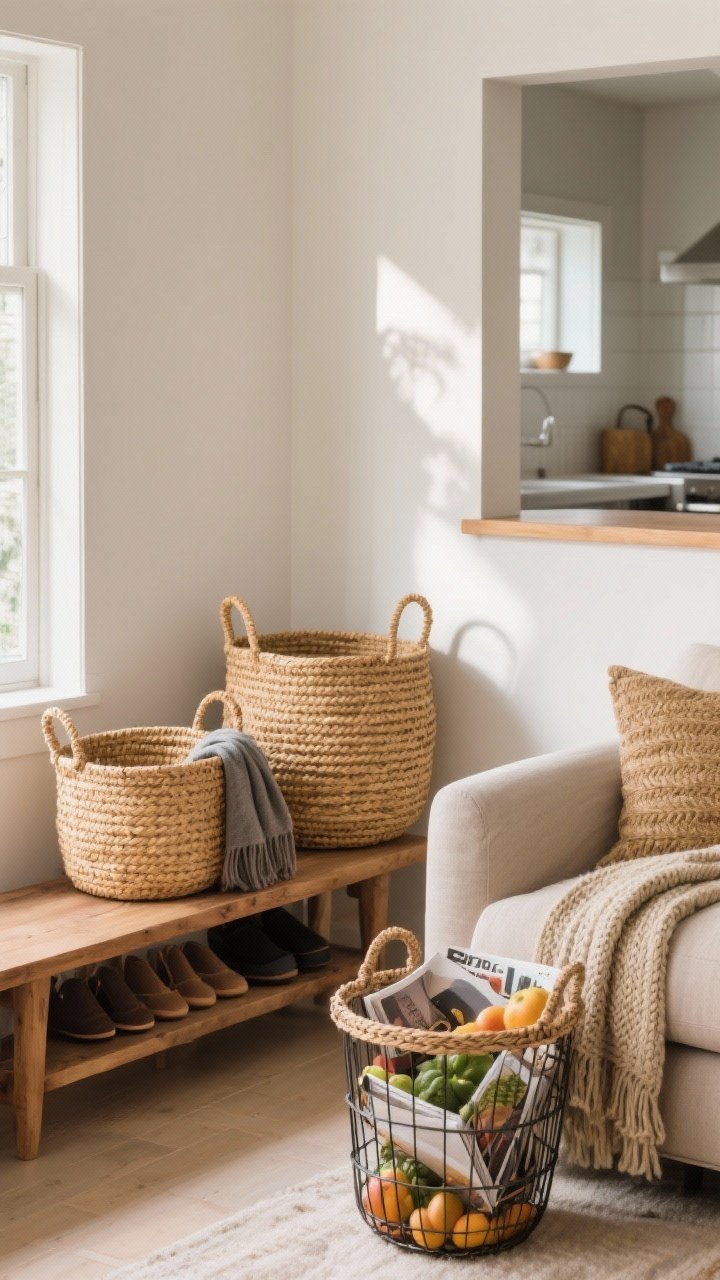
Consider baskets the cottagecore version of “put it in the cloud.” They make messes disappear and add texture instantly. Aim for wicker, seagrass, willow, or rattan—all durable, biodegradable materials.
Where They Shine
- Under benches: stash shoes, scarves, and dog leashes.
- By the sofa: corral throws, magazines, and that half-knitted scarf you swear you’ll finish.
- Kitchen: wire baskets for produce; lidded baskets for bulk items.
Buying Vintage? Check This
- Look for tight weaves and intact handles.
- If brittle, revive with a light mist of water and a touch of food-grade mineral oil.
7. Botanical Artwork And Oil Paintings With Soul
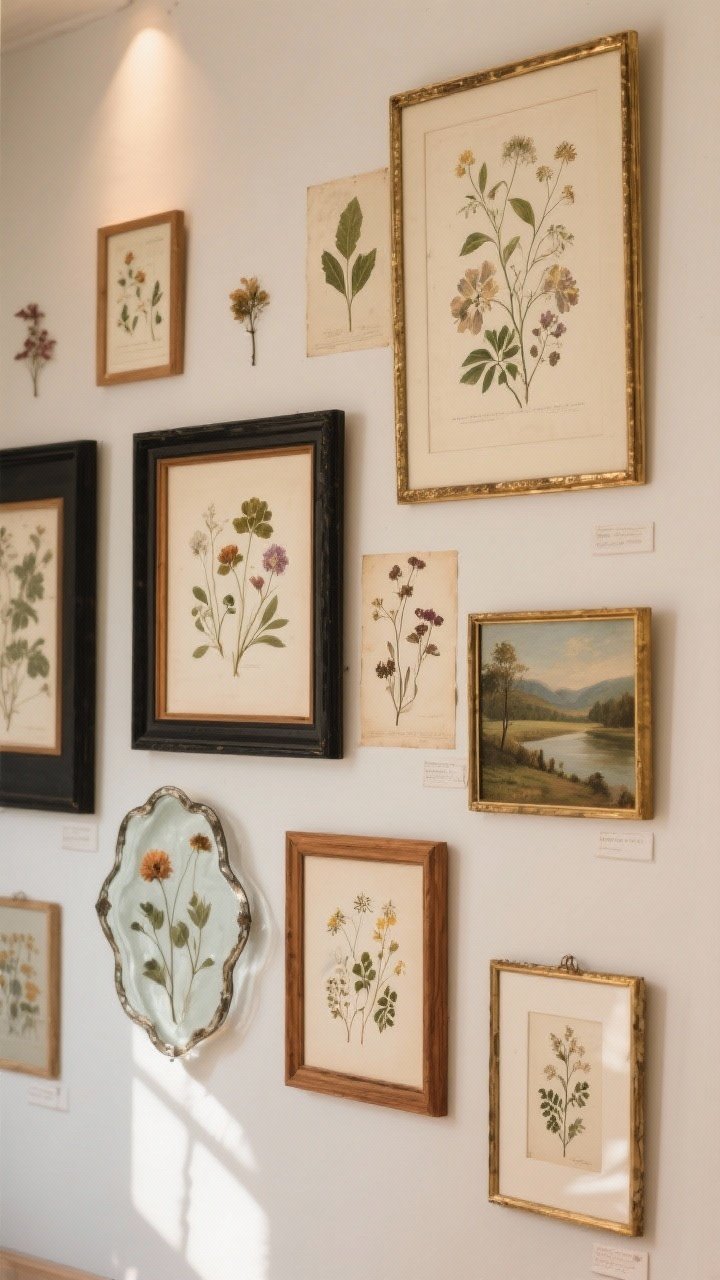
Art doesn’t need to match your sofa; it needs to move you. Vintage botanicals, landscapes, and still lifes add warmth without shouting. Bonus points for chippy frames and wavy antique glass.
Easy Gallery Wall Formula
- Mix frame finishes: black, wood, and gilt in varying widths.
- Anchor with one larger piece, then scatter smaller works around it.
- Layer in pressed flowers or herbarium prints for that “I collect things on walks” energy.
Eco Angle
- Swap cheap mass prints for original artwork or vintage prints. They hold value and reduce demand for new production.
8. A Heirloom Mirror To Bounce Light And Charm
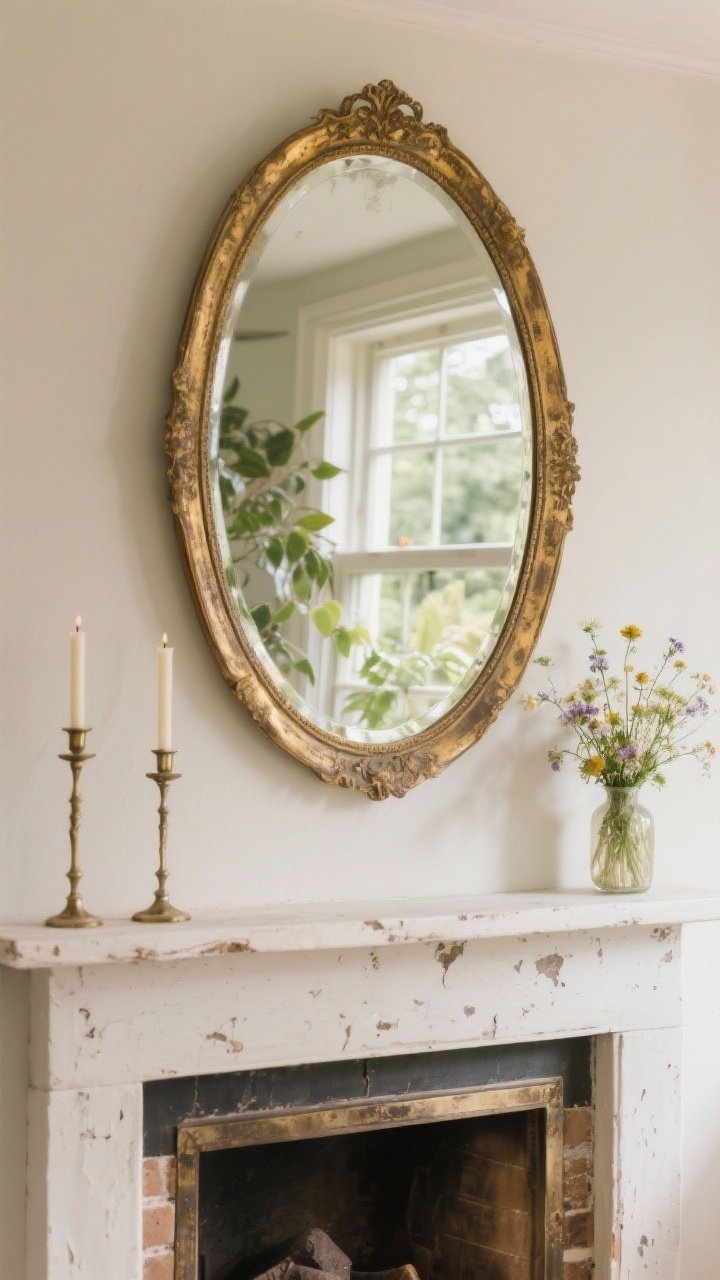
If you buy one “wow” piece, make it a vintage mirror. A gilded or wood-framed mirror = instant brightness, depth, and romance. Hang it across from a window to double natural light and your plant collection’s ego.
How To Choose
- Seek beveled edges and a frame with age (patina, subtle chips, foxing on the glass).
- Look for sturdy backing and hanging hardware—upgrade to D-rings if needed.
- Oval and rectangular shapes mix easily with cottage furniture.
Placement Ideas
- Over a fireplace with candlesticks and a small vase of wildflowers.
- In an entry to widen a narrow hall.
- Above a dresser to turn it into a vanity—instant charm.
How To Source Sustainably (Without Losing Your Mind)
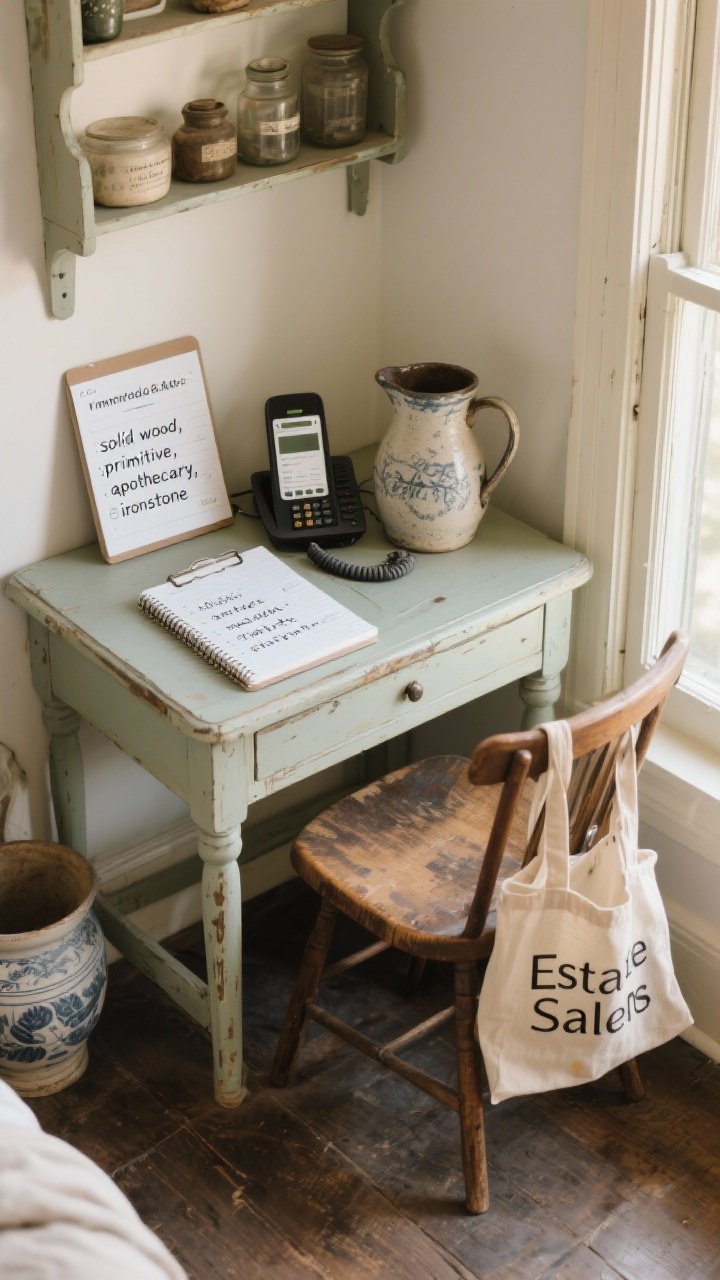
Yes, thrifting can feel like a sport. But slow living isn’t about rushing—it’s about curating. Take your time and shop with intention.
Smart Sourcing
- Hit estate sales early for furniture; swing back late for bundle deals.
- Use saved searches on Facebook Marketplace and Craigslist (keywords: “solid wood,” “primitive,” “apothecary,” “ironstone”).
- Support local artisans who restore vintage pieces—less work for you, more life for the item.
Quality Checklist
- Check joints, drawer runners, and legs; wiggle test everything.
- Smell for mustiness; sun and baking soda can help, but mold is a hard pass.
- Prefer real materials: wood, glass, stoneware, linen, and wool outlast plastic every time.
Care, Refresh, Repeat: Make It Last
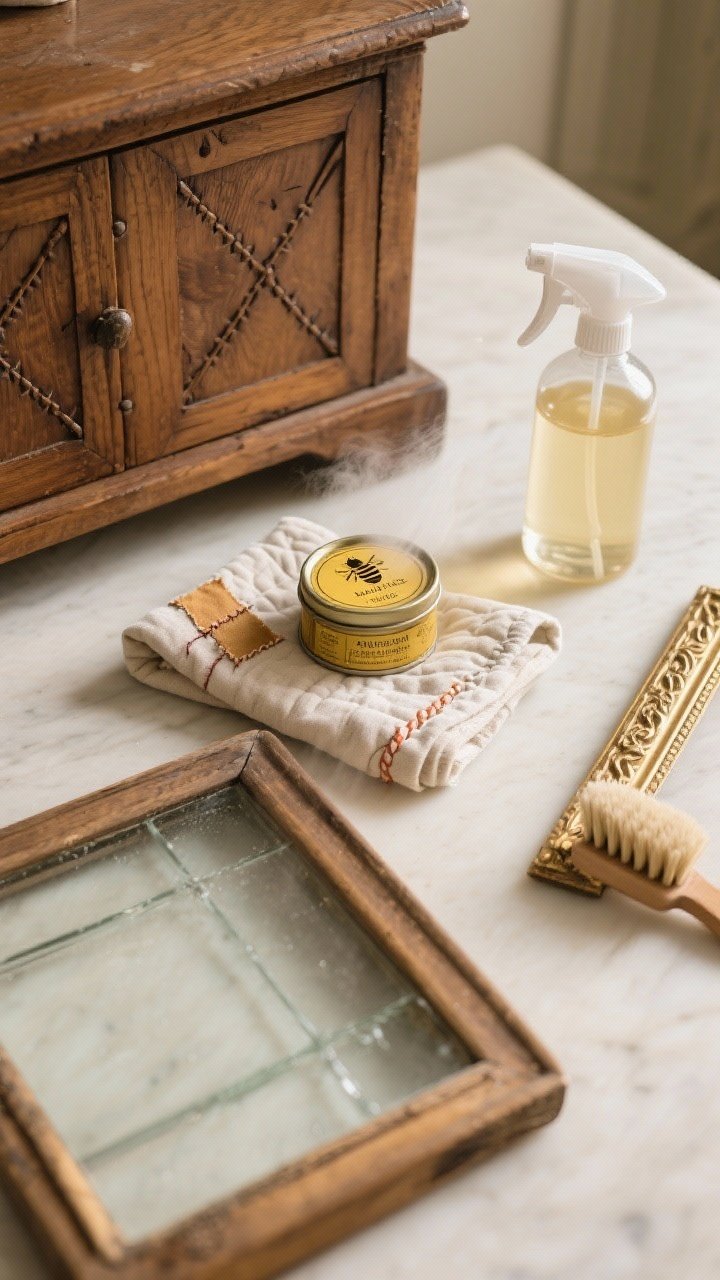
Keeping vintage beautiful is part of the ritual. It’s also the most sustainable move—maintenance beats replacing, every time.
Easy Maintenance
- Wood: dust with a barely damp cloth; wax quarterly with beeswax.
- Textiles: rotate away from direct sun; mend small tears quickly with visible mending for charm.
- Glass and mirrors: clean with vinegar + water; polish frames gently with a soft brush.
Your Cozy, Low-Impact Cottage Starts Here

Slow living isn’t a shopping list—it’s a mindset. But these eight vintage cottagecore pieces make it feel real fast: useful, beautiful, and grounded. Start with one hero piece (table or mirror), then layer in texture, storage, and art as you go. FYI: the best homes are collected, not completed. You’ve got this.