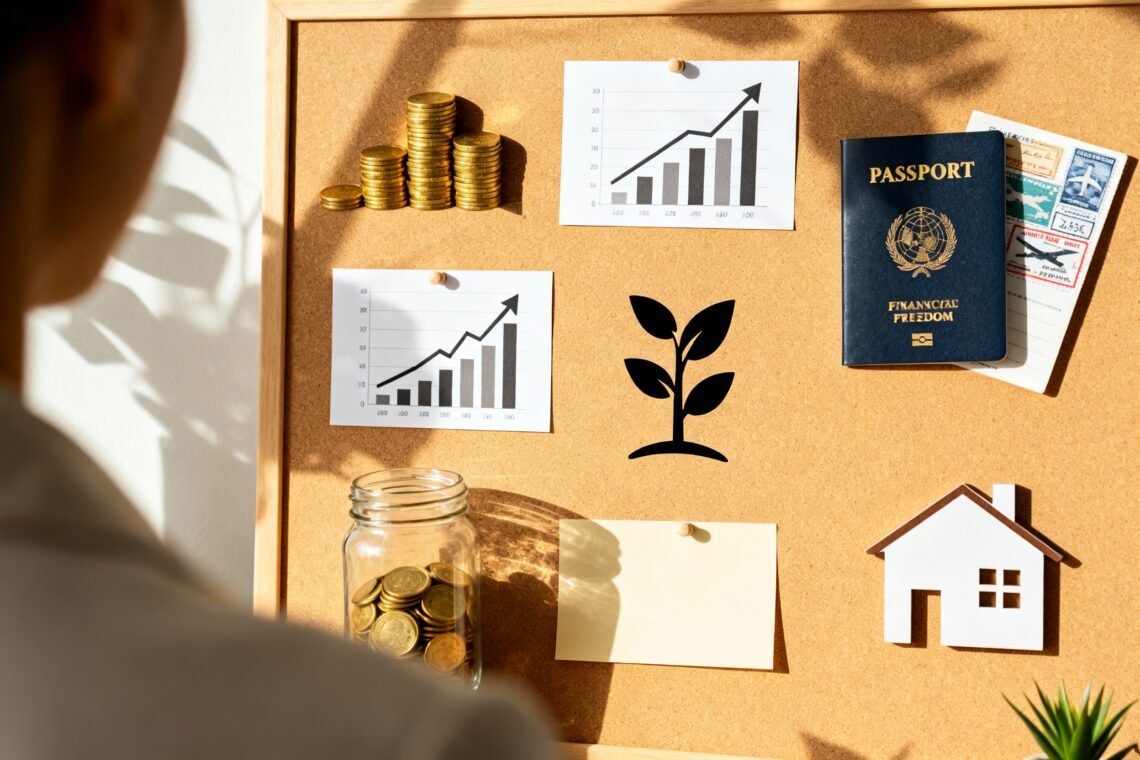
Money goals feel big until you pin them down and stare at them every day. That’s where a life vision board shines. It turns fuzzy “someday” dreams into visual to‑dos that your brain can’t ignore.
Ready to make your board do heavy lifting for your wallet? Let’s build a board that nudges your behavior, not just your vibe.
Start With One Money North Star
Pick a single, crystal-clear financial target for the next 12 months. Pay off $10k of debt?
Save a $20k emergency fund? Hit $50k in revenue? Choose one headline goal so you don’t dilute your focus. How to anchor it on your board:
- Use one huge, central image or phrase that screams your target.
Example: “Debt-Free by Dec 31” in bold black letters.
- Place numbers everywhere. A giant “$10,000” beats a vague “financial freedom.”
- Add a simple timeline (Q1-Q4) to imply urgency.
Why this works? Your brain prioritizes what it sees big and often.
Keep it obvious, not artsy.
Turn Dreams Into Measurable Milestones
No one accomplishes “financial freedom.” It’s a vibe, not a task. Translate your North Star into 3-5 concrete milestones. Examples that slap:
- “$3,000 paid to credit card by March 31”
- “$5,000 emergency fund by June 30”
- “Invest $500/month automatically”
Visualize the ladder, not just the summit
Use a ladder or staircase graphic. Each step equals one milestone.
As you hit a step, cover it with a sticker or checkmark. Tiny dopamine hits build momentum. IMO, that little “done” sticker carries more power than a latte.

Create a Money Map Section
You need a mini “how it happens” area.
Show your top three income drivers and top three expense levers. Make it visual and simple. Build two columns:
- Income: Salary + negotiation number, side hustle (hours/week), passive income (dividends or rent).
- Expenses: High-impact cuts (subscriptions, dining out cap, car refi target).
Use icons for speed
- 💼 for salary boost
- 🧰 for side hustle tools
- ✂️ for expense cuts
Icons help your brain process goals faster. Less reading, more doing.
Build Habit Triggers Into the Board
Vision motivates.
Habits compound. Combine both. Attach a mini habit tracker directly onto the board:
- Daily: “No-spend weekdays” – checkboxes Mon–Fri.
- Weekly: “Update budget every Sunday” – calendar sticker.
- Monthly: “Invest on the 1st” – bank app logo or autopay icon.
Habit stacking FTW
Tie a money habit to an existing routine: “After I brew coffee, I log yesterday’s expenses.” Place a coffee image next to a tiny expense log graphic. Your board becomes the literal trigger.
Design With Dopamine: Progress Bars & Thermometers
You don’t need spreadsheets to feel progress.
You need visuals. Try these:
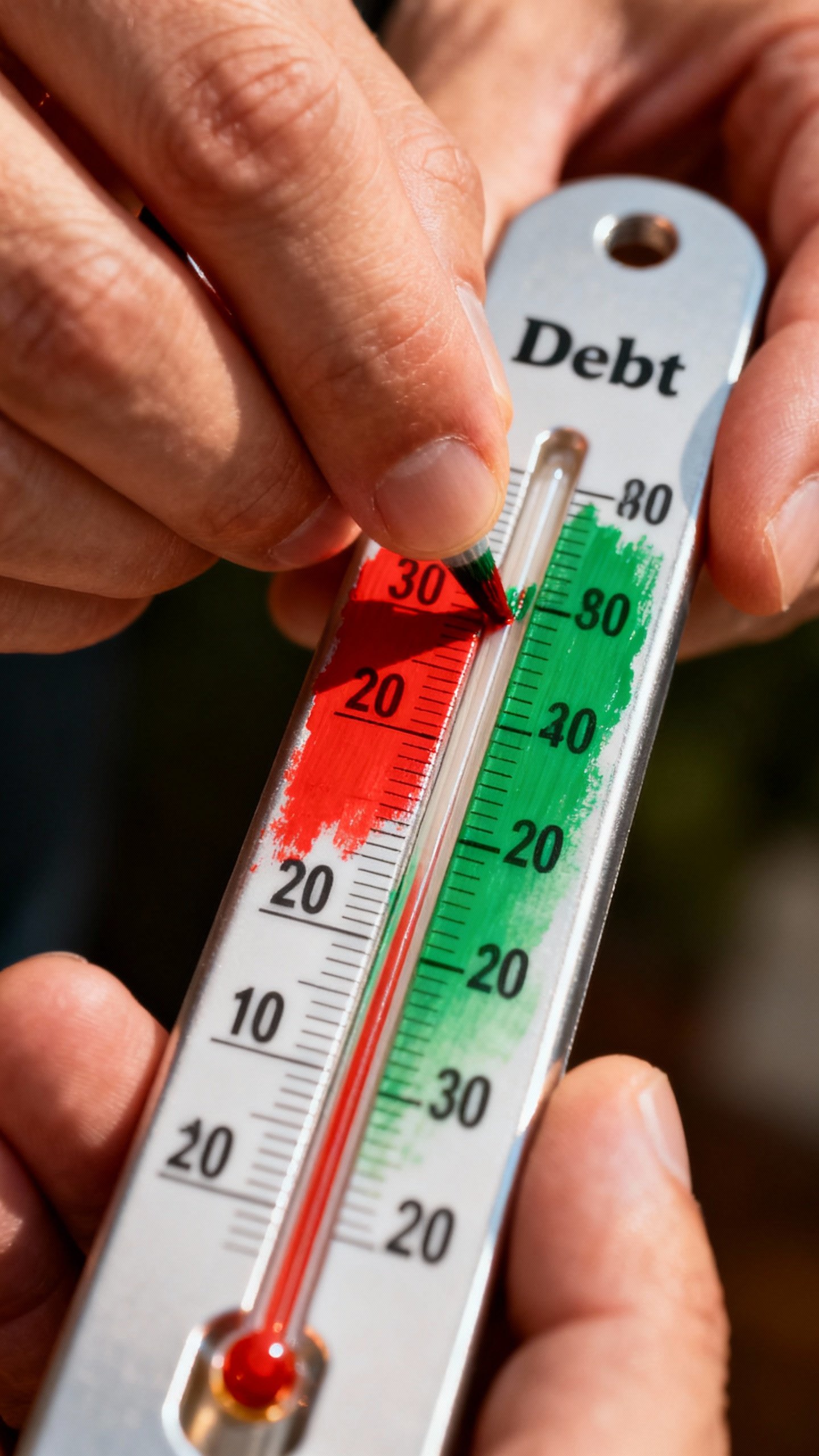
- Debt thermometer: Fill it red to green as you pay down.
- Savings bar: 10 boxes = $1,000 each. Color as you hit milestones.
- Income arc: A semi-circle from $0 to your revenue target; color in segments.
FYI, progress visualization increases consistency. You’ll want to “color in another box,” which nudges you to take actions that earn that color.
Make It Real With Receipts and Numbers
Aesthetic inspiration matters, but real numbers change behavior.
Layer data under the pretty pictures. What to include:
- Printed account balances on the first of each month.
- Interest rates and payoff order: “Card A (22%), Card B (17%).”
- Automatic transfer screenshots or scheduled amounts.
Snowball vs. Avalanche, choose one
- Snowball: Pay smallest balance first for momentum.
- Avalanche: Attack highest interest first for math wins.
Pick a method and put it on the board. Don’t waffle.
Waffling is for brunch.
Curate Identity Cues (Not Just Stuff You Want)
You don’t “do” a financial plan. You become someone who manages money well. Identity cues help. Place cues like:
- Photo of someone negotiating calmly (your future self, tbh).
- Sticky note: “I’m the person who pays herself first.”
- Books or mentors that model the identity you want: “Automatic Millionaire,” “I Will Teach You to Be Rich,” or your fave finance creator.
When you see the identity, you act in line with it.
Corny? Maybe. Effective?
Absolutely.
Engineer Your Environment
Your environment either nudges you forward or drags you back. Set your board where you make money decisions. Where and how:
- Hang it near your desk or the door you exit every morning.
- Keep a Sharpie and stickers attached for instant updates.
- Use a small, travel-friendly version in your planner or as your phone’s lock screen.
Automate what you can
Set auto-transfers the day after payday. Put a bank icon and the transfer amount on your board.
No willpower needed. IMO, automation beats motivation every time.
Give Yourself Rewards You’ll Actually Want
Willpower fades. Rewards keep you in the game. Set a reward ladder:
- $1,000 saved = Fancy coffee week
- $5,000 saved = Weekend day trip
- $10,000 saved = Upgrade your workspace chair
Place small images of each reward next to their milestone.
You’ll remember why the grind matters.
FAQs
Do I need a physical board or can I go digital?
Use whichever you’ll actually see daily. Physical boards hit harder for many people because you interact with them. Digital boards work great as a phone lock screen or desktop wallpaper if you update them weekly.
How detailed should my numbers be on the board?
Keep top-level numbers visible and simple: balances, targets, dates.
Save granular budgets for your spreadsheet or app. The board’s job is to keep your eyes on the prize, not turn into a tax form.
What if my goals change mid-year?
Change the board. Financial freedom rewards flexibility.
Replace images, move milestones, and write new targets without guilt. Progress over pride, always.
How often should I update the board?
Weekly check-ins work best. Color in bars, add stickers, and record new balances.
Do a 15-minute monthly review to adjust milestones and celebrate wins.
I’m overwhelmed. What’s the absolute minimum to start?
One central goal, one progress bar, one weekly habit. That’s it.
Tape it to your wall and start coloring boxes. Momentum will do the rest.
Conclusion
Vision boards don’t print money, but they do print clarity. When you see your goal, your plan, and your progress every day, you make better choices without white-knuckling it.
Build the board, stack the habits, and let your environment do the nudging. Financial freedom is just a bunch of small wins you can see—so make them visible and go get them.