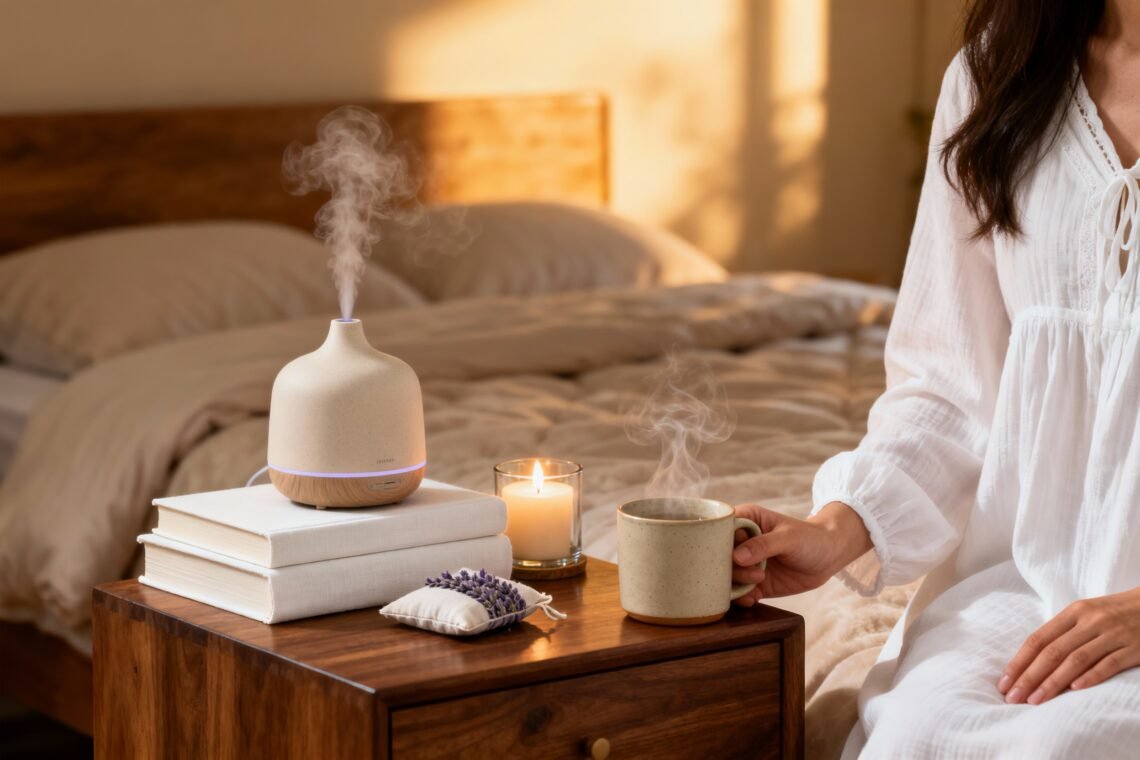
You know that moment when your head hits the pillow and your brain says, “Cool, now let’s replay every awkward conversation since 2012”? Yeah. Same.
The good news: you don’t need a 45-minute ritual with seven crystals and a Tibetan singing bowl to calm down. A simple five-minute routine can cut the noise and convince your nervous system to chill. You’ll sleep faster, and your mind won’t feel like a tab with 37 open pages.
Set the Stage in 60 Seconds

You don’t need spa vibes.
Just tweak your environment so your brain gets the memo: sleep mode, not doom scroll. Think small, fast, and consistent.
- Dim the lights: Lower brightness signals your brain to release melatonin. Overhead lights?
Off. Lamp? Yes.
- Cool the room: Aim for 60–67°F (15–19°C).
Cooler temps help you fall asleep faster.
- Phone out of reach: Put it on Do Not Disturb. Notifications at 2 a.m. are not personality traits.
- Soft sound: White noise or a low-volume fan can calm that hyper-alert state.
FYI: Your Bed Isn’t a Workspace
If you answer emails in bed, your brain associates the mattress with stress. Keep the bed for sleep and, you know, cozy stuff.
Your mind learns fast when you set clear zones.
One-Minute Body Reset
You can trick your nervous system into “relax mode” with basic moves. No yoga degree required.
- Shoulder roll x5: Big circles, forward and back. Release jaw while you do it.
- Neck stretch (20 seconds each side): Ear toward shoulder, breathe slow.
Keep shoulders down.
- Calf and hamstring stretch (20 seconds): Stand, hinge forward slightly, soft knees. Feel the back of your legs wake up, then relax.
Why This Works
Muscle tension equals brain tension. When you release tight spots, your body signals “we’re safe,” which lowers anxious energy. It’s not magic.
It’s your vagus nerve getting a little love.
90 Seconds of Breath That Actually Helps
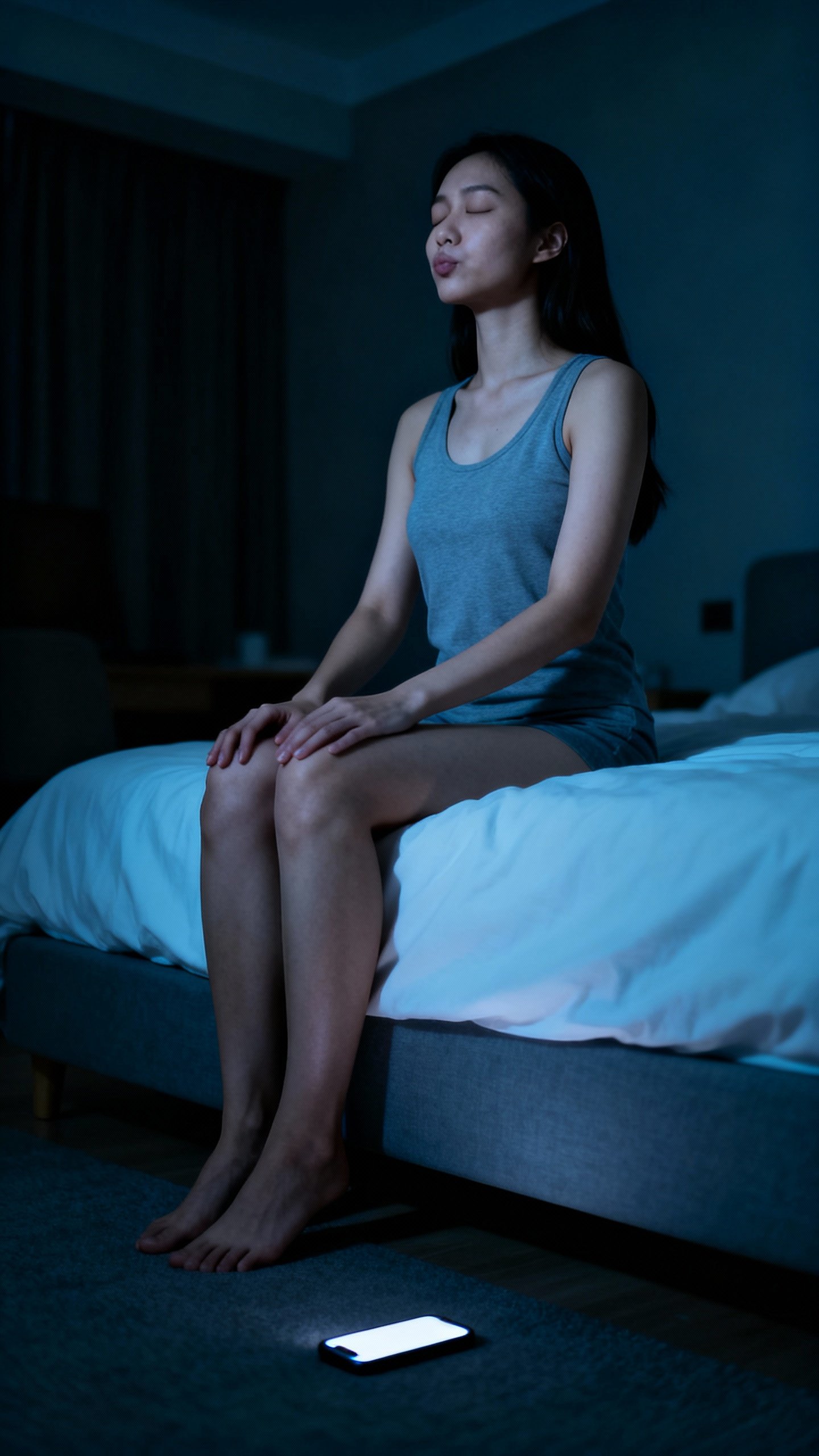
Breathing exercises can feel cheesy, but this one works because it’s simple and fast. It dials down the stress response without turning you into a meditation monk. Try the 4-6 Breath:
- Inhale through your nose for 4 seconds.
- Exhale slowly for 6 seconds (through pursed lips).
- Repeat 6–8 cycles.
Pro Tip: Extend the Exhale
Longer exhales activate the parasympathetic system. Translation: your body leaves “fight or flight” and enters “we’re good, let’s sleep.” If you get lightheaded, shorten the inhale a bit.
Two-Minute Brain Dump (No Poetry Required)
Your brain loves chewing on loops: to-dos, random worries, hypothetical conversations with Karen from accounting.
You need to offload them. Grab a notepad (paper beats apps here) and do a quick two-column scribble:
- Left side: Worries — everything buzzing in your head.
- Right side: Next tiny step — not a full plan, just the next move (email Sam, set reminder, book appointment).
Why This Helps
When you assign a next action, your brain stops treating the worry like an emergency. It knows Future You has a plan. That lets Present You sleep.
IMO, this one’s the secret sauce.
30-Second Sensory Grounding
Anxiety loves to drag you into future-maybe disasters. Pull yourself back into your body with a fast sensory check-in. Try this:
- 5 things you can see
- 4 you can feel (blanket, sheets, your breath on your lip)
- 3 you can hear
- 2 you can smell
- 1 you can taste
Don’t overthink it.
Rapid-fire answers work best. If your brain tries to debate whether the fan counts as a “sound,” tell it thanks and keep going.
Optional: A Tiny Ritual You Actually Enjoy
This is the fun part. Pick one small thing that tells your brain, “We do this, then we sleep.” Keep it under a minute.
Ideas:
- Herbal tea sip (caffeine-free, obviously)
- Face mist or moisturizer with a deep breath
- One page of a low-drama book
- 30 seconds of gentle foot massage (yes, yours)
Make It Pavlovian
Same tiny ritual, same time, every night. Your brain loves patterns. After a week, your ritual becomes a sleep cue.
Like a lullaby, but less awkward.
Putting It All Together: The 5-Minute Flow
Here’s the whole routine, compressed and easy to memorize:
- Lights down, room cool, phone away (1 minute)
- Body reset: shoulders, neck, legs (1 minute)
- 4-6 breathing (90 seconds)
- Two-minute brain dump
- 30-second sensory grounding
- Optional: micro-ritual you like (30–60 seconds)
Total: about five minutes. Less time than scrolling comments you’ll forget by morning.
Common Pitfalls (And How to Dodge Them)
Let’s be real: some nights will feel chaotic. You can still win.
- “I forgot.” Put your notebook and pen on your pillow.
You’ll move them, which triggers the routine.
- “I’m too wired.” Double the exhale practice to two minutes. Keep everything else the same.
- “My brain argues with the routine.” Cool. Do it anyway.
You’re training a reflex, not debating a philosophy class.
- “I broke the routine.” Start again the next night. Consistency wins, perfection burns out.
FAQ
What if I wake up at 3 a.m. and can’t fall back asleep?
Run a mini version: 4-6 breathing for one minute, quick sensory grounding, then a micro brain dump in the dark (jot one sentence). If you’re still awake after 20 minutes, get up and read something boring in low light until you feel sleepy again.
Do I need to meditate too?
Not if you don’t want to.
This routine gives you the benefits of calm breathing and mindful awareness without a formal meditation session. If you enjoy meditation, add a minute—but don’t pressure yourself. Pressure kills sleep vibes.
Can I do this with my partner in bed?
Totally.
Just keep it quiet and simple. Breathwork and sensory grounding work fine silently. IMO, shared routines can even deepen connection, which lowers stress further.
How long until it works?
You’ll likely feel calmer on night one.
Strong habit cues usually kick in within 7–10 days. The goal isn’t perfection—it’s stacking small signals that tell your nervous system “safe now.”
What if my anxiety feels severe?
Use this routine as support, not a substitute for help. If anxiety disrupts daily life or sleep often, talk to a therapist or healthcare pro.
Combine care with routine for the best results. FYI, cognitive behavioral therapy for insomnia (CBT-I) and anxiety helps a lot of people.
Can I swap steps or shorten it?
Absolutely. Keep the core pieces: dim lights, extended exhale breathing, and a quick brain dump.
Everything else is custom. You do you.
Conclusion
You don’t need perfect calm or monk-level focus to sleep. You just need a reliable, five-minute pattern that tells your body, “We’re safe, we can power down.” Try this tonight, even if your day felt chaotic.
Small signals, repeated often, create big change—no singing bowl required.