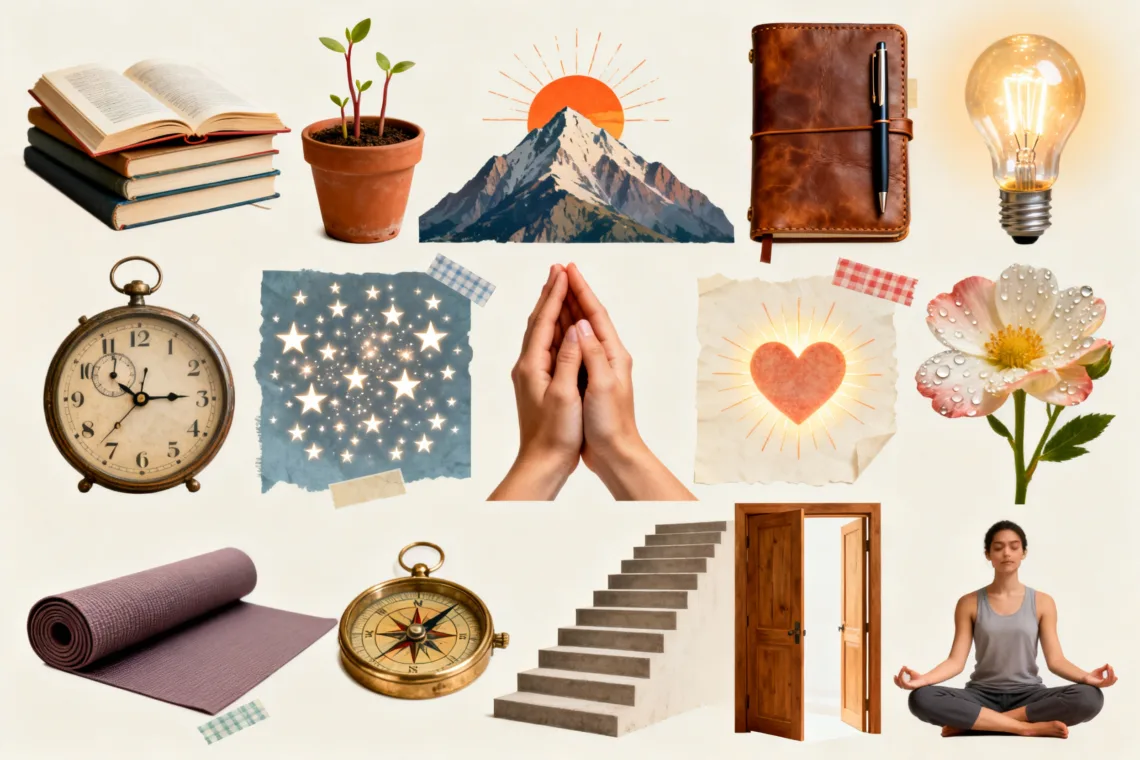
You want a vision board that actually moves the needle, not just a cute collage of pretty quotes. Good. You’re here for ideas that support real personal growth—habits, mindset shifts, and brave goals. You don’t need a perfect aesthetic; you need a board that nudges you every day and says, “Hey, remember what we’re building?” Let’s get into it.
Start With Your Why (Then Make It Visible)
Forget perfection—start with clarity. What do you want to feel this year? Energized? Grounded? Brave? Pick 2–3 core feelings and build from there.
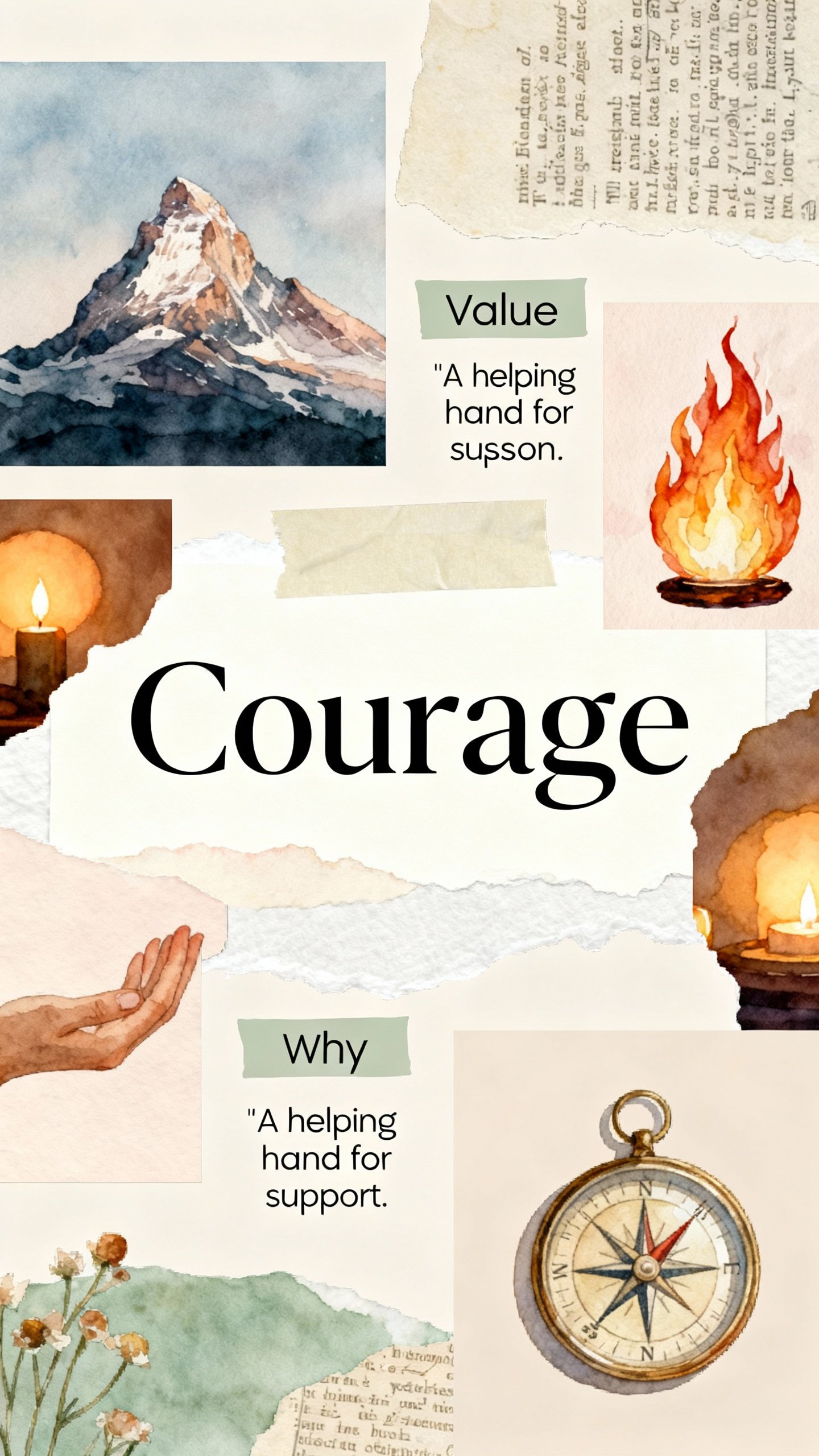
- Anchor word/phrase: Choose a theme like “Courage,” “Consistency,” or “Soft Ambition.” Put it dead center.
- Values check: Add 3–5 values you refuse to compromise, like “Health,” “Family,” “Impact.”
- Reminder: Include a “Why” statement: “I’m building stamina so I can travel with ease” or “I want time freedom for my creativity.”
Quick Tip: One Board, One Year
Too many goals? Chaos. Set your board to a one-year window. You’ll stay focused and actually measure progress—wild concept, I know.
Design Goals You Can See (And Track)
If you can’t visualize the process, you won’t do it. Period. Create imagery and prompts that make habits obvious and doable.
- Mini milestone visuals: Instead of “Run a marathon,” add a calendar with “3 runs/week” stickers and a finish-line photo.
- Habit snapshots: Pictures of a tidy desk, meal-prepped containers, morning sunlight. These remind your brain “Oh, we do this now.”
- Progress bars: Draw or print little bars you can color in as you go—books read, workouts done, savings milestones.
Make It Interactive
Add sticky notes for weekly goals. Move them from “To Do” to “Done.” Yes, you’re basically gamifying your life. IMO, that’s the point.
15 Vision Board Ideas That Actually Support Growth
You want ideas? Here are 15, broken down so your board becomes a growth engine, not just a Pinterest mood ring.
- Energy Rituals Panel: Photos that represent morning or evening routines—journal, sunlight, water bottle, yoga mat. Add a “10-minute version” note for busy days.
- Focus Word + Sub-Intentions: One power word with three supporting actions (e.g., “Consistency: daily walk, weekly review, monthly reset”).
- Skill Ladder: Choose one skill and map three levels. Example: “Public speaking—Intro: speak up once/meeting. Intermediate: present a small update. Advanced: give a talk.”
- Financial Micro-Wins: Visuals for debt payoff or savings jars, plus tangible triggers: “Transfer $50 each Friday.”
- Boundaries Board: Phrases you’ll use to protect time: “I can’t this week, but next Tuesday works.” Add “No” scripts you can copy-paste into your life.
- Mini Adventure Map: Local hikes, day trips, new cafes. Growth requires novelty—make it easy to sprinkle in.
- Mentor Montage: People who inspire you (living or not). Add a sticky note with “What would X do today?”
- Healthy Home Vibes: Images of your ideal workspace or kitchen setup. Add one tangible change: “Clear desk every night.”
- Identity Shift Corner: Statements like “I’m a person who keeps promises to myself” or “I train even when I’m tired.” Identity drives behavior—FYI.
- Connection Goals: Faces of friends/family you want to prioritize. Include prompts like “Text check-in weekly” or “Monthly dinner.”
- Learning List: Books, courses, podcasts. Add one per quarter and track start/finish dates.
- Recovery Rituals: Yep—rest is a growth tool. Add cues for sleep, therapy, stretching, quiet time.
- Fear-to-Action Lane: A column of scary things with the tiniest next step listed under each. Example: “Ask for feedback—send 2-question email.”
- Celebrate and Keep: Wins you’ve already achieved. Keep proof on display. Confidence loves receipts.
- Vision-in-Motion: A QR code to a playlist, a pep-talk voice note, or a short video of Future You. Cheesy? Maybe. Effective? Absolutely.
Formats That Fit Your Life (Not Just Your Wall)
Not everyone wants a poster board shrine. Choose a format you’ll actually see daily.
- Classic corkboard: Add and remove pieces easily. Great for iterative goals.
- Journal spread: Create a monthly mini-board. Pair with habit trackers.
- Digital wallpaper: Phone or laptop background with 6–8 key visuals. Set reminders to update each quarter.
- Whiteboard hybrid: Use magnets for photos and draw progress bars you can update in seconds.
Where to Put It
Pick a high-traffic spot—above your desk, closet door, phone wallpaper. If you never look at it, it’s just arts and crafts.
Make It Real With Systems
Vision without systems equals wishful thinking. Tie every idea to a calendar or trigger.
- Weekly review: Set a 15-minute check-in to adjust goals. Non-negotiable.
- Implementation intentions: “When I make coffee, I read one page.” “After lunch, I walk 10 minutes.”
- Accountability buddy: Share one screenshot weekly. Keep it light, keep it honest.
- Quarterly refresh: Swap images, upgrade goals, remove anything stale. Growth isn’t a static aesthetic—IMO, it’s alive.
Track Inputs, Not Just Outcomes
You control actions, not results. Track reps: workouts completed, outreach messages sent, pages written. The outcomes follow.
Design Tips So Your Brain Says “Yes”
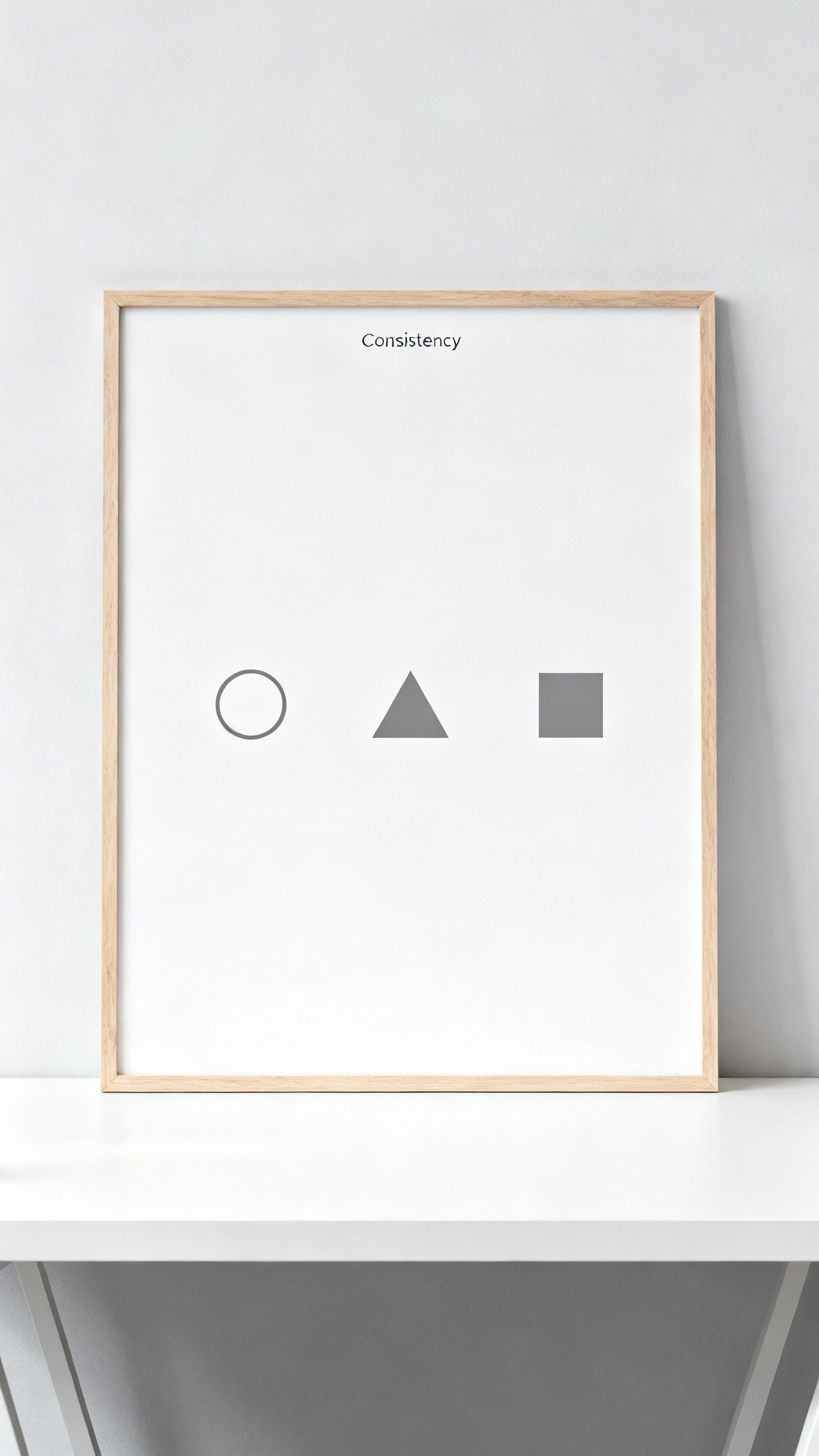
Let’s make it pretty enough to love and simple enough to use.
- Limit the chaos: Pick 2–3 colors. Your eyes will thank you.
- Mix media: Photos, handwritten notes, quotes, doodles. Texture = interest.
- Use large text: Big, readable headers. You’re not squinting for growth.
- Leave white space: Crowded boards feel overwhelming. Give it breathing room.
Where to Find Great Visuals
Print photos from your camera roll, pull free images from reputable stock sites, or sketch your own. Bonus: take your own “vision photos” at the store—like snapping a pic of running shoes you’ll buy after 30 runs.
How to Stay Motivated When the Spark Fades
Motivation dips. Expect it. Your board should help you restart quickly.
- Create a comeback ritual: One song, one stretch, one micro-task. Restart in 90 seconds.
- Revisit your why: Read your center phrase out loud. Yes, out loud. It works.
- Make wins visible: Add photos of completed projects, race bibs, or thank-you notes. Proof fuels momentum.
- Reduce friction: Pre-pack your gym bag, pre-open your notebook, prep “default dinners.”
FAQ
Do I need to use physical images, or will a digital board work?
Both work—choose the one you’ll see daily. If your phone never leaves your hand, a digital wallpaper is perfect. If you love tactile stuff, go physical. Many people do both: a wall board at home and a simplified digital version for on-the-go.
How often should I update my vision board?
Review weekly, tweak monthly, refresh quarterly. Major overhaul? Once a year. That cadence keeps it aligned with your life instead of locking you into January fantasies that don’t match July reality.
What if I don’t know my exact goals yet?
Start with feelings and habits. Pick “how you want to feel” and choose 2–3 daily actions that support that. Clarity grows from action, not the other way around. FYI, messy starts are still starts.
Isn’t this just manifesting with extra steps?
Only if you stop at pictures. A good vision board is half visualization, half operations. The images prime your brain; the systems get you results. Manifest with a calendar—chef’s kiss.
How do I avoid making a board that’s just…aesthetics?
Tie every image to a behavior. Add labels like “Daily,” “Weekly,” or “Next Step.” If a picture can’t point to an action, swap it for one that can.
What size should my vision board be?
Big enough to see clearly, small enough to update easily. For walls, poster or corkboard size works. For digital, keep it to a single screen—no scrolling required.
Conclusion
A vision board should make your goals feel close and your next steps obvious. Keep it simple, interactive, and anchored to systems that you control. Refresh it often, celebrate tiny wins, and let it evolve as you do. Build a board that doesn’t just look inspiring—it gets you moving.