Japandi is where Japanese minimalism meets Scandinavian coziness, and honestly? It’s the perfect antidote to our chaotic lives. These designs prove you can have warmth AND simplicity without sacrificing either one.
1. Serene Living Room With Low-Profile Furniture and Natural Textures
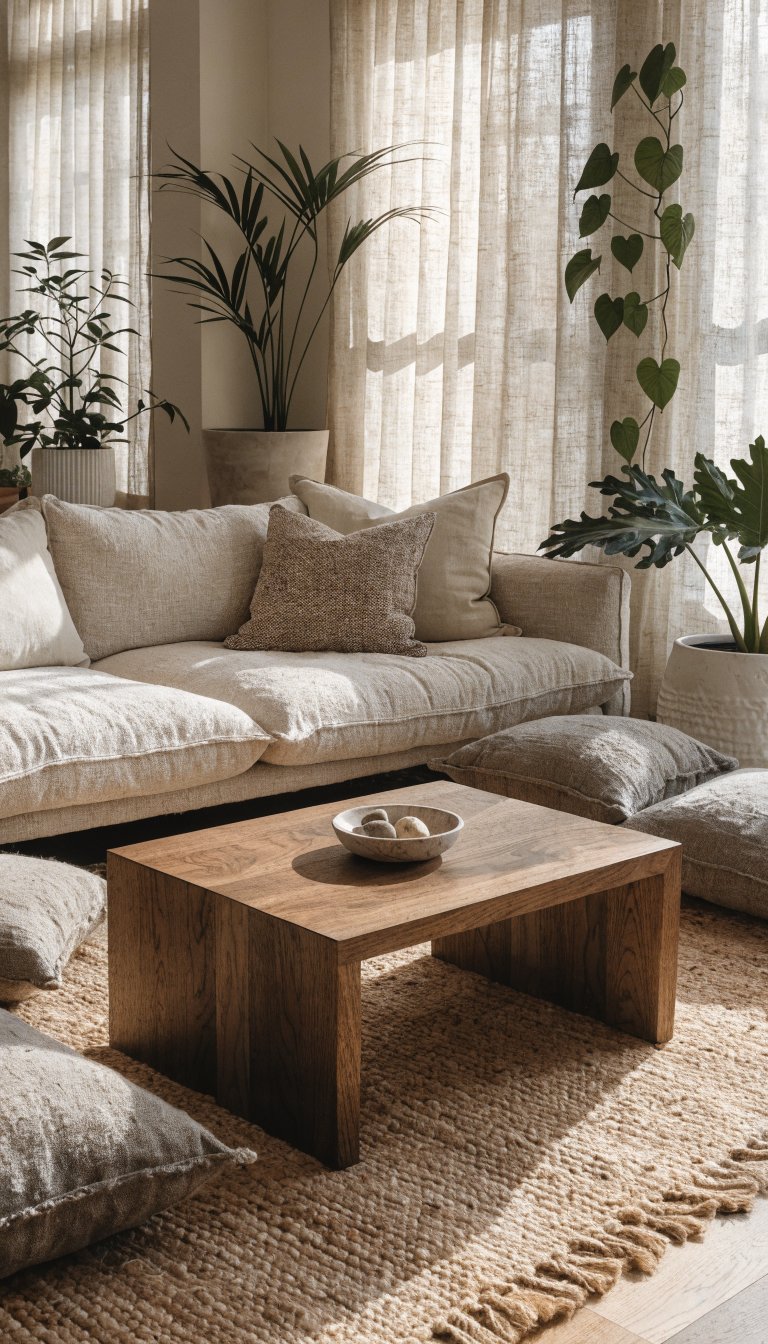
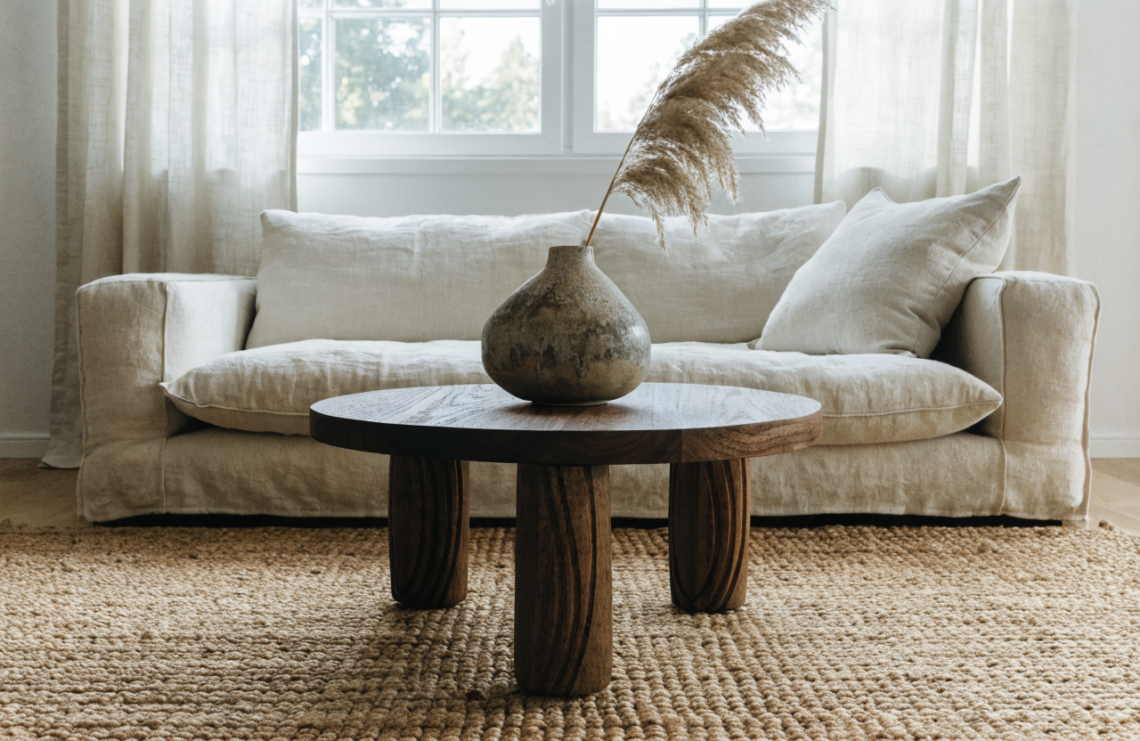
Picture a living room where everything sits close to the ground, creating this incredible sense of calm the moment you walk in. The low-slung sofa in oatmeal linen practically begs you to kick off your shoes and stay awhile.
The magic happens with the layering of natural materials. A chunky jute rug anchors the space, while a walnut coffee table with clean lines keeps things grounded. Add a few linen floor cushions in muted grays and taupes, and you’ve got flexible seating that doesn’t scream “I bought all this at once.”
Key Elements:
- Low platform sofa in neutral linen or cotton
- Handwoven jute or sisal area rug
- Walnut or oak coffee table with minimal hardware
- Ceramic vases in irregular, organic shapes
- Single statement plant like a fiddle leaf fig
This setup works beautifully for anyone who wants to unwind without visual noise. The low furniture actually makes your ceilings feel higher, which is a nice bonus if you’re working with a smaller space.
2. Minimal Bedroom Sanctuary With Tatami-Inspired Platform Bed
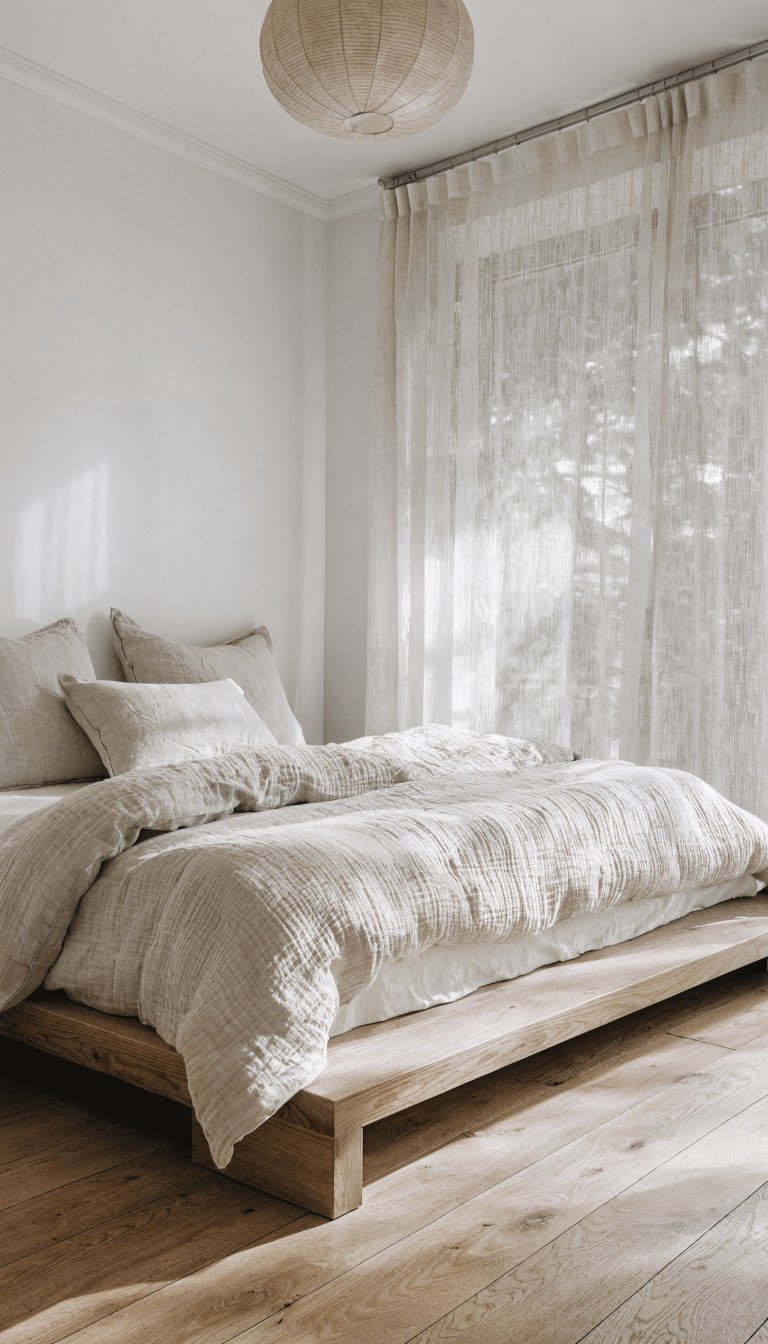
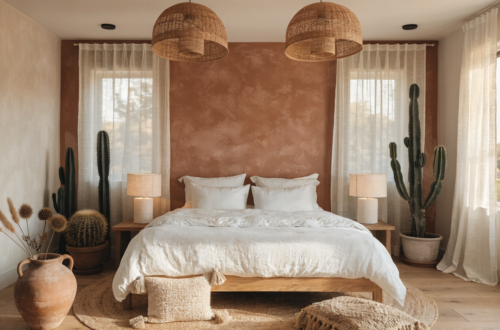
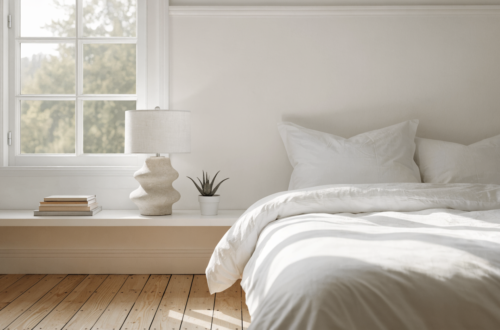
Forget the boxspring. This bedroom centers around a low platform bed frame in light oak that sits maybe eight inches off the floor, giving you that authentic Japanese simplicity vibe.
The bedding stays simple with organic cotton sheets in warm white and a stone-washed linen duvet in greige. One or two pillows max because this isn’t a pillow fort. A paper pendant lamp hangs overhead, casting the softest glow that makes overhead lighting feel aggressive by comparison.
The walls stay bare except for maybe one black-framed line drawing. A small wooden bench at the foot of the bed holds your current read and a cup of tea. That’s it. That’s the whole room, and it’s perfection.
Trust me, you’ll sleep better when your bedroom isn’t trying to do seventeen different things at once.
3. Functional Kitchen With Open Shelving and Muted Earthtones
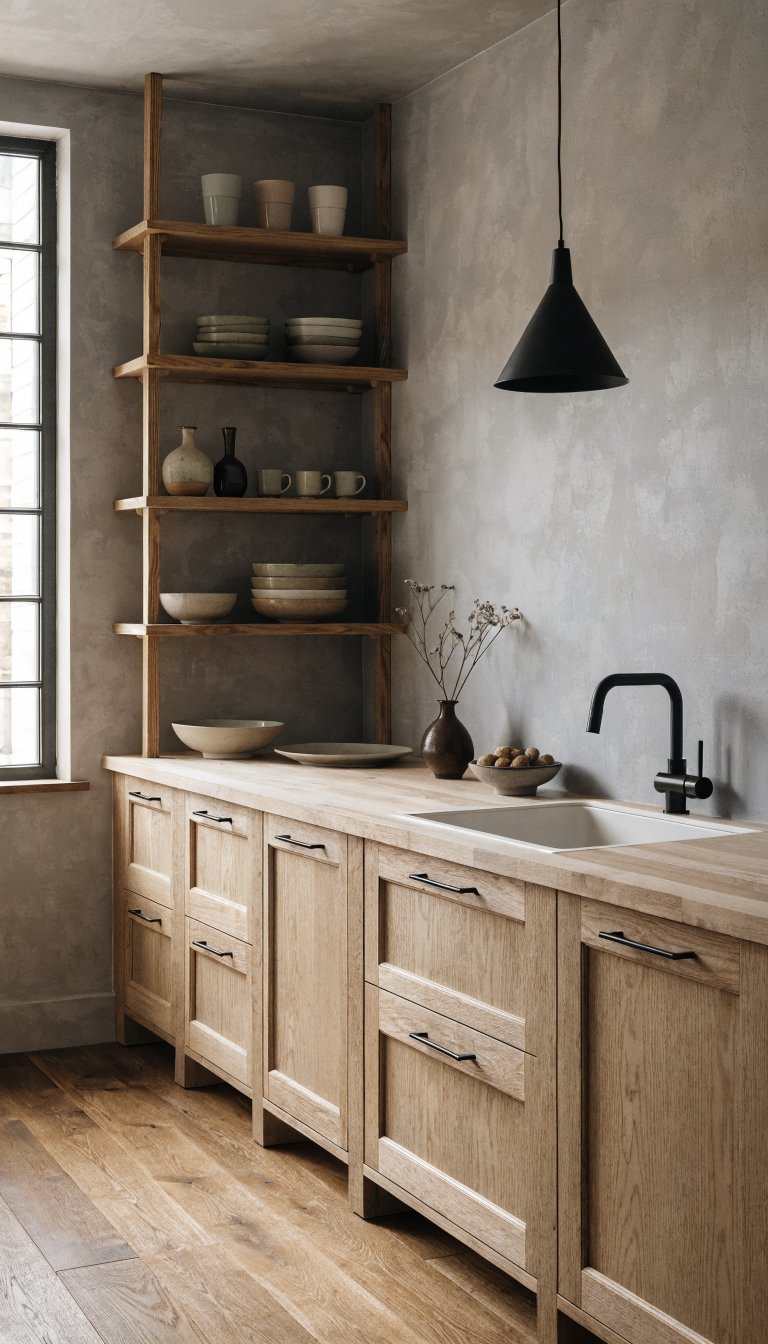
Open wooden shelves replace upper cabinets, displaying only your most-used dishes and cups. Everything earns its place here, which means no random promotional water bottles or chipped mugs hiding in the back.
The color palette leans into warm grays, soft blacks, and plenty of natural wood tones. Your matte black faucet and cabinet pulls add just enough contrast against light oak lower cabinets without feeling too modern or cold. A white oak butcher block countertop brings warmth and practicality.
Storage Solutions:
- Floating shelves in light wood (birch or ash)
- Ceramic containers for dry goods in cream and charcoal
- Woven baskets for produce storage
- Minimal counter appliances (only what you actually use daily)
The open shelving forces you to be intentional about what you keep, which honestly makes cooking more enjoyable when you’re not hunting through cabinet chaos.
4. Tranquil Home Office With Built-In Desk and Paper Screens
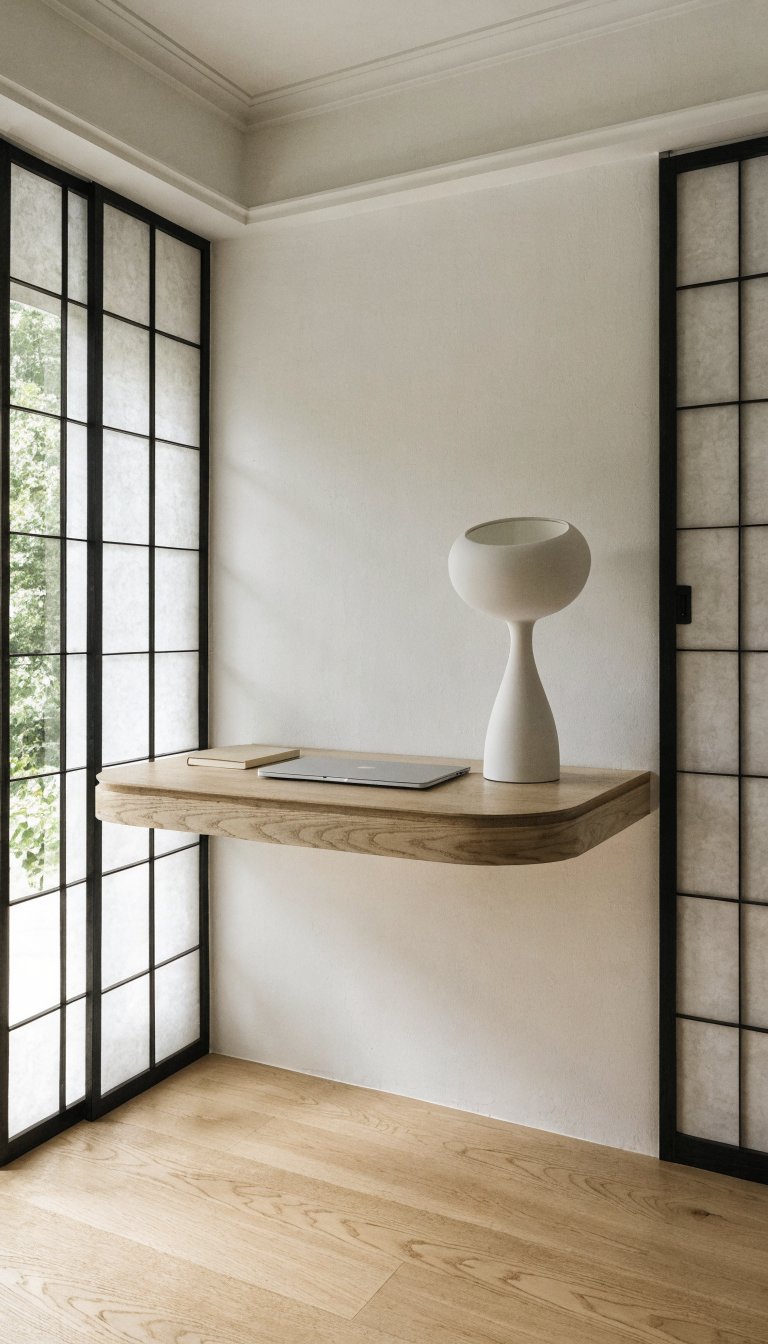
A wall-mounted floating desk in ash wood keeps the floor space open and your mind clear. The desk itself is beautifully simple—no drawers, no compartments, just a clean surface for your laptop and maybe a notebook.
The genius move here? A shoji-style sliding screen that separates your workspace from the rest of the room. When work ends, you literally close the screen and boom—your office disappears. A sculptural desk lamp in matte white ceramic provides task lighting without looking like standard office equipment.
Add one low-back wooden chair with a linen seat cushion, and maybe a small bonsai tree on a corner shelf. The restraint is the point. Your home office shouldn’t look like a WeWork threw up in your living room.
Perfect for anyone who works from home but refuses to let their job take over their entire aesthetic.
5. Spa-Like Bathroom With Soaking Tub and Stone Accents
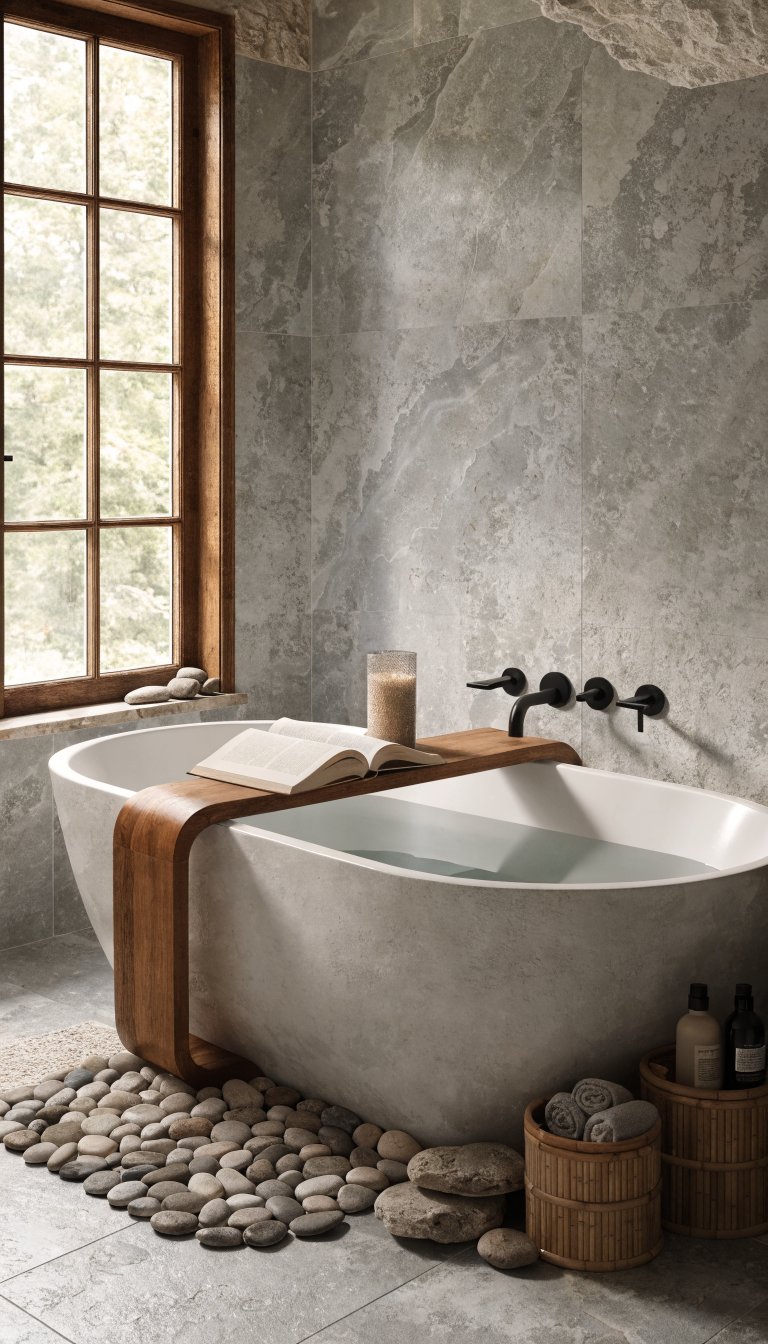
The centerpiece is obviously the deep soaking tub in matte white, positioned near a window if you’re lucky. The walls wear large-format porcelain tiles in soft gray that mimic natural stone without the maintenance drama.
A teak bath caddy holds your current book and a candle. A pebble bath mat gives you that stepping-on-river-rocks feeling every single morning. The black matte fixtures add subtle contrast, while bamboo storage containers keep your toiletries corralled but visible.
Essential Elements:
- Freestanding soaking tub (or retrofit your existing tub)
- Natural stone or stone-look tiles
- Minimal towel storage in open shelving
- One or two air plants in ceramic holders
- Cotton waffle-weave towels in white or beige
This bathroom makes you actually want to take baths instead of quick showers, which IMO is the ultimate luxury.
6. Cozy Reading Nook With Floor Cushions and Wabi-Sabi Pottery
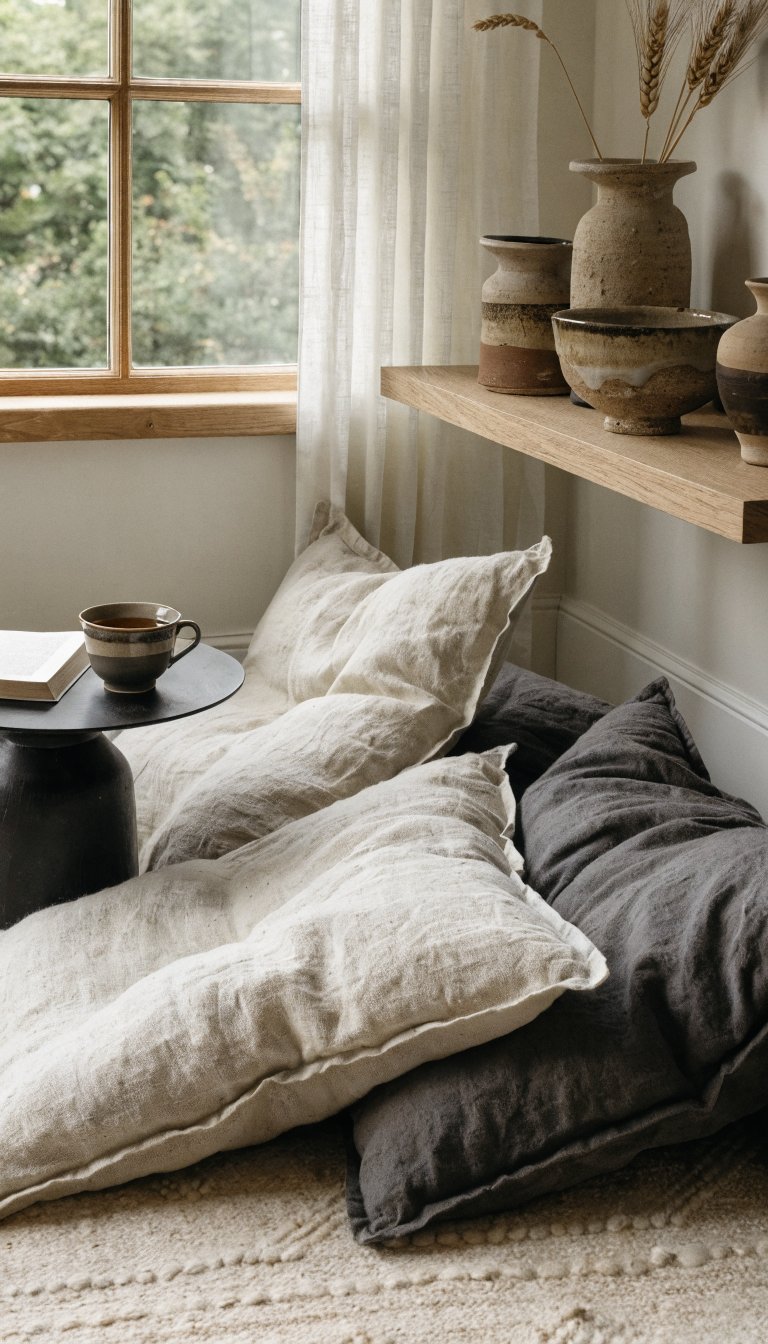
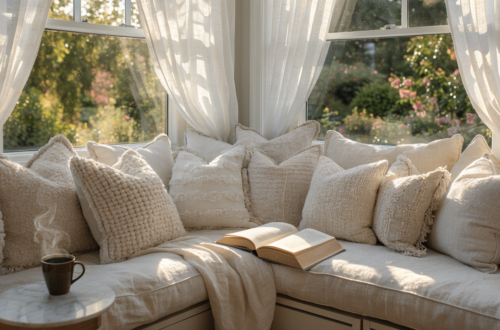
Who says you need a chair for a reading nook? This corner features a collection of oversized floor cushions in natural linen and charcoal cotton, layered over a handwoven wool rug in cream with subtle geometric patterns.
A small round side table in blackened steel holds your tea and current reads. The shelving is minimal—maybe a simple wall-mounted shelf in light oak displaying a few ceramics with intentional imperfections. We’re talking handmade pottery with visible throwing marks, uneven glazes, and organic shapes that celebrate the beauty in imperfection.
Natural light does most of the heavy lifting during the day, but you’ll want a adjustable floor lamp with a linen shade for evening reading sessions. The whole vibe screams “I have my life together and also excellent taste.”
Seriously, once you try floor seating for reading, regular chairs feel unnecessarily formal.
7. Minimalist Dining Room With Live-Edge Table and Wishbone Chairs
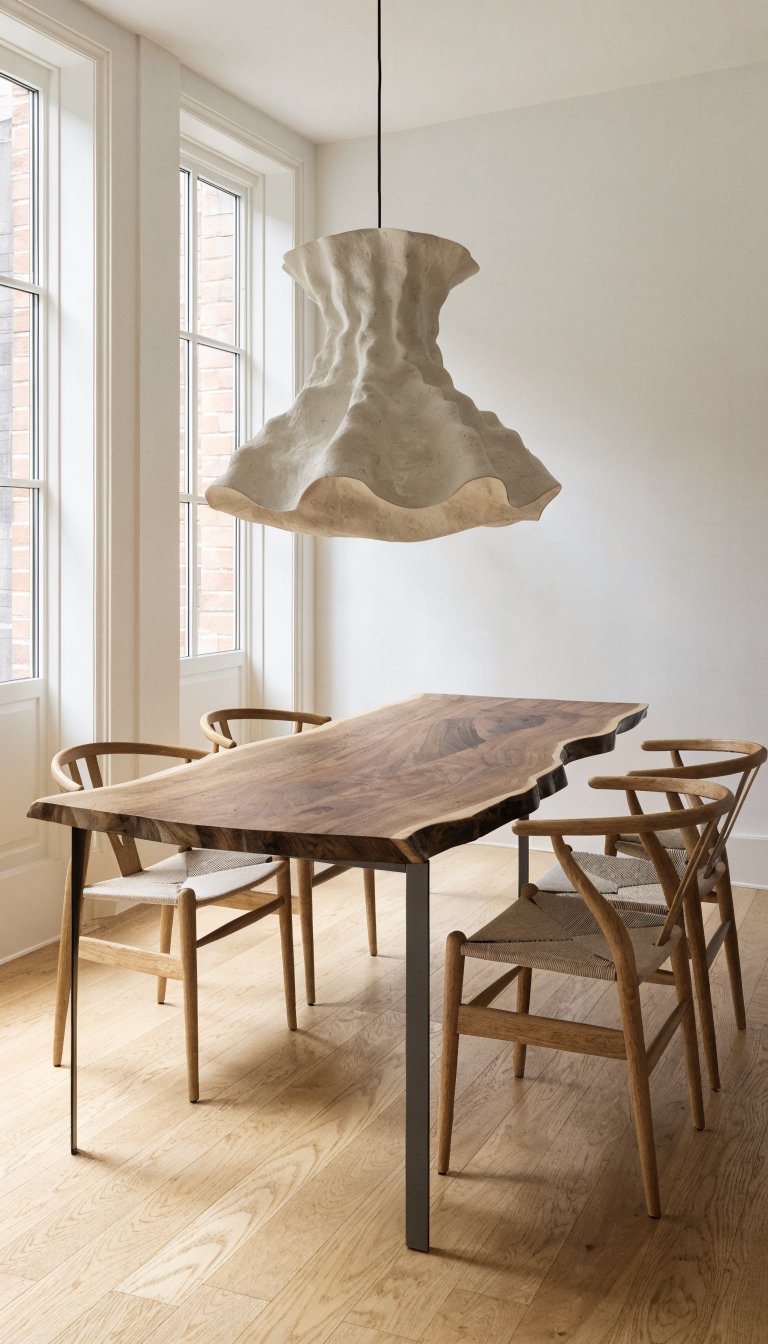
The star of this space is a live-edge dining table in walnut that seats six comfortably. The natural edge brings organic movement to an otherwise restrained room, and the simple steel legs keep it from feeling too rustic.
Surround it with Wishbone-style chairs in natural oak with woven paper cord seats—a perfect marriage of Scandinavian design and Japanese craftsmanship. A ceramic pendant light in an irregular shape hangs low over the table, casting warm light exactly where you need it.
The table stays mostly bare except during meals. Maybe a low ceramic bowl holds seasonal fruit, or a single stem vase displays one perfect branch. The discipline of keeping surfaces clear makes every meal feel a bit more special.
This is for people who believe dining rooms should be about gathering, not displaying your dishware collection.
8. Entryway With Hidden Storage and Vertical Garden Wall
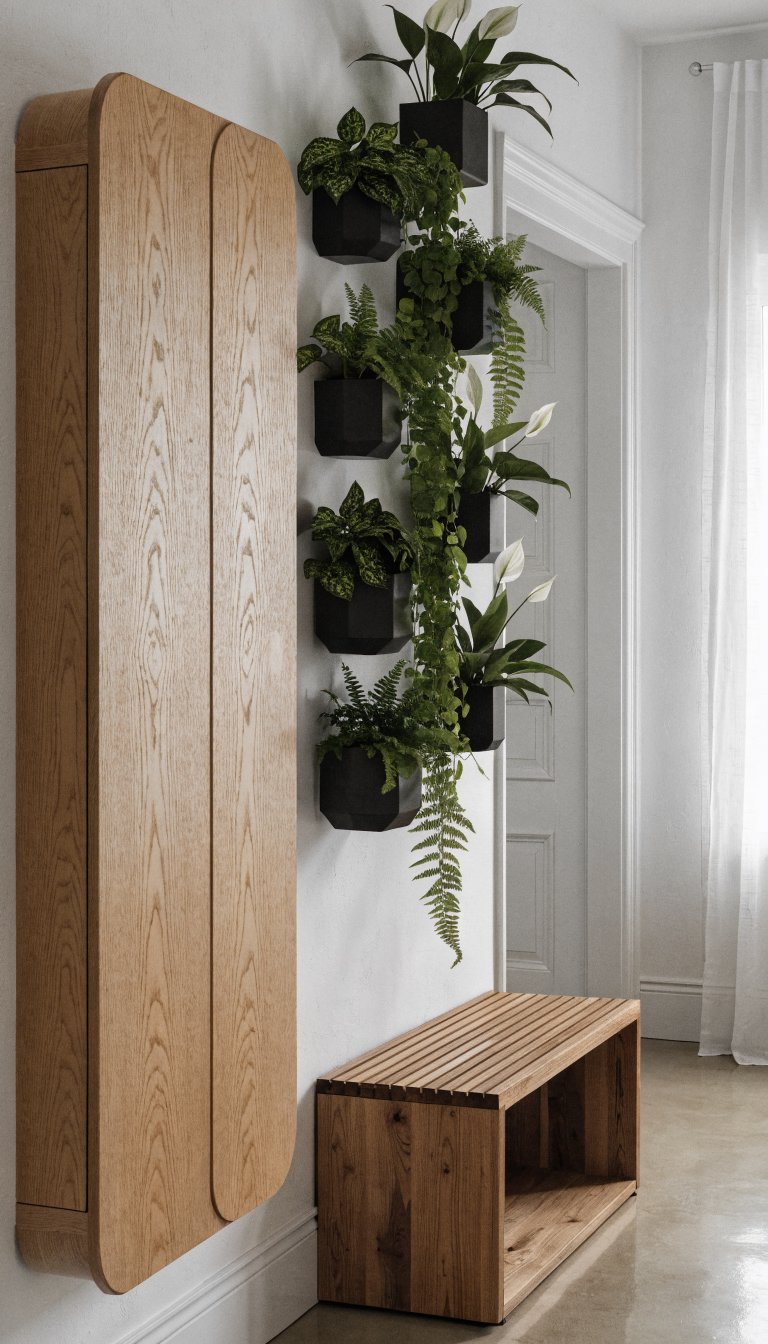
Your entryway sets the tone for the entire home, so this design features a wall-mounted cabinet in light maple with push-to-open doors—no visible handles, no visual clutter. Shoes, bags, and daily chaos hide behind those clean panels.
The opposite wall hosts a vertical garden system with pothos, ferns, and peace lilies in matte black planters. The greenery immediately signals “you’re entering a peaceful space” without saying a word. A simple wooden bench with hidden storage underneath provides seating while you change shoes.
Practical Touches:
- Wall-mounted hooks in brass or black for coats
- Small ceramic tray for keys and mail
- Full-length mirror with minimal black frame
- One statement plant in a floor planter
FYI, the hidden storage is what keeps this from looking like a dumping ground by Wednesday afternoon.
9. Meditation Corner With Tatami Mat and Shoji Screen
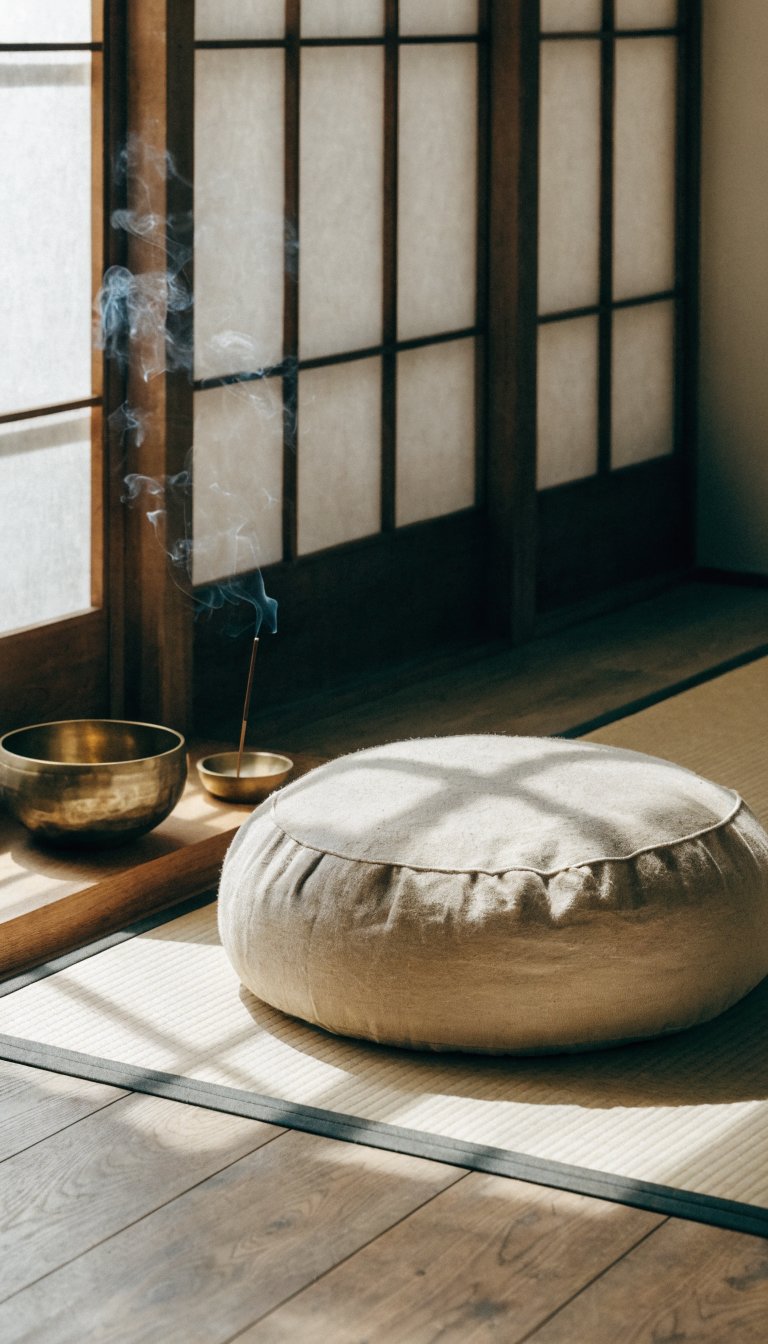
Carve out a dedicated meditation space with a traditional tatami mat or natural fiber mat as your foundation. A low zafu cushion in undyed cotton provides comfortable seating without demanding attention.
Use a folding shoji screen to define this zone within a larger room. When you need to meditate, you unfold the screen and create instant separation from the rest of your space. A small wooden shelf at floor level might hold a singing bowl, incense, or nothing at all.
The beauty is in the restraint. No motivational quotes, no Buddha statues unless they’re meaningful to your practice, no “zen” aesthetics that feel performative. Just a quiet corner that invites you to actually sit down and breathe.
This works even in tiny apartments because it requires maybe four square feet total.
10. Gallery Wall With Black Frames and Negative Space
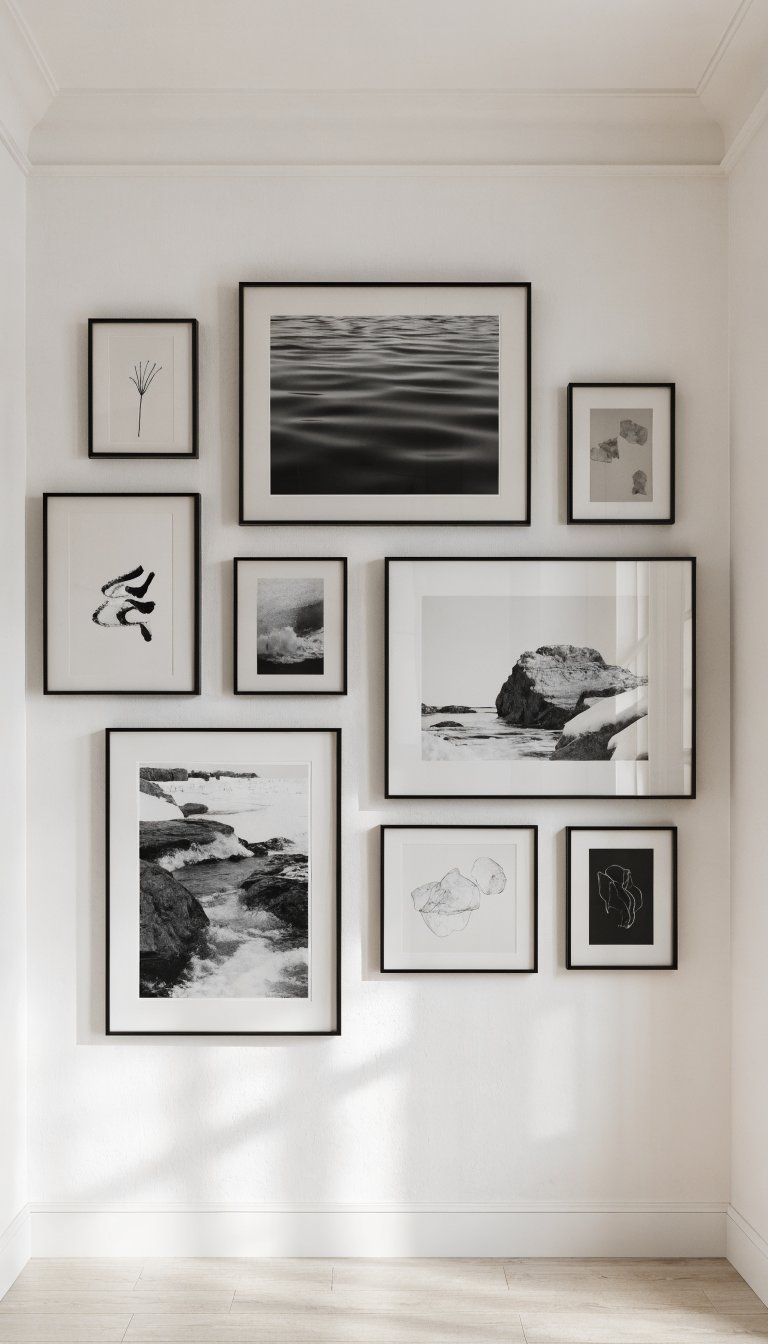
This isn’t your grandma’s gallery wall. We’re talking identical black frames in two sizes max, arranged with generous breathing room between each piece. The art itself leans toward black and white photography, minimalist line drawings, and abstract brush strokes.
The key is negative space—the wall color (warm white or soft gray) matters as much as what’s hanging on it. You’re not trying to cover every inch. Some pieces hang in pairs, others stand alone, but nothing feels crowded or chaotic.
Choose art that means something to you rather than matching your couch. The cohesion comes from the consistent framing and thoughtful spacing, not from buying a pre-matched set from a big box store.
Perfect for renters who can’t paint but want to add personality without permanent commitment.
11. Bedroom Closet With Open Wardrobe and Capsule Organization
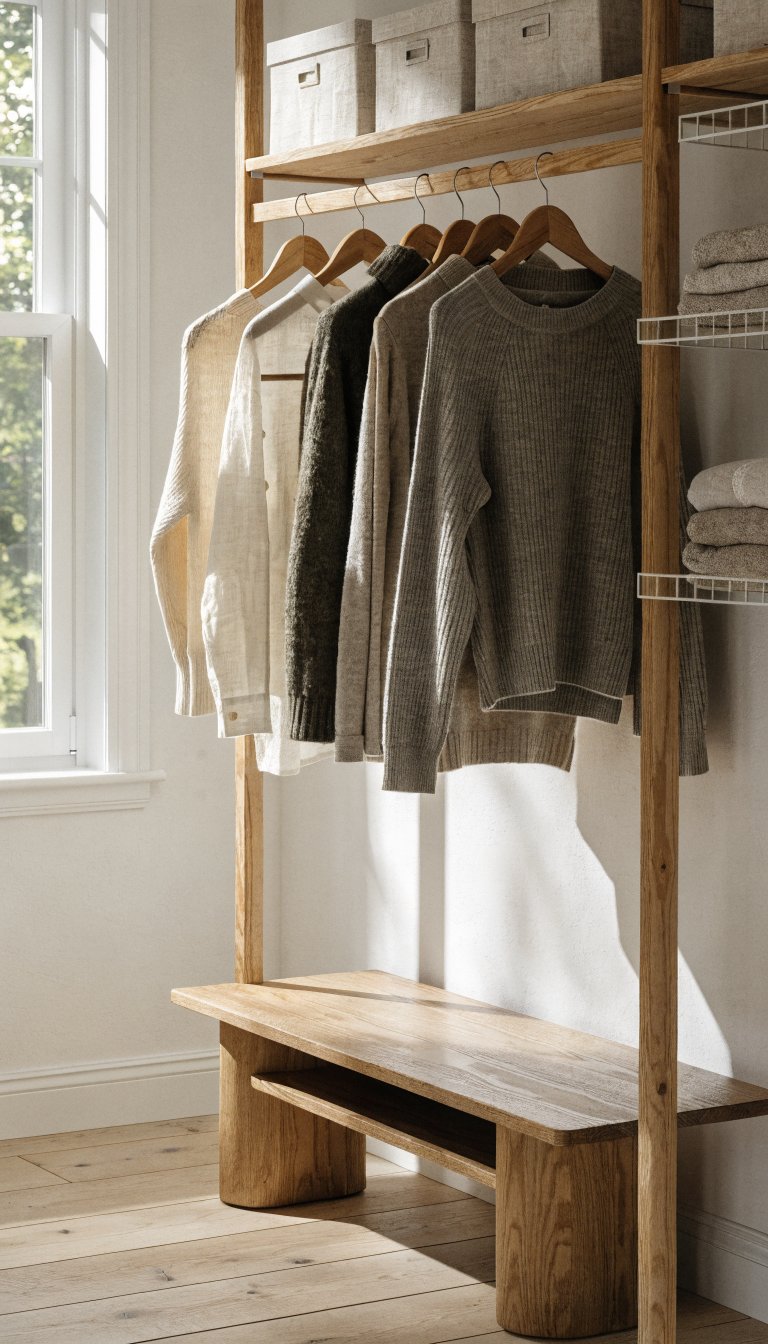
Ditch the stuffed closet for an open wardrobe system with a wooden clothing rack in white oak and simple wire shelving for folded items. When everything’s visible, you only keep what you actually wear, which is liberating.
Your clothes hang on matching wooden hangers—yes, all matching, because wire hangers are chaos incarnate. Linen storage boxes in neutral tones sit on upper shelves for seasonal items or accessories. A low wooden bench provides a place to sit while getting dressed and stores shoes underneath.
Organization Strategy:
- Color-coordinate clothing from light to dark
- Keep only current season items accessible
- Use cedar blocks instead of harsh fresheners
- Display favorite accessories like art
- Maintain significant empty space on racks
The exposed wardrobe forces intentionality about what you own, and surprisingly, it looks way better than closet doors ever did.
12. Sunroom Lounge With Paper Lanterns and Low Tea Table
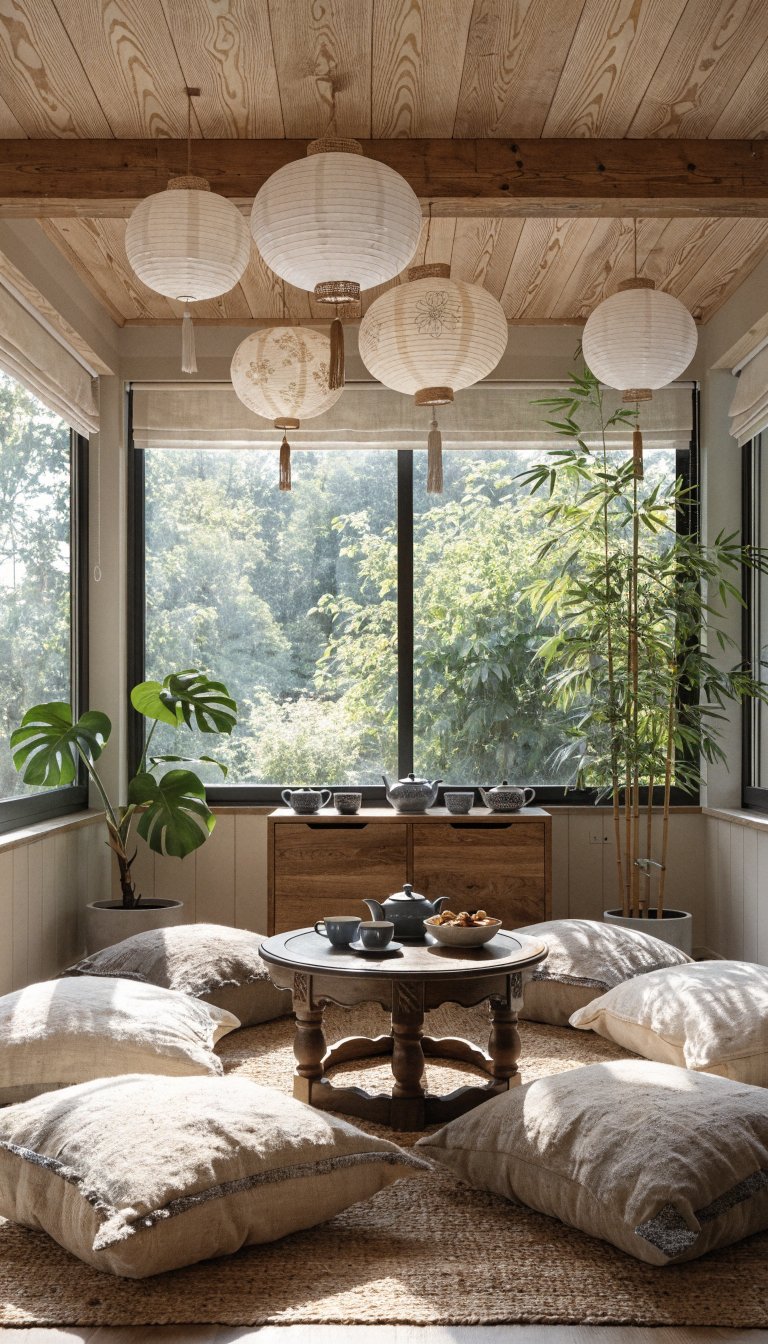
Transform your sunroom into a Japanese-inspired tea lounge with a low wooden table surrounded by floor cushions in natural fabrics. Paper lanterns in various sizes hang at different heights, creating soft, diffused light for evening gatherings.
Large potted plants—think monstera, bamboo, or large ferns—frame the windows without blocking natural light. A low wooden sideboard stores tea supplies, cups, and maybe a few books. The floor stays clear except for a natural fiber rug that defines the seating area.
Use bamboo blinds or linen curtains in warm white to filter harsh afternoon sun. The whole space should feel like an extension of your garden, blurring the line between inside and outside.
This is your entertaining space that doesn’t require everyone to perch uncomfortably on formal furniture. Relaxed, grounded, and perfect for long conversations over tea.
Conclusion
The beauty of Japandi design is that it works with your life instead of against it. Pick one room, start with the pieces that speak to you, and watch how quickly “less but better” becomes your new favorite way to live. Your peaceful, clutter-free home is just a few intentional choices away.