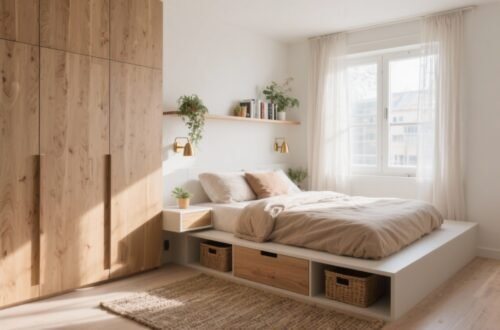
You don’t need a Pinterest-perfect house to have a minimalist bedroom that looks calm, cozy, and ridiculously put-together. You just need a plan—and a tiny sprinkle of restraint. These 11 Minimalist Bedroom Tips & Ideas will help you clear the visual noise, keep the personality, and create a space that actually helps you sleep.
1. Start With a Calm Color Base
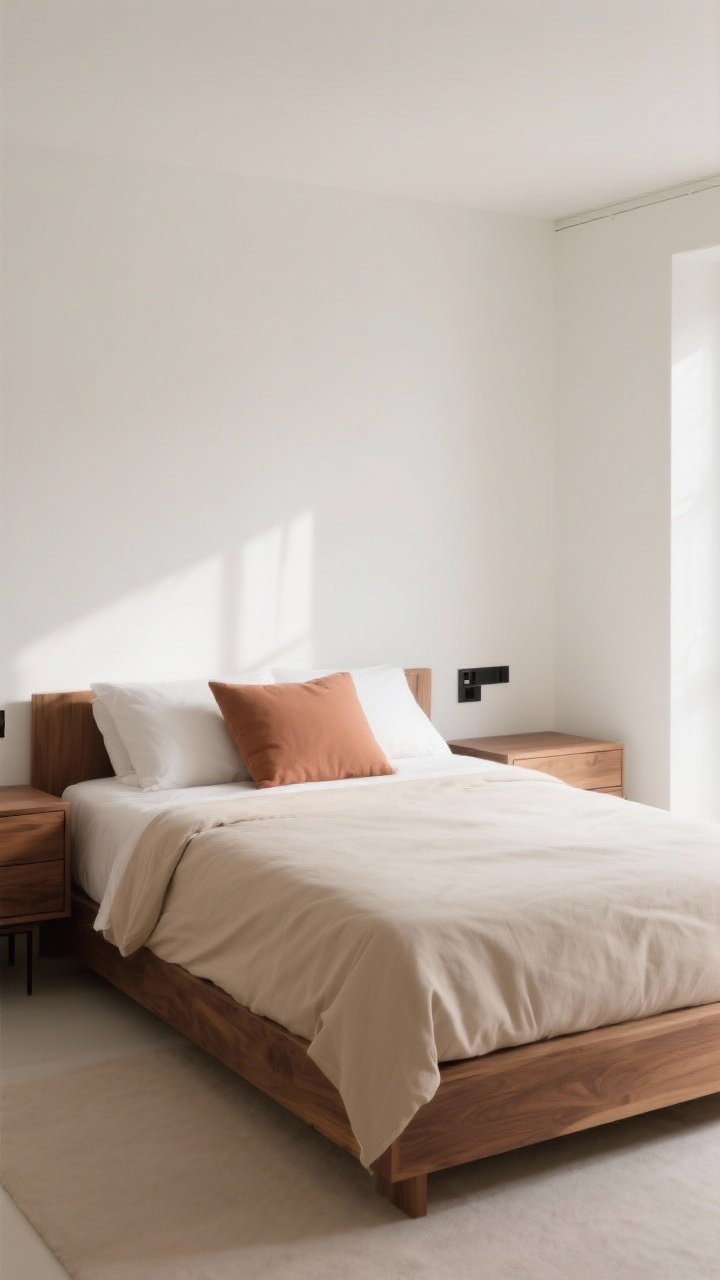
Minimalism doesn’t mean “all white everything,” but it does love a soft, cohesive palette. Think warm whites, greige, mushroom, taupe, muted clay, or cool pebble gray. Keep the base colors calm so your eyes can chill the second you walk in.
Color Pairings That Never Miss
- Warm and cozy: Swiss coffee walls + oatmeal bedding + walnut accents
- Modern and crisp: Soft gray walls + white bedding + black hardware
- Earthy and grounded: Clay beige walls + cream bedding + oak wood
Pro tip: If you love color, use it in one controlled moment—a throw pillow, a rug, or art—so the room stays serene, not shouty.
2. Edit Like a Stylist (But Nicer)
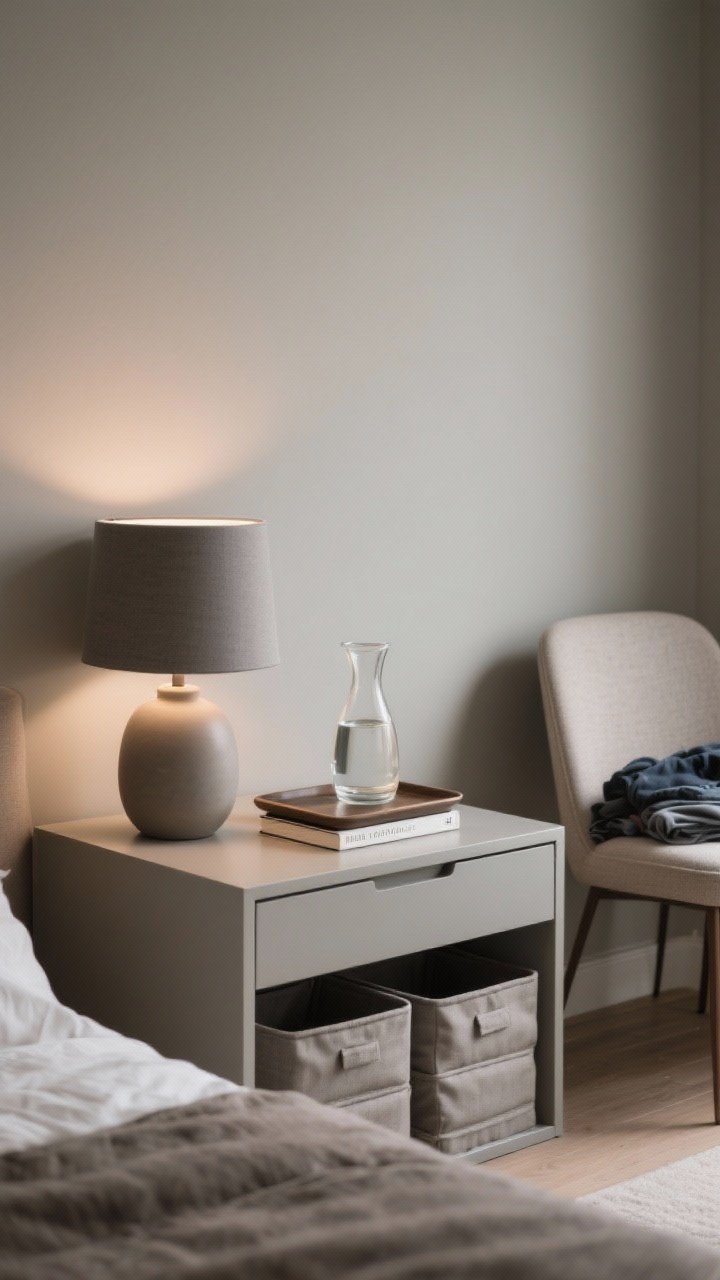
Before you buy anything, get ruthless (in a gentle, self-caring way). Remove duplicates, out-of-season clothes, and random “maybe one day” items. That chair piled with clothes? It’s retired now.
- One-in, one-out rule: New candle? Let an old one go.
- Surface audit: Nightstands should host only the essentials: lamp, book, water.
- Closet sweep: Store off-season clothes in stackable bins under the bed.
FYI: Minimalism is not about owning nothing—it’s about everything having a purpose (and a place).
3. Choose a Bed That Anchors the Room
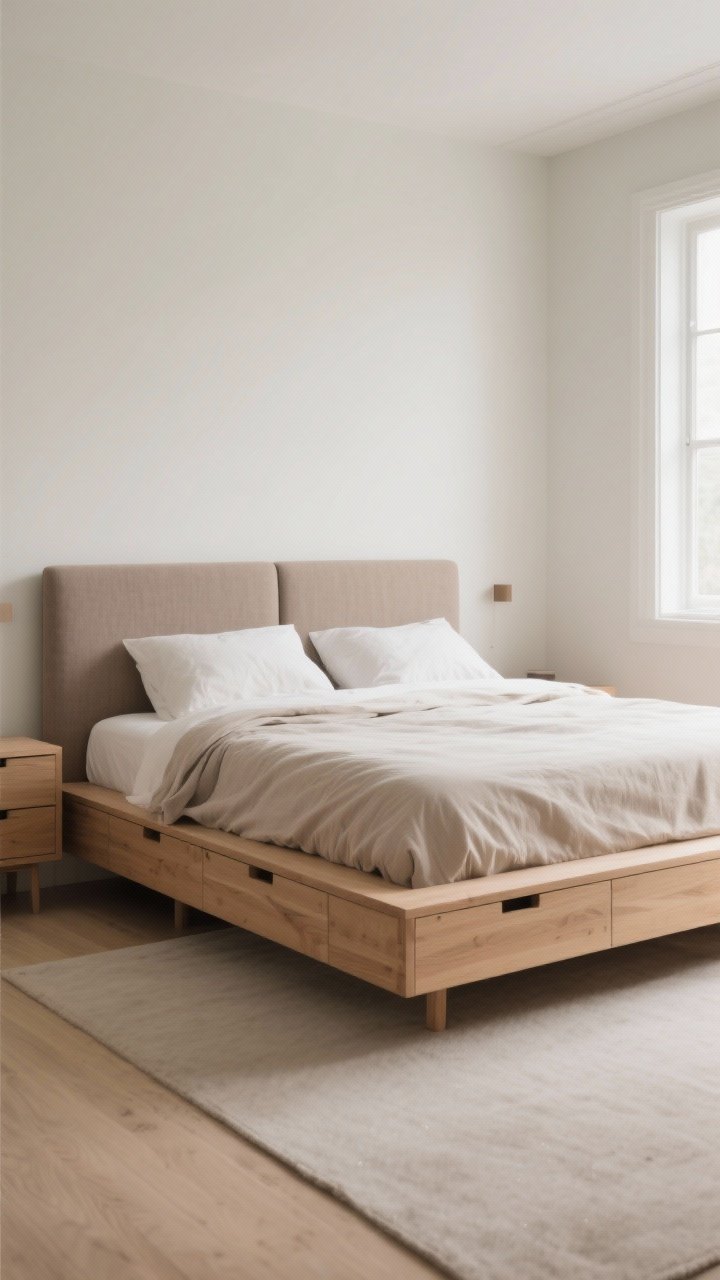
Your bed is the main character, so pick a frame that’s clean-lined and proportionate. Low-profile platforms, slim upholstered frames, and simple wood beds are minimalist wins. Skip the ornate headboards and heavy footboards—let the bedding and texture do the talking.
Smart Bed Choices
- Wood platform: Warmth + clean silhouette = timeless
- Upholstered headboard: Adds softness without visual clutter
- Storage bed: Built-in drawers that don’t scream “storage”
Keep the bed skirt simple or go without. Visual lines matter more than people think.
4. Layer Textures, Not Stuff
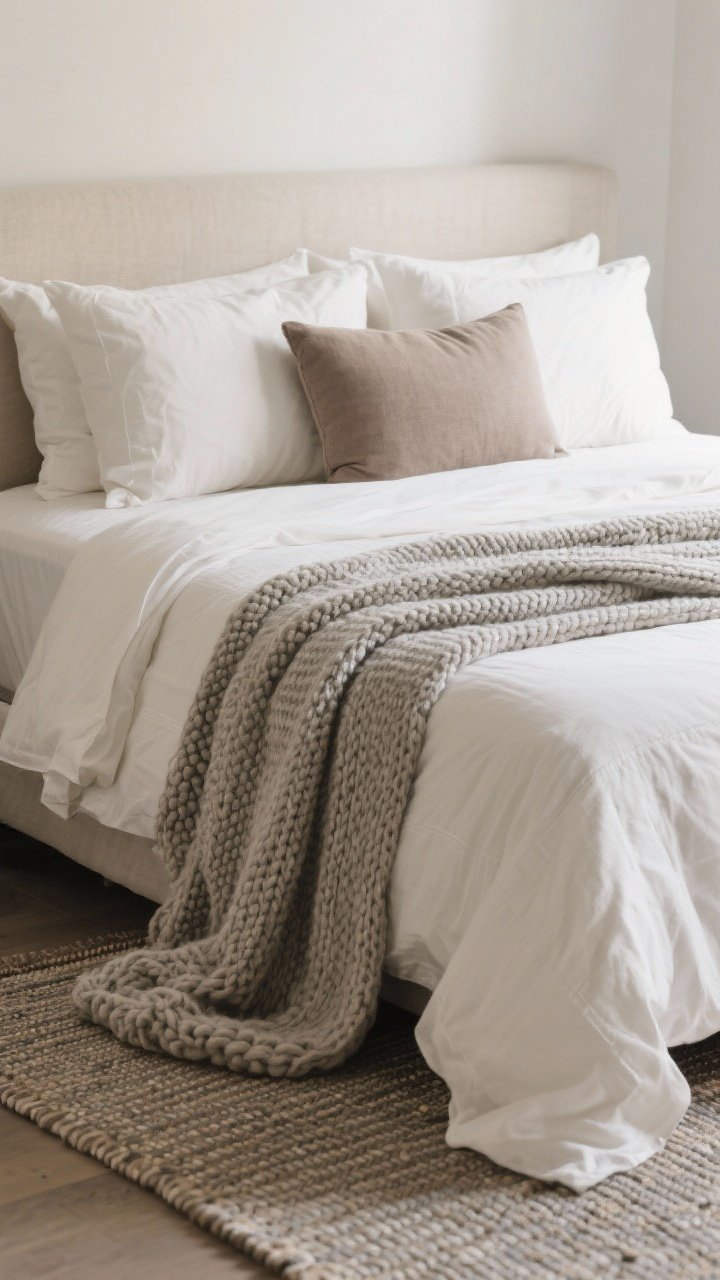
Minimal doesn’t have to feel cold. Skip the knickknacks and layer texture instead: nubby linen sheets, a quilted coverlet, a chunky knit throw, and a flat-weave rug. Neutrals feel richer when the textures contrast.
- Bedding formula: Percale sheets + linen duvet + one textured throw
- Pillow rule: Two euro shams + two sleeping pillows + one lumbar
- Rug choice: Jute, wool, or cotton flat-weave for that quiet-lux vibe
Stick to 3–4 textures max so it feels curated, not chaotic.
5. Simplify Your Nightstands
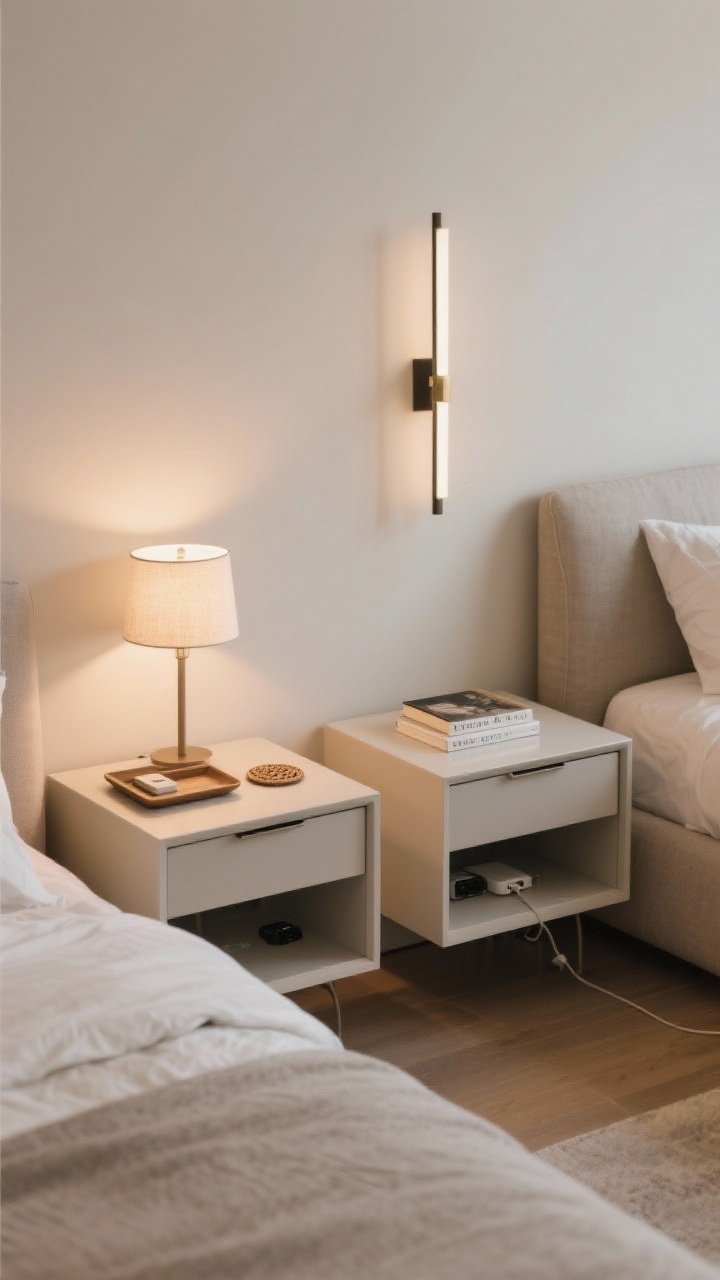
Let’s be real—nightstands are clutter magnets. Choose a pair with a drawer to hide the essentials and keep the top surface clean. Aim for a cohesive look on both sides, even if they’re not identical.
Nightstand Styling That Works
- Keep: Lamp, small tray, book, carafe or coaster
- Hide: Chargers, lip balms, meds—tuck them in a drawer organizer
- Matchy energy: If mixed styles, unify with matching lamps or shared color tones
Bonus: Use a slim wall sconce to free up precious surface space. Floating nightstands also make rooms feel larger.
6. Light the Room in Layers
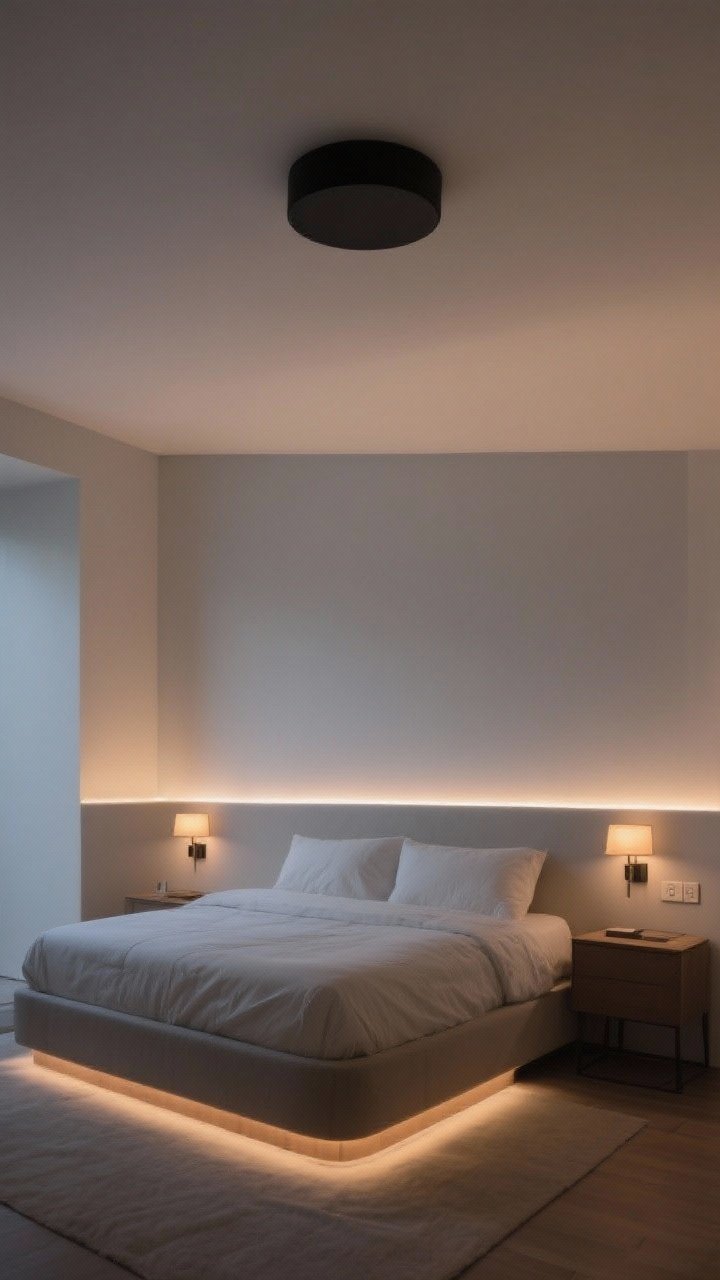
Good lighting is the secret sauce. Combine ambient, task, and accent lighting so your room feels intentional at every hour. Overhead light alone = interrogation room vibe. No thanks.
- Ambient: Flush mount or pendant that’s simple and matte (black, brass, or white)
- Task: Bedside lamps or sconces with warm bulbs (2700K–3000K)
- Accent: A tiny picture light, candle, or LED strip under the bed frame
Use dimmers everywhere. Your circadian rhythm—and your selfies—will thank you.
7. Curate Art That Breathes

Minimalist doesn’t mean art-free. It means art that’s intentional. Go for one oversized piece above the bed or a small, tidy pair. Negative space is part of the composition—let it do its job.
Art That Suits Minimal Bedrooms
- Abstracts: Soft shapes, tonal palettes
- Photography: Black-and-white landscapes, architectural details
- Textiles: Framed fabric or simple wall-hung fiber art
Keep frames simple—thin black, oak, or white. And hang art at eye level for a gallery feel, IMO.
8. Hide Storage in Plain Sight
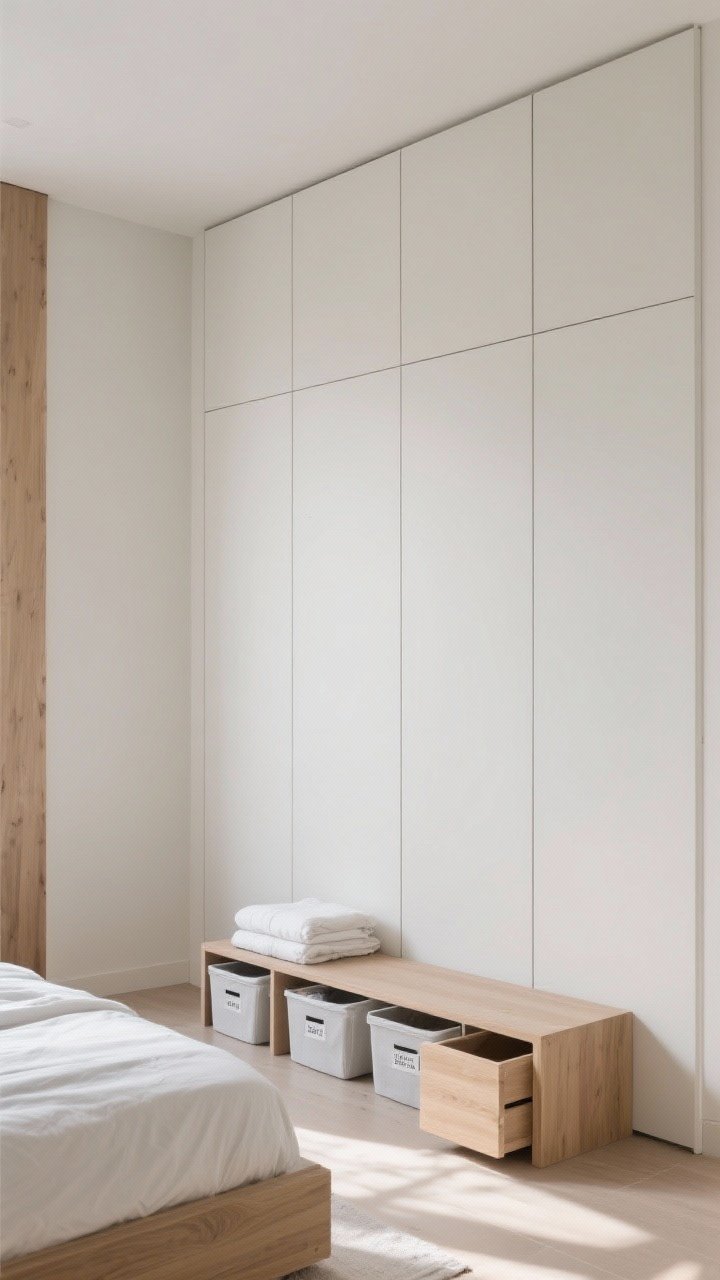
Visual clutter is the enemy. Storage solutions should blend in, not shout. Choose furniture with hidden compartments and stick to a consistent material palette so everything reads as one.
- Under-bed bins: Low, lidded, and labeled (no plastic avalanche)
- Built-ins or wardrobes: Floor-to-ceiling if possible for a clean wall plane
- Bench with storage: Perfect at the foot of the bed for linens and blankets
Use matching hangers in your closet. It sounds fussy, but it’s instant visual calm. Promise.
9. Keep the Window Treatments Airy
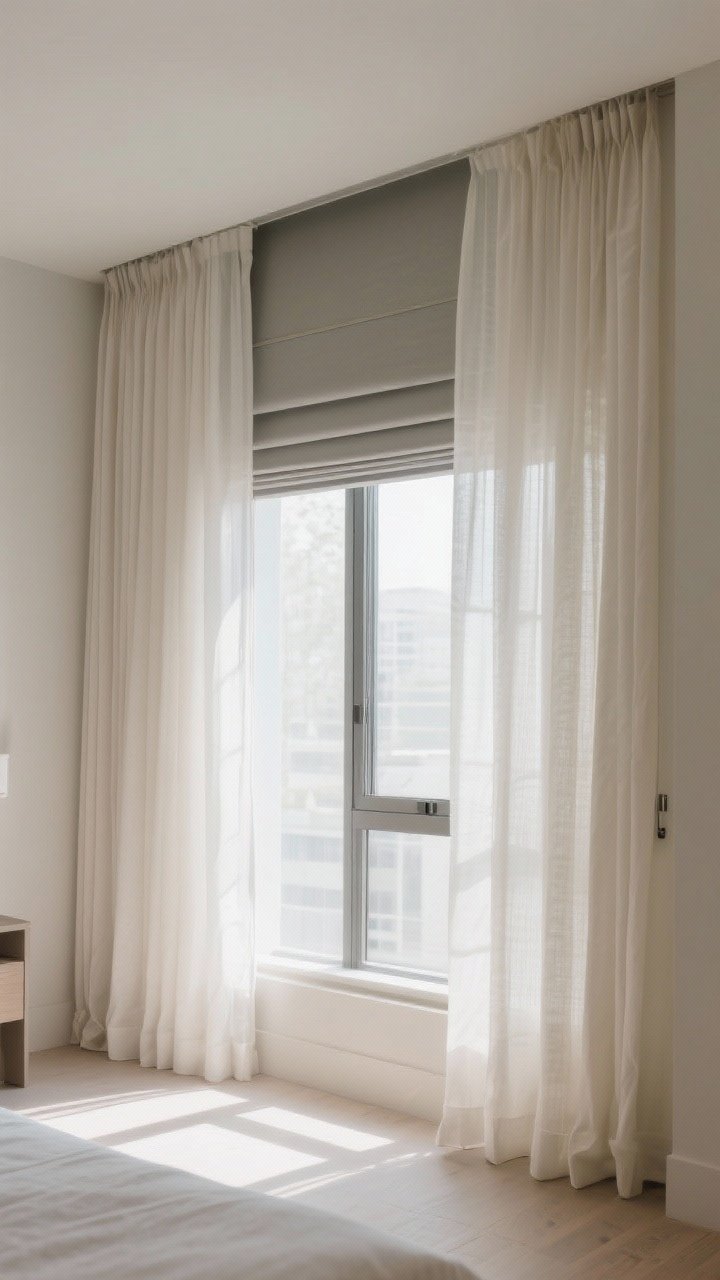
Windows are the lungs of the room. Let them breathe. Choose simple drapery or sleek shades that soften light without adding bulk.
Fail-Proof Window Options
- Linen curtains: Off-white or flax, hung high and wide to elongate walls
- Roman or roller shades: Clean lines, minimal hardware
- Blackout layer: Hidden behind sheers for hotel-level sleep
Pro tip: Floor-skimming or puddle-free hem keeps things tidy. No curtain high-waters, please.
10. Add Greenery (But Keep It Low-Maintenance)

A little life goes a long way. A single plant can soften the edges and add depth without clutter. Choose sculptural greenery that thrives in bedroom light.
- Best picks: Rubber plant, snake plant, ZZ plant, olive tree (faux is fine if it’s good)
- Vessels: Simple ceramic pots in matte finishes—white, sand, or charcoal
- Placement: One floor plant + one small stem on the nightstand is plenty
Keep it sculptural and sparse. You’re not opening a nursery—just adding a breath of calm.
11. Create Ritual Zones (Without Extra Stuff)
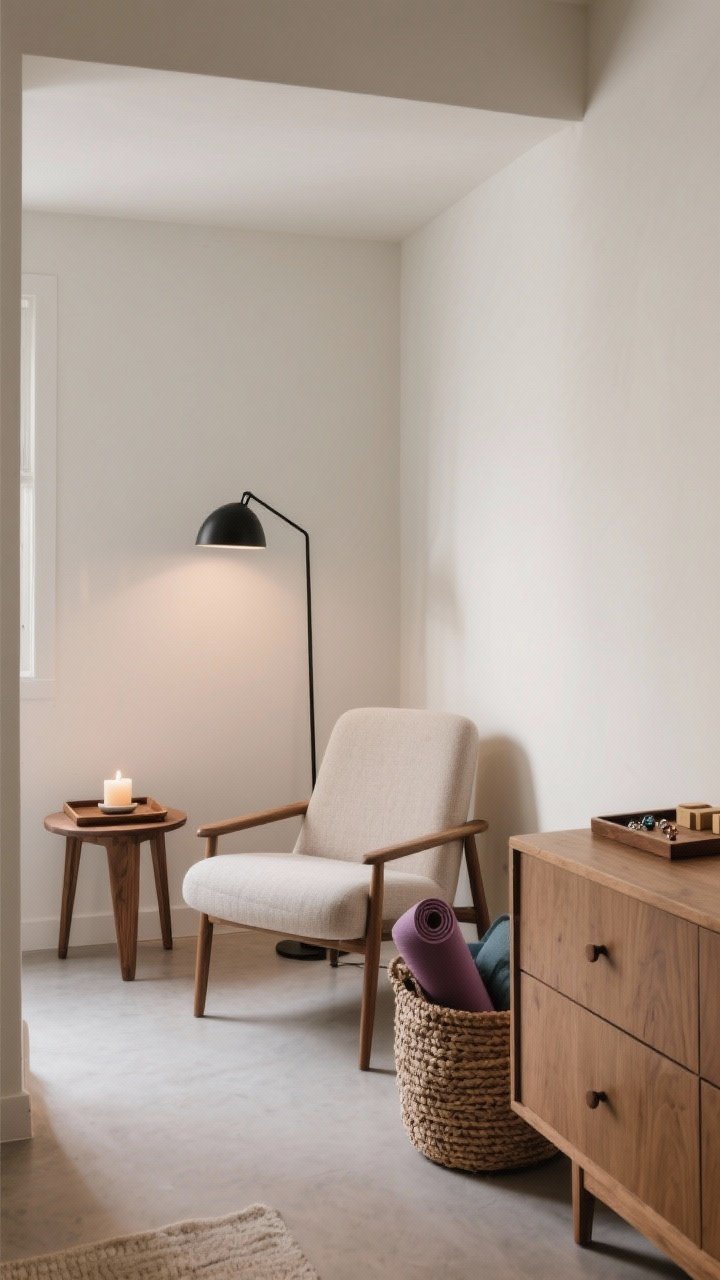
Minimalism should support your life, not fight it. Design tiny “ritual zones” that help you wind down—without adding clutter. Think function-first, then make it pretty.
Small Zones, Big Impact
- Reading nook: Slim chair + floor lamp + one side table
- Dresser top: Tray for jewelry, a candle, and a small dish—done
- Wellness corner: Basket for yoga mat and blocks; tuck it away after
Set boundaries for screens if you can. A charging station across the room helps you actually sleep (wild concept, I know).
Conclusion
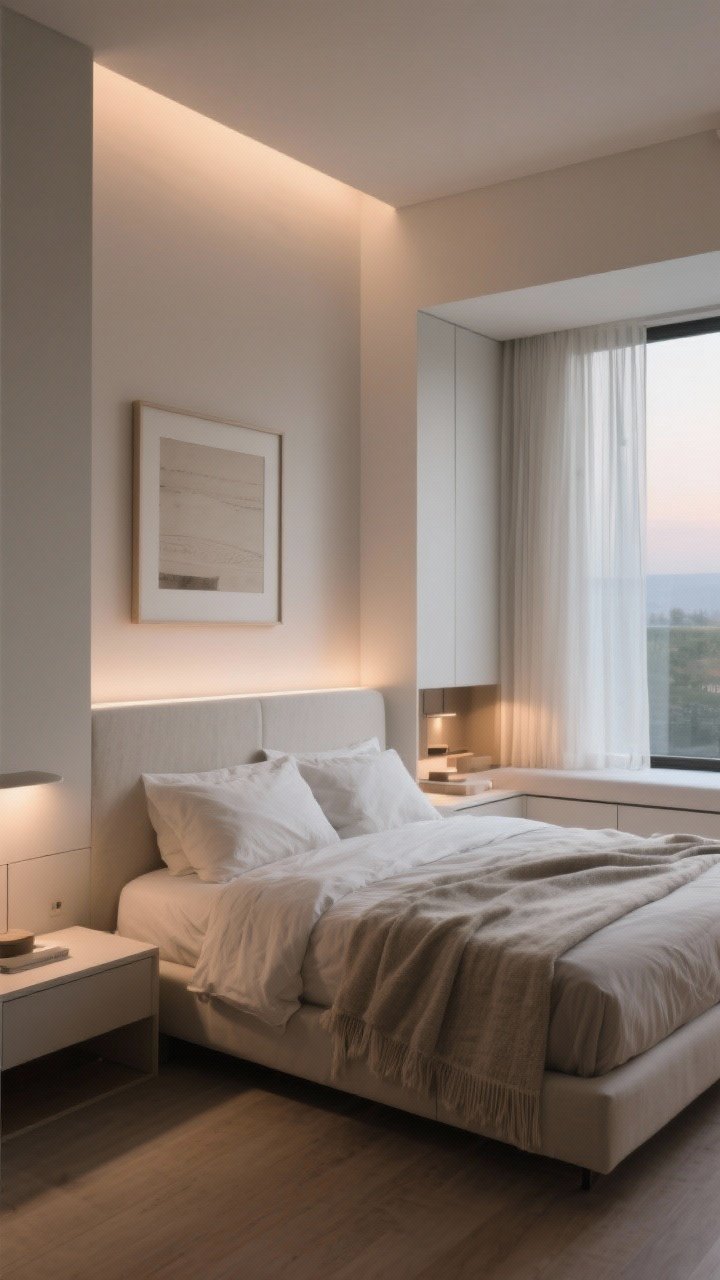
Minimalism isn’t about depriving yourself—it’s about curating calm. Keep your palette soft, your lines clean, and your storage sneaky. Layer texture, add a little art, invite in good light, and let the space breathe.
Start small. Edit a nightstand, swap your lamp bulbs, fold one drawer beautifully. Little moves, major impact. Your future well-rested self says thanks.