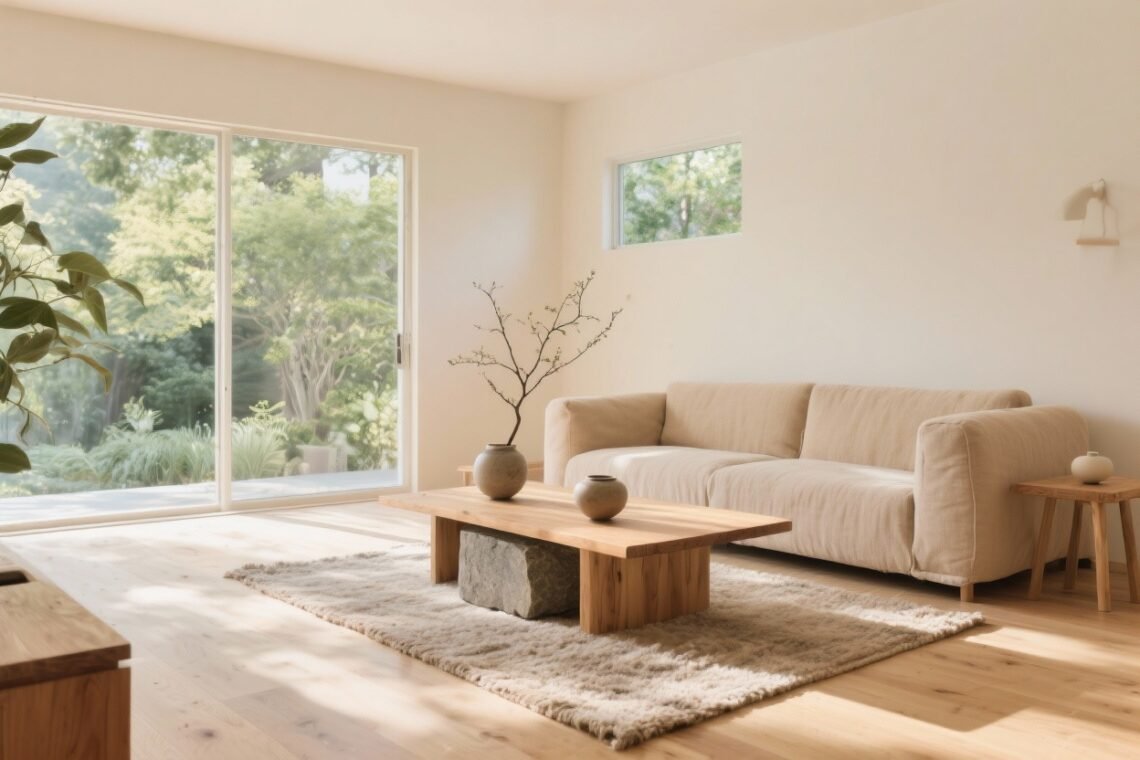
You want calm, clutter-free vibes that still feel warm and lived-in? Welcome to Japandi—the love child of Japanese minimalism and Scandinavian coziness. The easiest way to bring it home fast is with a coffee table that looks serene and works hard. Think clean lines, natural materials, and zero visual noise.
Below are 7 smart ways to choose (and style) a Japandi coffee table so your living room feels like an instant retreat. Grab tea. Let’s design your calm.
1. Honor The Grain: Solid Wood That Whispers, Not Shouts
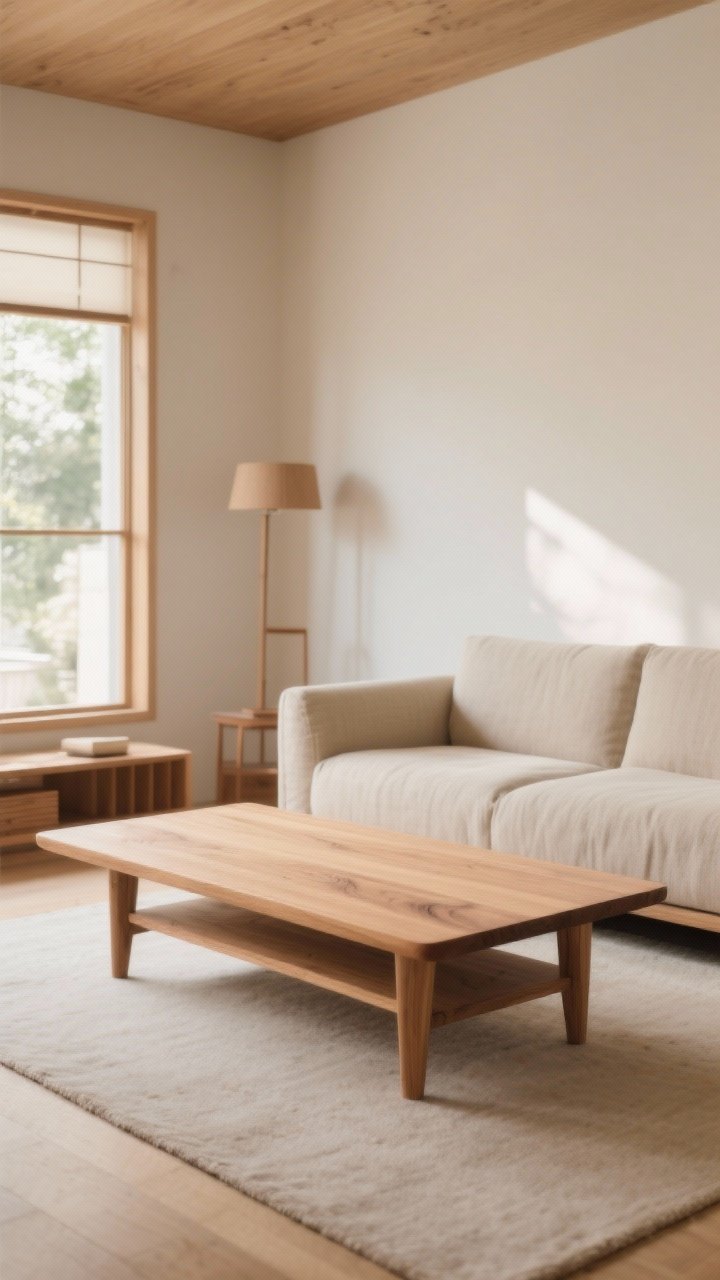
Japandi starts with nature. A coffee table in solid oak, ash, or walnut instantly warms the room without trying too hard. The trick is to let the wood grain be the star—no glossy lacquer, no ornate legs, just clean forms and soft edges.
What To Look For
- Low profiles with rounded corners (they feel softer and safer).
- Matte finishes that celebrate texture over shine.
- Visible joinery or simple slab tops that show craftsmanship.
FYI: Walnut adds mood, oak keeps things bright. Either way, it’s an instant “I meditate and moisturize” energy.
2. Stone, Ceramic, And Limewash: Calm Surfaces With Soul

If wood isn’t your thing, go for stone or ceramic. Honed travertine, tumbled limestone, or a limewashed plaster coffee table brings a tactile, earthy calm. The finish should be soft and matte—no mirror gloss here.
Pairing Tips
- Travertine + oak side tables = chef’s kiss balance.
- Keep the palette sandy: creams, putty, mushroom, taupe.
- Add a linen or jute rug underneath to keep it grounded.
PSA: Stone can be heavy, both visually and literally. Go for slimmer silhouettes or open bases to keep it airy.
3. Oval, Round, Or Soft Rectangle: The Peaceful Geometry

Sharp corners scream “corporate.” Japandi says curves. Ovals, circles, and rounded rectangles feel more organic and help flow around the room. They also play nice with sectionals and compact spaces.
Right Shape, Right Space
- Round for small rooms and tight walkways—no hip bruises.
- Oval for sectionals or long sofas—visually elongates the space.
- Soft rectangle if you love symmetry but want gentler edges.
Bonus: Curved edges make even chunky pieces feel calm and intentional.
4. Low And Loungey: Proportions That Instantly Relax
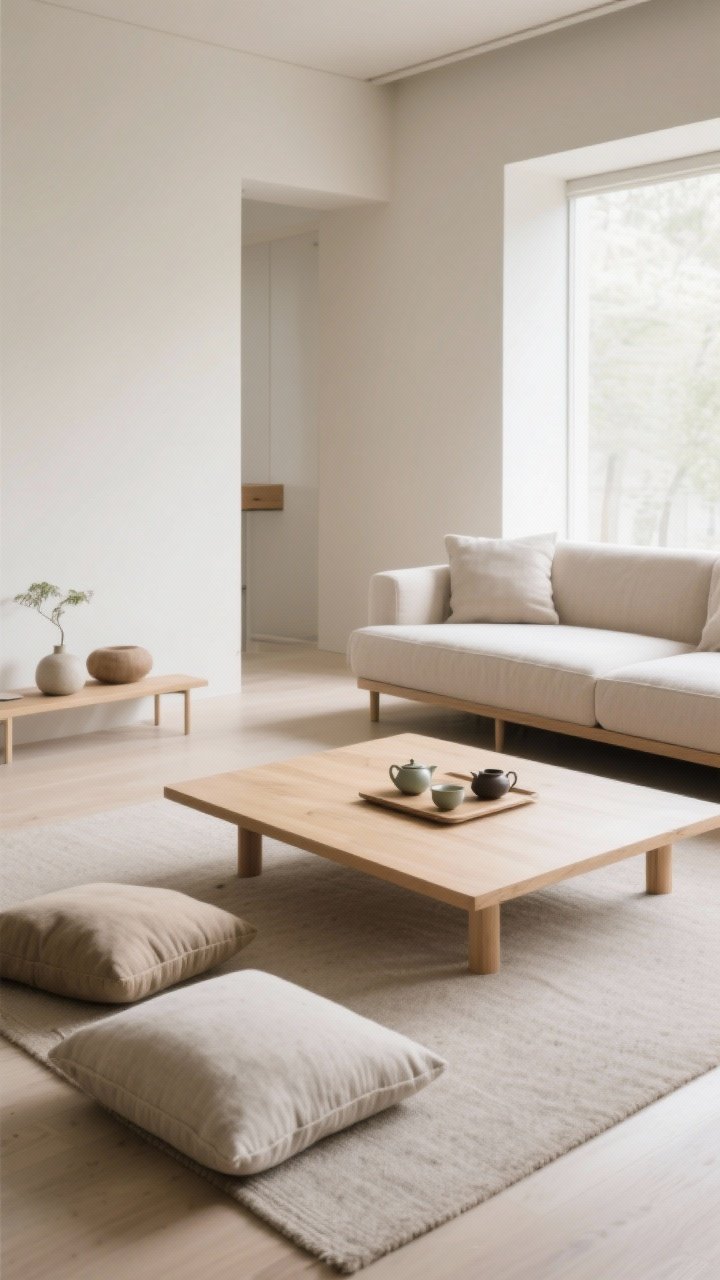
Japandi coffee tables tend to sit lower than traditional options. The lower height pulls your eye downward, making the room feel spacious and grounded. It’s like a visual exhale.
Proportion Rules (That Actually Help)
- Height: Aim for 1–2 inches lower than your sofa seat height.
- Length: About two-thirds the length of your sofa.
- Clearance: Leave 16–18 inches between sofa edge and table.
IMO, low tables + floor cushions = instant tea ritual moment. You’ll use your living room way more.
5. Storage Without The Clutter: Open Shelves, Trays, And Smart Styling
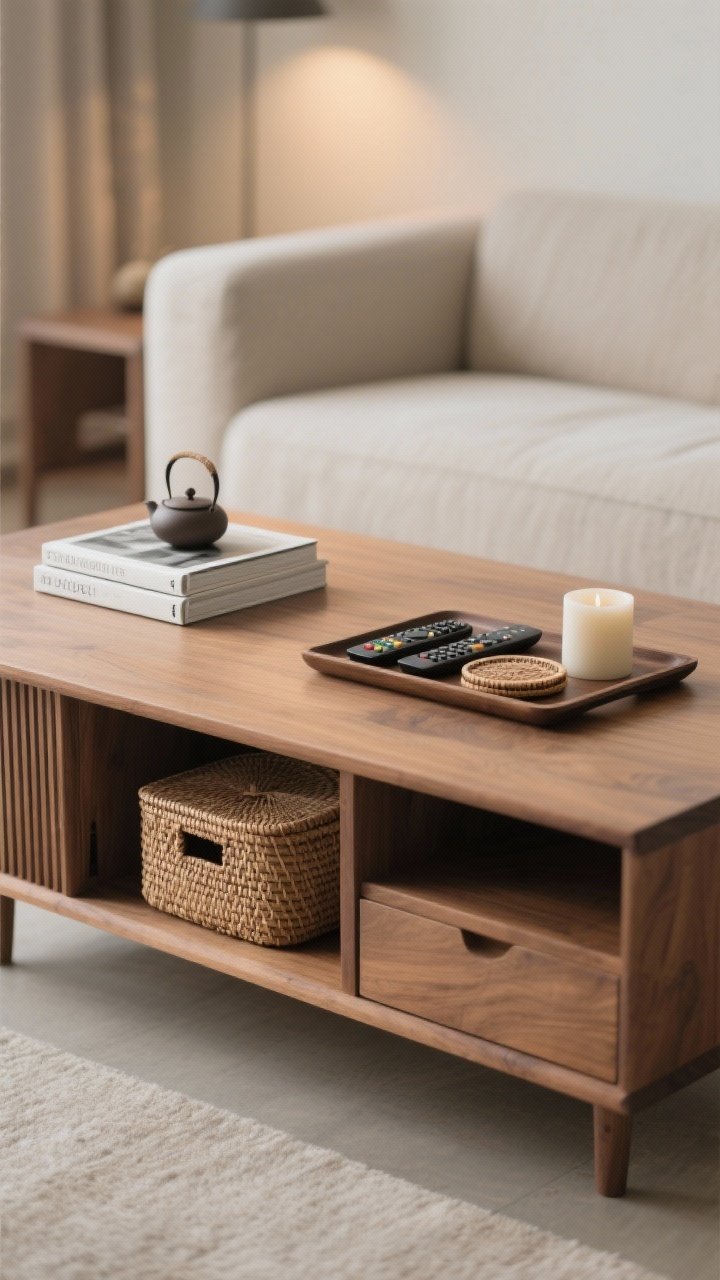
Japandi is not anti-storage—it’s anti-chaos. Choose tables with discreet shelves, removable trays, or inset drawers to hide the visual noise while keeping everyday items close.
Keep It Minimal, Not Bare
- Use a shallow tray for remotes, coasters, and a minimalist candle.
- Stack two design books max—no leaning towers, please.
- Hide extra stuff in a woven lidded basket under an open shelf.
Think “curated tea ceremony,” not “I forgot to clean.” Your table should breathe.
6. Two’s Company: Nesting Tables And Mixed Materials
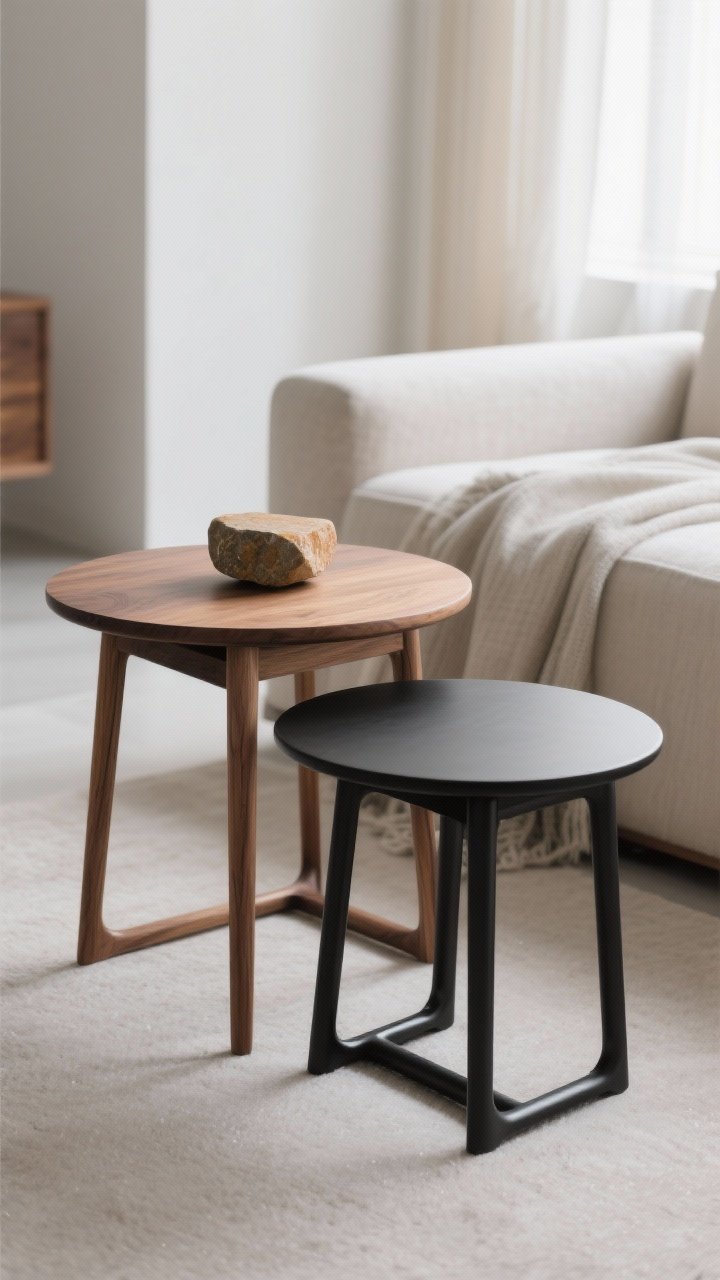
Nesting tables are a Japandi secret weapon. You get flexibility for guests, and the layered look adds depth without clutter. Bonus if you mix materials the quiet way: oak + matte black metal, or ash + stone.
Mix, Don’t Mash
- Keep color contrast subtle—mid-tone wood with warm stone beats high-contrast black and white.
- Choose one dominant material and one accent so it feels cohesive.
- Stagger heights slightly for a relaxed, asymmetrical composition.
It’s like a capsule wardrobe for your furniture—everything plays nice together.
7. Styling The Zen Way: Intentional Objects, Soft Glow, Living Green
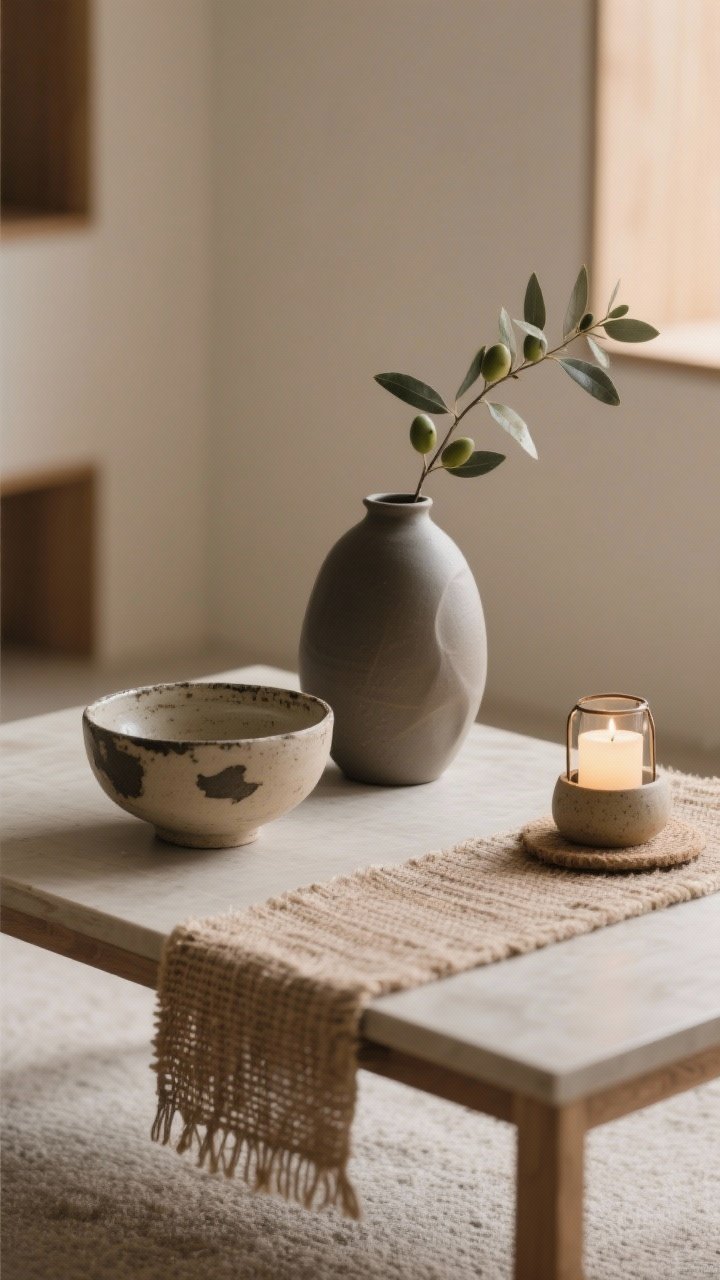
Now for the fun part: styling. Japandi decor is all about intentionality. A few meaningful objects, lots of negative space, and textures that feel good to the touch.
Keep It Calm, Keep It Curated
- One sculptural vase with a single branch (olive, magnolia, or eucalyptus).
- Hand-thrown ceramics instead of shiny decor—matte finishes win every time.
- Soft lighting via a small table lantern or candle in a ceramic holder.
- Natural fiber runner or linen coaster to layer a bit of texture.
For personality, add a tiny wabi-sabi moment—something imperfect and beautiful. A slightly irregular bowl? A stone you found on vacation? That’s the soul.
Quick Care Tips
- Use felt pads under decor to protect finishes.
- Wipe with a dry microfiber cloth; skip harsh cleaners.
- Seal stone surfaces annually to prevent stains.
FYI: Negative space is part of the design. Resist the urge to fill every inch.
Shop-The-Look Ideas
- Solid oak slab coffee table with rounded corners.
- Travertine pedestal round table in honed finish.
- Nesting duo in ash and matte black steel.
- Limewash plaster oval with waterfall edges.
Final thought: Pick a table that makes you want to slow down. If it makes you breathe deeper when you look at it, you nailed the Japandi vibe.