Let’s be real: clutter is the enemy of calm. If your apartment feels like it’s closing in on you, Japandi—that dreamy blend of Japanese minimalism and Scandinavian coziness—might be your design soulmate. Think clean lines, natural textures, and peaceful vibes that don’t feel sterile. Ready to make your place look bigger, calmer, and low-key luxurious? Let’s dive in.
1. Start With a Calm, Neutral Base

Japandi is basically a love letter to neutral color palettes. Soft whites, warm beiges, gentle grays, and earthy taupes set the tone. It’s like hitting mute on visual noise.
Why It Works
Minimalist backdrops make your space feel airy and help your favorite pieces shine. Plus, it’s easier to mix textures without creating chaos.
- Walls: Go for off-white or warm gray—avoid cool whites that feel clinical.
- Floors: Light wood tones (oak, birch, ash) scream Japandi without trying.
- Accents: Layer in clay, sand, charcoal, and muted sage for depth.
FYI: If you rent, removable paint or peel-and-stick wall panels can give you that serene vibe without a security deposit meltdown.
2. Choose Low, Slim Furniture With Soul

Japandi furniture is all about low profiles and clean lines. It keeps sightlines open and makes small apartments feel larger. But it’s not just minimal—it’s intentional.
What to Look For
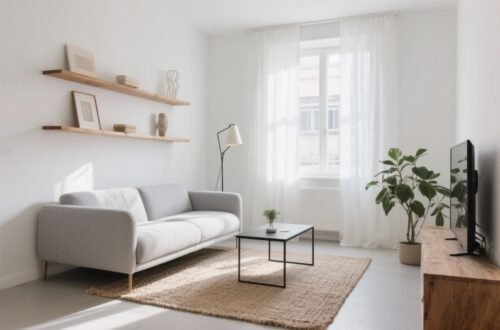
- Sofas: Low and boxy with slim arms. Linen or textured cotton upholstery is your friend.
- Coffee Tables: Low, simple wood with rounded corners—bonus points for visible grain.
- Chairs: Spindle-back or wishbone silhouettes in natural wood.
- Dining Tables: Rectangular or oval, no bulky pedestals, matte finish.
Real talk: Skip the shiny chrome. Go for natural wood, matte black accents, or powder-coated metal. It’s that quiet luxe look—no flexing required.
3. Embrace Negative Space (aka Let It Breathe)

Here’s the secret sauce: empty space is part of the design. Don’t fill every wall or corner just because it’s there. Your space needs room to exhale.
How To Edit
- Declutter: Keep only what you use and what you love. The rest? Donations.
- Art: One large piece beats a chaotic gallery wall. Or try a diptych for balance.
- Surfaces: Limit decor to 1–3 objects per surface max—think tray, candle, branch.
Pro tip: After styling, remove one item. It almost always looks cleaner and more intentional.
4. Layer Natural Textures (Soft + Hard, Light + Dark)

Minimal doesn’t mean flat. Texture is everything in Japandi. It adds warmth without clutter—like wearing a cashmere sweater instead of a loud print.
Texture Mix Ideas
- Textiles: Linen curtains, cotton throws, wool rugs, gauzy sheers.
- Hard Materials: Oak, ash, bamboo, stone, ceramic, rattan.
- Contrast: Pair a soft boucle ottoman with a matte oak media console.
Stick to 3–4 textures repeated throughout the room so it feels cohesive, not chaotic.
5. Keep Storage Sleek, Hidden, and Multi-Tasking

If your stuff has a home, your apartment will look clean even on a Wednesday. Japandi storage is practical and beautiful.
Smart Storage Swaps
- Entryway: A slim console with drawers + a woven basket for shoes.
- Living Room: Closed media cabinets, not open shelves full of cords.
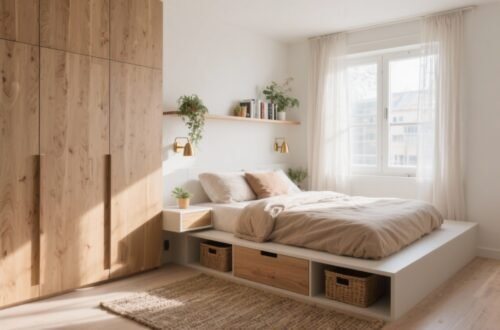
- Bedroom: Underbed drawers or a bed with built-in storage.
- Kitchen: Matte canisters, peg rails, and uniform jars (labels = sanity).
Consider a bench with hidden storage. It’s a seat, a drop zone, and a clutter black hole you control—IMO, hero furniture.
6. Warm Up With Soft Lighting (Multiple Layers)

Lighting makes or breaks the vibe. Skip harsh overhead bulbs. Go for warm, layered light that feels like golden hour on demand.
Light It Right
- Overhead: Paper lantern pendants or minimal drum shades for soft diffusion.
- Task: Slim matte lamps in black or brass—great for reading nooks.
- Ambient: Candles (unscented), tea lights, or LED strips under shelves.
- Bulbs: 2700K–3000K warm white. Dimmers if you can swing them.
Bonus: A single sculptural floor lamp can be “the moment” without shouting for attention.
7. Curate Art and Objects With Restraint

Less, but make it meaningful. Japandi loves handmade, wabi-sabi pieces—things that feel human, not mass-produced. Think patina, not perfection.
Display With Intention
- Art: Large, minimal compositions, botanical sketches, or ink wash prints.
- Objects: One ceramic vase, a carved wooden bowl, a single branch.
- Books: Stack a few horizontally with space to breathe—no rainbow spines, please.
- Color: Keep it muted; reserve bold hues for tiny moments (a rust linen pillow).
Tip: Trays corral objects so surfaces don’t look messy. It’s visual order with zero stress.
8. Bring Nature In (Plants, Branches, and Organic Shapes)

Nature is Japandi’s best accessory. But this isn’t a jungle vibe—it’s considered greenery. One or two statement plants can transform a room.
Greenery That Fits the Aesthetic
- Trees: Ficus, olive, rubber plant, or a small indoor pine.
- Branches: Forsythia, eucalyptus, or cherry blossom twigs in a tall vase.
- Low-Maintenance: ZZ plant, snake plant—great if you forget watering exists.
Use matte ceramic or stone planters in neutral tones. And please, no neon plastic pots. Your vibe deserves better.
9. Make the Bedroom a Soft Sanctuary

Your bedroom should feel like a calm exhale. Keep it low, soft, and seriously uncluttered. If your nightstand is a tech graveyard, we need to talk.
Layer Cozy, Minimal Essentials
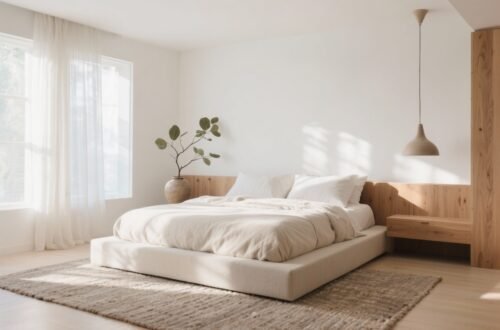
- Bed: Low platform with a simple headboard—wood or upholstered in linen.
- Bedding: Crisp percale or washed linen in ivory, oatmeal, or warm gray.
- Rug: Flatweave or wool underfoot—big enough to frame the bed.
- Nightstands: Closed storage, one lamp, one book, and maybe a sprig in a bud vase.
Keep cords hidden and screens out. Your sleep will thank you. FYI, a sunrise alarm clock fits the aesthetic and your circadian rhythm.
10. Edit Your Palette and Repeat Motifs

Consistency is your best design friend. Pick a tight palette and a few repeating shapes to tie your rooms together. That flow? Instant high-end energy.
How To Create Cohesion
- Choose 3–4 main colors: e.g., warm white, oat, charcoal, and sage.
- Repeat materials: Oak, black metal, cream ceramics—let them echo room to room.
- Echo shapes: Rounded corners on tables, soft arches in mirrors, cylindrical lamps.
- Commit to finishes: Matte over glossy for that refined, calm look.
When in doubt, ask: Does this support the vibe? If it’s not a yes, it’s probably a no. Edit generously.
Quick Room-by-Room Checklist
- Entry: Slim console, hidden storage, one art piece, soft runner.
- Living: Low sofa, natural rug, one statement plant, layered lamps.
- Dining: Wood table, simple chairs, linen runner, branch centerpiece.
- Bedroom: Low bed, two pillows max per person, soft lighting, zero clutter.
- Bathroom: Wood stool, stone tray, matching dispensers, waffle towels.
Budget-Friendly Ways To Get the Look
- Swap bright decor for matte neutrals and natural textures.
- DIY a branch arrangement in a thrifted ceramic vase.
- Use peel-and-stick wood for a console or shelf refresh.
- Replace harsh bulbs with warm, dimmable LEDs—instant mood shift.
- Rehome extra decor and keep only a hero piece per surface.
Common Japandi Mistakes (And Fixes)
- Too sterile? Add texture: boucle, linen, wool, woven baskets.
- Too dark? Lighten walls, add a bigger rug, and use sheer curtains.
- Feels busy? Reduce your palette to neutrals and remove 30% of decor.
- No personality? Introduce one handmade object or heirloom per room.
Japandi isn’t about perfection. It’s about thoughtfulness—choosing fewer, better things and letting your home breathe. Start small, edit often, and let the calm roll in. You’ve got this.