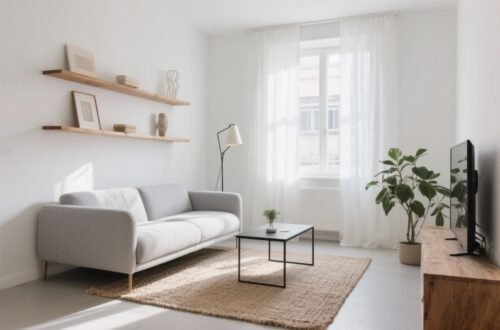
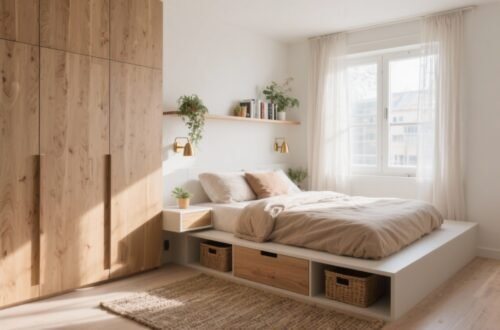
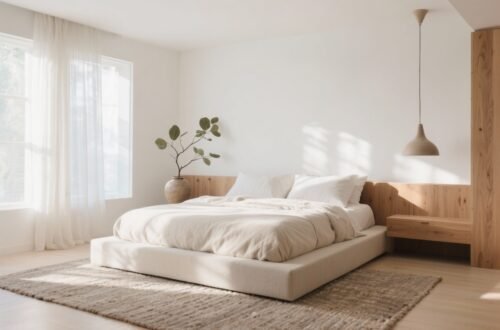
You know that calm, uncluttered room you see on Pinterest and immediately want to nap in? That’s Japandi. It’s where Japanese simplicity and Scandinavian coziness hang out, sip tea, and whisper “you’re home.” If you’re craving a living room that feels spacious, serene, and seriously chic—without looking sterile—these ideas are your blueprint.
1. Choose a Grounded, Low-Slung Sofa

Japandi rooms sit low and steady. A low-profile sofa instantly makes your space feel calmer and more anchored—no flashy legs or puffed cushions needed. Look for clean lines, soft corners, and textured fabrics that invite lounging, not fussing.
What to look for
- Neutral upholstery like oatmeal, stone, or camel.
- Textured weaves (linen blends or bouclé) to add depth.
- Structured silhouette with simple, solid wood feet.
Pro tip: If you’re in a small space, skip chunky arms and go armless or slim-arm to keep the vibe airy.
2. Curate a Calm, Neutral Palette (With One Quiet Accent)

Japandi color stories are composed—never shouty. Think off-whites, bone, warm grays, and soft taupes layered together like a perfect capsule wardrobe. Then add one hushed accent to keep it from feeling flat.
Easy palette formula
- Base: Warm white walls (not stark), e.g., “Swiss Coffee” vibes.
- Secondary: Greige sofa, natural oak wood tones.
- Accent: Sage, muted charcoal, or clay—used sparingly in a throw or vessel.
FYI: Cool whites can feel clinical. Choose warm neutrals to keep it inviting.
3. Bring In Natural Woods (And Mix Them Thoughtfully)

Wood warms the minimalist edges. In Japandi, you’ll see pale oak, ash, or beech balanced with darker walnut or smoked finishes. The trick? Keep it harmonious—not matchy, not chaotic.
How to mix wood tones without chaos
- Choose a dominant tone (light oak) and a secondary (walnut).
- Repeat each tone at least twice: coffee table + frames, shelving + legs.
- Matte finishes over high gloss—shine makes it feel modern in a not-great way.
And yes, rattan and cane count as “wood” textures here. They bring gorgeous lightness to the room.
4. Edit Ruthlessly, Then Style With Intent

Clutter is the enemy of calm. But emptiness can feel cold. The sweet spot is curated simplicity—fewer things, but each one beautiful and useful.
Declutter plan (fast and painless)
- Clear surfaces to bare, then add back 1–3 items max per surface.
- Hide the random stuff in baskets, lidded boxes, or a closed media console.
- Choose sculptural objects (ceramic bowls, a wooden tray, a stone candle holder) that add form and texture.
IMO, if it doesn’t spark a “wow” or serve a purpose, it’s out. Your breathing room will thank you.
5. Layer Cozy, Natural Textures (Quietly)

Minimalism doesn’t mean cold. It means quiet. Layer in texture thoughtfully so your living room feels soft and lived-in without the visual noise.
Texture layering ideas
- Rug: Natural fiber like jute, sisal, or a flatweave wool in a subtle pattern.
- Throws: Linen in summer, chunky knit or cashmere in winter.
- Pillows: Keep the palette tight; mix weaves, not colors.
- Accents: Paper, plaster, clay, stone—organic and matte.
Remember: one patterned pillow = interest. Four patterned pillows = chaos. Choose calm.
6. Opt for Low, Simple Tables With Soft Geometry

Skip the heavy “statement” coffee table. Japandi loves soft curves and human-scaled furniture that doesn’t dominate the room. Rounded corners feel relaxed and safer, especially in small spaces.
Smart table choices
- Round or pill-shaped coffee table in wood or stone.
- Nesting side tables for flexibility and less visual bulk.
- Tray-style top to corral objects and keep surfaces tidy.
Bonus: A bench-style coffee table brings easy, linear minimalism and doubles as extra seating.
7. Balance Light With Sheers, Paper, and Warm Lamps

Lighting is everything. You want soft, diffused light that makes you want to curl up with a book and never leave. Natural and ambient sources should work together, not compete.
Lighting recipe
- Window treatments: Sheer linen panels that kiss the floor, ideally off-white or natural.
- Pendant: A rice paper lantern or linen drum shade for a gentle glow.
- Table/floor lamps: Warm 2700K bulbs, fabric or paper shades, matte finishes.
- Accent: A small uplight or backlight behind a plant or sculpture for drama without glare.
Shiny chrome? Too cold. Black metal or brushed brass with fabric shades? Just right.
8. Style With Wabi-Sabi Decor (Imperfect Is Perfect)

Wabi-sabi is the soul of Japandi. It’s about honoring natural materials, patina, and pieces with character. Think hand-thrown pottery, a slightly uneven vase, a vintage stool with a nick or two.
How to get the look without trying too hard
- Choose handmade over mass-produced where you can—ceramics, textiles, art.
- Display one hero object per surface: a branch in a stoneware vase, a single sculptural bowl, a low ikebana arrangement.
- Let negative space breathe—don’t fill every corner.
It’s less “decorated” and more “composed.” Your eyes—and nervous system—will feel it.
9. Add Greenery With Architecture, Not Filler

Plants ground the room and bring life without breaking the minimalist spell. Choose plants with sculptural shapes and give them space to shine. No jungle corner needed.
Plant picks that feel Japandi
- Olive tree or ficus for airy branches.
- ZZ plant or rubber plant for glossy structure.
- Monstera adansonii (lighter, lacier) for interesting geometry.
Use simple clay or cement planters, nothing fussy. And if you do a branch moment? Keep it tall and minimal in a heavy, textural vase. Instant calm.
10. Keep Walls Minimal—But Intentional

Wall art in a Japandi space is quiet and thoughtful. A single large piece beats a cluttered gallery wall every time. Choose art that speaks softly: line drawings, abstract ink, monochrome photography, or handwoven textiles.
Wall styling made easy
- One oversized piece centered above the sofa (2/3 the sofa width is ideal).
- Floating shelves with 2–3 objects per shelf: a small stack of books, a ceramic piece, a framed print.
- Natural frames in light wood, black, or thin metal; avoid ornate details.
If you must do multiples, try a pair or triptych with plenty of space between. Let the wall breathe.
Bonus Styling Tips to Tie It All Together
- Symmetry isn’t required—balance is. If the sofa is heavy on one side, a floor lamp or tall plant can counterweight.
- Repeat materials: wood, linen, stone, paper. Repetition = calm.
- Hide cables and remotes. Visual noise ruins the vibe faster than anything.
- Scent counts: cedar, hinoki, or sandalwood candles make the whole room feel cohesive.
Quick Shopping Checklist
- Low-profile neutral sofa
- Natural fiber rug (jute or wool)
- Round wood or stone coffee table
- Sheer linen curtains
- Rice paper pendant + warm table lamp
- Matte ceramic vase + branch
- Simple wood frames and a large-scale art piece
- Clay or cement planters with sculptural plants
- Closed storage media console
- Soft throws and a few textured pillows
You don’t need to buy everything at once. Start with one anchor (sofa or rug), then build out textures and lighting. Edit as you go. Japandi isn’t a shopping haul; it’s a calming practice.
Ready to exhale every time you walk into your living room? Keep it simple, choose beauty you can feel, and let the space do the talking. You’ve got this.