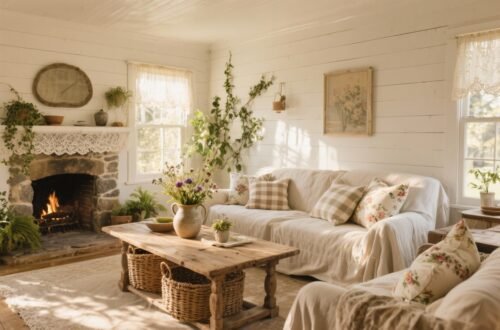
You know that kitchen you see in movies where someone bakes bread and speaks to a cat? That’s cottage core energy. It’s cozy, lived-in, and blissfully unfussy—aka the antidote to chaotic mornings and cluttered countertops. If you’re craving a kitchen that feels like a deep breath, these ideas will help you layer charm and function without turning your space into a museum of knickknacks.
1. Embrace Open Shelving (But Keep It Edited)

Open shelves are cottage core catnip: airy, simple, and a sneaky way to show off pretty things you actually use. The trick is balance. Too much, and it looks like a flea market. Too little, and it feels cold.
How to Style Without Stress
- Group by color and material: Stack white plates, lean cutting boards, line up clear jars. Instant harmony.
- Mix heights: Tall pitchers, short bowls, medium jars. Your eye should zig-zag pleasantly.
- Keep daily-use items within reach: Mugs, bowls, and cereal jars go low. Special pieces go high.
- Leave breathing room: One-third of each shelf should be empty. Yes, really.
FYI: If your cupboards are a jumble, start with just one open shelf. You’ll avoid overwhelm and dial in your look before committing.
2. Lean Into Natural Materials (They Calm Everything Down)

Cottage core loves anything that looks harvested, carved, or woven. Wood, stone, linen—these materials ground a busy kitchen and soften the steel-and-tile vibe.
Swap Small, See Big Change
- Wooden accents: Butcher-block boards, vintage rolling pins, or a chunky walnut tray.
- Stone moments: A marble pastry slab or soapstone utensil crock adds quiet luxury.
- Linen textiles: Tea towels, a sink skirt, or a linen runner for the table.
- Wicker and rattan: Baskets for produce, a woven tray for oils and salt.
Pro move: Keep finishes matte or honed. Shiny reads modern; matte reads mellow.
3. Choose a Soft, Nature-Forward Palette

Think moss green, buttercream, warm white, and muted clay. These tones create a low-contrast backdrop that makes space read larger and calmer.
Palette Pairings That Always Work
- Warm white walls + sage cabinets + aged brass hardware = timeless and restful.
- Buttermilk cabinets + oak accessories + cotton white walls = sunshine in a room.
- Putty gray base + cream uppers + black iron accents = softly rustic.
Paint tip: Choose low-sheen (eggshell or satin) for walls and a durable satin for cabinets to keep light soft but wipeable.
4. Add Vintage (But Make It Useful)

You do not need a full-on antique range to get vintage charm. One or two character pieces can transform an otherwise basic kitchen. The secret? Pick items that earn their counter space.
Functional Finds That Bring Soul
- Antique scales as a fruit stand.
- Ironstone pitchers for utensils.
- Copper cookware on a simple rail—patina optional, bragging rights included.
- Old bread boards stacked against a backsplash for warmth and texture.
IMO, vintage + utility is the perfect cottage core equation. If you can use it daily, it stays. If it’s purely decorative, limit to one “moment.”
5. Create a Quiet Prep Zone

A dedicated little workstation keeps mornings from spiraling. Whether you’re team coffee, tea, or toast, consolidate the essentials so you can move on autopilot.
Build a Mini Station
- Corral with a tray: Mug, spoon, sugar, milk frother—done.
- Label glass jars: Coffee beans, loose-leaf tea, oats. Pretty and practical.
- Add a small lamp: Soft task lighting = instant calm (and it looks fancy, tbh).
- Include a catch-all: A shallow dish for teaspoons or tea strainers keeps counters tidy.
Bonus: A tiny vase or herb sprig makes routine feel like ritual. Not necessary, just delightful.
6. Style With Everyday Produce And Pantry Goods

If you’re buying apples anyway, let them earn their keep. Cottage kitchens feel alive because food is part of the decor. The trick is to be intentional—no random plastic bags on display.
Edible Styling That Actually Works
- Woven basket for onions and garlic: Breathable and charming.
- Footed bowl for fruit: Height adds presence; swap with the seasons.
- Glass canisters: Pasta, beans, rice—uniform containers cut visual noise.
- Olive oil decanter + salt cellar: Keep near the stove for pretty, practical reach.
Pro tip: Limit visible labels. Choose one neutral palette for jars and containers so your food’s colors pop, not the packaging.
7. Bring In Garden Energy (Even If You Don’t Garden)

Nothing says cottage like a hint of green. Plants soften hard surfaces and make the room feel alive. No green thumb? No shame—choose low-maintenance or faux with great texture.
Easy Greens To Try
- Potted herbs: Rosemary, thyme, and mint by a sunny window—snip and cook.
- Trailing plants: Pothos or ivy on open shelves for that romantically wild vibe.
- Single-stem florals: One hydrangea or a few foraged branches in a jug = instant mood.
- Dry stems: Eucalyptus or lavender for low-effort, high-aesthetic.
FYI: If counter space is limited, use hooks for hanging herb planters or a slim wall-mounted shelf near a window.
8. Layer Soft Textiles For Warmth

Hard surfaces bounce sound and stress. Textiles absorb both. Add soft layers and your kitchen instantly feels calmer and more inviting.
Where To Add Fabric
- Sink skirt: Hide bins or cleaning supplies behind a gathered linen panel.
- Cafe curtains: Filter light with a cotton or muslin fabric in a tiny check or stripe.
- Rugs: A flatwoven or braided runner warms floors—look for washable options near the sink.
- Chair pads: Tie-on cushions for bistro chairs bring that sweet cottage vibe.
Pattern tip: Tiny florals, gingham, and ticking stripes are cottage core classics. Mix two patterns tops, and keep the color story consistent.
9. Add Ritual Lighting (Not Just Overhead)

Overhead lighting is great for chopping, not for relaxing. Layer glowing pools of light so your kitchen shifts from task mode to cozy mode by dinnertime.
Build A Cozy Lighting Plan
- Under-cabinet lights: Dimmable is ideal for evening prep.
- Plug-in sconces: Add beside a window or over open shelves for charm without wiring.
- Small table lamp: Nestle on a corner counter or hutch for ambient glow.
- Warm bulbs: 2700K–3000K keeps the vibe soft; avoid stark daylight bulbs here.
Hardware detail: Antique brass, aged bronze, or milk glass shades whisper “cottage” without shouting.
10. Curate A Cozy Nook For Slow Moments

Even a small kitchen can spare a corner for slow living. A perch turns the room from a workspace into a sanctuary. It’s where the Saturday pancake plate lands—and where you hide with tea when the world gets loud.
Make A Nook, Big Or Small
- Two-chair cafe setup: Round table, spindle chairs, a vase. Done.
- Window perch: Add a cushion and a throw to a deep sill or bench.
- Hutch or peg rail behind: Hang aprons, display cups, keep it charming but useful.
- Sound-softening: A rug under the table to quiet the clatter.
Finishing touch: A stack of cookbooks and a candle. It’s a nook; it deserves a mood.
Conclusion

Cottage core isn’t about buying a whole new kitchen—it’s about slowing down the look and letting warmth lead. Choose natural textures, soften your palette, and keep only what you use and love on display. Do a few of these ideas, and your kitchen will start feeling like a deep exhale with a side of buttered toast.